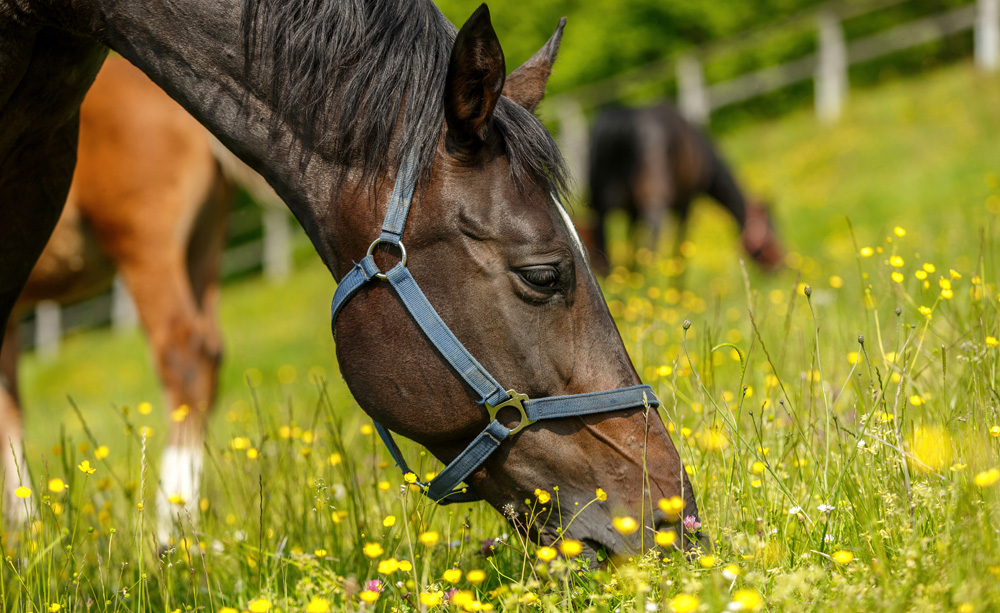
Colic is one of the most common and serious equine emergencies. In horses, colic refers to abdominal pain that arises from gastrointestinal issues such as gas and impaction (blockages).
As springtime approaches, horse owners must remain vigilant for signs of colic and take steps to prevent colic brought on by spring pasture. Dr. Rebecca Bishop, a veterinarian at the University of Illinois Veterinary Teaching Hospital who is board certified in equine surgery, shares her expertise in the matter.
Winter Colic vs. Spring Colic
Colic can happen any time of the year, but we sometimes speak of “winter colic” and “spring colic,” which tend to have distinct causes.
“The biggest risk in winter is impaction,” says Dr. Bishop. “Horses eating hay tend to have drier ingesta. Add in dehydration if horses have reduced water intake due to freezing weather. This combination can lead to slower movement of food through the gut and, in turn, large colon impactions.”
Cold weather may also decrease horses’ activity levels, which further slows gastrointestinal motility.
“Gas colic predominates in spring, when horses consume high-sugar, rapidly fermentable spring grass,” says Dr. Bishop. “Gas accumulation in the large colon can also contribute to large colon displacement.”
Diarrhea or mild colitis (inflammation of the colon) may accompany the dietary shift.
How Spring Pastures Cause Colic
“Spring grass has a high content of non-structural carbohydrates such as sugar and fructans,” explains Dr. Bishop. “These rapidly fermentable carbohydrates produce a large amount of gas in the horses’ intestines, potentially leading to colic.”
The sudden dietary change from winter hay diets to lush pasture may also trigger changes in the gut microbiome, which may also cause colic.
Additional springtime dangers include overconsumption; parasites, particularly strongyles, emerging with warm temperatures; water intake fluctuations during weather swings; and underlying diseases, such as equine metabolic syndrome (EMS), made evident with diet change.
Consequences of Colic
“Laminitis is the most common and concerning complication of pasture-associated colic,” says Dr. Bishop.
Laminitis involves inflammation and damage of the tissue between the hoof and the underlying coffin bone. The condition is extremely painful and can lead to separation of the hoof wall from the bone in advanced cases. Rapid consumption of a high-carbohydrate diet like spring grass results in an insulin spike that can contribute to laminitis “flares.”
Another concern, gut wall inflammation, can lead to the presence of endotoxins in bloodstream. Dehydration and electrolyte balance are also potential consequences of prolonged colic.
“If a horse requires colic surgery, potential complications include post-operative slowing of the gut motility, adhesion formation, and infection of the surgical incision,” adds Dr. Bishop.
Recurrence of colic signs is possible in horses with underlying motility disorders, dental problems, or chronic management issues that are not addressed after the initial colic.
Signs of Colic and How to Respond
Clinical signs owners should watch out for:
- Changes in behavior that indicate abdominal pain, including pawing or stretching out as if to urinate; looking at or biting the flank; repeated lying down and getting up; rolling or thrashing
- Signs related to the GI system, such as reduced appetite; lack of manure or reduced manure output; distended abdomen; excessive gas passing or discomfort around the flank
- General unwellness, such as increased heart rate, respiratory rate, or sweating (without heavy work or warm temperatures); quietness, depression, or reluctance to move
If you notice signs of colic in your horse, call your veterinarian immediately.
“Although many episodes of gas colic may resolve without veterinary intervention, it is always best to communicate with your horse’s veterinarian,” advises Dr. Bishop. “There may be subtle signs of a more sinister problem that warrants an emergency visit.”
After calling the veterinarian, owners should remove the horse’s access to feed but allow access to water.
Walk the horse, if it is safe to do so. “Walking for 10 to 15 minutes can help stimulate gut motility and facilitate passage of gas and manure,” says Dr. Bishop. “However, continuous walking is not recommended. That will only make the horse tired and risk worsening dehydration.”
Although horses with twisted intestines certainly do roll to address their pain, Dr. Bishop dispels the myth that rolling causes the intestines to twist.
“If your horse wants to lie down quietly, allow it to do so,” she says. “If the horse is violently uncomfortable and you are waiting for your veterinarian, keeping them in a large, enclosed area with safe footing, such as an arena or round pen, is often the safest option.”
Owners can also take vital signs (heart rate, respiratory rate, and temperature), if it is safe to do so, and be prepared to answer questions the veterinarian may have about manure output, recent diet changes, turnout routine, and how long signs have been present.
Dr. Bishop advises against giving any medications, such as Banamine® (flunixin), without veterinary direction. Doing so can mask signs that the veterinarian needs to evaluate.
Colic Treatment and Prognosis
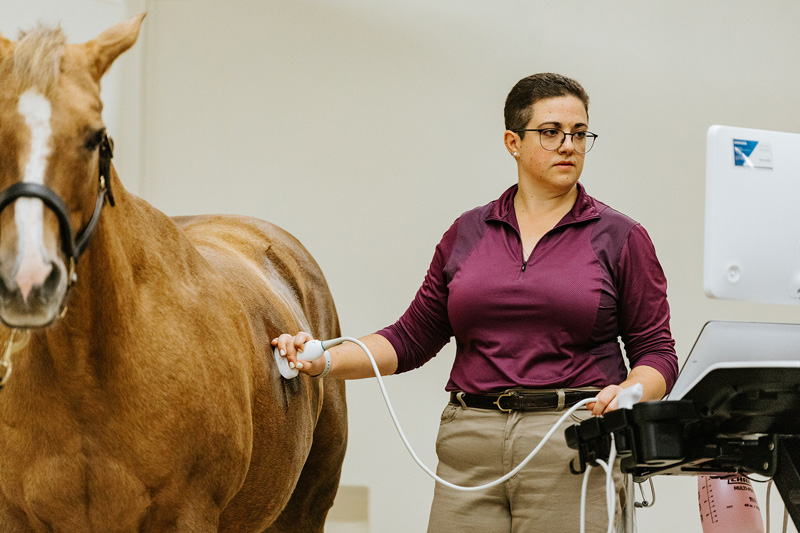
Your veterinarian may perform several procedures to assess your horse’s condition. These include rectal palpation to check for impaction or gas in the large intestine and determine whether the small intestine is distended. An abdominal ultrasound would provide further information about placement of the intestines. A nasogastric tube may be placed to assess the volume and consistency of feed/fluid in the stomach. Blood work provides information about the horse’s hydration, electrolytes, inflammation.
Possible treatment options include:
- Nasogastric intubation to relieve excess fluid or give fluid/electrolytes;
- IV (intravenous) fluids for dehydration;
- Pain management with non-steroidal anti-inflammatory drugs (NSAIDs) or sedatives;
- Anti-gas or pro-motility medications;
- Surgery for unresponsive or obstructive colics (twists, displacements, strangulating lesions).
“Prognosis is excellent for mild gas colic or impactions resolved with medical treatment,” reports Dr. Bishop. “Spring colic generally has an excellent prognosis when caught early.”
Prognosis for colic that requires surgery, however, is fair to guarded, depending on location of the lesion, time elapsed before intervention, and degree of intestinal compromise.
Tips for Preventing Colic
Introduce spring pasture gradually, especially if horses were stalled a lot during winter. Start with 15 to 20 minutes a day. Increase pasture time over 10 to 14 days. Use a grazing muzzle for easy-keepers or other horses on a restricted diet. Owners should continue offering hay during the transition to avoid overeating grass.
“Maintain consistent feeding schedules. Sudden diet change is a major risk,” says Dr. Bishop.
Watch pasture conditions. Early-morning frost on spring grass can increase the sugar/fructan content.
Check water access frequently during weather swings. Dr. Bishop recommends encouraging hydration by:
- Offering loose salt or adding loose salt or electrolyte powder to the horse’s feed
- Ensuring clean fresh water is always available
- Offering water with added flavoring (a small handful of sweet feed to make “sweet tea” or an electrolyte powder water additive such as RepleniMash® or Gallagher’s Water™) during times of weather change, intense exercise, or stress
Regular preventive veterinary care, including dental exams, parasite management, and body condition monitoring, keeps horses in overall good condition.
By Cassidy Kelly