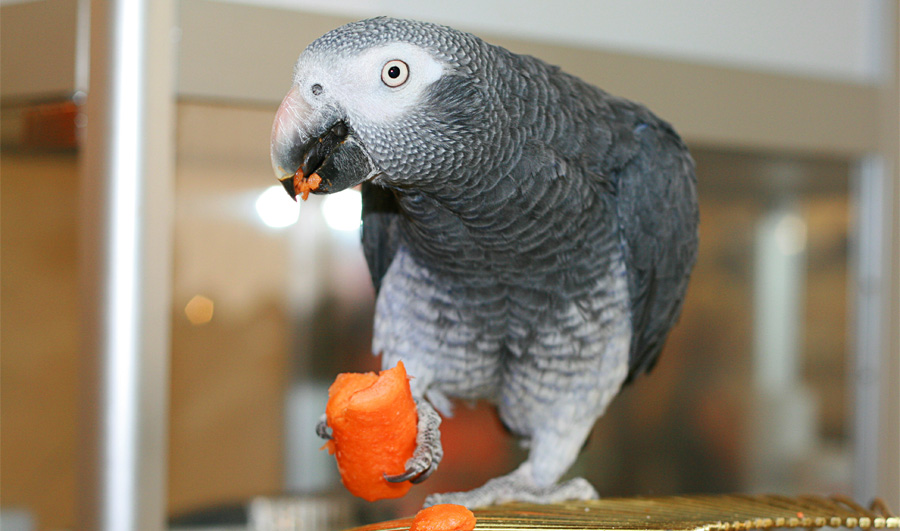
Many pet birds are parrot species: macaws, amazon parrots, cockatoos, lovebirds, cockatiels, parakeets, and more. In the wild, these birds eat a variety of plants and seeds. But what’s the best diet for the parrot in your home?
Dr. Judilee Marrow, a veterinarian at the University of Illinois Veterinary Teaching Hospital who specializes in treating zoological species, describes what a healthy diet for pet birds looks like.
Say No to Seeds
Commercially available seed diets have a much lower nutritional value than the diets birds consume in the wild. Pet birds that consume exclusively seed diets suffer from obesity, chronic malnutrition, and other health issues.
“The seeds you can buy in a pet store are high in fat, low in fiber, and low in calcium,” says Dr. Marrow. “They do not include essential vitamins that birds need, such as vitamin A. When a pet bird does not get enough vitamin A, they can develop problems such as respiratory diseases, poor feather quality, and reproductive diseases.”
Just like in people, birds on a diet high in fat combined with a lack of exercise (pet birds get a lot less flying time than do wild birds) can lead to atherosclerosis. This condition, which involves a buildup of plaque in the arteries, leads to narrowed arteries and reduced blood flow. It is progressive and potentially fatal.
High fat content in the diet can also stimulate breeding and egg-laying behavior, which is problematic when the diet is also low in calcium.
“For birds on a seed diet, stimulation of egg production, which requires calcium, may result in depletion of calcium stores in the bones,” explains Dr. Marrow. “Ultimately birds may develop life-threatening reproductive issues, such as egg binding, when a female is unable to expel an egg.”
Choose Pellets
Dr. Marrow recommends a well-balanced pellet food that is formulated for your parrot over a diet that has a mix of pellets and seeds. However, parrots themselves may have a different opinion. Parrots are very smart and they can be very picky eaters.
“Seed diets are very tasty to birds,” Dr. Marrow acknowledges, “and it can be hard for them to learn to eat a more balanced diet.”
Diets containing a mix of pellets, seeds, dried fruits, and vegetables may seem healthy to owners, but birds can pick out their favorite bits and leave healthier items behind.
“Transitioning from a seed-based diet to a pelleted diet can take time,” Dr. Marrow notes. “We recommend owners make small changes under the guidance of their veterinarian. A gradual shift to a pelleted diet is the best way to prevent illnesses in your bird.”
Other Ways to Improve Your Bird’s Diet
Birds should also be offered fresh fruits and vegetables. These foods provide mental stimulation in addition to fiber, minerals, and vitamins. Nutrients from fresh produce support overall health and can influence brain and cognitive function, including problem-solving, memory, and learning.
“Birds should not be offered table scraps or allowed to eat other pet food, especially dog or cat diets, as this can be harmful to them,” warns Dr. Marrow.
Dr. Marrow also urges owners to avoid giving their birds fatty treats like peanuts or other nuts. Peanuts are not only unhealthy due to their fat content but also can contain a harmful fungus that sickens birds.
For bird owners who would like help moving their pets to a healthful diet, the zoological medicine service at the University of Illinois Veterinary Teaching Hospital provides evaluations of pet birds and dietary recommendations.
By Cassidy Kelly