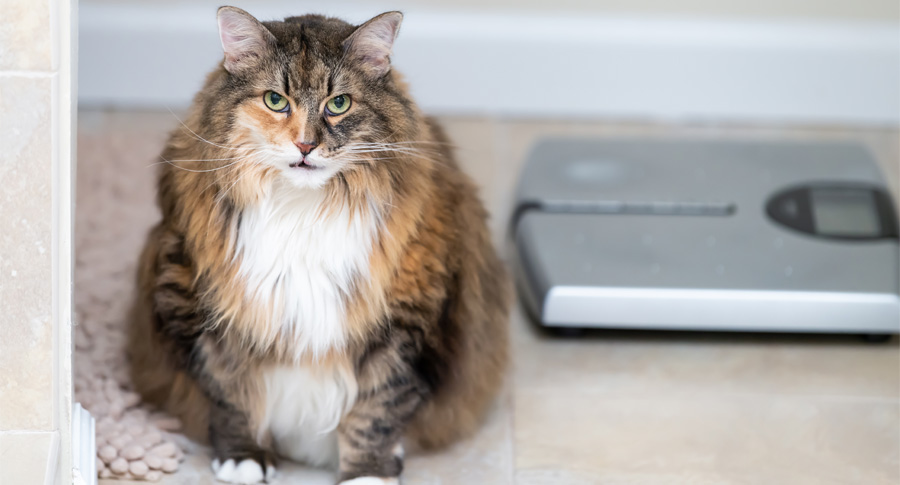
Did you know that, along with dental disease, excess weight is one of the most common conditions noted in routine veterinary exams? About 60% of pets in the United States meet the diagnostic criteria for being overweight.
“Obesity can decrease overall life expectancy and contribute to development of chronic conditions such as diabetes and osteoarthritis,” says Dr. Gene Pavlovsky, director of the Dr. John A. Coyne South Clinic at the University of Illinois Veterinary Teaching Hospital. Drawing on his years of experience, Dr. Pavlovsky answers your questions about this important, but often-overlooked, pet health issue.
How do I know if my pet is overweight?
According to Dr. Pavlovsky, the body condition score, a value independent of bodyweight similar to body mass index (BMI) in people, provides the best way to see if your pet’s body fat percentage is considered appropriate. The body condition score uses a 9-point scale, with 1 being emaciated and 9 being overtly obese.
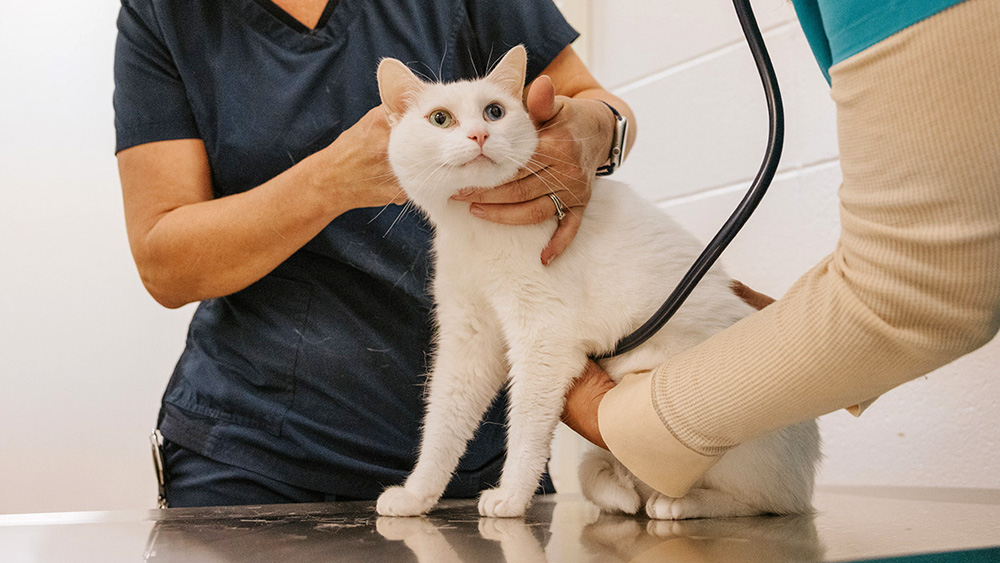
While you can approximate your pet’s score at home by consulting a veterinary resource, Dr. Pavlovsky recommends asking for your veterinarian’s opinion, too. Veterinarians use objective criteria plus expertise about breed, age, and health nuances to determine the appropriate score for any individual animal. When using the 9-point scale, a score of 4 or 5 is the goal.
If your pet consistently falls in the 4 to 5 range, good job! Your feeding protocols are likely appropriate for your pet. If not, read on for Dr. Pavlovsky’s insights and discuss the matter with your veterinarian to come up with a plan for your pet.
How did this happen?
“The advent of commercially available, balanced and complete pet food has contributed significantly to the health and lifespan of our pets,” acknowledges Dr. Pavlovsky. “However, the fact that some of these foods may pack a relatively large number of calories into a small amount of food has made overfeeding easy.”
Just like a pound of peanut butter has many more calories than a pound of veggies, commercial foods vary in caloric density. The bottom line is, a few cups of kibble may be too much for your pet. That’s why it’s important to read the label of their food closely to see how much to give your pet.
For some pets, weight loss may be as easy as feeding the same amount of a less calorically dense food. For others, keeping the same food but feeding a smaller amount will do the trick.
How can I help my pet?
For many owners, figuring out how many calories their pet needs is the easy part. The harder task: changing habits and routines to monitor and limit their pet’s daily caloric intake.
- People who like to give their pet table scraps or lots of treats may need to make calorie-friendly swaps so they can continue to show their pet affection without overfeeding. For lower-calorie dog treats, Dr. Pavlovsky suggests small portions of fresh veggies, apple slices, and plain popcorn, all of which tend to be a hit with our canine friends.
- Dogs may benefit from being separated from small children during meal times so that they cannot eat anything that falls off the table or is fed to them.
- To better monitor calorie intake for cats, Dr. Pavlovsky recommends set mealtimes (delivered manually or with a timed feeder) instead of always having food out.
What about exercise?
“Research has shown that overfeeding plays a much bigger role in pet obesity than does lack of physical activity,” Dr. Pavlovsky says. “All other things being equal, expending energy in the form of exercise will have a positive impact on caloric balance, but exercise alone is usually not enough.”
If you want to speed up the weight loss process by increasing your pet’s activity level, Dr. Pavlovsky advises long walks, runs (if able), and play sessions for dogs.
Cats may be trickier to motivate. Dr. Pavlovsky’s suggestions include using toys, such as a feather on a stick or a laser pointer, in scheduled sessions throughout the day or investing in a cat tree or other climbing structure. You could also split daily meals into several bowls placed around the house so that the cat must walk from room to room to find food or toss kibble across the floor during mealtimes.
Is this my fault?
“No. It’s important to remember that a pet’s weight is not a reflection on your ability to care for them,” says Dr. Pavlovsky. Given the many demands of work and family and the difficulty of interpreting pet food labels, Dr. Pavlovsky recognizes how complicated it can be to attend to a pet’s nutritional status. Instead of blaming yourself, Dr. Pavlovsky advises, “focus on what you can do moving forward.”
Learn about Pet Nutrition
Interested in learning more about how to optimize your pet’s diet? Dr. Pavlovsky recommends these resources on pet nutrition.
By Jenna Camargo