Most pet owners know the benefits of spaying female dogs and cats. Surgical removal of the ovaries and uterus not only prevents unwanted pregnancies but also eliminates certain hormonal behaviors related to the heat cycle.
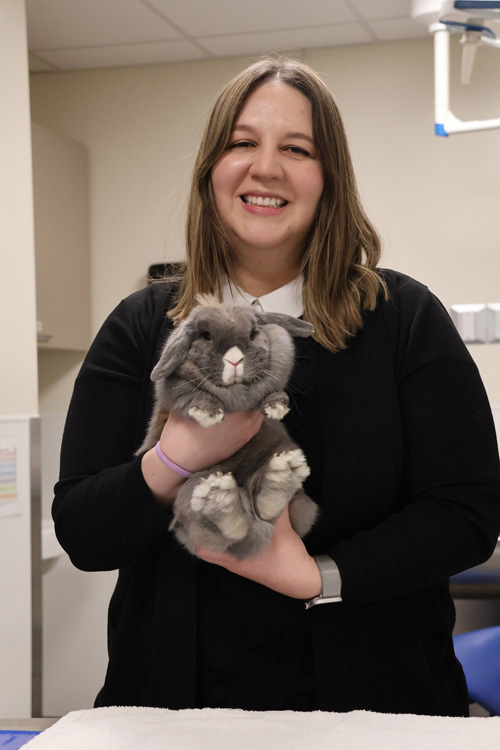
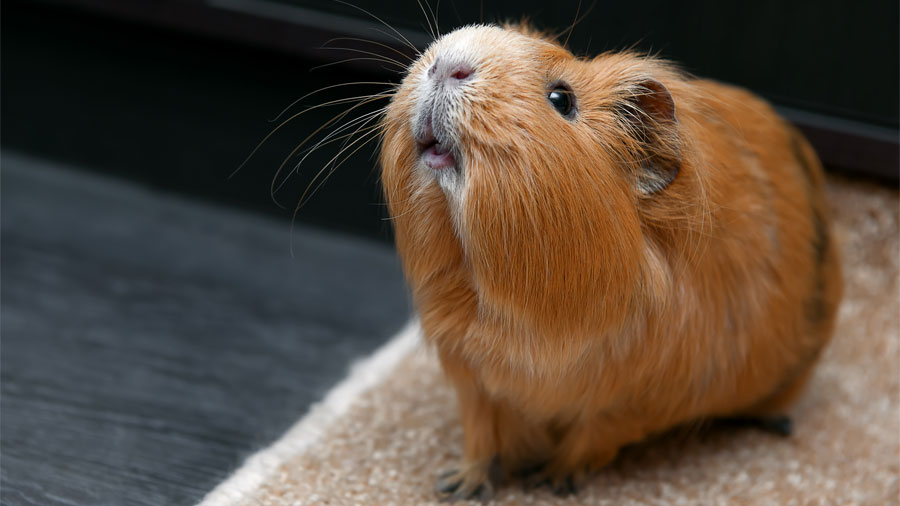
But what about spaying a guinea pig? Dr. Mariana Sosa Higareda, a veterinarian at the University of Illinois Veterinary Teaching Hospital who specializes in zoological medicine, recommends the procedure for young guinea pigs as an important part of their preventive care.
“Historically, routine spays in guinea pigs were not widely recommended because of anesthesia and surgical risks,” says Dr. Sosa Higareda. “However, we now know that reproductive disease is highly prevalent in this species. Additionally, a recent alternative surgical approach for this procedure reduces many of the risks.”
Reproductive Disease in Guinea Pigs
“Reproductive disease arises spontaneously in guinea pigs more commonly than many owners realize,” Dr. Sosa Higareda says. “In fact, one study found that reproductive problems are the third most common reason guinea pigs are taken to the veterinarian.”
While some general practice veterinarians see exotic pets as part of their daily routine, at the Veterinary Teaching Hospital, pets like guinea pigs are cared for by doctors specially trained in zoologic medicine.
“The most frequent issue is ovarian cystic disease, which has been found in more than half of female guinea pigs in various studies,” Dr. Sosa Higareda explains. “Other studies have also shown a high prevalence of uterine disease, including tumors and a thickening of the uterine lining.”
Obviously, whether you have a dog, cat, or guinea pig, removing your pet’s reproductive tract prevents the development of tumors, cysts, infections, or other problems in that location. Dr. Sosa Higareda notes, however, that in guinea pigs, unlike dogs and cats, spaying has not been proven to reduce the prevalence of mammary tumors.
When to Spay Your Guinea Pig
Dr. Sosa Higareda recommends that young, healthy female guinea pigs undergo an elective ovariectomy procedure via a flank approach. In ovariectomy, the ovaries are removed, and the uterus remains intact within the abdomen.
“An elective spay in healthy guinea pigs can serve several purposes: it reduces the risk of developing reproductive disease, provides effective contraception, and is technically easier to perform and less likely to involve complications in the absence of pathology,” Dr. Sosa Higareda explains.
If the disease extends to the uterus, then an ovariohysterectomy (i.e., removal of both the ovaries and the uterus, as is typical in dogs and cats) is performed.
Challenges in Spaying Guinea Pigs
“A standard surgical approach through the mid lower abdomen is more challenging in guinea pigs than in dogs and cats, because the ovaries are located deep within the abdominal cavity,” says Dr. Sosa Higareda.
Guinea pigs are hind gut fermenters, meaning that an important part of their digestive tract is the cecum, which harbors bacteria that allow for digestion of vegetation. The cecum in dogs and cats is not nearly as large and developed and plays a lesser part in their digestion.
“The large gastrointestinal tract of the guinea pig—particularly the cecum, which is frequently stuffed full of partially digested food and gas—can get in the way during surgery and make it hard to see and exteriorize the uterus,” explains Dr. Sosa Higareda. These factors make the surgery more difficult and increase the risk of post-operative pain, loss of appetite, and slowing or shutting down of the movement of food through the digestive tract (gastrointestinal stasis).
A Safer Approach to Spaying Guinea Pigs
Due to these complications of a traditional ovariohysterectomy, an ovariectomy (removal of the ovaries only) can be performed using a small incision on each side of the guinea pig’s dorsum, or back, which lines up exactly with the anatomical location of the ovaries. This approach is called the bilateral flank approach.
“The flank approach reduces surgical and anesthesia time, minimizes handling of soft tissues and the gastrointestinal tract, and lowers the risk of intra- and post-operative complications,” Dr. Sosa Higareda says. “If uterine removal is indicated, the entire reproductive tract can be excised through a single incision in the flank.”
Treatment of pain is important for quick recovery. After surgery, patients should receive pain relief in multiple ways, including local blocks at incision sites, meloxicam (an NSAID), and buprenorphine (an opioid). The incision may also be iced. Because of the risk of the gastrointestinal stasis, it is important that patients eat after surgery to keep food moving through their system.
For more information, please consult your local veterinarian or see a specialist in zoological medicine.
By Lauren Bryan