Heart disease is something most cat owners don’t think about until there is a problem. Unlike dogs, where coughing or exercise intolerance may raise early concerns, cats often hide illness extremely well. One of the most common and serious heart conditions affecting cats is hypertrophic cardiomyopathy, or HCM.
In cats with HCM, the muscular walls of the heart—specifically the left ventricle, the heart’s primary pumping chamber—become abnormally thick.
“The thickening makes it difficult for the heart to adequately relax and fill with blood between heartbeats,” explains Dr. Amanda Bentley, a cardiology resident at the University of Illinois Veterinary Teaching Hospital.
As the disease progresses, pressure builds inside the heart. This can cause the left atrium (the chamber that receives blood from the lungs) to enlarge. Once this chamber enlarges, the risk of complications increases significantly. These complications include congestive heart failure, abnormal heart rhythms, and the formation of blood clots within the heart.
Serious Complications of Hypertrophic Cardiomyopathy
One of the most challenging aspects of HCM is that many cats appear completely normal—until they aren’t.
“Many cats with hypertrophic cardiomyopathy show no obvious signs of heart disease until the condition has progressed significantly,” Dr. Bentley says. “Unlike in dogs, the presence or absence of a heart murmur in cats does not reliably indicate whether heart disease is present.”
Because of this, some cats are not diagnosed until serious complications develop. One of the most common is congestive heart failure, which occurs when fluid accumulates in or around the lungs. Cats with congestive heart failure often develop rapid or labored breathing and require emergency veterinary care.
Another major concern is thromboembolism–a condition where a blood clot forms in the heart and travels through the bloodstream. These clots most commonly lodge in the arteries supplying the hind limbs, causing sudden pain, paralysis, and loss of blood flow.
“These events are extremely painful and often require hospitalization with intensive care,” Dr. Bentley explains.
Diagnosing Hypertrophic Cardiomyopathy in Cats
Even though many cats show no outward symptoms early on, some subtle changes may occur. Owners may notice decreased interest in play, slowing down during activity, lethargy, or increased breathing effort.
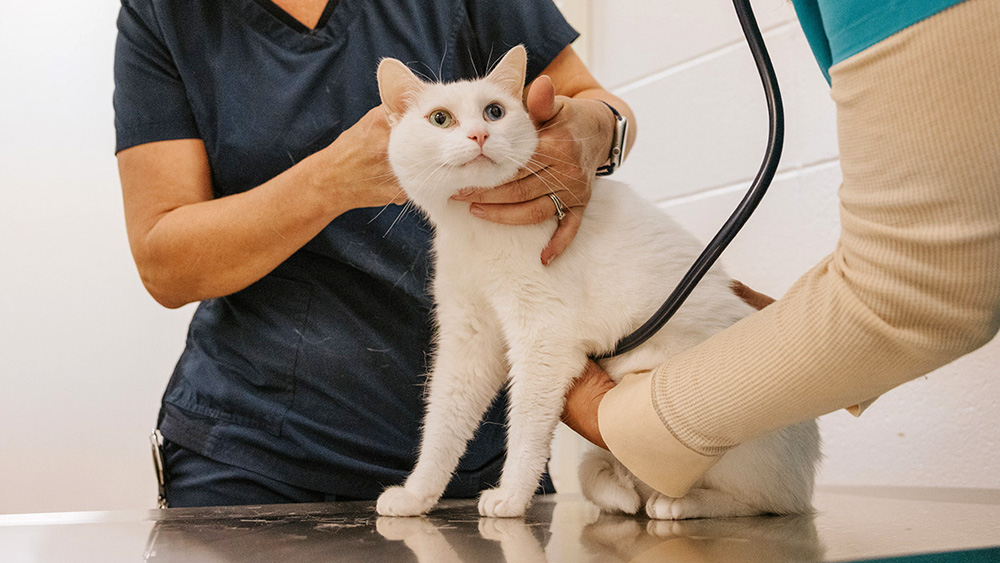
During a physical exam, veterinarians may detect such clues as heart murmurs, abnormal heart rhythms, or extra heart sounds known as a “gallop sound.” However, these findings are not always present.
Because physical exams alone are unreliable for diagnosing HCM, additional testing is often needed.
The gold standard for diagnosis is an echocardiogram, an ultrasound of the heart. This test allows veterinarians to visualize the heart, measure wall thickness, assess chamber size and function, and check for blood clots.
Before confirming HCM, veterinarians must also rule out other conditions that can cause heart muscle thickening, including high blood pressure and hyperthyroidism.
Once diagnosed, management depends largely on the severity of disease. Cats with mild heart thickening and a normal left atrium may require only monitoring. If the left atrium enlarges, medications may be started to reduce the risk of blood clot formation. If congestive heart failure develops, treatment focuses on reducing fluid buildup and maintaining quality of life.
Early Detection Improves Outlook
“There is currently no cure for hypertrophic cardiomyopathy,” Dr. Bentley says. “However, many cats can be managed successfully for extended periods with medical therapy and monitoring.”
Prognosis varies widely. Cats with mild disease may live for many years with good quality of life, while those who develop congestive heart failure or thromboembolism often face a more guarded outlook.
Perhaps the most important takeaway is that normal behavior and normal physical exams do not necessarily rule out heart disease in cats. Because HCM can progress silently, early detection and monitoring can play an important role in managing the condition and preparing for potential complications.
For cat owners, recognizing subtle changes and discussing these concerns with your veterinarian can help to catch problems in the early stages.
By Julia Bellefontaine