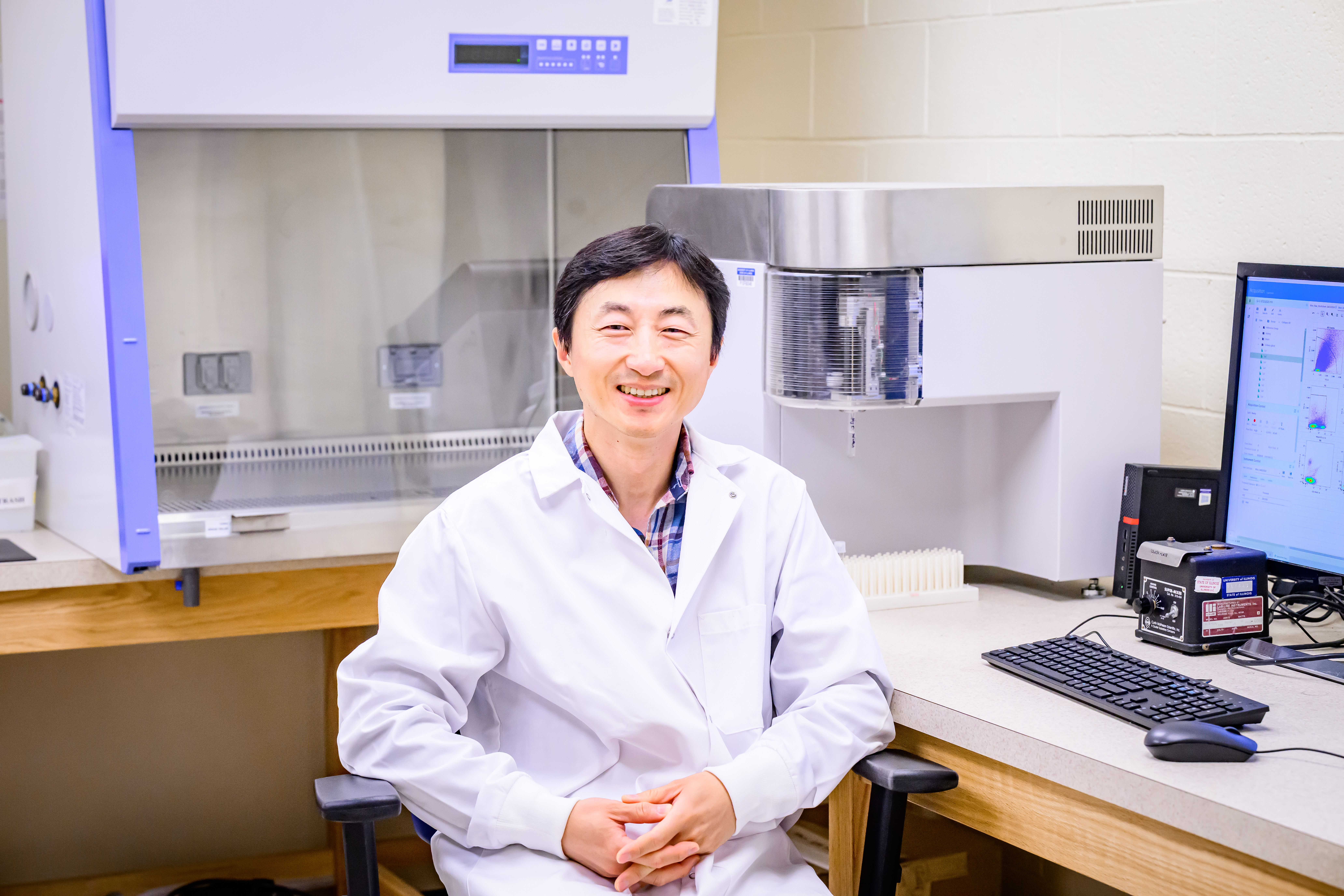
Dr. Taejoon Won, an assistant professor in the Department of Pathobiology, joined the faculty in 2023. While a postdoctoral fellow at Johns Hopkins University in the lab of Dr. Daniela Cihakova, he developed novel mouse model for a type of autoimmune myocarditis. He holds 10 patents.
Using about 60 words, how would you explain your main area of research focus to someone sitting next to you on an airplane?
My research is all about immunology, particularly autoimmune responses in the heart. The best example is myocarditis, which became a major medical concern during COVID-19 and following mRNA vaccination. I investigate how the immune system protects the heart from both infectious threats and autoimmune damage. This work is essential for developing better diagnostic and therapeutic strategies.
How will your work impact quality of life and benefit society both locally and globally?
Inflammatory heart diseases are life-threatening conditions worldwide and can lead to heart failure, heart attacks, and sudden cardiac death. However, the mechanisms underlying these diseases remain poorly understood, making clinical management challenging. By uncovering the immune mechanisms that drive or block harmful cardiac inflammation, our work can enable earlier and more accurate diagnosis and identify novel therapeutic targets. Ultimately, this research will reduce the clinical and socioeconomic burden of cardiovascular disease.
What excites you most about the future of research in your field?
I’m excited about integrating cutting-edge immune profiling technologies, computational biology, and systems immunology to build a more complete picture of how immune responses shape cardiac inflammation. These emerging tools bring us closer to personalized, mechanism based interventions that could transform how inflammatory heart disease is diagnosed and treated.
What tools are critical to the work you do?
Our research depends on a combination of advanced immunological assays (flow cytometry and single-cell RNA sequencing), mouse models of disease, and computational tools for analyzing complex immune datasets. Comprehensive bioinformatics and imaging platforms help us link molecular events with cellular and tissue-level outcomes.
How has the broader U. of I. research community factored into your success?
The University’s collaborative environment and access to shared core facilities have been invaluable to our work. My collaboration with Dr. Matsumoto within our department has deepened and refined our understanding of basic concepts of immunology. In addition, regular participation in the Tumor Immunology Working Group at the Cancer Center at Illinois and collaborations with colleagues there have helped shape new research directions and provided intellectual and technical resources to advance our studies.
What publication are you most proud of?
I’m most proud of the paper titled “Cardiac myosin-specific autoimmune T cells contribute to immune-checkpoint-inhibitor-associated myocarditis,” published in Cell Reports (2022). This study was among the first to provide mechanistic insights into how immune checkpoint inhibitors, a new generation of cancer therapies, can trigger cardiac inflammation. Our findings laid the foundation for the current working model in the field and guided follow-up investigations by clinicians and researchers worldwide.
If your work depends on collaborations with people in other fields of study, what are those fields?
My research is highly interdisciplinary. I collaborate closely with experts in immunology, rheumatology, physiology, computational biology, imaging, bioengineering, and clinical cardiology to integrate mechanistic insights with translational and clinical perspectives.
More about Taejoon Won
Taejoon Won
Assistant Professor
Department of Pathobiology
Education
- Ph.D. in Immunology, Laboratory of Host Defense Modulation, College of Pharmacy, Chung-Ang University, Seoul, South Korea (Advisor: Kwang Woo Hwang, Ph.D. and Do-Ik Lee, Ph.D.)
- M.S. in Immunology, Department of Immunology, College of Pharmacy, Chung-Ang University, Seoul, South Korea (Advisor: Do-Ik Lee, Ph.D.)
- B.S. in Pharmacy, College of Pharmacy, Chung-Ang University, Seoul, South Korea
Other Positions
- Postdoctoral Fellow, Division of Immunology, Department of Pathology, Johns Hopkins University School of Medicine, Baltimore, Maryland
- Postdoctoral Fellow, Department of Microbiology and Immunology, University of Michigan Medical School, Ann Arbor, Michigan