Dr. Ben Blair earned a bachelor’s degree in mechanical engineering, then pivoted to a veterinary degree to realign his career with his agricultural roots and interests. He joined the college faculty in 2023, the year after completing his PhD. His expertise in engineering and veterinary medicine allows him to address problems in animal health and production from a multidisciplinary perspective.
Using about 60 words, how would you explain your main area of research focus to someone sitting next to you on an airplane?
My research focuses on understanding how infectious diseases move through livestock systems and how modern computational tools can be used to manage that risk more effectively. I work at the intersection of field epidemiology and technology, integrating animal movement data, transportation networks, and farm practices into network and AI-based models. The goal is to make complex disease systems understandable and actionable for real-world decision-making.
How will your work impact quality of life and benefit society both locally and globally?
At its core, this work is about protecting animal health, food security, and the people whose livelihoods depend on both. By improving how livestock diseases are detected, predicted, and controlled, we can reduce economic losses, limit unnecessary animal suffering, and strengthen the resilience of food systems. Locally, this supports better decision-making for producers and veterinarians. Globally, it contributes to preparedness for emerging and transboundary diseases.
What excites you most about the future of research in your field?
What excites me most is how advances in AI and data availability are reshaping disease modeling. The field is moving from static, retrospective analyses toward dynamic systems that support predictive and scenario-based decision-making. The ability to build digital representations of livestock systems and test interventions virtually before they are implemented on farms has enormous scientific and practical potential.
What tools are critical to the work you do?
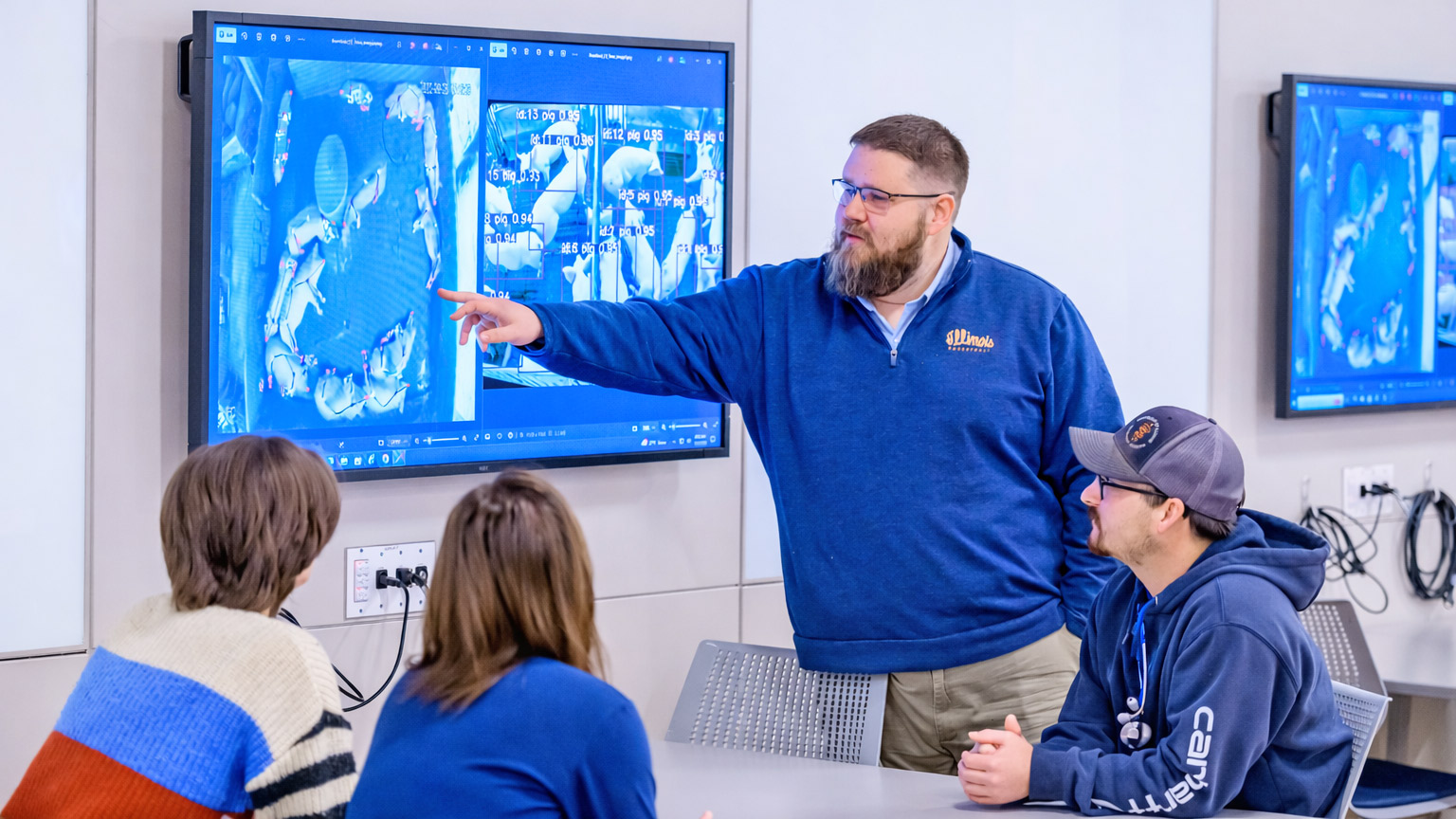
My work depends on a combination of strong field data and advanced computational tools. This includes large, integrated datasets, high-performance computing, and analytical methods such as network analysis, simulation modeling, and machine learning, including graph neural networks. Equally important are the data pipelines and collaborative frameworks that allow information from farms, industry, and regulators to be integrated responsibly.
What publication are you most proud of?
The publication I am most proud of is my first first-author paper describing the U.S. cull sow marketing network. That project was formative and showed me how systems-level data could reveal disease risks that are not apparent through traditional approaches. It continues to generate interest years later and remains a foundation for ongoing work. That early effort has since expanded into a broader portfolio that includes advanced disease modeling and AI-focused research, with multiple manuscripts currently under review or in final submission.
If your work depends on collaborations with people in other fields of study, what are those fields?
My research is inherently collaborative and draws on expertise from multiple fields. I have worked closely with peers in veterinary medicine, computer and data science, engineering, agriculture, and animal production systems. While many of these collaborations are new and still growing, collaborations are essential for ensuring that technology-driven approaches remain biologically sound, computationally rigorous, and operationally relevant.
More about Ben Blair
Ben Blair
Assistant Professor
Department of Veterinary Clinical Medicine
Education
- PhD, Pathobiology, specializing in epidemiology, University of Illinois
- DVM, University of Illinois
Other Positions
- Merck Animal Health Ventures, Consultant, Madison, NJ
- Postdoctoral Research, University of Minnesota College of Veterinary Medicine