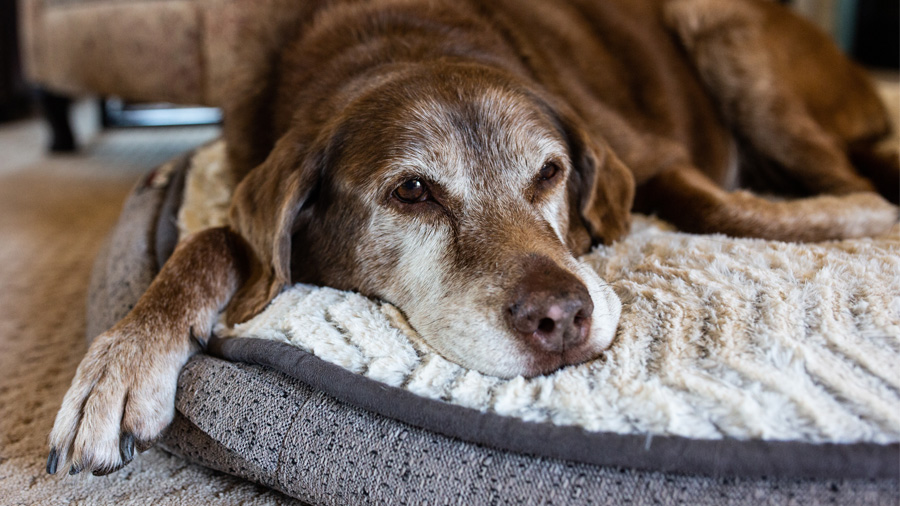
It’s easy to chalk up small changes in our dogs to aging. Maybe they’re drinking more water, asking to go outside more often, or losing a little hair. But in some cases, these subtle shifts can point to an underlying medical condition called Cushing’s disease, also known as hyperadrenocorticism.
“Cushing’s disease is caused by chronic, excessive exposure to cortisol,” explains Dr. Alyssa Baratta-Martin, a primary care veterinarian at the University of Illinois Veterinary Teaching Hospital in Urbana. Cortisol is a hormone produced by the adrenal glands, which sit near the kidneys and play an important role in stress response, metabolism, and immune function.
Causes of Cushing’s Disease
In dogs with Cushing’s disease, cortisol levels remain consistently elevated. This can happen either because the body is producing too much cortisol on its own or, less commonly, due to long-term exposure to steroid medications.
In the majority of naturally occurring cases–about 85%–the problem originates in the pituitary gland in the brain.
“With pituitary-dependent Cushing’s disease, a tumor in the pituitary overstimulates the adrenal glands, causing them to produce excess cortisol,” says Dr. Baratta-Martin. In other cases, the adrenal gland itself contains a tumor responsible for overproduction.
Cushing’s disease most commonly affects middle-aged to older dogs, and its symptoms often develop gradually. Common signs include increased thirst and urination, increased appetite, panting, lethargy, and hair loss or thinning. Because these changes tend to occur slowly, owners may assume they are a normal part of aging.
However, untreated Cushing’s disease can have real consequences.
“Over time, excess cortisol can significantly impact a dog’s quality of life,” Dr. Baratta-Martin explains. Dogs with untreated Cushing’s are at higher risk for recurrent infections such as urinary tract or skin infections, urinary incontinence, high blood pressure, and even diabetes mellitus.
Veterinarians may also notice physical and laboratory changes that raise suspicion. A classic finding is a “pot-bellied” appearance, along with abnormalities on routine bloodwork, such as elevated cholesterol, increases in a liver enzyme called alkaline phosphatase (ALP), or dilute urine. Certain patterns in white blood cell counts, known as a stress leukogram, can also point toward excess cortisol when they appear in a relaxed, otherwise calm dog.
Diagnosing Cushing’s Disease
Because the signs of Cushing’s disease overlap with many other conditions, diagnosis usually requires multiple steps.
“We typically start with routine lab work, like blood tests and a urinalysis, to rule out more common diseases that can cause similar symptoms,” says Dr. Baratta-Martin. If results suggest further investigation is needed, additional endocrine testing may follow.
Determining whether a dog has pituitary-dependent or adrenal-dependent Cushing’s is an important part of the process. While pituitary-dependent disease is far more common, identifying adrenal tumors is critical, as they may be benign (non-cancerous) or malignant (cancerous) and can affect treatment decisions.
Treating Cushing’s Disease
Most dogs with Cushing’s disease are managed medically, although surgical options exist in select cases.
“The goal of treatment is always improvement in quality of life,” Dr. Baratta-Martin emphasizes. Successful therapy often leads to reduced thirst and appetite, fewer accidents in the house, decreased panting, and improved energy levels.
Medical treatment is typically lifelong and requires careful monitoring, especially early on. Commonly used medications include trilostane (Vetoryl) and mitotane (Lysodren). Frequent bloodwork during the first few months helps ensure cortisol levels are controlled without being suppressed too much, which could lead to another serious condition, called Addison’s disease. Once stabilized, most dogs are monitored every four to six months.
Although Cushing’s disease can look like “normal aging” at first, it doesn’t have to mean declining quality of life.
“When a dog’s quality of life is affected by Cushing’s disease, treatment can make a huge difference,” says Dr. Baratta-Martin. “Discussing changes you’re noticing with your veterinarian is the first step in determining whether a diagnostic workup is needed.”
If something about your dog’s behavior or health feels off, even subtly, it’s worth asking the question. Sometimes, addressing what seems like aging can lead to meaningful improvement and more comfortable, happy years together.
By Julia Bellefontaine