This message will appear in the Illinois State Veterinary Medical Association Epitome.
By 1960, human brucellosis had declined dramatically from its peak of 6,321 U.S. cases in 1947, thanks to coordinated efforts among government, farmers, veterinarians, and physicians. But many zoonotic diseases remained: Rocky Mountain spotted fever, Chagas disease, and trichinosis to name just a few.
At the time, zoonotic disease research often existed in a “no man’s land” between human and veterinary medicine. It was in this context that our college established the Center for Zoonoses Research on a forward-thinking premise: complex health challenges require expertise across disciplines—from veterinary and human medicine to ecology, epidemiology, meteorology, sociology, and beyond.
That premise is even more relevant today. Recent threats such as cryptosporidiosis, West Nile virus, COVID-19, hantavirus, highly pathogenic avian influenza, and antimicrobial resistance underscore how essential coordinated responses are for protecting both public health and the agricultural systems veterinarians support every day.
Center for Zoonoses Research in 2026
To meet these challenges, the college is reinvigorating the Center for Zoonoses Research with new leadership and renewed focus. Earlier this year, we named three scientific co-directors:
- Dr. Ying Fang, distinguished professor specializing in diagnostic testing and vaccine development
- Dr. Gireesh Rajashekara, associate dean for research and advanced studies
- Dr. Brenda Wilson, professor of microbiology
In April, a kickoff event brought together faculty members and trainees to highlight work across the four core research areas in CZR:
- Emerging pathogens and diagnostic technologies
- Microbial and data science
- Vaccines, therapeutics, and disease models
- Food safety and antimicrobial resistance
Their presentations demonstrated how CZR connects discovery to real-world health outcomes—advancing tools and knowledge that ultimately support veterinary practice, public health, and food system resilience.
As Dr. Rajashekara noted, “Our work spans the One Health spectrum, recognizing that human, animal, and environmental health are deeply interconnected. Whether mitigating zoonotic risks, improving diagnostics, or addressing antimicrobial resistance, CZR aims to deliver practical solutions for society.”
Next steps for CZR include expanding its ranks. Researchers within the University of Illinois and beyond are invited to apply for membership. The center will provide an overarching framework for dynamic interdisciplinary research, with priority given to training and mentorship of the next generation of researchers who will tackle global health challenges.
As this work progresses, I look forward to sharing updates with you. In the meantime, I invite you to learn more about the Center for Zoonoses Research at vetmed.illinois.edu/research/czr/.
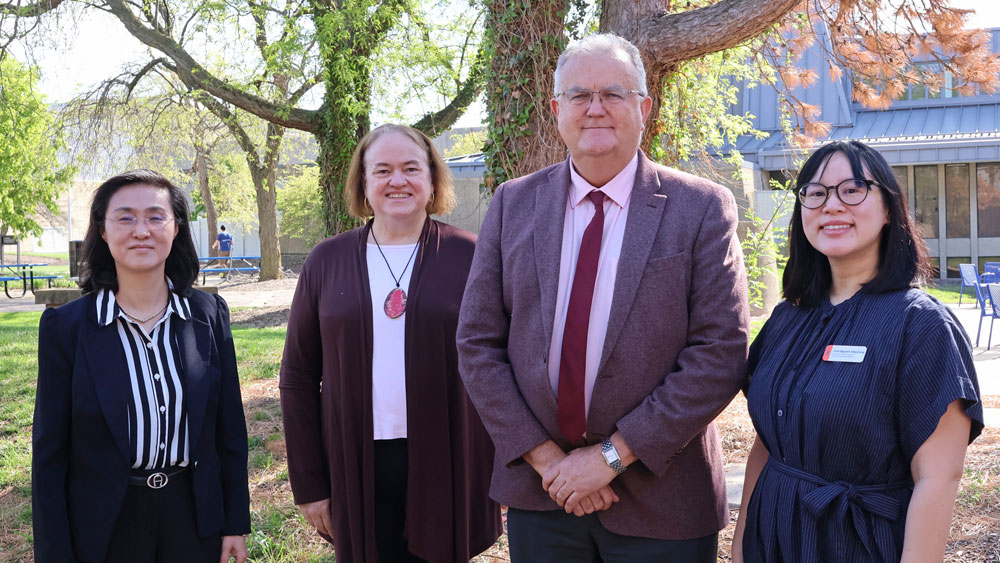
Shown in the featured image: Scientific co-directors Dr. Ying Fang and Dr. Brenda Wilson (Dr. Gireesh Rajashekara was unable to attend the kickoff); Dean Peter Constable, director of the Center for Zoonoses Research; and Dr. Julie Nguyen-Edquilang, program manager.