Research Partners Sought
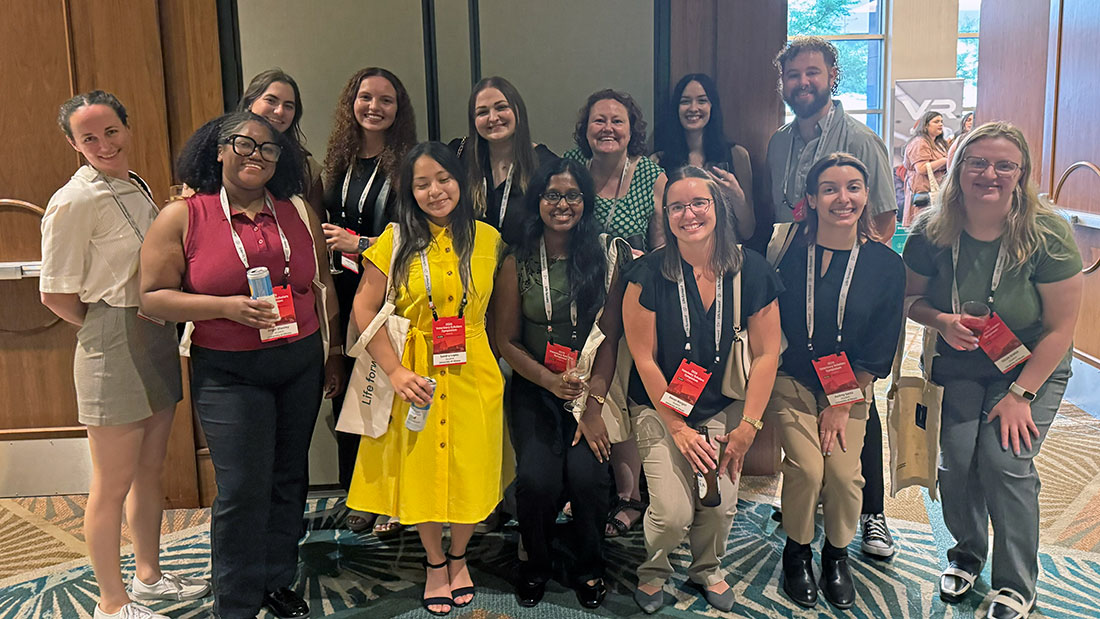
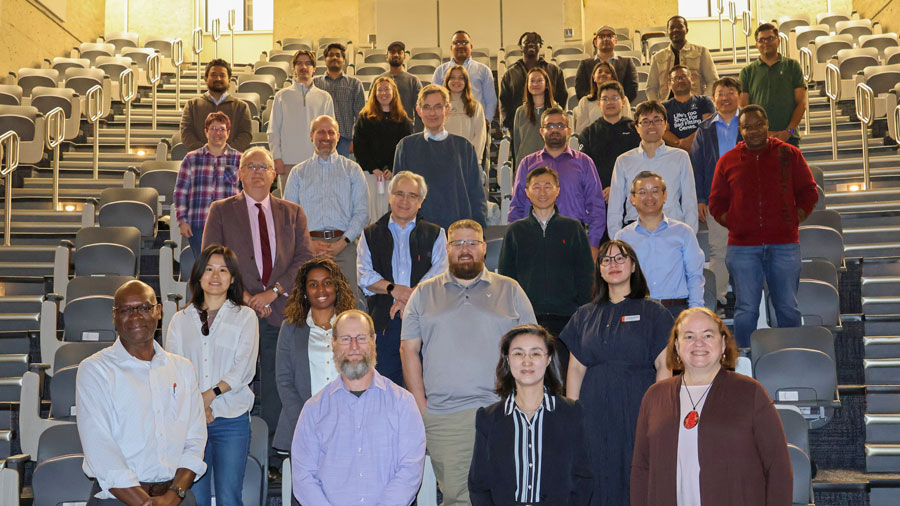
More than 65 years after the University of Illinois Board of Trustees established the Center for Zoonoses Research (CZR), its mission remains central to human and animal health. In April, the College of Veterinary Medicine held a kickoff event to reinvigorate the center.
“When CZR was established in 1960, the concept of interdisciplinary research in academia was relatively novel,” said Dr. Peter Constable, dean of the College of Veterinary Medicine, who serves as director of CZR. “It was very forward-thinking—and essential—to bring a range of expertise to bear on the problem of zoonoses.”
Zoonoses are diseases transmitted between animals and humans. Diseases of interest at the founding of the center included parainfluenza viruses of cattle and humans, leptospirosis, and rabies. The center’s early goals also sought to prevent “tragic outbreaks and great epidemics,” an effort which would require “the capabilities of physicians, veterinarians, public health workers, zoologists, biologists, ecologists, epidemiologists, biometricians, meteorologists, sociologists.”
Over the decades, emerging threats such as cryptosporidiosis, West Nile virus, COVID-19, highly pathogenic avian influenza (HPAI), foodborne illnesses, and antimicrobial resistance have reinforced the need for cross-disciplinary teamwork in this area.
CZR Leadership
“In expanding the work and membership of CZR, we leverage cross-disciplinary expertise and cutting-edge technologies in a united effort to protect public health and the agricultural economy,” said Dr. Ying Fang, distinguished professor in diagnostic test and vaccine development at the College of Veterinary Medicine.
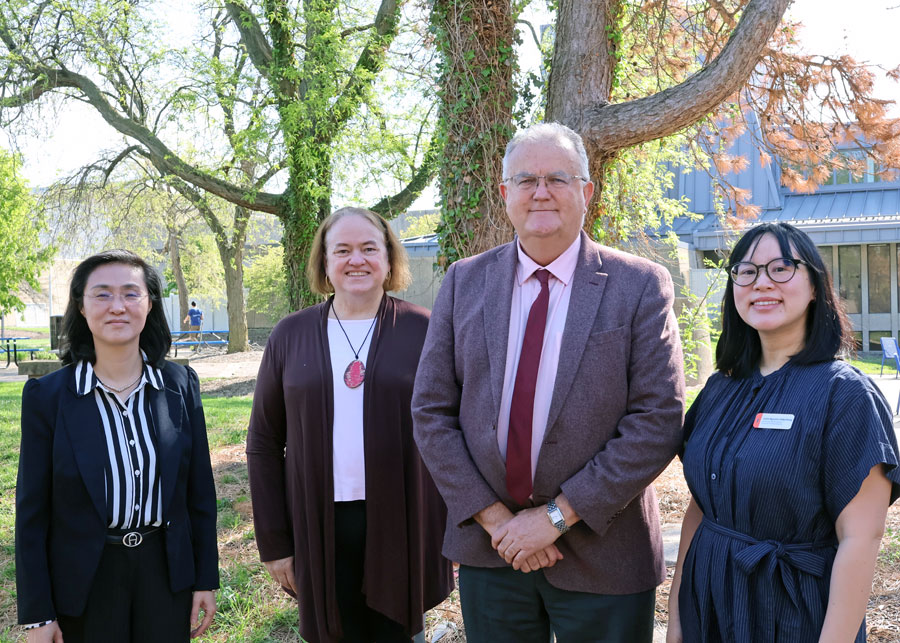
Dr. Fang is one of three scientific co-directors of the center, along with Dr. Gireesh Rajashekara, associate dean for research and advanced studies at the veterinary college, and Dr. Brenda Wilson, professor of microbiology in the College of Liberal Arts and Sciences.
In addition to these leaders, an advisory board and a scientific executive committee provide strategic guidance for CZR. Dr. Julie Nguyen-Edquilang serves as program manager.
This structure supports the research done by members—faculty, trainees, and partners across the University of Illinois system and beyond—whose disciplines span molecular biology to ecosystem science.
Four Core Areas
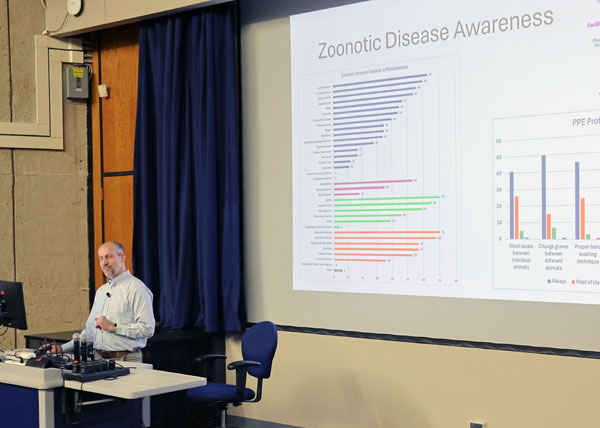
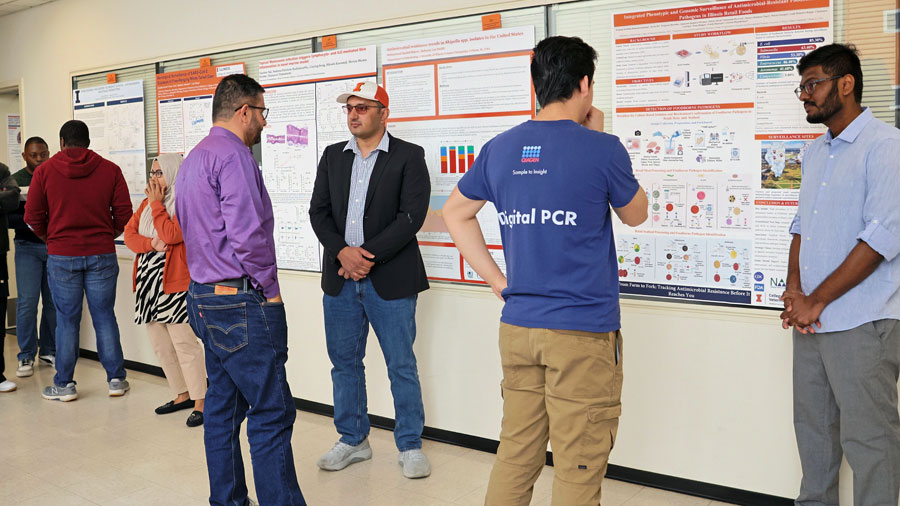
At the kickoff event, faculty representatives from each of CZR’s four core research areas presented ongoing work. This broad overview demonstrated how the center connects scientific discovery to real-world implications.
Core A: Emerging Pathogens and Diagnostic Technologies
Researchers in this core are developing tools to detect and understand new and evolving infectious threats. Efforts focus on developing nanosensor tests for rapid detection of coronavirus infection, identifying previously unknown viruses—such as the discovery of influenza D virus—and advancing surveillance strategies that allow earlier detection of emerging pathogens. This core plays a critical role in preventing outbreaks that can disrupt food systems and spill over into human populations.
Core B: Microbial and Data Science
Core B integrates microbiology with advanced data analysis to understand how microbes influence health across species. Research on the microbiome is revealing how environmental exposures—such as pesticides—alter microbial communities and affect disease risk. Our collaborative team is integrating high-resolution multi-omics and Bayesian phylodynamic modeling to map the precise epigenetic and transcriptional pathways through which distinct viral lineages execute host metabolic reprogramming.
Core C: Vaccines, Therapeutics, and Disease Models
Work in this core focuses on translating biological insights into practical medical and veterinary solutions. Researchers are developing next-generation vaccines using novel vaccine platforms to protect against zoonotic pathogens. Other projects focus on improving understanding of how host defenses and pathogen factors interact. These insights inform effective treatment strategies.
Core D: Food Safety and Antimicrobial Resistance
This core addresses some of the most pressing threats to global health and food systems. Researchers are studying antimicrobial resistance in wildlife and agricultural settings, identifying how resistant genes spread across environments and species. Clinical and translational work includes developing new therapeutics targeting parasites and drug-resistant organisms. These efforts directly support safer food production and more effective clinical care.
From Science to Societal Impact
A defining feature of CZR is its emphasis on translational research—ensuring that discoveries move beyond the laboratory to deliver tangible benefits. By collaborating with public health agencies, industry partners, and practitioners, the center aims to improve disease surveillance, reduce outbreaks, and strengthen the resilience of food systems.
“Our work spans the One Health spectrum,” said Dr. Rajashekara, “recognizing that human, animal, and environmental health are deeply interconnected. Whether mitigating zoonotic transmission risks, improving diagnostics, or addressing antimicrobial resistance, CZR aims to deliver practical solutions for society.”
Dr. Wilson, who additionally holds faculty appointments in the veterinary college, the Carle Illinois College of Medicine, and the Office of the Vice Chancellor of Research and Innovation, noted, “CZR is an important community for collaborative, cross-disciplinary research critical to addressing some of society’s greatest challenges in infection biology, one health, and zoonoses research. I am honored to be part of this effort.”
Call for Collaboration
The recent kickoff event marked the beginning of a new chapter for the Center for Zoonoses Research—one defined by collaboration, innovation, and urgency. With renewed momentum, CZR is actively inviting faculty, researchers, trainees, and collaborators to become members. Membership is open to individuals within the University of Illinois as well as external institutions, with participants selecting one or more core areas aligned with their expertise.
By joining CZR, members gain access to a dynamic interdisciplinary network, opportunities for collaborative funding, and a platform to translate research into real-world impact. The center also prioritizes training and mentorship, creating pathways for graduate students and postdoctoral researchers to contribute to critical global health challenges.
Researchers interested in joining this growing community dedicated to advancing health at the human-animal-environment interface are encouraged to apply for membership.
For more information and to apply, visit: vetmed.illinois.edu/research/czr/