Citizens of Illinois have been asking whether hantavirus could pose a concern for their pets. The following information was prepared and reviewed by faculty members Drs. Will Sander, Yvette Johnson-Walker, and Leyi Wang at the University of Illinois College of Veterinary Medicine.
What are hantaviruses?
Hantaviruses are a group of viruses that are carried by rodents and can rarely infect and cause serious disease in people worldwide. People get hantavirus from contact with rodents, such as rats and mice.
Contact frequently occurs via inhaled dust that has been contaminated by rodent urine, droppings, and saliva. This type of contact typically happens while the person is cleaning rodent-infested homes or outbuildings. Hantavirus can also spread through a bite or scratch from a rodent, but this is rare.
Hantaviruses can cause hantavirus pulmonary syndrome (HPS), the illness recently reported on the South American cruise ship. Two main strains of hantavirus include Sin Nombre and Andes.
- Sin Nombre virus occurs primarily in the Western US. It is spread by deer mice and white footed mice. There have only been 7 reported human cases in Illinois.
- Andes hantavirus is found predominantly in South America and the reservoir rodent species is the pygmy long-tailed rice rat (Oligoryzomys longicaudatus). Andes virus is the one associated with the current cases from the cruise ship. It is the only hantavirus known to spread person to person. Typically, this type of spread is rare and requires prolonged close contact.
How are hantaviruses spread?
Hantaviruses are spread by rodents’ body fluids and excrement. People mostly contract hantavirus by breathing in the virus. Most hantaviruses found in North, Central, and South America can cause hantavirus pulmonary syndrome (HPS). Andes virus, which is found in South America, has the rare potential for person-to-person transmission.
Anyone who has contact with hantavirus-carrying rodents, or their droppings, urine, saliva, or nesting material, is at risk of HPS. Rodent infestation in and around the home remains the primary risk for hantavirus exposure. Even healthy individuals are at risk for HPS infection if they have contact with the virus.
Where are hantaviruses found?
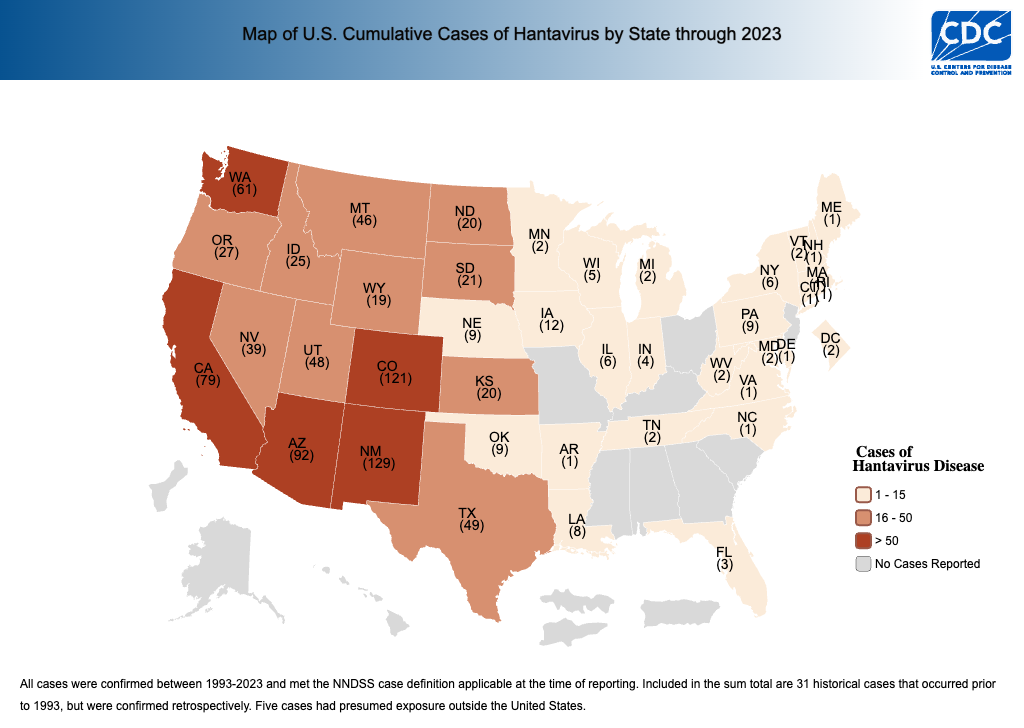
Various hantaviruses are found in the United States. Most of these cause hantavirus pulmonary syndrome (HPS), which primarily affects the lungs, and most HPS cases occur in the Western region of the United States. Non-HPS hantavirus infection can also occur, where patients experience non-specific viral symptoms but no cardiopulmonary symptoms. The hantaviruses found throughout the United States are not known to spread between people.
What are clinical symptoms?
Hantavirus pulmonary syndrome (HPS) initially causes flu-like symptoms that can progress to more severe illness where people have trouble breathing. It’s important for people with HPS to begin treatment as early as possible to improve their chances of recovery. HPS is fatal in nearly 4 in 10 people who are infected. Andes virus can cause HPS and is the only type of hantavirus that is known to spread person-to-person.
What wild animals carry hantavirus?
Wild rodents are the reservoir for hantavirus. In Illinois, the Peromyscus species of mice, which includes the deer mouse and the white footed mouse, are the reservoirs for the Sin Nombre virus. These mice are typically found in rural, suburban, or wooded areas, not typically inside urban homes. These rodents shed the virus into the environment via their feces, urine, and saliva.
What domestic animals can get hantavirus?
Clinical illness from Sin Nombre hantavirus is not found in gerbils, hamsters, guinea pigs, non-rodent pets, or livestock. However, cats and dogs could transport infected rodents to people or into their homes or outbuildings.
How can I protect my pet rodent from hantavirus?
Pet rodents should be kept away from wild rodents and their habitat.
How can I protect myself from hantavirus?
- Control and prevent rodents from coming into your home or outbuildings.
- Seal any gaps ¼ inch or larger to prevent entry into the house or outbuildings.
- Keep food, animal feed, and bird seed in rodent-proof containers to avoid attracting rodents.
- Keep tight-fitting lids on garbage cans.
- Remove brush and debris around your home to eliminate potential nesting sites.
- Do not touch rodents or objects where rodents have been with bare hands and then touch your nose or mouth.
- Avoid bites or scratches from rodents.
- Do not eat food contaminated by rodents.
- Use wet cleaning methods to clean up areas where rodents have been.
- Spray disinfectant on the area and allow it to sit for at least 5 minutes and do not use sweeping, vacuuming, or blowing to clean up areas where rodents have been.
Resources
Additional information about hantavirus and about removing mice infestations and dead rodents: