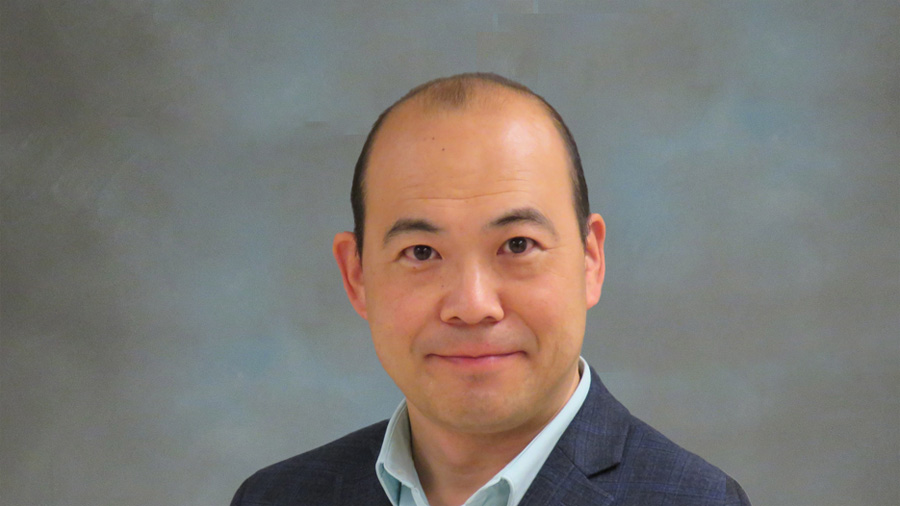
Dr. Inoue joined the College of Veteirnary Medicine in 2016. In 2021, the college recognized him with the Zoetis Animal Health Award, given to a faculty member for research at the University of Illinois that has attained national recognition.
Using about 60 words, how would you explain your main area of research focus to someone sitting next to you on an airplane?
The immune system normally protects us from infections, but in conditions like autoimmune and neurodegenerative diseases, it can mistakenly attack the brain. My lab studies why immune cells shift from being protective to harmful and how they disrupt brain function, including memory, mood, and movement. Understanding this helps us identify new ways to protect the brain.
How will your work impact quality of life and benefit society both locally and globally?
Our work improves quality of life by identifying therapies that protect brain function while correcting harmful immune responses. By integrating neuroscience and immunology, we target diseases that impair mood, cognition, and movement in multiple sclerosis and neurodegenerative disorders. Through collaborations, we also develop innovative drugs with the potential to prevent disease progression and restore function, benefiting patients and healthcare systems locally and globally.
What excites you most about the future of research in your field?
What excites me most is the shift toward brain-specific therapies that precisely target immune-neuron interactions without compromising systemic immune protection. Current immune-targeting treatments carry infection risks, highlighting the need for strategies that focus on the central nervous system. Advances that restore neuronal circuit function while selectively modulating pathogenic immune activity have the potential to transform treatment for autoimmune and neurodegenerative diseases and redefine how we protect both brain and body function.
What tools are critical to the work you do?
A critical tool in my work is the development of disease-relevant rodent models. When existing rodent models do not adequately capture clinical symptoms, we create new models tailored to the mechanisms we aim to study. Although model development is challenging, it is essential for uncovering previously unknown disease mechanisms and identifying therapeutic targets. To date, we have developed three novel mouse models that closely mimic key clinical features of human disease.
How has the broader U. of I. research community factored into your success?
The broader University of Illinois research community has been essential to my success. My home department, Comparative Biosciences, provides strong intellectual and logistical support for my lab. In addition, shared research infrastructure—including animal facilities, DNA services, metabolomics, proteomics, cytometry, microscopy, and omics cores at the Carl R. Woese Institute for Genomic Biology, the Roy J. Carver Biotechnology Center, and the Beckman Institute—has been critical to our work. Equally important are collaborations with faculty across my department and other units, without which many of our studies would not be possible.
What publication are you most proud of?
The publication I am most proud of is our 2021 Nature Communications paper demonstrating that early-life trauma induces interferon-β resistance and neurodegeneration in a multiple sclerosis model through impaired β1-adrenergic signaling (Khaw YM, Majid D, Oh S, Kang E, Inoue M. Nature communications.12, no. 1: 1-16, 2021). The revision process was particularly challenging due to COVID-19 restrictions on research time and animal use. Despite these limitations, my lab completed the study independently through careful planning, strong teamwork, and intense focus, making the achievement especially meaningful.
If your work depends on collaborations with people in other fields of study, what are those fields?
My work relies heavily on collaborations across multiple disciplines to uncover disease mechanisms and develop effective therapeutics. We work closely with researchers in materials engineering, bioengineering, biochemistry, and pharmacy, allowing us to integrate diverse expertise and translate fundamental neuroimmunological discoveries into therapeutic strategies.
More about Makoto Inoue
Makoto Inoue
Associate Professor
Department of Comparative Biosciences
Education
- Ph.D., Nagasaki University
- MS, Tohoku College of Pharmacy
Affiliate Positions
- Affiliate, Personalized Nutrition Initiative, Institute for Genomic Biology
- Associate Professor, Beckman Institute
Previous Positions
- Research Scientist, Duke University School of Medicine
- Associate Professor, Nagasaki University Graduate School of Biomedical Sciences