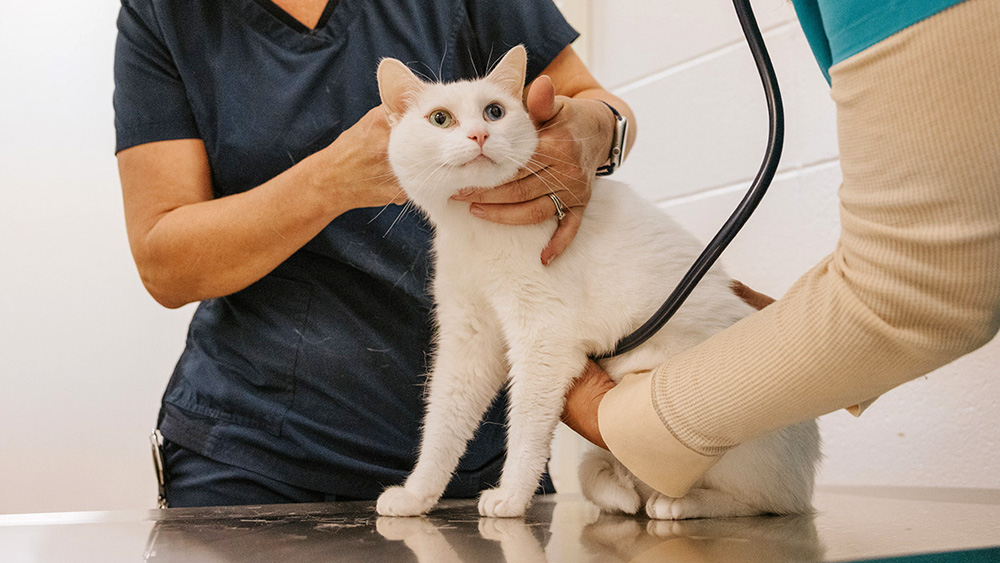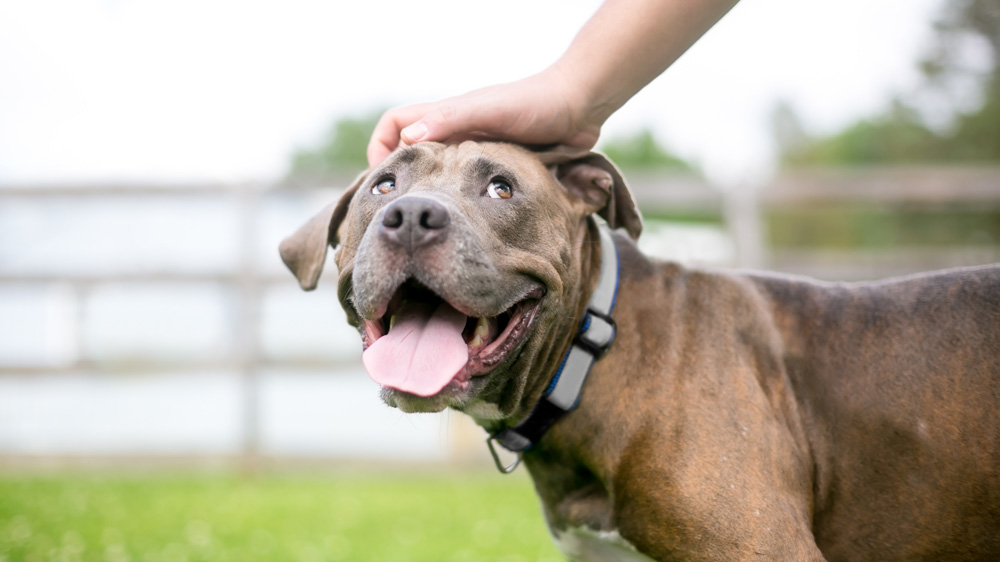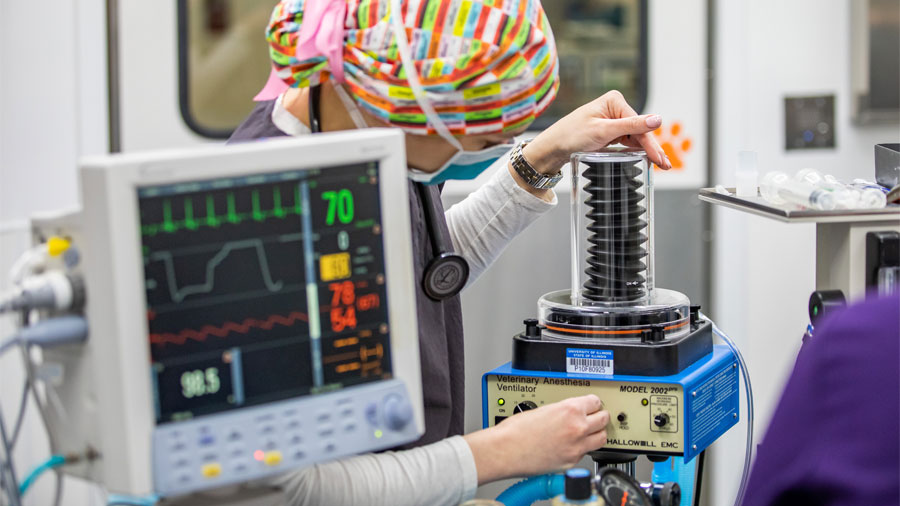
Experts at the University of Illinois Veterinary Teaching Hospital want to improve outcomes for female dogs by making their most common surgical procedure—the spay—less painful. Dr. Laura Marti, a veterinarian pursuing specialization in small animal surgery, devised a study to find out if pain relief medication administered at the incision site controls post-surgical pain as well as when it is given as an injection into the abdominal muscles.
“The downside to injecting the drug internally is that it requires an anesthesiologist, whereas a surgeon can administer the drug at the incision site, making the procedure possible in practices without anesthesiologists,” says Dr. Marti. Additionally, pain medication delivered at the surgery site limits the effects of the drug throughout the body.
If you have a dog that needs a spay (the surgical removal of female reproductive organs routinely used for sterilization in pets), you can help advance knowledge about pain control. The study combines the spay with a gastropexy, a simple procedure that eliminates the risk of bloat, a life-threatening condition any dog could get.
Incentives for Participating in the Trial
- Costs of hospitalization and all pain medications covered. Clients pay only for the cost of the spay and gastropexy surgery and for blood work, unless they can provide recent blood test results from their referring veterinarian.
- Laparoscopic approach, with much smaller incision and faster healing. All dogs in the study will be spayed laparoscopically. This minimally invasive procedure involves small incisions through which the surgeon inserts cameras to visualize the internal organs and tools to remove the ovaries. The traditional spay involves a larger, midline incision that enables the surgeon to access the abdomen and remove the uterus and ovaries. Like the traditional spay, the laparoscopic spay eliminates the risk of pregnancy. And while it leaves the uterus intact, the removal of the ovaries greatly reduces the risk of hormone-dependent conditions such as pyometra (infected uterus) and reproductive cancers.
- Gastropexy. During the spay, all dogs will also receive a gastropexy, in which the stomach is surgically attached to the body wall. This preventive measure eliminates the risk of a life-threatening condition called gastric dilatation and volvulus (GDV), or bloat. GDV is most likely to occur in large, deep-chested dog breeds such as Great Danes, poodles, and shepherds. (If you’ve seen the movie Marley & Me, you’re familiar with the devastating potential outcomes of GDV.)
Dogs over 100 pounds have a 1 in 5 chance of developing a GDV in their lifetime. However, any breed can be affected. “When a GDV occurs, the stomach flips on itself and presses on the blood supply. It is one of the most common true, true emergencies veterinary surgeons see,” says Dr. Marti. - 24-hour pain monitoring after surgery. Dr. Marti personally monitors every participant for 24 hours after the procedure. “I basically move in with your dog in the hospital,” she says, “to fully assess them every 2 to 6 hours.” The additional level of monitoring will be reassuring for owners who are nervous about their dog’s surgery.
Eligibility and How to Enroll Your Dog
To be eligible for the study, your dog must be a healthy, unspayed female, between 6 months and 6 years old, and at least 40 pounds.
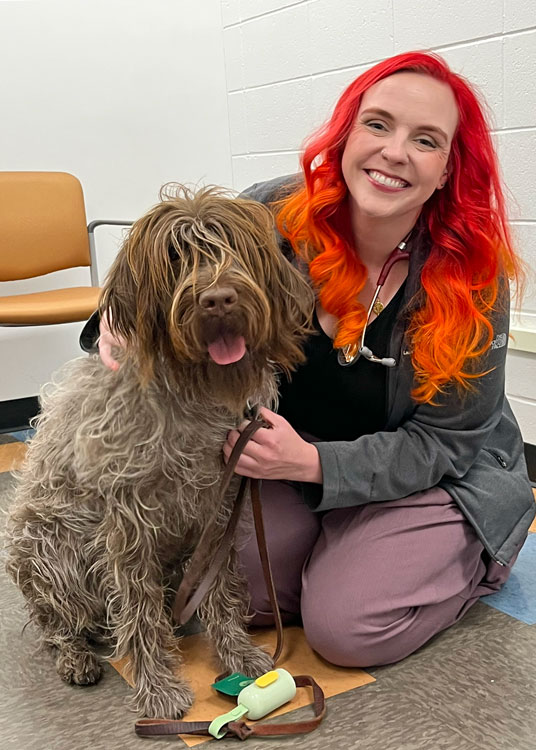
All dogs enrolled in the study will undergo a laparoscopic ovariectomy and gastropexy performed by a board-certified surgeon at the Veterinary Teaching Hospital. They will all receive Nocita®, a non-opioid local anesthetic that is released over 72 hours, providing high quality pain relief without causing systemic side effects, as many alternative drugs do.
Dogs will be randomly assigned to have the Nocita administered either:
- by an anesthesiologist using ultrasound to guide the injection into the transversus abdominis plane or
- by the surgeon, who will inject it into the incision at the end of the surgery.
Dr. Marti will assess post-operative pain levels using a scoring method that takes into account factors such as posture and vocalizations. A device called an esthesiometer collects measurements used to evaluate overall patient discomfort.
“If any dog appears to need additional pain medication for any reason, we will administer it,” assures Dr. Marti. “Medication will not be withheld for the purposes of the study, and the cost of this medication will be covered by the study.”
Participating in the study assures you of giving your dog the least invasive approach and prevention against bloat. Additionally, you will contribute to new knowledge about pain control that could help future veterinary patients. If Dr. Marti finds that pain medication administered by surgeons rather than anesthesiologists is effective, more veterinarians will be able to offer this type of pain relief.
If you have any further questions or are interested in having your dog participate in the study, please contact Rachel Dorney, certified veterinary technician, at 217-333-6808.
By Jenna Camargo