This message will appear in the Illinois State Veterinary Medical Association Epitome.
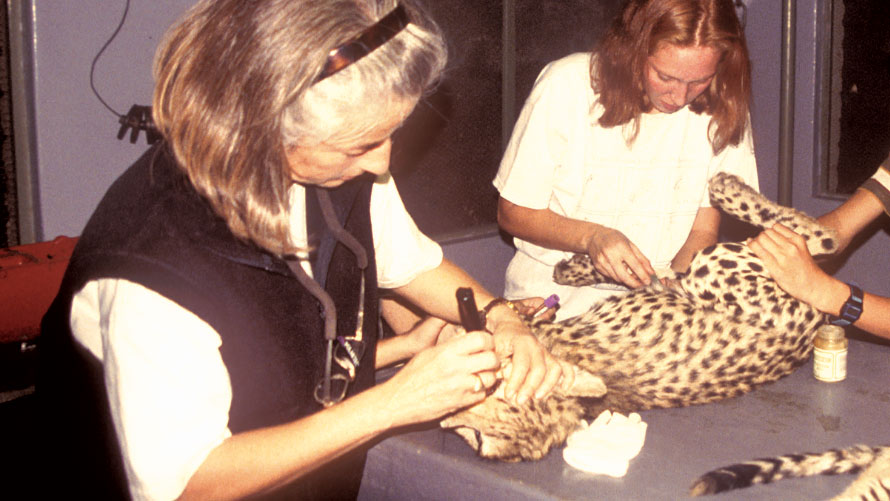
Many of you may know Dr. Yvette Johnson-Walker, a 1989 graduate of our college who returned as a faculty member in 2005. I’m pleased to share that Dr. Johnson-Walker has recently been named assistant dean for community engagement and inclusion. For those who have worked with her over the years, this appointment will come as no surprise. It formalizes and expands work she has been doing quietly, consistently, and with great impact for her entire career.
Dr. Johnson-Walker teaches courses on topics from epidemiology to “Religious Perspectives on Caring for Animals” and provides leadership in the college, state, and nationally on public health and disease-response readiness. Her influence, however, has always reached beyond the classroom and her faculty title. She has devoted endless energy to fostering a welcoming climate for students, faculty, and others who needed help finding a home within our college.
We try to meet people where they are in an equitable fashion and provide the resources they need to be successful in all walks of life.
Dr. Yvette Johnson-Walker | Assistant Dean for Community Engagement and Inclusion
In 2018, I was able to acknowledge this this essential, often invisible labor by naming her the college’s first-ever coordinator of diversity and inclusion. Her recent appointment as assistant dean reflects both the growth of that work and its importance to our college. With these added administrative responsibilities, she moved from a nine-month to a year-round role.
Why Community Engagement?
The veterinary profession grows stronger when we ensure that everyone with interest and aptitude for our field has the opportunity to pursue it. We open veterinary careers to a wider pool of talent through outreach activities, especially with school-aged children who might otherwise not have exposure to veterinary medicine.
Ultimately, our college needs to prepare veterinarians from many walks of life to better serve our society, which contains diverse perspectives and needs. By doing so, veterinary medicine remains a relevant and trusted profession.
Dr. Johnson-Walker collaborates with Dr. Sara Connolly, assistant dean for admissions and student success, on recruitment activities that encompass grade school through undergraduate learners. Yvette focuses on groups who, because of geography or income, have not had opportunities to explore a career in veterinary medicine. She engages youth in Urbana and Champaign, partnering with schools and campus and community organizations.
Dr. Johnson-Walker also oversees the outreach efforts led by Dr. Ana Valbuena with Dr. Amanda Hampton at our Medical District practice in Chicago. They visit schools, offer job shadowing, and host events at the practice. Through partnerships with ISVMA, Anti-Cruelty, and other organizations, we reach youth in Chicago, East St. Louis, and across the state.
Why Inclusion?
Dr. Johnson-Walker takes the broadest possible perspective regarding inclusiveness at our college.
“We try to meet people where they are in an equitable fashion and provide the resources they need to be successful in all walks of life,” she says. “Whether they are a person with a disability, a first-generation student, or someone from a traditionally underrepresented background, we want to create a space where everyone can find a place.”
This approach includes finding a place within the veterinary profession itself, which offers an incredible diversity in career paths, not only in terms of species and specialties but also roles in public health, research, environmental health, industry, academia, and more.
“We recognize that part of delivering a veterinary education includes looking after well-being,” Dr. Johnson-Walker says. “The veterinary curriculum is challenging, and we strive to provide support in a holistic way so students can focus on their studies.
“That means we offer resources to students who need a meal, have financial trouble, or need emergency support. We do our best to accommodate people who have children, people entering the DVM program as a second career, and people who hold a variety of spiritual or religious beliefs.”
Dr. Johnson-Walker also serves on the college leadership team and on committees at the university level and within organized veterinary medicine. In all these roles, she advocates for the needs and perspectives of those who may otherwise be overlooked.
Students Recognized Nationally for Leadership
Within the past four years, the Association of American Veterinary Medical Colleges and its industry partners have launched two national scholarship programs to recognize veterinary students who have made significant contributions to diversity within their colleges. I am proud to say that Illinois students have been named to these competitive scholarships every year.
In 2023, Theodore Berlanga was an inaugural recipient of the Merck Animal Health Diversity Leadership Scholarship. In 2024, Naomi Esquivel received the Merck scholarship and, from within the Merck recipients, the Patricia M. Lowrie Diversity Leadership Scholarship. That same year Melanie Narvaez was selected for the newly created Chewy Veterinary Leaders Program.
Last year, Vanessa Salgado was among the Chewy scholarship recipients. And this year, Javelis Marín Castro received both the Merck and the Lowrie scholarships, while Vitaly Capitaine received for the Chewy Veterinary Leaders Program. These honors recognize and provide tangible support for individuals who show great promise as future veterinary leaders.
That these students chose to attend Illinois and found success here substantiates the value of an inclusive community. They are not anomalies. Many of our students, faculty, and staff work to create a supportive environment where everyone can thrive.
I am grateful to Dr. Johnson-Walker for her decades-long dedication to making our college and the veterinary profession a more inclusive place. I look forward to her continued influence and leadership in her role as assistant dean for community engagement and inclusion.