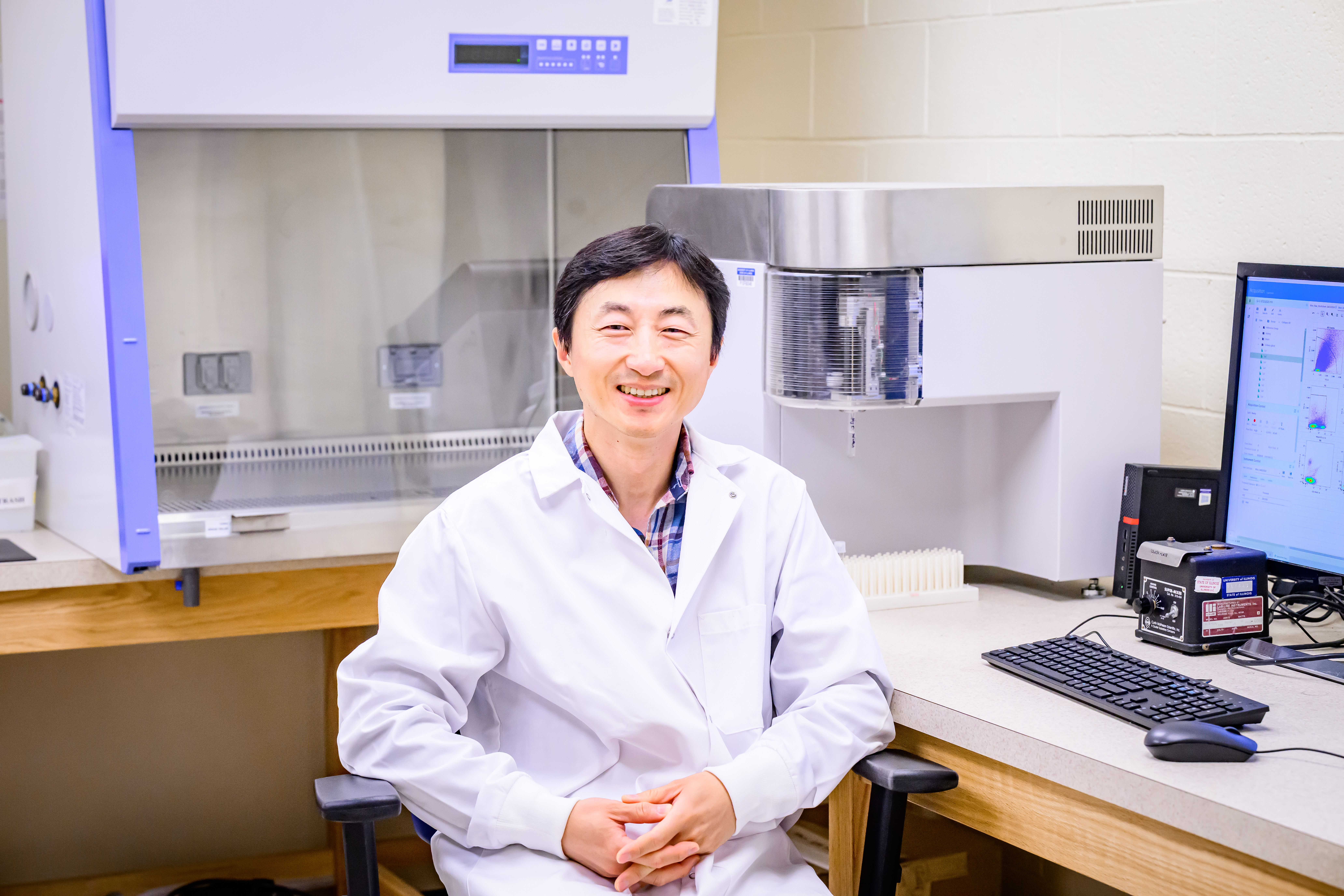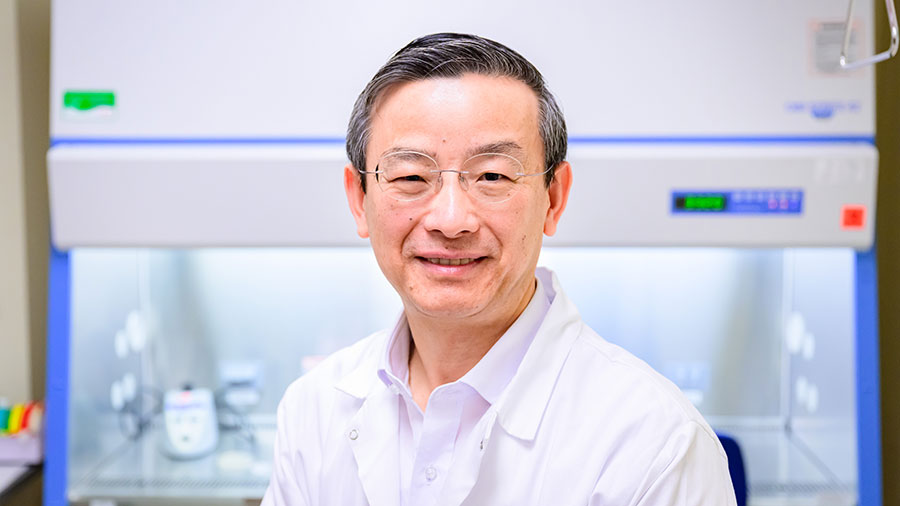
Dr. Weiping Zhang is the H.J. Detmers Chair in Veterinary Microbiology and professor in the Department of Pathobiology. Since 2018 he has had continuous funding from the National Institutes of Health to develop and produce his novel vaccines that protect against multiple strains of diarrhea-causing bacteria.
Using about 60 words, how would you explain your main area of research focus to someone sitting next to you on an airplane?
My research focus is to develop broadly protective vaccines against the leading bacteria that cause diarrheal diseases in humans and livestock animals, by using novel computational and structural biological technologies and various animal challenge models. Currently, we are developing protein-based multivalent vaccines against enterotoxigenic E. coli (ETEC), Shigella, and Vibrio cholera.
How will your work impact quality of life and benefit society both locally and globally?
Diarrheal diseases are a significant public health issue globally and are responsible for an annual death of 1.2 million people, including half of children under five years of age. Among the top ten causes of diarrheal death in children, five are bacteria, including ETEC, Shigella, and Vibrio cholerae. Currently, there are no vaccines against diarrhea caused by ETEC or Shigella, and no adequate or effective vaccines against cholera or diarrhea by V. cholerae. ETEC is also a predominant cause of neonatal diarrhea and post-weaning diarrhea in livestock animals, particularly pigs.
What excites you most about the future of research in your field?
The effort to develop vaccines against diarrheal diseases and deaths has been very challenging historically. By inventing new vaccine technologies, we can solve these major challenges and develop effective vaccines to potentially save hundreds of thousands of lives and prevent hundreds of millions of clinical cases of diarrhea each year.
What tools are critical to the work you do?
We have developed broadly protective multivalent vaccines using safe and immunogenic toxoids and toxoid fusions as vaccine antigens, an epitope- and structure-based multiepitope fusion antigen (MEFA) vaccinology platform, and animal challenge models, including pig and rabbit passive protection models.
How has the broader U. of I. research community factored into your success?
I benefit from collaborating with faculty members with expertise in structural biology and immunology, as well as from the campus research facilities, including the animal facilities.
If your work depends on collaborations with people in other fields of study, what are those fields?
Protein biology, immunology, and animal challenge.
More about Weiping Zhang
Weiping Zhang
Professor
Pathobiology
Education
- PhD, Iowa State University, Ames, Iowa
Previous Positions
- Professor, Kansas State University, Manhattan, Kansas
- Associate Professor, South Dakota State University, Brookings, South Dakota