Stethoscope, syringe, scalpel, … crayons?
Last month, faculty clinicians and residents at the University of Illinois Veterinary Teaching Hospital stepped away from their usual clinical tools to learn a different set of skills, ones designed to strengthen reflection, communication, and emotional wellbeing.
During a two-hour workshop, “The Power and Practice of Narrative Medicine,” participants explored techniques increasingly used in human healthcare and now gaining interest in veterinary medicine.
Structured Storytelling for Clinicians
Narrative medicine is a structured approach that uses reading, writing, drawing, and attentive listening to help clinicians develop skills that support empathy, communication, sound decision-making, and resilience. The process contributes to better patient care and greater satisfaction for clinicians.
“People use stories every day to make sense of the events and emotions in their lives,” said Dr. Jane Desmond, a professor of anthropology at the University of Illinois who also holds a faculty appointment in the College of Veterinary Medicine “By paying closer attention to those stories, medical practitioners can better understand how their clients frame problems, reflect meaningfully on their own experiences, and arrive at mutually achievable health solutions.”
Certified in narrative medicine through the University of Toronto Medical School, Dr. Desmond brought the workshop to Illinois with support from a grant from the American Veterinary Medical Association.
Making Peace with What Happened
Dr. Yvette Johnson-Walker, the veterinary college’s assistant dean for community engagement and inclusion, already knew that the techniques address cross-cultural gaps and help doctors better understand their patients’ point of view. She discovered that narrative medicine also proved powerful for the clinician’s emotional wellbeing.
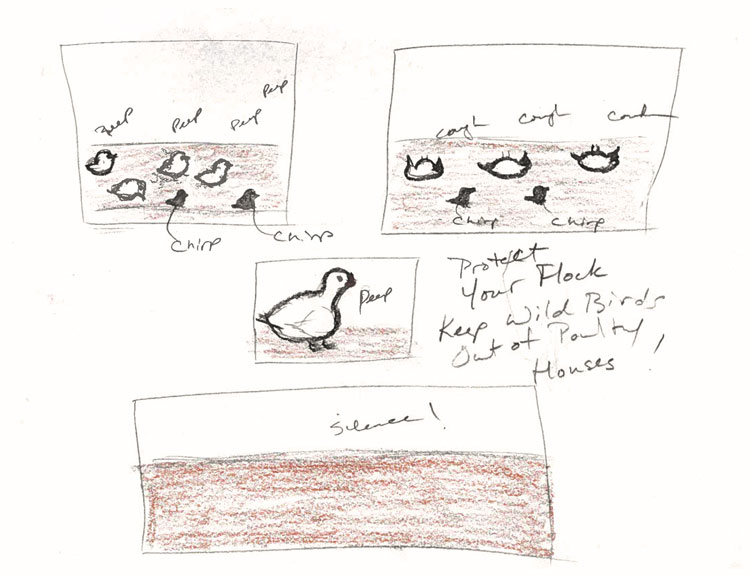
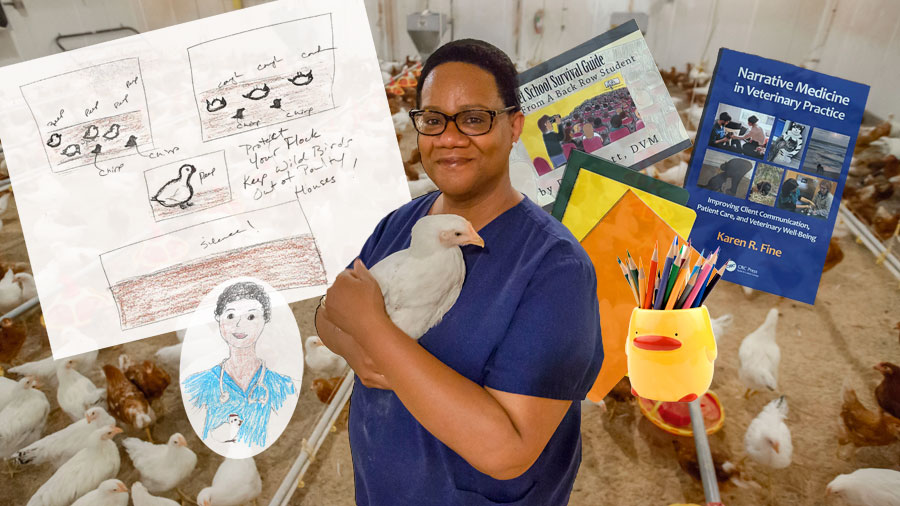
She used the workshop to reassess an experience she had early in her career. A small poultry farm had an outbreak of a reportable disease. Her impulse was to “fix things” for the farmer, but significant biosecurity deficiencies and limited finances put that out of reach.
Ultimately, after considering the welfare of the birds, the economic situation of the producer, and the risks to neighboring farms, she recognized that the kindest thing to do was to explain to the farmer that he needed to go out of business.
“Taking time to look at clinical dilemmas from all the perspectives helps you make peace with what happened,” Dr. Johnson-Walker said. “Veterinarians can become better practitioners when they have tools at hand to process the whole complexity of the circumstances. Sometimes what you feel is the right thing to do might not be the best thing to do.”
Dual Approaches to Narrative Medicine
The workshop presented two complementary approaches. Dr. Desmond led the participants through writing exercises using short prompts. The process was simple and doable, something clinicians can work into a busy day.
Participants also explored “graphic medicine,” a visual form of narrative medicine, taught by Dr. Margaret Brosnahan, a faculty member at Midwestern University veterinary college in Phoenix, Arizona. These exercises involved drawing an avatar and creating a comic strip that showed the progression of a case from diagnosis through clinical decision making and case outcomes.
“The graphic portion was presented as a technique clinicians could use to help the client see the issue in a new way,” noted Dr. Johnson-Walker. “It’s helpful to have both approaches—writing and drawing—to use as tools.”
Although narrative medicine may seem unusual in a profession grounded in science and clinical expertise, its benefits are practical. Veterinary professionals routinely encounter ethical dilemmas, clinical uncertainties, difficult conversations, and emotionally charged situations. Narrative medicine addresses those challenges by creating a space for powerful reflection at the end of the day.