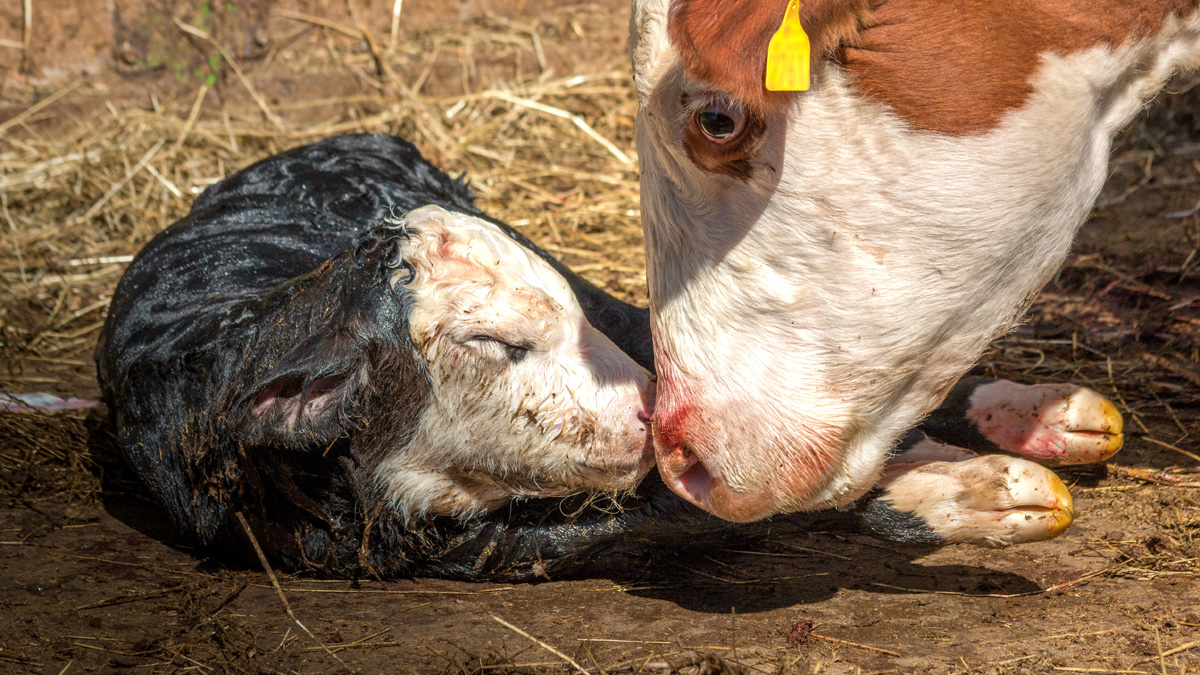
Primary care veterinarians are often called upon when a neonatal calf with diarrhea is doing poorly. Often traditional feeding methods cannot keep up with the calf’s hydration needs, leading them to surrender to decreased immune function and malabsorption of nutrients.
Deciding whether to intervene with oral tube feedings, subcutaneous fluid therapy or placing an intravenous catheter is not always easy. Ideally, finding the difference between a calf with a good prognosis and a calf with a high risk of dying can help the attending to focus their energy, making directed financial decisions with their current resources.
Diarrhea in Neonatal Calves
Diarrhetic calves are in danger of profound hyponatremia and metabolic acidosis as they succumb to loss of sodium (Na+) and bicarbonate (HCO3-) from the intestines. Ideally, a blood-gas analysis with base excess is used to diagnose the severity of acidosis and guide the treatments. Unfortunately, access to this equipment is often impractical in the field and cost prohibitive in the clinic. Breaking down the calf’s outward physical signs into four categories will aid in more successful outcomes, whether the calf is losing its suckle reflex, standing with lethargy, in sternal recumbency, or laid out laterally obtunded.
Predicting & Correcting Acidosis
There is a correlation between dehydration and the severity of lactic acidosis as fluid and electrolyte losses reduce the body’s ability to buffer acids. Sodium bicarbonate (NaHCO3) is the only product that reliably corrects acidosis.
Typically, 150 to 600 mmol of bicarbonate, or 1 to 4 L of isotonic NaHCO3 solution, is required to correct the metabolic acidosis caused by diarrhea. The presenting attitude and posture of the calf will aid in predicting the mounting sodium bicarbonate needs.
Calves Standing with a Weak Suckle
A calf that is having difficulty suckling or standing may already have a base deficit of 5 mmol/L and require additional care. The standing calf can be tube fed with electrolytes that contain a buffering solution (acetate or bicarbonate) to head off acidosis. Calves with diarrhea tend to have perfusion problems; as symptoms worsen, they do not respond well to oral or subcutaneous fluid support. One to two liters of bicarbonate, depending on the calf’s size, are generally sufficient for standing diarrheic calves.
Sternal Recumbency & Mild Obtundation
Once the calf begins to lose interest in its surroundings and alertness is reduced, sodium bicarbonate is beginning to drop. We can predict that their increasing base deficit is now between 10 and 15 mmol/L. The volume of IV isotonic NaHCO3 necessary to reverse the acidosis increases to 2.5 to 3.0 L.
Lateral Recumbency
Week calves that are unable to right themselves have severe base deficits averaging over 10 mmol/L in young calves (less than one week of age) up to 20 mmol/L in older calves. The latter may require 3.5 to 5 L (or more) of isotonic NaHCO3 to correct severe acidosis.
Correcting the Dehydration
Administering isotonic bicarbonate fluids will work toward decreasing the acidemia and correcting the dehydration. Calculating the fluid volume will include replacement volume (body weight in kg x % dehydration), maintenance fluids (body weight in kg x 0.05L/kg), and ongoing losses (1-4 L), depending on the severity of the diarrhea.
Prognostic Indicators
Neonatal calves with severe diarrhea are subject to dehydration and metabolic acidosis leading to shock. Measuring L-lactate in the field can provide a quick point-of-care measurement to identify calves at higher risk of death, indicative of severe tissue hypoxia and anaerobic metabolism.
Calves that survive neonatal diarrhea have been shown to have a significantly lower lactate of less than 4.8 mmol/L than calves that died with higher lactate levels at an average of 6.4 mmol/L. Using lactate values combined with physical examination findings (e.g., mentation, hydration status, and presence of septicemia) can guide prognostic decision making, directing treatment strategies, estimates, and intensity of care.
Conclusion
In most practice situations, acidosis can only be estimated. Assessing physical presentation will aid in delivering the appropriate volume of intravenous bicarbonate to reverse acidosis, affording the time necessary to treat the diarrhea as the calf becomes better hydrated with restored perfusion. Choosing isotonic NaHCO3 for IV fluid replacement therapy is the key treatment route for young calves in sternal or lateral recumbency.
By Colleen Lewis, DVM