An outbreak of highly pathogenic avian influenza virus that nearly wiped out an Illinois farmer’s backyard flock also spread to a domestic cat and wild rats on the farm, an analysis of the animals by the University of Illinois Urbana-Champaign Veterinary Diagnostic Laboratory and the University of Missouri Veterinary Medical Diagnostic Laboratory found.
“Bird flu does not stop at birds. On this farm, a cat and a rat were infected too, most likely after contact with dead or dying infected birds, and any wild animal that scavenges or handles carcasses could be exposed the same way,” said Dr. Leyi Wang, the virology section head at the U. of I. Veterinary Diagnostic Laboratory and corresponding author of the report.

After quickly losing 100 out of 105 of his backyard birds in March 2025, the farmer brought the remains of five birds and a rat to the University of Missouri. Located a mere two miles from a reservoir lake, the farm was ideally situated for avian influenza to travel from wild waterfowl to the flock. The Missouri lab collected a sample from one of the farm chickens, which unsurprisingly tested positive for avian influenza.
Four days later, the farm’s primary veterinarian collected the remains of a cat and another rat and sent them to the U. of I. Veterinary Diagnostic Laboratory, as there had been a few reports of infections in cats at the time.
‘The Rat Is the Surprise’
Dr. Wang and his team examined the mammals and tested and sequenced the viruses collected. Both animals tested positive for the same subtype of H5N1 avian influenza as the chicken had. Dr. Wang’s team then tested tissue samples from assorted organs to see how extensive the infections were in the mammals; all 12 cat tissues were infected, as were 11 out of 15 rat tissues, and viral RNA was present in the rat’s urine as well.
“The cat was expected, but the rat is the surprise,” said Dr. Wang, who also is a professor of veterinary clinical medicine at the U. of I. “Since rats live on nearly every farm despite biosecurity, they may be an overlooked link between wild birds, poultry and other mammals. Rodents live close to people, livestock and feed, so infected, shedding rodents could contaminate the farm environment and create new exposure routes.”
The labs then sequenced the viral genomes from all three animal sources: chicken, cat and rat. They found that the sequences were nearly identical, indicating a shared source— likely spillover from the poultry to the cat and the rat, Dr. Wang said. Crucially, all three had a certain mutation that makes the avian virus more adapted to mammals, which raised a red flag for Dr. Wang.
“Because the mammalian-adaptation marker was already present in the bird virus, crossing into mammals may not require new mutations,” Dr. Wang said. “Shared changes arising in two mammalian species are exactly the kind of adaptation signal worth watching.”
Takeaway: Be Vigilant
The researchers reported their findings in the journal Emerging Infectious Diseases, a publication of the U.S. Centers for Disease Control and Prevention.
In light of the findings, particularly the mammalian adaptation and the presence of viral RNA in the rat’s urine, Dr. Wang cautions farmers, backyard coop owners, and veterinarians to be vigilant.
“For flock owners: keep poultry away from wild waterfowl, report sudden die-offs, control rodents and don’t let farm cats scavenge dead birds. For veterinarians: when poultry die of suspected HPAI, treat sick or dead mammals on the same premises as potentially infected and use appropriate precautions.”
By Liz Ahlberg Touchstone, Biomedical Sciences Editor, News Bureau
View the original post of this article
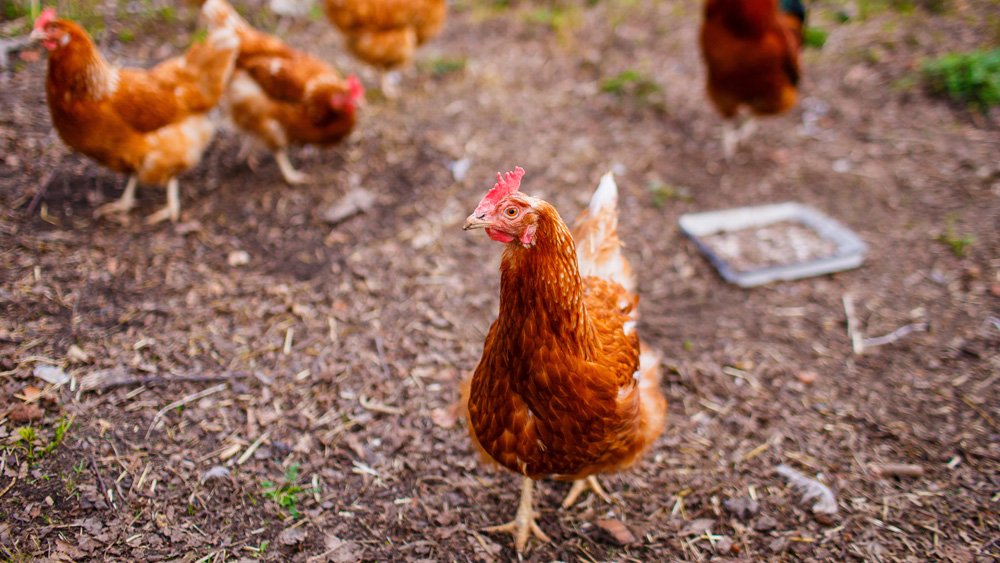
Featured image: Stock photo of backyard flock