In 2023, Dr. Barko joined the faculty as an assistant professor in the Department of Veterinary Clinical Medicine. A diplomate of the American College of Veterinary Internal Medicine – Small Animal, he also sees patients as part of the small animal internal medicine service in the Veterinary Teaching Hospital.
Using about 60 words, how would you explain your main area of research focus to someone sitting next to you on an airplane?
My research is focused on understanding how compounds produced by gut microbes from dietary components regulate intestinal health and disease. Specifically, compounds produced from dietary tryptophan can suppress inflammation and strengthen the intestinal barrier, which are critical steps to supporting gastrointestinal health. I study the associations between these tryptophan-derived microbial compounds and chronic gastrointestinal diseases and am active in developing in-vitro models to investigate these associations mechanistically.
How will your work impact quality of life and benefit society both locally and globally?
I aim to leverage insights related to how gut microbial compounds regulate intestinal health to explore novel diagnostic and therapeutic strategies for chronic gastrointestinal disorders in dogs and cats. From a diagnostic perspective, gut microbial markers can be used to characterize how gut microbes are involved in the underlying disease process in chronic gastrointestinal disorders. Ultimately, this understanding can be exploited to develop therapeutic tools, such as probiotics, nutritional supplements, and novel drug candidates targeting microbial metabolic pathways in the gut.
What excites you most about the future of research in your field?
It has been understood for decades that gut microbes regulate both gastrointestinal and systemic health. More recently, researchers have the investigative tools and insights to explore these relationships at a deeper level.
I anticipate that over the next 10 years, results generated from experiments leveraging the full arsenal of investigative technology will translate basic science insights to innovative diagnostic and therapeutic strategies that will substantially improve quality of care for pets and people with chronic gastrointestinal disorders.
What tools are critical to the work you do?
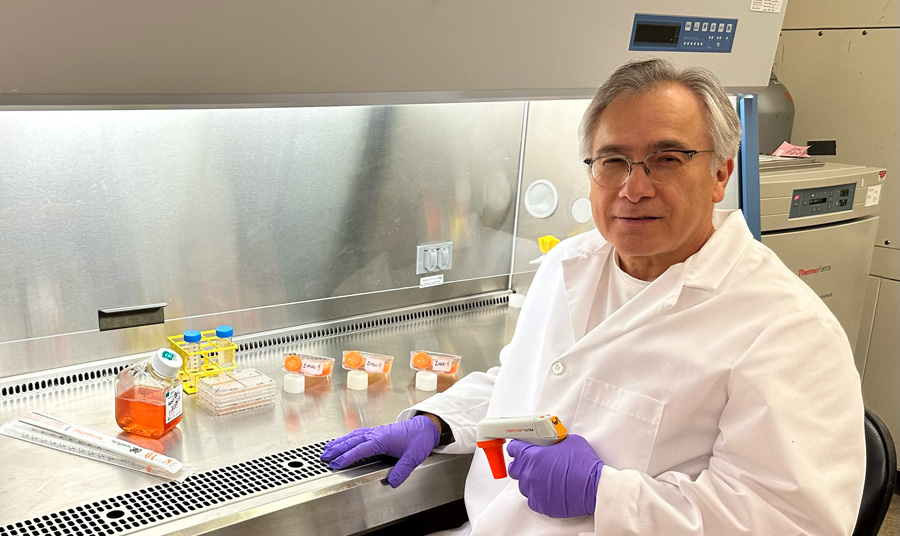
I am currently developing in-vitro cell culture models to reveal how gut microbial compounds influence intestinal health. I have been working most recently with peripheral blood mononuclear cells (immune system components isolated from blood) to assess the immunomodulatory potential of gut microbial tryptophan derivative.
Going forward, I am working to develop an intestinal epithelial (cells that line the gut) and intestinal mononuclear cell (immune system components isolated from intestinal tissue) co-culture system. This co-culture model will allow my lab to investigate how gut microbial compounds impact immune system pathways as well as the structure and function of the physical barrier of the gut wall.
Finally, I am also learning to integrate anaerobic bacterial culture methods to isolate gut microbes for experimentation. The bacteriology methods will complement the mammalian cell-based models I am developing.
How has the broader U. of I. research community factored into your success?
I have received invaluable assistance from the core research facilities on campus. In particular, I have used the core facilities in the Roy J. Carver Biotechnology Center including the Metabolomics Core Lab, the DNA Services Core, and at the High Performance Computing in Biology Group.
More about Patrick Barko
Patrick Barko
Assistant Professor
Department of Veterinary Clinical Medicine
Education
- DVM, Washington State University
- MS, University of Illinois
- Ph.D., University of Illinois
Previous Positions
- Small animal rotating internship, University of Illinois
- Residency in small animal internal medicine, University of Illinois