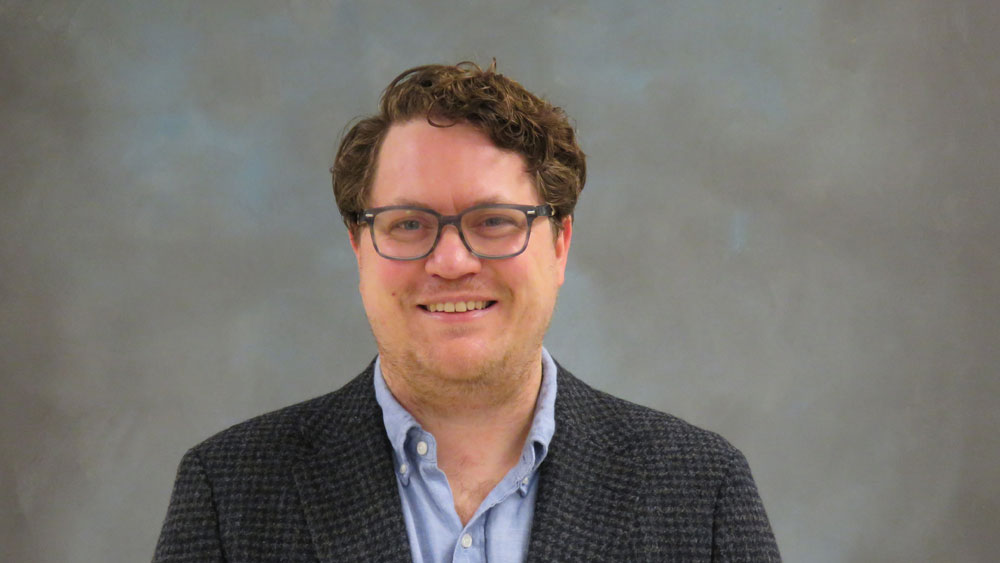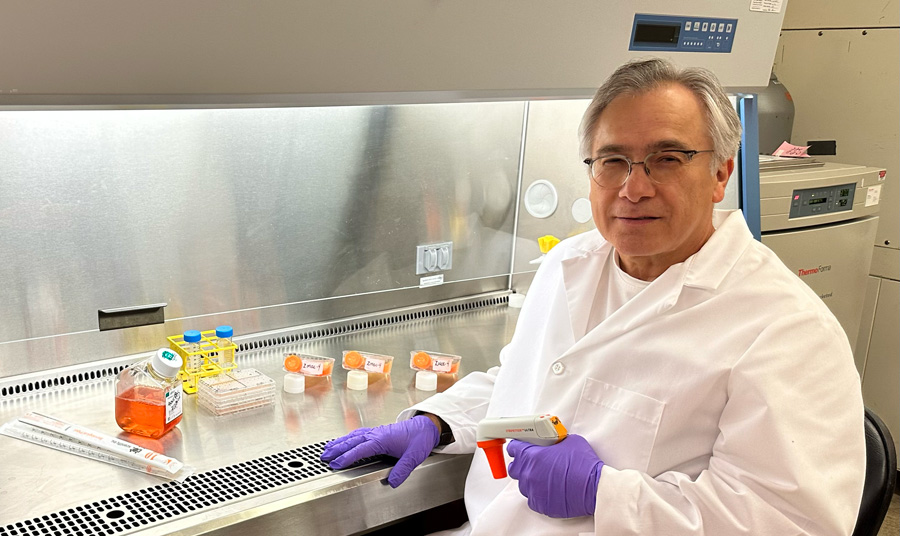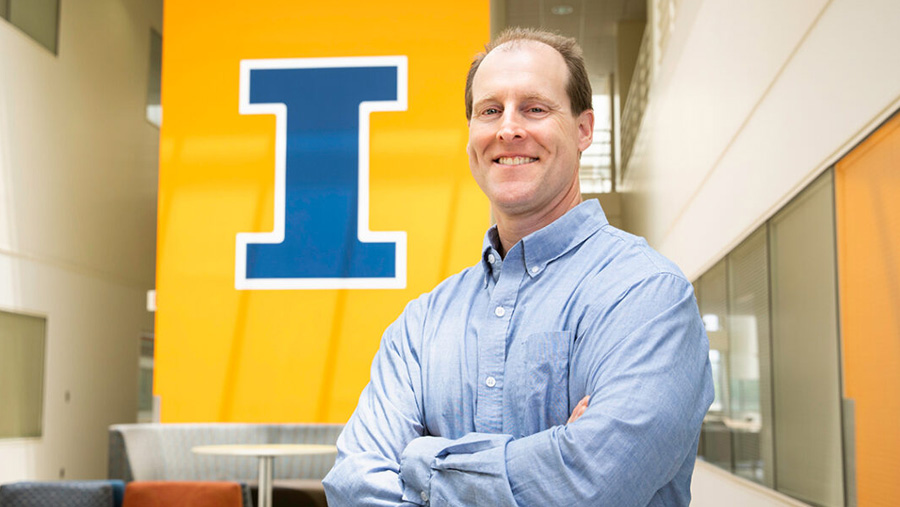
Dr. Keith Jarosinski is an associate professor and the director of graduate studies in the Department of Pathobiology. He joined the faculty of the College of Veterinary Medicine in 2016. One of his lifelong hobbies has been raising ornamental avian species.
Using about 60 words, how would you explain your main area of research focus to someone sitting next to you on an airplane?
I study a virus that gives chickens cancer. Today’s vaccines keep chickens from getting sick, but the virus still spreads from bird to bird. I want to stop that spread so the disease never starts. Interestingly, this virus is similar to some human viruses, so this work also gives us a real-world way to learn how other viruses spread.
How will your work impact quality of life and benefit society both locally and globally?
The main virus I work with causes Marek’s disease, a cancer in chickens, similar to human Epstein-Barr (EBV) and Kaposi sarcoma-associated (KSHV) virus-induced cancers. The chicken herpesvirus also spreads within the host population, like the human herpesvirus that causes chickenpox.
My work primarily aims to stop the Marek’s disease virus from spreading in chickens. Current vaccines only reduce disease, but my goal is to stop the virus from spreading. If we can stop the virus, then we don’t have to worry about the disease.
Herpesviruses usually infect one type of host (human, chicken, dog, cat, etc.), so there are few natural animal models for studying them. However, their mechanisms of spread in their population can be similar. We can also use herpesviruses in chickens to understand how human or other animal herpesviruses spread in their preferred hosts. Understanding how herpesviruses disseminate in their respective populations will allow us to develop strategies to stop their spread. Directly, my work aims to develop vaccines or strategies to protect chickens from infection, keep meat and egg prices down, and better understand how herpesviruses spread in general.
What excites you most about the future of research in your field?
Marek’s disease has been mostly controlled since the 1970s by vaccination, but the vaccines only reduce clinical disease. They do not stop the spread of the virus. The vaccines are also cumbersome for farmers because they require a liquid-nitrogen cold chain to keep cells frozen until use.
Our work focuses on improving vaccines to stop the spread of the virus in chickens and developing stable, lyophilized vaccines that are easier for farmers to use. Understanding how herpesviruses spread in the population provides important information for developing future vaccines and therapies that stop spread, not just symptoms.
What tools are critical to the work you do?
We use chickens to study the virus in its natural host. Herpesviruses typically infect and transmit only in the host they evolved with, so this model is critical to understanding how herpesviruses spread in their natural host.
In addition, we use viruses that express fluorescent proteins to track the virus in chickens, and we maintain the chicken cancer cells in tissue culture to study the virus’s cancer-causing effects. This lets us generate mutant viruses, infect their natural host, and study replication and oncogenicity in a natural setting. These studies are nearly impossible using mouse or other rodent models and impossible in humans.
How has the broader U. of I. research community factored into your success?
The university offers abundant resources for this work, including the poultry farm where we often obtain our chickens and eggs, the veterinary medicine farm, the animal care program, and the Roy J. Carver Biotechnology Center, which we heavily rely on for cell sorting, DNA sequencing, and proteomics.
What publication are you most proud of?
Probably the first study in which we identified viral proteins required for transmission of Marek’s disease virus in chickens, and the subsequent publications trying to determine the function of these proteins in this process. However, I think our upcoming publications will be groundbreaking in developing new vaccines in the field.
More about Keith Jarosinski
Keith Jarosinski
Associate Professor
Department of Pathobiology
Education
- Ph.D., State University of New York Health Science Center, Syracuse (now Upstate Medical University)
Affiliate Positions
- Cancer Center at Illinois
Previous Positions
- Research Assistant Professor of Microbiology, University of Iowa
- Senior Research Associate, Department of Microbiology and Immunology, College of Veterinary Medicine, Cornell University