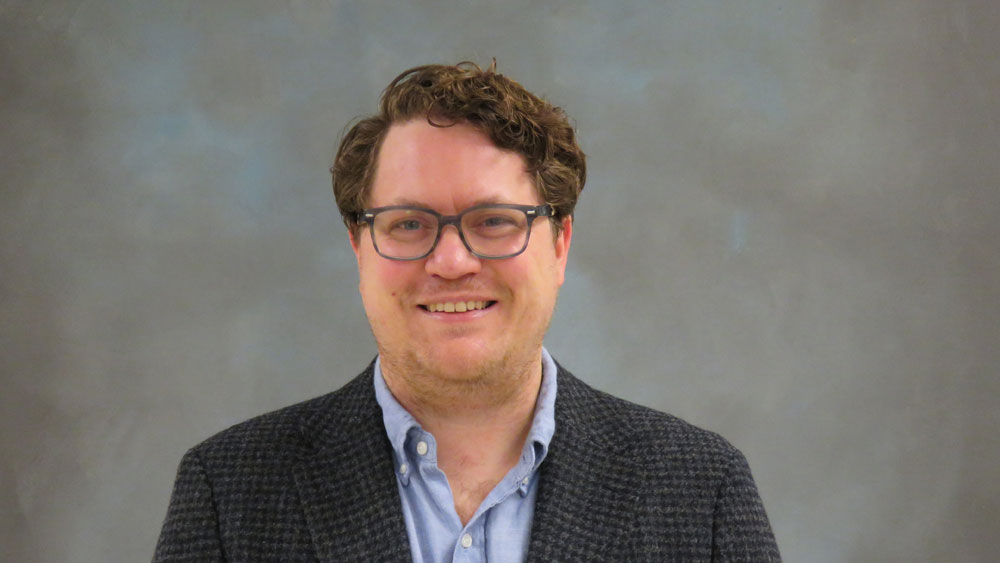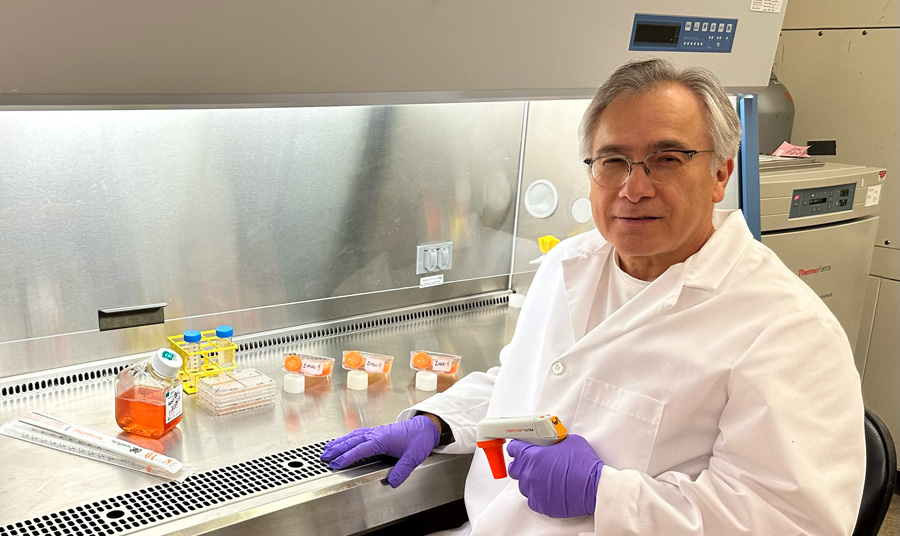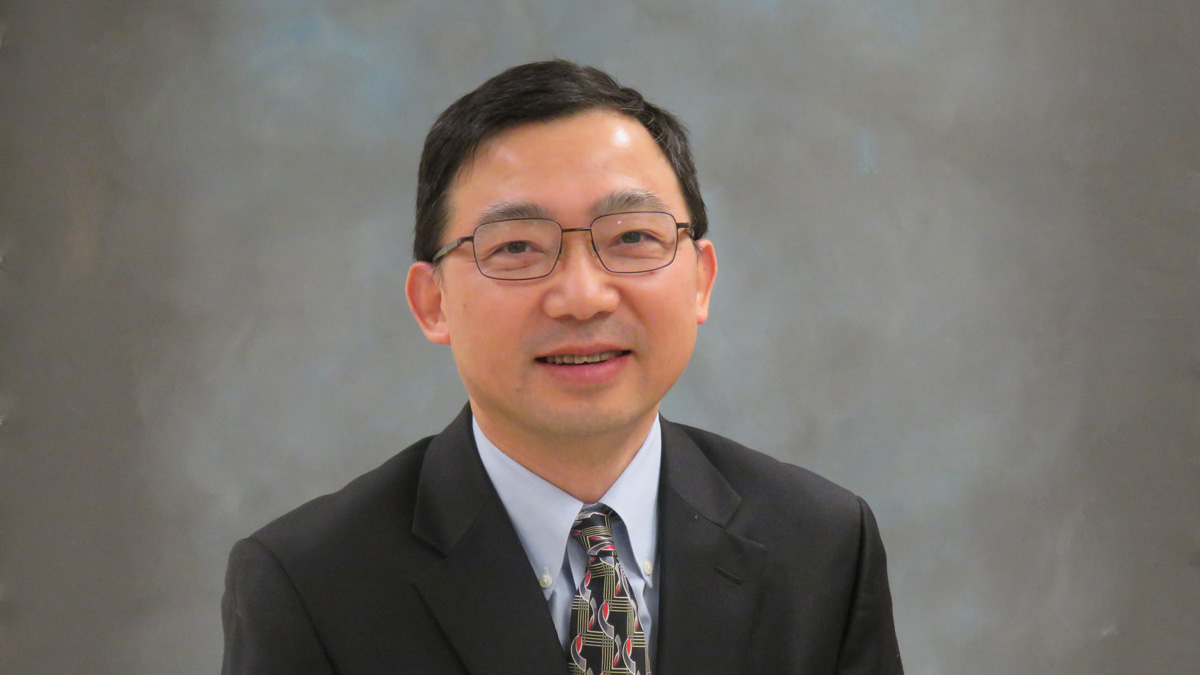
Dr. Yang joined the College of Veterinary Medicine in 2011 as an associate professor and was promoted to full professor in 2017. He has published around 70 peer-reviewed articles.
Using about 60 words, how would you explain your main area of research focus to someone sitting next to you on an airplane?
Earth differs from other planets in that it supports an extraordinary diversity of life. The world as we know it exists because, although individual organisms eventually die, every species has evolved mechanisms to reproduce and ensure the continuation of life. I study the oocyte-to-embryo transition and early embryonic development, which lie at the heart of reproduction and the perpetuation of species.
How will your work impact quality of life and benefit society both locally and globally?
I do not think my research has a direct or immediately visible impact on the quality of life or on local and global society. I study the oocyte-to-embryo transition (also known as egg-to-embryo transition) and early embryonic development, a field that differs from much of biomedical research, which often focuses on understanding specific human diseases and developing new therapies.
Defects during the oocyte-to-embryo transition or early embryonic development generally lead to the death of the embryo and reproductive failure. Because these failures occur at such an early stage of development, their consequences often go unnoticed. As a result, the broader public may not fully appreciate the importance of research in this area.
In some ways, this reminds me of the film Don’t Look Up, where critical issues receive little attention until their consequences become impossible to ignore.
What excites you most about the future of research in your field?
The oocyte-to-embryo transition is a fascinating developmental process. It is the only known biological process in which fully differentiated cells regain totipotency. Remarkably, this transition is driven entirely by maternal products stored within the oocyte and proceeds independently of new transcription.
Despite its fundamental importance, the post-transcriptional mechanisms that regulate this developmental transition remain poorly understood. Over the past decade, sophisticated imaging, genomic, and proteomic technologies have transformed our ability to study the oocyte-to-embryo transition and early development. These advances now make it possible to investigate how cellular organelles, protein-protein interactions, and RNA-protein interactions are dynamically reorganized to orchestrate the initiation of life.
What tools are critical to the work you do?
We use several animal models to study the oocyte-to-embryo transition and early embryonic development. For many years, our primary model has been the amphibian Xenopus laevis. Xenopus oocytes are exceptionally large, measuring approximately 1.2 to 1.3 mm in diameter, making them an outstanding system for biochemical purification and cell biological studies.
In recent years, we have also adopted zebrafish as a complementary model organism. Zebrafish are highly genetically tractable, with numerous transgenic and mutant lines available. Moreover, both forward and reverse genetic approaches can be readily applied to investigate the molecular mechanisms underlying the oocyte-to-embryo transition and early embryonic development.
Our research integrates a broad range of experimental and computational approaches, including confocal microscopy, multiple RNA sequencing technologies, quantitative proteomics, and bioinformatic analyses, to examine the molecular and cellular events that govern the initiation of development.
How has the broader U. of I. research community factored into your success?
U. of I. offers an ideal research environment for my research. It has a strong community of researchers in reproductive biology as well as molecular and cellular biology. The collaborative atmosphere enables me to readily interact with and seek advice from experts across these fields, fostering productive exchanges of ideas and facilitating my research.
What publication are you most proud of?
I would say: the next paper we publish.
If your work depends on collaborations with people in other fields of study, what are those fields?
I have collaborated with many colleagues across a range of research areas. For example, Drs. Jodi Flaws, Huanyu Qiao, and Romana Nowak contributed their expertise to our studies of mouse oocytes and embryos.
Dr. Wenyan Mei helped us establish the zebrafish model system, while Dr. Gee Lau collaborated with us on studies of lung development.
Dr. Kai Zhang has worked with us on the application of optogenetic approaches to our research.
As our research continues to evolve, I anticipate establishing new collaborations with colleagues in other disciplines to address increasingly complex biological questions and expand the scope of our work.
More about Jing Yang
Jing Yang
Professor
Department of Comparative Biosciences
Education
- BSc, Biochemistry, University of Sichuan, Sichuan, China
- Ph.D., Shanghai Institute of Biochemistry, Chinese Academy of Sciences
Affiliate Positions
- Institute for Genomic Biology, Environmental Impact on Reproductive Health
- Affiliate, Department of Cell & Developmental Biology
Previous Positions
- Postdoctoral Fellow, Shanghai Institute of Cell Biology, Chinese Academy of Sciences
- Postdoctoral Research Associate, HHMI, University of Pennsylvania, School of Medicine
- Associate Professor, Center for Molecular and Human Genetics, Department of Pediatrics and the Research Institute at Nationwide Children’s Hospital, The Ohio State University College of Medicine