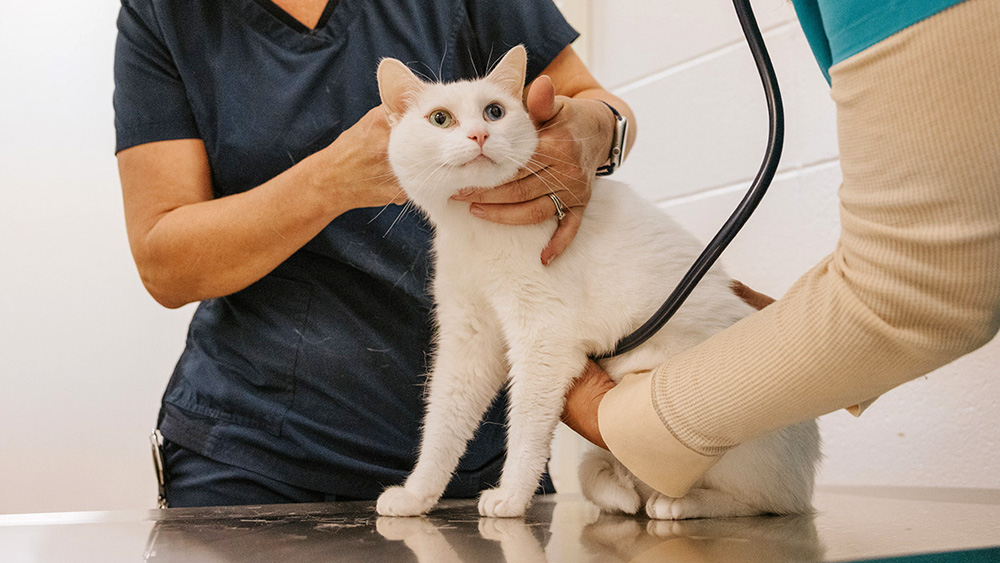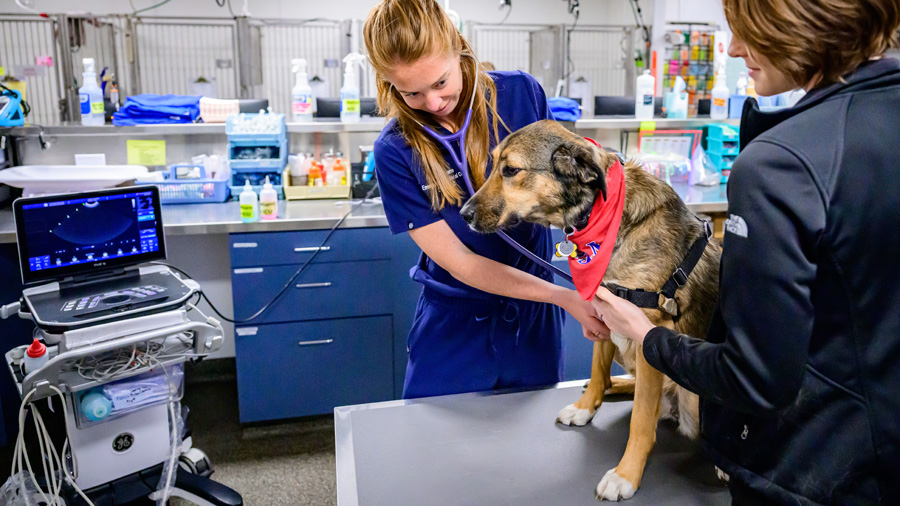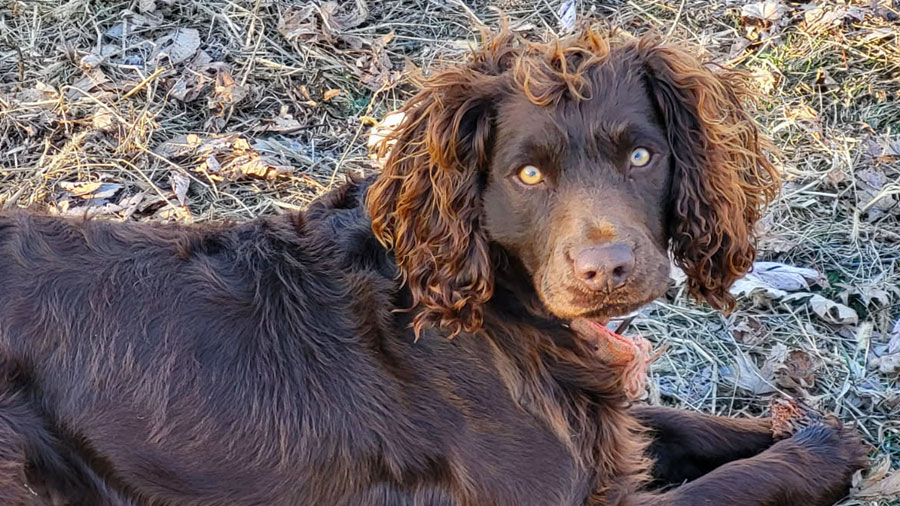
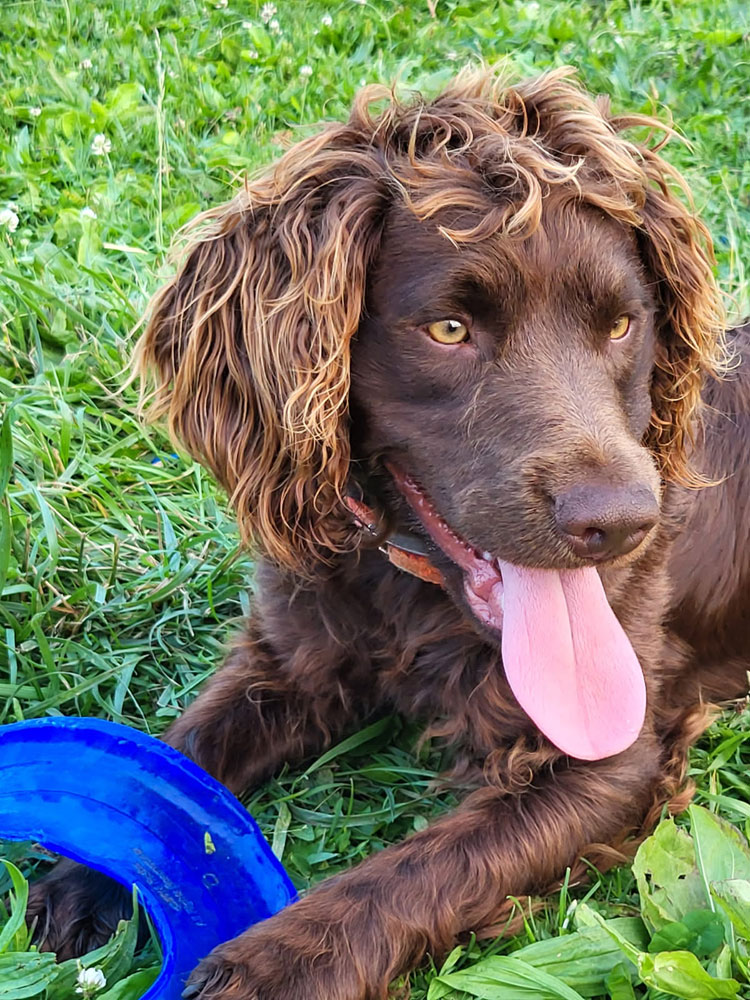
Broken toenails are a regular occurrence for the veterinarians who staff the urgent and convenient care service at the University of Illinois Veterinary Teaching Hospital. But Jesse, the two-year-old Boykin spaniel, was a special case.
Jesse broke one of the toenails on his left back paw while playing in his family’s horse pasture. His wound was bandaged at a local emergency veterinary clinic, but unfortunately Jesse bled through his bandage. The next day, his owners brought him to the urgent and convenient care service with a broken toenail that wouldn’t stop bleeding.
Dr. Canaan Shores, who leads the service, recalls Jesse’s visit and all the twists and turns his care took.
Typical Broken Toenail Treatment
Treatment of a broken toenail depends on how badly the nail is broken. “Mild cases may not require much treatment at all, whereas more severely broken toenails may require sedation with trimming the nail back, including the quick, which can lead to further bleeding,” Dr. Shores explains.
The quick is the part of the nail containing nerves and blood vessels, so when cut, it causes pain and bleeding. Veterinarians cut the quick back in some cases of broken toenails to even out the nail, prevent infection, reduce prolonged pain, and decrease annoyance to the animal.
Jesse’s Special Case
When Jesse arrived at the Veterinary Teaching Hospital, he was lethargic and pale due to blood loss. His toenail was severely broken, indicating the need to trim back the nail under sedation.
However, Jesse’s medical history suggested he has a blood clotting disorder as well as a cardiac condition. Animals with cardiac conditions are at higher risk when it comes to sedation. Jesse’s history meant that both sedation and trimming to the quick carried higher risks than they would for a typical patient.
“Given that Jesse required sedation, we wanted to be sure his heart could handle the medications we needed to use,” Dr. Shores explains. “Thankfully Jesse recently had a full cardiac work up, so our team was familiar with his condition.”
Dr. Shores and his team were able to consult a faculty member in emergency and critical care who has additional training in cardiology to develop a sedation protocol and determine how best to address Jesse’s bleeding.
Personalized Care Approach
In addition to the mild pain medication used to sedate Jesse, a local anesthetic block was administered to the affected toe. “An effective local anesthetic block can reduce pain in a given area by almost 100%,” explains Dr. Shores.
After Jesse’s broken toenail was cut back, silver nitrate was applied to the nail. Silver nitrate is a chemical agent commonly used to help form clots.
Tranexamic acid was also given to Jesse, both intravenously and topically onto the affected toe. Tranexamic acid is a medication that helps reduce bleeding, stabilize blood clots, and prevent clots from breaking down prematurely. Since Jesse has a known blood clotting disorder, this medication helped reduce any potential negative effects of that disorder.
After Jesse’s procedure he was discharged with pain medication as well as antibiotics to treat any potential infection of the affected toenail.
Broken Toenails: What Pet Owners Should Know
If your dog happens to break a toenail, the first thing you should do is call your veterinarian. You can also help your dog while waiting to see the veterinarian, however. If your pet will allow it, gently rinse the affected nail with saline or clean running tap water. Dry the paw and lightly wrap it in a clean towel or cloth. Ensure the bandage remains clean and dry.
“If the dog is very painful or if there is the concern the dog may bite, then it’s best not to try to cleanse and wrap the nail yourself,” explains Dr. Shores.
For Jesse, access to specialists also helped to successfully navigate his additional health conditions. “Collaboration is one of the strengths of the Veterinary Teaching Hospital,” says Dr. Shores. “We’re able to work together to do what’s best for the patient.”
Jesse is now fully recovered and back to enjoying playing in his horse pasture.
By Catherine Haenni