Oneida the ornate box turtle, a beloved ambassador animal at the Nahant Marsh Education Center in Davenport, Iowa, came to the University of Illinois Veterinary Teaching Hospital with a life-threatening condition: egg binding.
With the help of the hospital’s dedicated specialists—and a GoFundMe account—Oneida survived and is now thriving at home. But her case wasn’t easy. Dr. Lauren Vincent, a veterinarian completing a residency in zoological medicine, shares Oneida’s story to educate turtle owners on the dangers of egg binding.
An Egg that Won’t Leave
Oneida was referred to the Veterinary Teaching Hospital by her primary veterinarian, who had been monitoring the shelled egg in her coelom via radiographs. In turtles, the coelom is the main body cavity that contains all the organs.
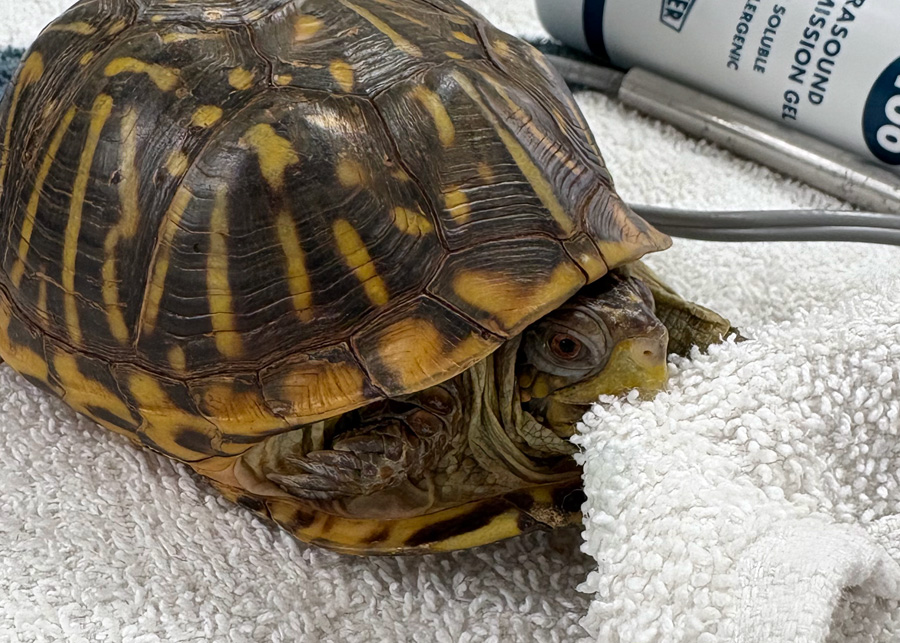
Treatment for egg binding in turtles typically includes keeping them hydrated, giving them injections of calcium, and in some cases an injection of oxytocin, a hormone that stimulates oviduct contractions, in hopes that they will pass the egg themselves. Unfortunately, supportive therapies failed to help Oneida expel the egg. When her signs included lethargy, decreased appetite, and the occasional inability to use her back legs, Oneida went to see the University of Illinois zoological medicine service.
Dr. Vincent explained that during Oneida’s first visit, “The zoological medicine faculty performed a CT scan, which revealed multiple large follicles present in addition to the shelled egg.”
Oneida also had blood work done, which showed an elevated white blood cell count, indicating chronic inflammation.
Plotting the Surgical Path
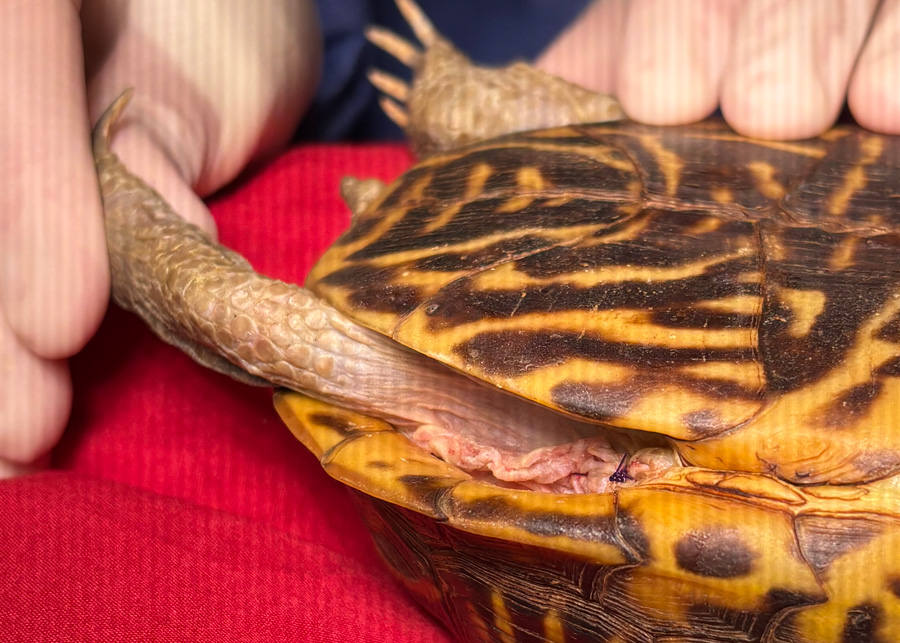
Oneida’s CT results plus her declining health meant surgery was the next step. The surgical procedure Oneida required has two possible approaches: a prefemoral approach – making the incision in the skin between a hind leg and the shell – or a plastronotomy approach – cutting into the bottom of the shell, or the plastron.
“The prefemoral approach is favored since it is less invasive and has a quicker recovery time, but this can be challenging in smaller turtles,” Dr. Vincent said. “Oneida is a very petite lady, weighing only 380 grams, so we were worried the prefemoral approach may not be feasible, especially since her egg was extremely large for her size.”
The prefemoral approach was chosen, so Oneida was off to surgery.
Oneida’s Surgery
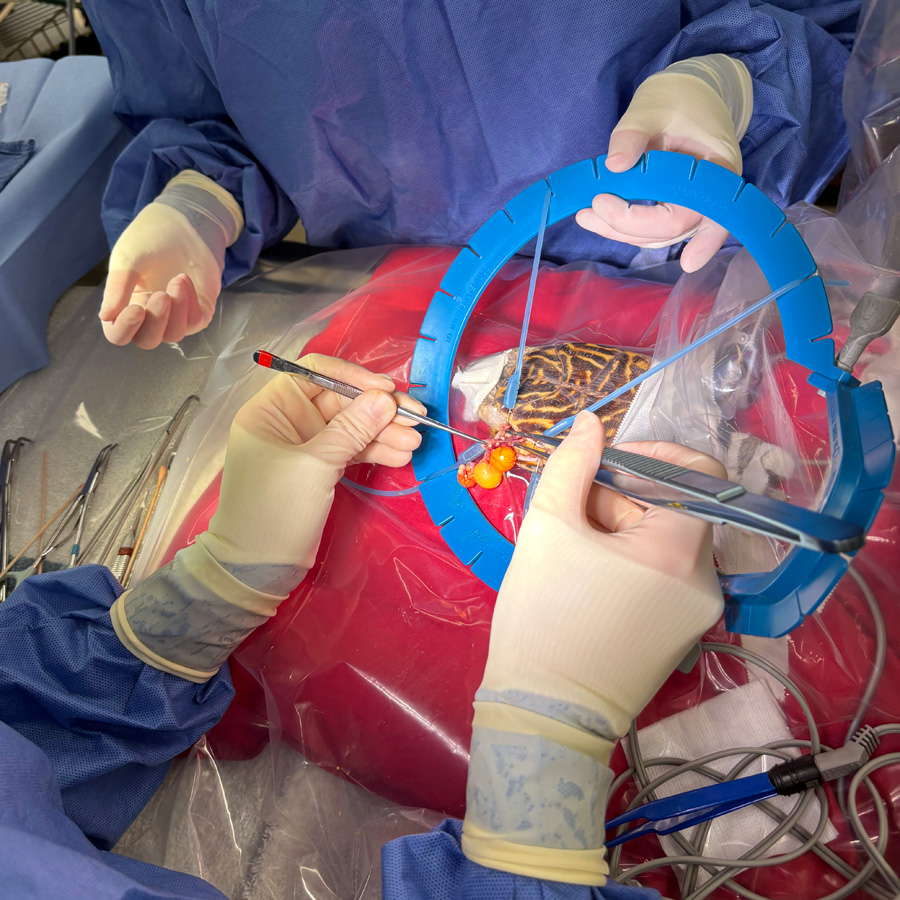
Oneida’s surgery began with her being anesthetized via an injection of multiple sedative and pain medications. She then had an intravenous catheter placed so that anesthetic medications could be administered to ensure she remained asleep during her procedure. A tracheal tube was then placed to control her breathing, and the procedure site was cleaned to prevent infection.
Doctors made an incision and inserted a small sterile camera, called an endoscope, to visualize the egg and numerous large follicles causing Oneida’s problem. The large follicles were gently removed, along with her ovarian tissue.
“This can be tricky since the follicles are a lot like egg yolks, and even with delicate handling there is risk of these follicles rupturing during removal. We had a couple follicles rupture during Oneida’s procedure but thankfully most of the material leaked outside of her body,” recalled Dr. Vincent.
To help prevent infection, the coelom was flushed with sterile saline, and Oneida was given intravenous antibiotics.
Finally, it was the shelled egg’s turn. The shelled egg was too large to be removed through the incision, so doctors used a large needle and syringe, poked through the leathery shell of the egg, and extracted its contents, making it small enough to be removed.
Lastly, doctors removed Oneida’s reproductive tract to ensure egg binding could not happen again.
The incision was then closed using suture, but Oneida’s care was far from over.
Slow but Sure Recovery
Turtles commonly do not eat well after anesthesia, so Oneida had a feeding tube placed into her stomach to ensure she would get all the nutritional support she needed during recovery. She remained hospitalized for monitoring overnight before returning home with medications and a specialized liquid diet.
Her recovery was slow at first, but her care team never gave up. Their dedication contributed to her speedy recovery!
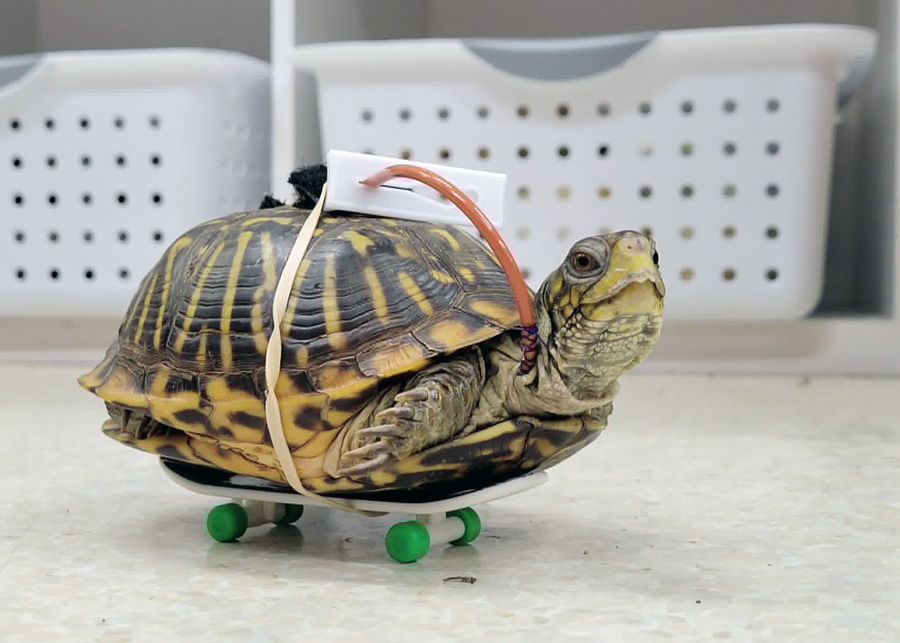
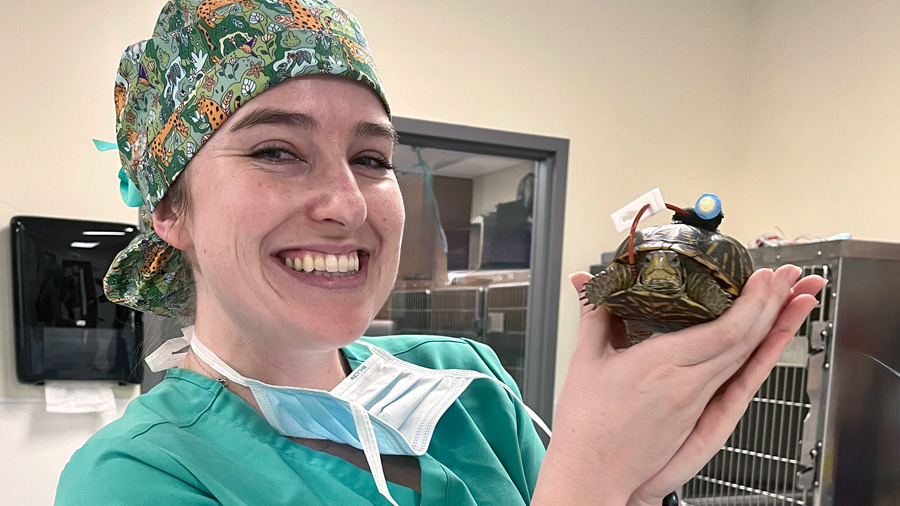
“She was initially hesitant to walk, and we suspect the egg had caused some weakness in her back legs due to compression of nerves in this area,” noted Dr. Vincent. “To help with her walking, she was fitted with a small skateboard, which has helped her exponentially. Oneida is now walking very well!”
The Dangers of Egg Binding
Egg binding, also known as dystocia, happens when an animal is unable to expel one or more eggs through their reproductive tract. Egg binding can occur in any female turtle, even one that has never been housed with a male.
Causes of egg binding may include abnormal egg size, illness, nutritional problems, cancer, environmental changes, or inadequate nesting opportunities. Sometimes, however, the cause remains unclear.
Egg binding is a life-threatening condition. Stuck eggs can put pressure on internal organs or even rupture inside the body, which can lead to infection and death. Because reptiles often hide signs of illness until the disease is advanced, regular veterinary care and appropriate housing and nutrition are essential.
“In Oneida’s case, the egg had been monitored for multiple months with radiographs, so this persistence and her clinical signs made us suspicious of a problem,” said Dr. Vincent. “We still don’t know why Oneida developed egg binding since she had appropriate care.”
Zoological Specialists at the University of Illinois
The care Oneida received represents just one example of the depth of expertise in zoological medicine at the Veterinary Teaching Hospital. Four faculty members have advanced certifications in this field, including diplomates of the American College of Zoological Medicine (ACZM) and American Board of Veterinary Practitioners, avian specialist. They offer two residency training programs, in zoo companion animals and in zoological and aquatic animals (in partnership with Brookfield Zoo Chicago and the John G. Shedd Aquarium), that meet ACZM standards.
Faculty member Dr. Mariana Sosa Higareda mentored Dr. Vincent as she performed Oneida’s highly specialized surgery and recovery. Experiences like this provide critical clinical exposure and contribute to the development of highly skilled specialists.
For Oneida, that expertise proved lifesaving. For turtle owners, her story is a reminder that when something seems off, seeking veterinary attention early can make all the difference.
By Catherine Haenni