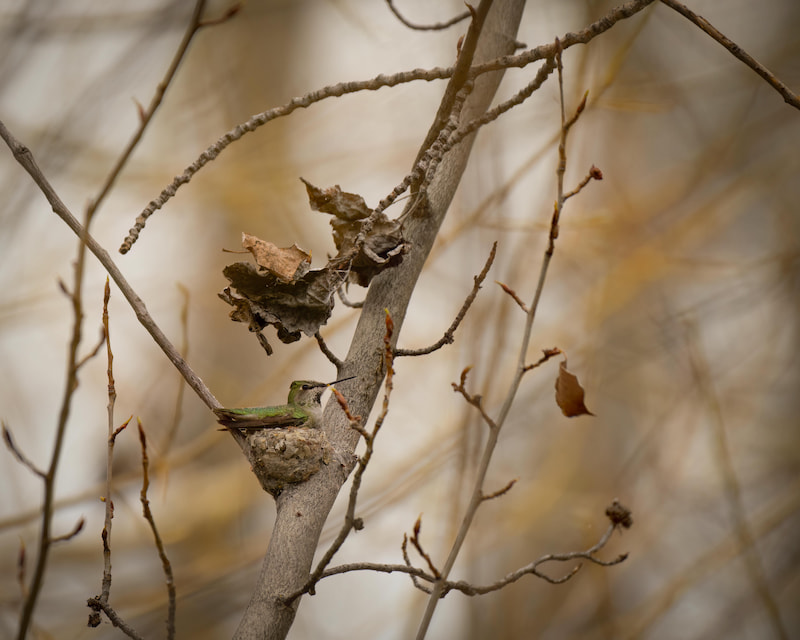
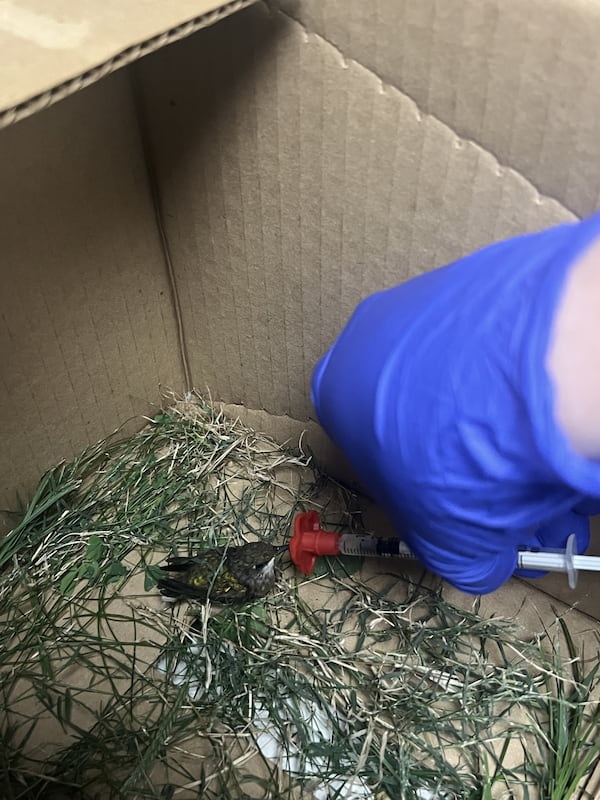
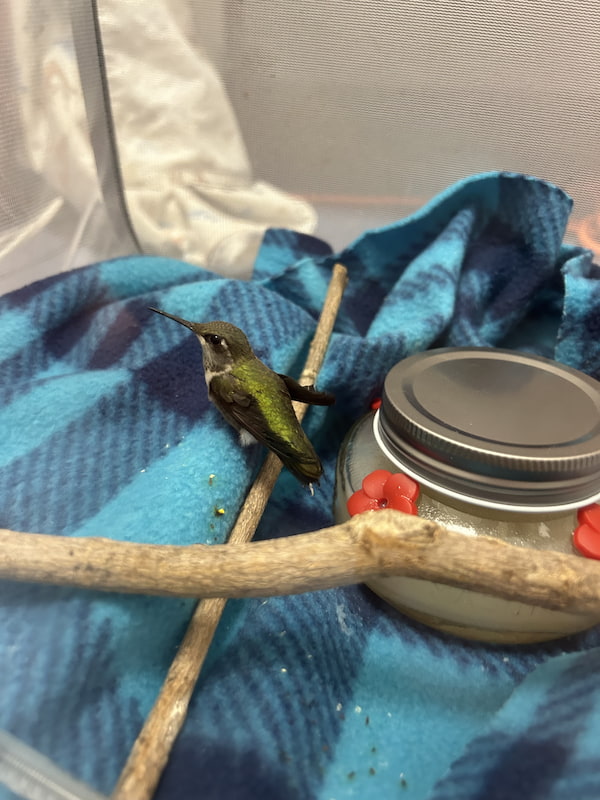
Ruby-throated hummingbirds can fly over 1,000 miles without stopping, an impressive feat for a creature that usually weighs in at just around 4 grams. These hummingbirds are a migratory species, spending their summers spread across the eastern United States and overwintering in the much more comfortable climates of Central America.
Baby hummingbirds are born in the summertime and only stay in the nest for a few weeks before venturing out on their own. Their first migration is the hardest, simply because they need to build muscle and fat reserves from a larger deficit before embarking on their long journey. As hatchlings and fledglings, ruby-throated hummingbirds eat a regurgitated meal from their mother that is high in protein and sugars. Younger birds are fed every 20-30 minutes to accommodate their extremely high metabolisms. As they age, the birds will convert to a more nectar-heavy diet, though they will continue to eat insects as well in order to balance their nutrition.
As summer turns to fall, these fledglings will start to explore the world outside of their nest. They must get used to flying, hunting, and evading predators, but they will not be experts from the start. You may occasionally find a fledgling hummingbird in your backyard or along the sidewalk.
If you do, keep the following in mind:
Always look around to try and locate the nest. Returning the hummingbird to the nest gives it the greatest chance of survival.
Hummingbirds should not spend any time on the ground at any point, even as fledglings. If a nestling hummingbird is on the ground and uninjured, it can be returned to the nest. If you find an adult hummingbird on the ground, it is likely to be sick or injured and needs to be brought to a licensed rehabilitator immediately. Even a few hours without food can be fatal to a hummingbird.
Once the hummingbird is back in the nest, observe it frequently for the rest of the day to make sure its mom comes back. Often people will miss the mother’s return to the nest because she is quite fast and only takes seconds to feed her nestlings.
If the nest is nowhere to be found, appears abandoned, or the bird is suspected to be injured, place it in a small box, lined with a washcloth.
Bring the bird to the nearest licensed wildlife rehabilitator. They will be able to provide the bird with the proper nutrition and housing to be released before the winter sets in. The University of Illinois Wildlife Medical Clinic is located at 2100 S Goodwin Ave in Urbana, Illinois. If you are not local, use wildlifeillinois.org to locate your closest rehabilitator.
At the Wildlife Medical Clinic, we receive many phone calls from caring members of the community asking if they should be feeding healthy and/or injured wildlife. We truly appreciate when citizens care enough about our native wildlife to reach out and ask these commonly asked questions. The short answer is no, you should not feed wild animals. Although we understand that this gesture comes from a place of love for our wildlife species, it can cause harm to them and provide hazards to humans, as well.
That being said, let’s get into some specific examples of commonly fed wildlife.
Squirrels
Squirrels are a common species of wildlife that we see frequently, even in urban areas! It is common for people to leave food out for the squirrels that live nearby, but let’s rethink that. Human food is often not nutritionally appropriate for their needs and can even cause illness when consumed. Not only can it be bad for their overall health, but it trains the squirrel to stop hunting and foraging for food. Then, if you forget to feed them once you’ve already started, or if you are away from your home for a period of time, these squirrels are unable to find food for themselves, which can lead to starvation. Squirrels that are being fed by humans often lose their fear of us and are therefore more likely to show aggression, which could result in biting a person. There are a multitude of human medical concerns that arise when bitten by a wild animal. To ensure your safety, your fellow neighbor’s safety, and the squirrel’s safety, please refrain from feeding them.
Raccoons
For similar reasons to that of the squirrel, we also do not recommend feeding raccoons. When feeding raccoons, it can cause them to congregate in higher-than-normal numbers at your home. This upsets the balance of the local ecosystem and can increase competition for food. Thus, inducing more aggressive behaviors between raccoons, which can lead to conflict with humans. Raccoons are a common rabies vector species, and if bitten it would be considered a medical emergency. You should seek medical attention immediately or even go to the emergency room.
Birds
Bird feeders are a common route for feeding wildlife. One of the problems with using bird feeders is that it can aid in the spread of disease between birds. It can also lead to a higher rate of predation because there is now an influx of birds going to the same spot, on a predictable schedule. As bird feeders are usually next to or near windows, it can also increase the likelihood for window strikes, which can cause injury or even death to birds. Feeding birds has also been shown to change the behavior and health status of the bird.
What about Hummingbird Feeders?
Hummingbirds are another species where there is a commercially available diet that people purchase to feed them. However, if regular cleaning is not completed, the nectar that is used to fill hummingbird feeders can easily become contaminated with various molds, bacteria, bugs, and fungus. This can cause illness and even death to the hummingbirds that visit those feeders.
Healthy Wildlife Should Not Need Help Finding Food
To ensure the health, safety, and protection of our native wildlife, please refrain from interfering in their natural behaviors by feeding them. We cannot match the same diet that these animals would be foraging for themselves in the wild and most commercially available diets marketed for feeding wildlife are not nutritionally balanced. As a licensed rehabilitator, we do have access to more nutritionally sound diets backed by research to help support these animals while they are in our care. We are also trained to take very strict precautions when overseeing these patients to ensure their safety and the safety of our staff. But the goal of our clinic is to safely rehabilitate wildlife and release them to their natural habitats as soon as possible.
How to Safely Interact with our Native Wildlife
As adorable as wildlife is, they are wild for a reason and do not need our intervention with food. However, there are some ways that you can still enjoy the beauty of our wildlife! For example, bird walks are a wonderful way to view different native avian species from a far. Also, cameras outside your home are a cool and interactive way to view your wildlife visitors!
Thank you for caring and protecting our native wildlife!
Every year thousands of turtles cross our roads for various reasons. As the weather warms up, many turtles search for new territories, breeding grounds, or food.
Year after year in late spring, female turtles begin their voyage to find a nesting site on land. Aquatic species haul themselves out of their beloved body of water and may end up crossing the road to find a suitable place to lay their eggs. We know this is one of the biggest causes for road-crossings, as roadkill disproportionately effects female turtles of a mature age. Many times, females choose to nest in an area that may be difficult for the babies to traverse when they hatch. These babies know exactly where they need to go but may get hit by a car or predated upon on the way. In other cases, turtles may go to roads to bask when feeling unwell. Because they cannot thermoregulate internally, they try to create a behavioral fever by laying under the sun. Unfortunately, hot asphalt is a great way to do that.
Do turtles have superpowers?
In my personal opinion, yes! They are excellent navigators with the ability to create mental maps and rely on an internal compass. They become very familiar with their home range, which can include a yearly nesting site, overwintering grounds, and the wetlands they utilize during the active season. In fact, sea turtles have been known to swim hundreds of miles annually to get to their destination nesting site!
What can you do to help?
If you ever see a turtle on the road, it is very important to help the turtle get to the other side in the direction that it was going. If you decide to pull over, please prioritize your own safety! Not only do turtles have exceptional navigational skills, but they are also very stubborn! Redirecting or relocating a turtle can be very dangerous for them. They may take a longer and potentially more treacherous path to the place they originally wanted to go. Additionally, turtles learn to live and love their home, making it very difficult to learn how to navigate, forage, and socialize in a new environment.
When encountering turtles that may be dangerous to handle, like Common Snapping Turtles, there are still some steps you can take to help! Many wild turtles will be frightened at human interaction and may try to bite. If you are uncomfortable handling any turtle, you can use a car mat or shovel to put under the turtle and slide it. Please never pick up a turtle by their tail, as this can result in severe spinal damage!
What if I find a turtle that’s been hurt?
Turtles are insanely hardy and can survive some pretty horrific injuries. If you come across an injured turtle or one that has been hit by a car, we always recommend bringing it into your nearest wildlife rescue, such as the WMC! If you are unable to bring it in, please contact your local fish and wildlife department to ask for guidance. Never attempt to treat the animal on your own, as this could put you or the turtle in danger and may be in violation of state laws.
Case example!
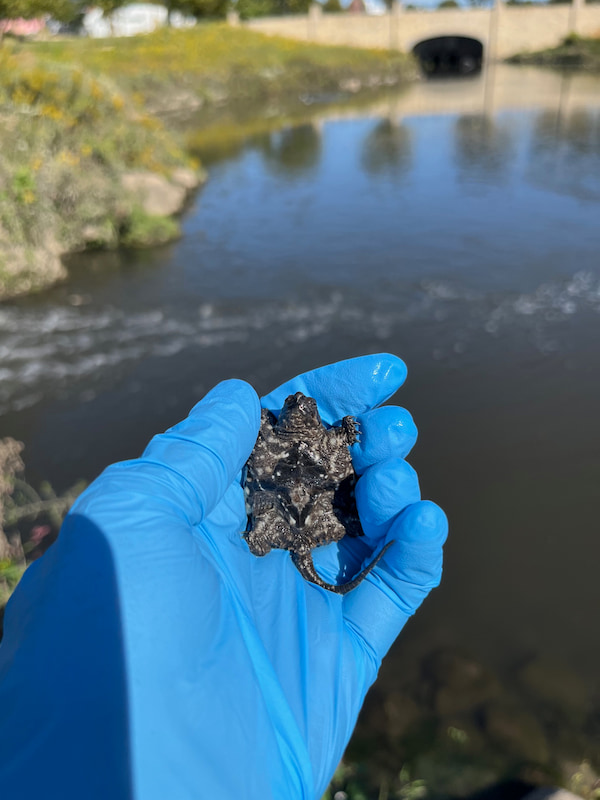
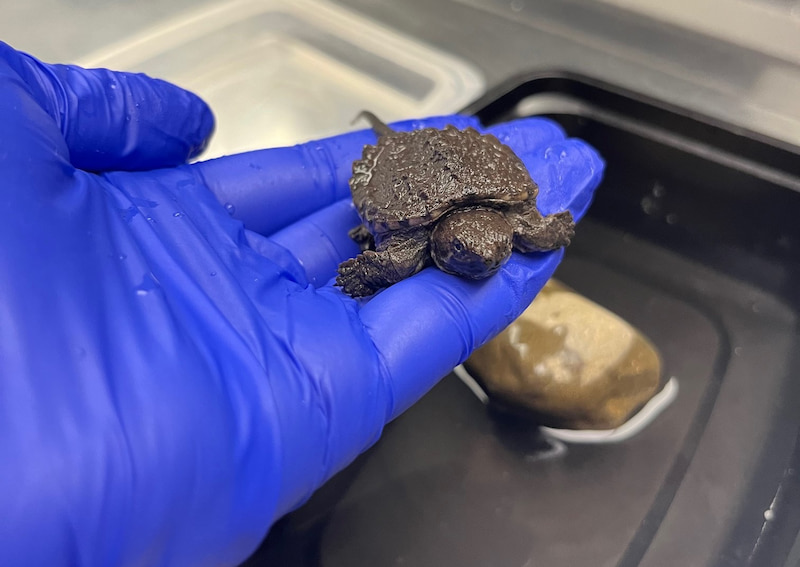
In mid-September, I was presented with a hatchling common snapping turtle on triage. Generally, snapping turtles lay eggs during May and June, with the hatchlings emerging around September. Therefore, this little one was on perfect schedule! The hatchling had been picked up by a Good Samaritan that had found it trying to cross the road. They were most likely trying to get to the nearest body of water.
On exam, it was a perfectly healthy baby weighing in at 10 grams! Its age was determined not only by size, but by how squishy the hatchling’s shell was. It also had a visible umbilical scar, as seen in the featured image! In the early stages of life, it is normal for a turtle’s shell to be soft and pliable. This allows for “give” as the turtle expands and grows. Sadly, this is also a major reason for predation in newly hatched turtles. The umbilical scar, or yolk sac, can be thought of as a belly button. It is where the turtle embryo was attached to the shell when it was in the egg. Within about ten days, the yolk sac is fully absorbed and there will no longer be evidence of a scar.
Time for Release!
In this case, we did not know where the turtle had been found and picked up, so we were very hesitant to release it. We knew that it may be hit by a car or predated upon trying to find its way back to its original destination. It was going to take some deep detective work to find out where the little one had come from.
In the meantime, we set up the hatchling with a proper enclosure in the clinic. This included a tank filled with water, a heat lamp, rocks for a basking area, a UV lamp, and fake plants and logs for hiding spots to decrease stress. We also began experimenting with different food items to see what the turtle would enjoy eating. Some of the options included cut up brine shrimp, turtle pellets, bloodworms, mealworms, and pinky mice. We learned that the patient really took a liking to the brine shrimp!
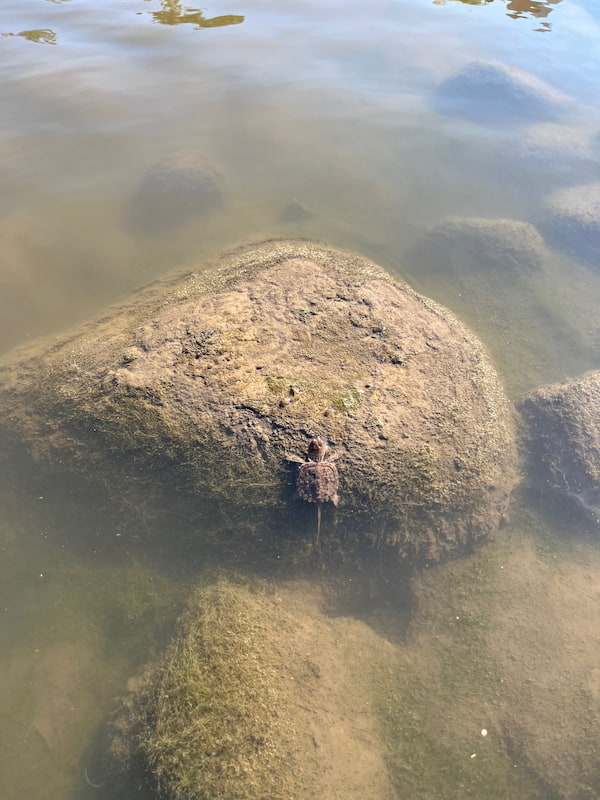
With a lot of luck and determined investigation, we were able to find out where the patient had been found. It just so happened to be a couple of blocks from a large body of water! A few days after the turtle presented to the clinic, I was able to release it. I hope that it will grow for years to come and be a beneficial contributor to our ecosystem!
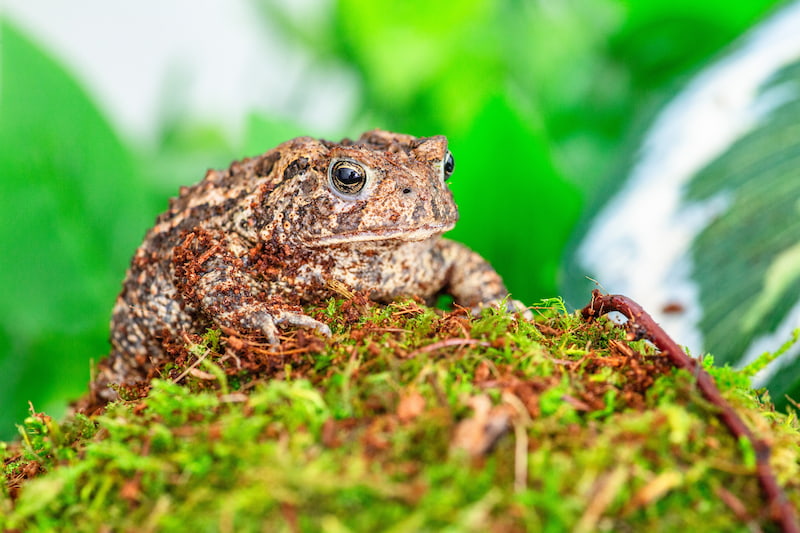
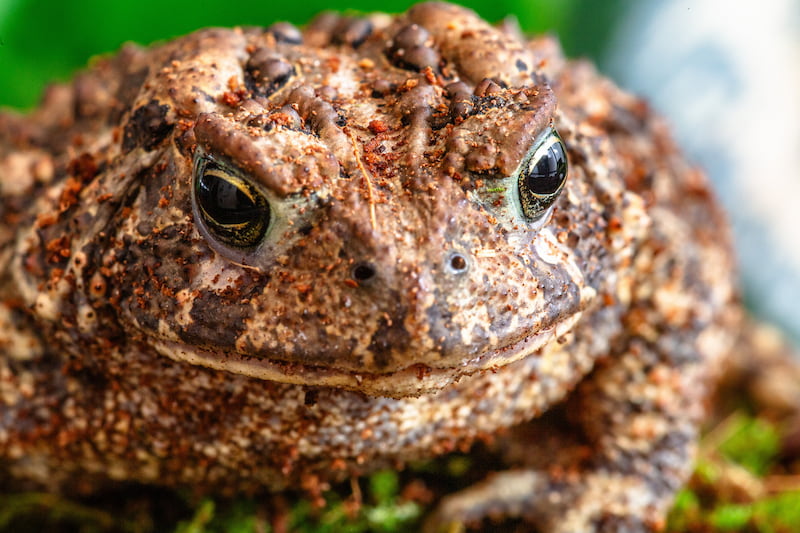
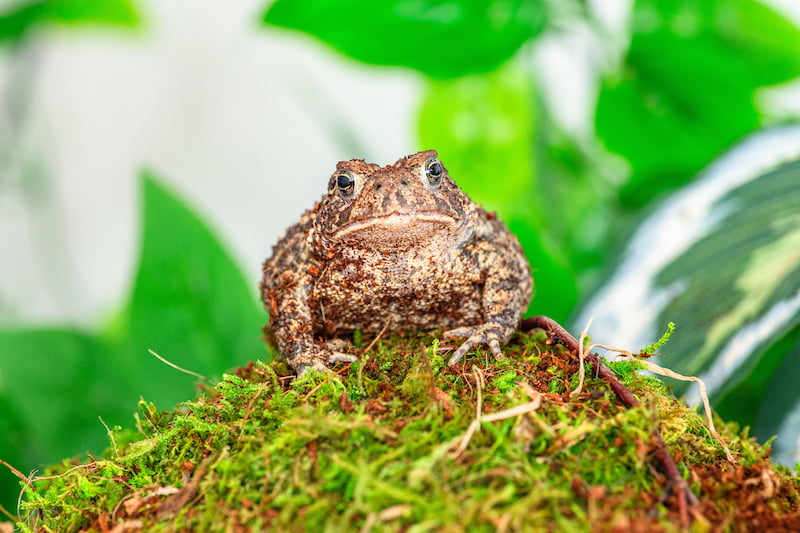
The Wildlife Medical Clinic’s Ambassador Program is absolutely thrilled to introduce our newest member – Basil the American toad!
Basil was found injured in Meadowbrook Park in Urbana, IL in late October 2024. They were then brought to the Wildlife Medical Clinic by a community member for treatment. On our initial exam, it was suspected that there was an open fracture of their right hind limb. An additional fracture of one of their toes was found on that same leg. The treatment team administered pain medications, started a course of antibiotics, and arranged for them to be quickly and fully assessed by one of the WMC veterinarians.
The next day, these injuries were confirmed by taking radiographs. Since surgical repair was likely to be unsuccessful, amputation of the hindlimb was determined to be the best course of action. However, the WMC would not be able to release them into the wild with only three legs. This is because they would be at a disadvantage for getting around their environment, hunting, and escaping from predators. Conversations quickly turned to our ambassador program, and whether we would be willing to take on another resident. We eagerly agreed, and the veterinary team proceeded with the leg amputation on Halloween – October 31, 2024. The toad was kept in the WMC for a healing and recovery period of about six weeks.
Becoming an ambassatoad
Once we moved our newest education animal into the Ambassador building, we asked the WMC clinic and ambassador volunteers to submit name ideas. We received dozens of suggestions and narrowed it down to a handful for the clinic to vote on. The winner was Basil, with the British pronunciation, so it rhymes with “dazzle.”
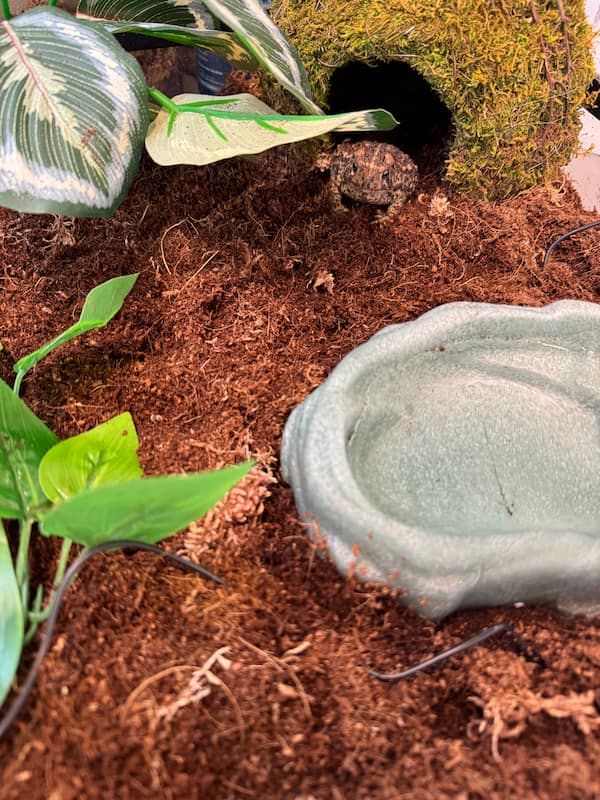
Basil has adjusted well to living in the ambassador building. They enjoy burying themselves in the substrate, hunting for crickets and Dubia roaches, and getting daily soaks. In our care, having only three legs does not appear to be having any negative effects. We do not know if Basil is a male or female, but suspect we will find out soon. Toads start displaying sex-specific behaviors during breeding season in spring and early summer. If Basil is a male, we would expect their throat to darken. We would also hear them start singing to attract a mate, which would sound like a prolonged, high-pitched trill.
Croaking forward
As far as we can tell, this toad is our first amphibian ambassador in the WMC. We are excited that our ambassador team volunteers have the opportunity to learn the unique aspects of amphibian care. For instance, it is important to use gloves covered in dechlorinated water when handling. We are especially excited to bring Basil to our educational programs to teach the community about American toads. They have an important role in the ecosystem and we would love to teach you what to do if you come across an injured amphibian in nature!
Sometimes it can be difficult to know when an animal should be taken to the Wildlife Medical Clinic. In cases where there are signs of an overt injury with blood present, unwillingness to move when approached, exposed bone, and maggots, we highly recommend safely transporting the animal to us! However, not all cases are as clear as that. Below I have outlined some very common questions the Wildlife Medical Clinic receives and what we think is the best course of action.
“Help! There is a bird in my yard on the ground and it hasn’t moved. It also seems to be wobbly when it walks. Should I bring it in?”
This is a super common question that we receive phone calls about a lot during the summer months. In these situations, it is very important to consider how old the bird in question may be. If the bird is an adult and fully feathered, it is uncommon to find them in that state. There is also a concern if the bird has no feathers and is looking dull and unresponsive. In these situations, it would be appropriate to give the WMC a call prior to capturing them. However, if the bird is smaller and lacking full plumage, then this may be a fledgling bird that is learning how to fly. Most songbirds will spend 3-5 days on the ground during this time. It is common to find fledgling birds near the bases of trees below their nest while they are learning to navigate the world.
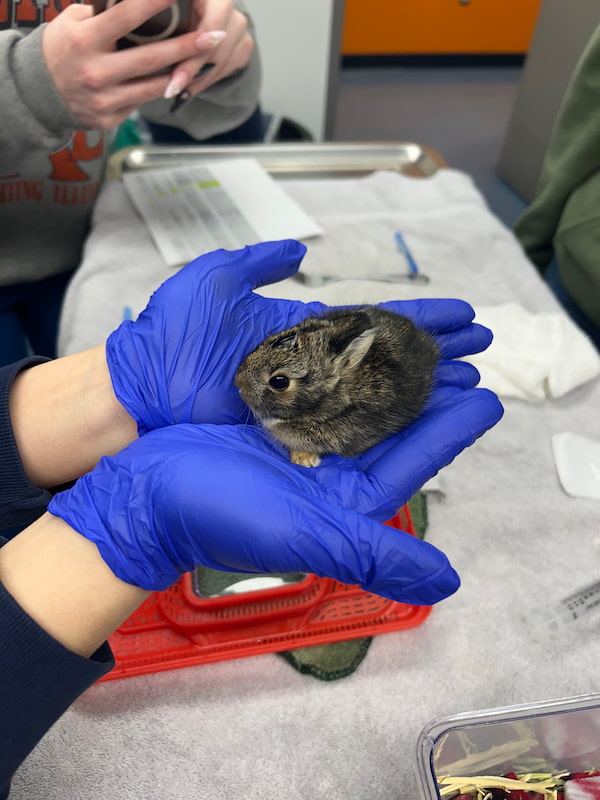
“I found a tiny bunny on the sidewalk, what should I do?”
It can be quite alarming to find an abandoned baby bunny! If you come across an abandoned wild young cottontail, it is important to first assess them for any injuries. If the bunny otherwise appears healthy, the next course of action should be to locate the nest. Bunny nests can be difficult to find as they are usually not in plain sight. They can commonly be found at the bases of bushes, hidden in taller grass, or under decks or sheds, in depressions found in the ground.
Eastern Cottontails are a common bunny species in the Champaign-Urbana area. They do not burrow in the ground. Instead their nests will be on the ground level, lined with the mother’s fur and then covered with soft grasses. If the nest is successfully located, we advise you to gently place the found bunny in the nest and cover it with grass and leaves. To ensure that the mother is visiting the nest, a pattern of ribbon can be placed on top of the nest and flour can be used to create a trail around the nest. These aspects will be disturbed if the mother is actively visiting the nest. If you are unable to find a nest for the bunny, we advise you to give the WMC a call for further steps!
If you are concerned about your dogs finding the nest, you can cover it with an upside-down laundry basket, with a hole cut into the side large enough for the mother rabbit to access her nest. The laundry basket can have a heavy object, such as a brick, placed on top to prevent dogs from pushing it over.
Another important consideration is that eastern cottontail rabbits leave the nest and are independent at only 4 weeks of age! At that time, they are only about the size of a tennis ball! If you find a healthy young cottontail about that size with upright ears, it’s best to let them be. Many people mistake these young rabbits as orphaned, but they have actually already left their mother!
“I found a nest of baby birds, but I don’t see the parents, should I bring the nest in?”
It is very normal to not see the parents for a nest of baby birds! Birds, along with other wildlife species, are terrified of us and will likely not visit the nest with us nearby. It is best to watch the nest from far away, either from across the street, through a window, or from inside a car. If there are no signs of the parents after a few days, it would be appropriate to give the WMC a call. In situations where there has been a recent storm, bird nests can be knocked out of trees. After accessing inhabitants of the nest for any signs of injury, the nest can be placed securely into the nearest tree.
“I found a baby squirrel in my backyard, what should I do?”
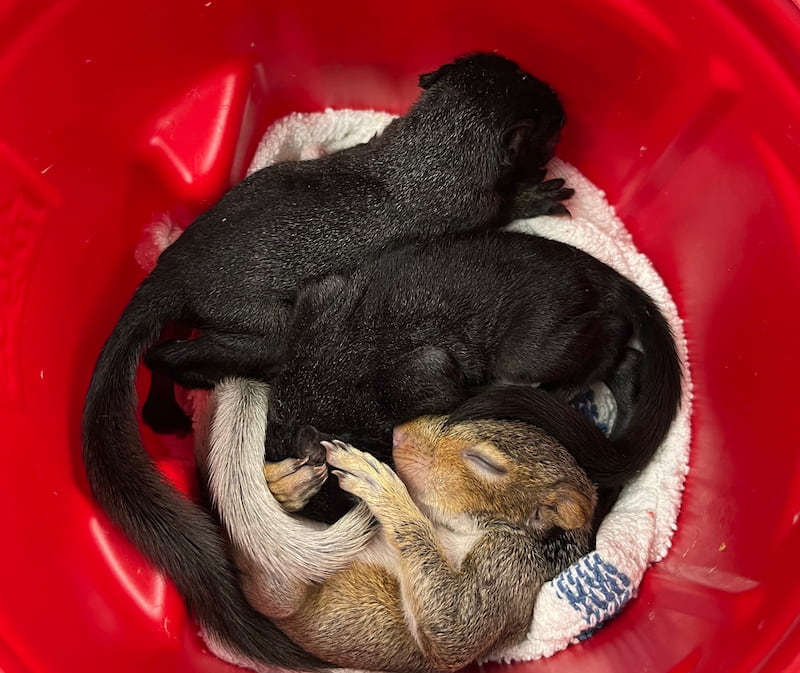
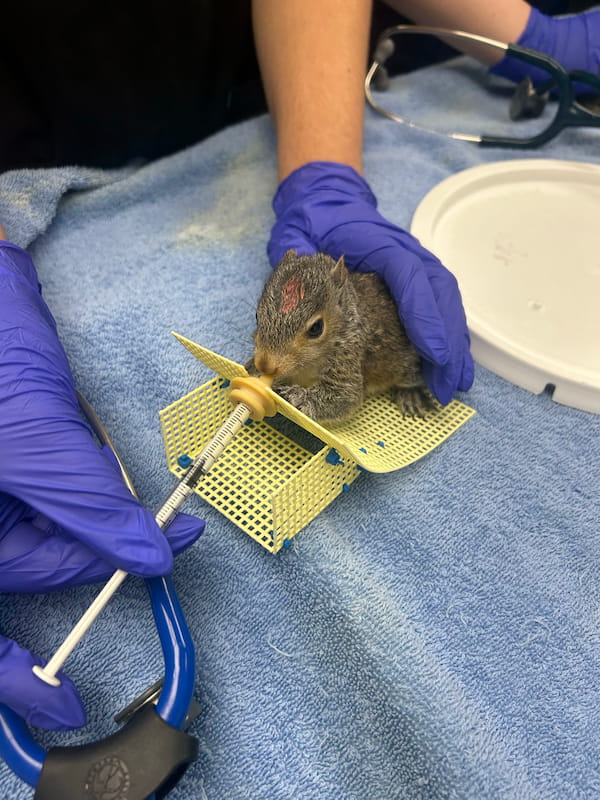
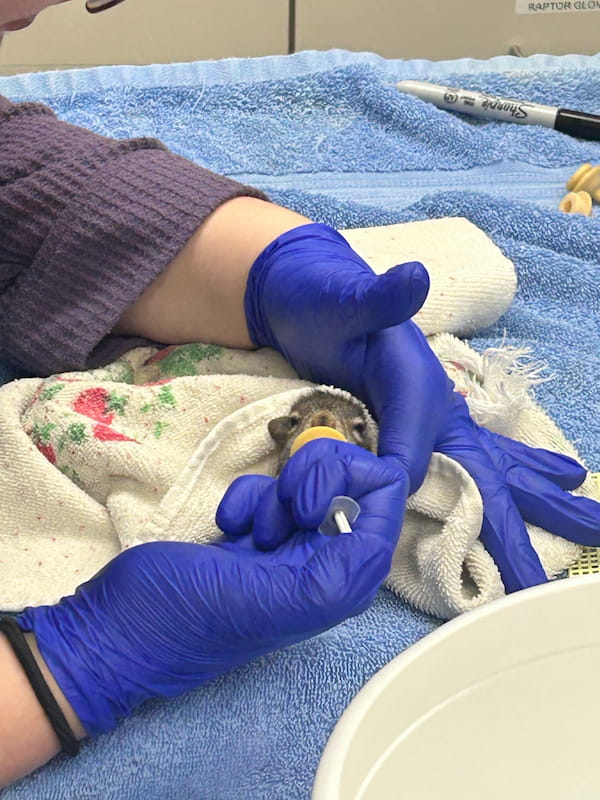
Baby squirrels typically wind up on the ground if they have fallen from their nest. If there are not any obvious signs of injury, it is completely okay to pick them up and place them back into their nest. In the event that you are unable to locate the nest or perhaps it is too high up, you can place them into a wicker basket close to where they were found. This gives the mom an opportunity to collect her baby and take it back to the nest. Even if the nest has been destroyed, it is common for the mother to have a back-up nest to move her babies to. If you don’t see her after a few hours or it is getting dark, you should bring the squirrel to the Wildlife Medical Clinic.
So you’ve determined it needs to come to the clinic, now what?
If you are planning to safely transport an orphaned or injured animal to the Wildlife Medical Clinic, it is important to understand the do’s and don’ts. Please do not feed them anything! Almost all species of wildlife can survive up to 24 hours without any food or water. Unfortunately, any attempts with feeding will likely result in serious issues for the animal. Inappropriate food items can cause harm to the animal’s digestive system and inappropriate feeding methods can pose a risk for the inhalation of food material.
The best thing that a finder can do is place the animal in a small box with air holes, keep them warm, provide them with a quiet, dark environment, and avoid handling the animal. Minimizing the amount of stress the animal is exposed to gives the animal the best chance of being able to make strides towards recovery.
For more information, follow the link below: Dr. Stephany Lewis, the current director of the Wildlife Medical Clinic, discussed with The News Gazette on when to bring wildlife here!
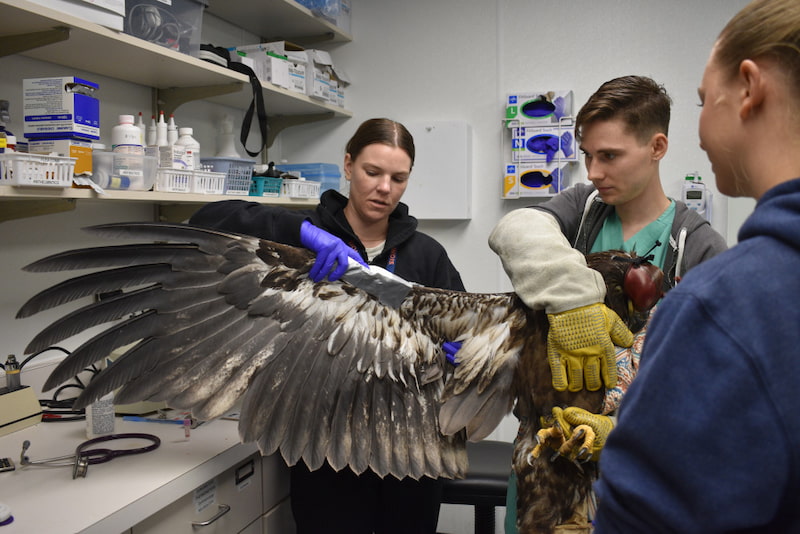
Time truly does fly when you are doing the things you love. In the blink of an eye, we, as the third years, are preparing to transition into the next step of our academic career. In this little corner of the South Clinic, memories are made, friendship blossoms, and knowledge is learned and passed down from one to another. As cheesy as it sounds, I will miss this place a lot. Like many of my peers, we have our fair share of learning curves. From the late-night orphan feeding to wrestling a bald eagle at 7 am. The never-ending raccoon wrangling and the splashing sessions with the giant snapping turtle. Looking back, all that was left was the laughter and teasing as we worked as a team and enjoyed the time we shared.
The third-year students serve as a cornerstone in the Wildlife Medical Clinic. Many of them take on the responsibilities as team leaders and have guided countless students through the ups and downs in wildlife medicine. Their dedication to teaching and learning has inspired many more students, just like how we are motivated by the ones before us. The near-peer mentorship highlights the wonderful things that the WMC provides. Thank you for all the hard work, time, and commitment of all third-year students who contributed to the WMC.
Send-offs for our third-years
Below are quotes from current WMC volunteers to showcase these wonderful attributes brought by our third-year students.
“Hi Sarah! Thank you so much for being a great mentor and for always being an incredible team lead. I always appreciated your answers to my questions and your willingness to help and allowing us to learn. Good luck on clinics, you’re going to do great!!” – Christie
“Sof, you have been such an amazing teacher and are always pushing us to step out of our comfort zone while also always being on our side! The clinic was so lucky to have you and we’re going to miss you so much.” – Akasha
“Talia!! You’ve been an incredible role model to me! Your kindness, skill, and ability to teach and help us all learn the ways of wildlife have helped me grow so much! Thank you for always being there for each question that we’ve had and helping us navigate it all! I am going to miss having you as my team lead, but I’m so excited to see all the amazing things you’ll accomplish!” -Becca
“Marg, congratulations on finishing your third year of vet school!! what an amazing accomplishment! Thank you for all that you’ve done for the WMC and for always looking out for me (and of course for all the rides to treatments)! I know you’ll make such a caring, compassionate veterinarian and be successful in whatever path you choose. Best of luck in everything you do!” – Michelle
“Becky, thank you for being the best WMC mentor these last 2 years! It’s so hard to imagine volunteering at the WMC without you there. You put so much dedication and passion into helping wildlife, it was truly inspiring. I hate that you have to leave, but I have no doubt that you are ready for clinics and will be successful in your veterinary career.” – Kayla
This is far from the end of the list of all the kind words volunteers have shared. Let us celebrate with all our third-year volunteers as they now take on the next challenge ahead.
Thank you all, and cheers!
-Written and organized by YiYing Tung, Class of 2026
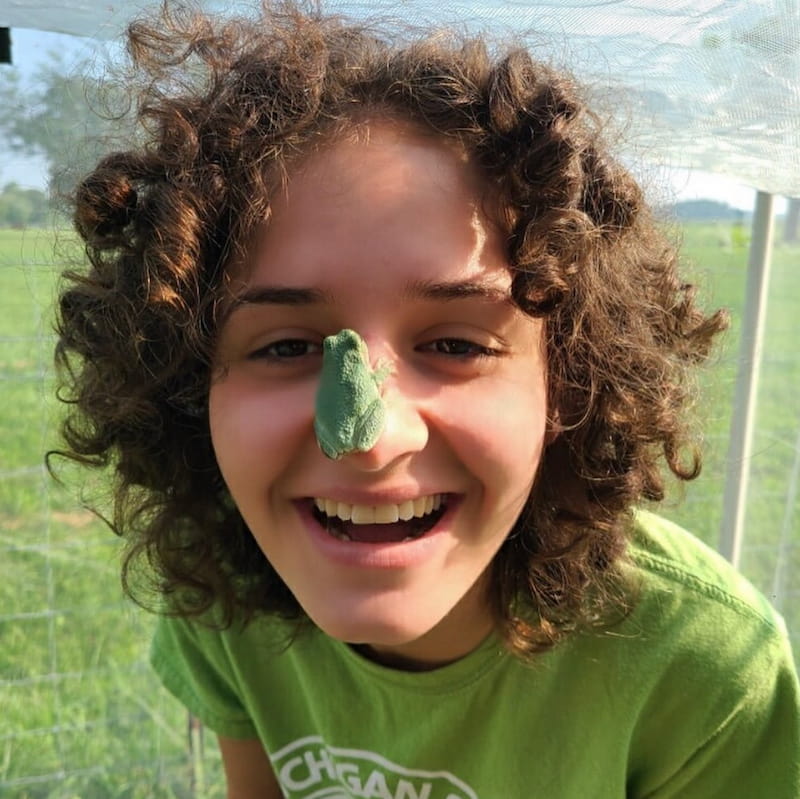
The Wildlife Medical Clinic is excited to introduce our newest student manager from the Class of 2028, Alyssa Guest! Alyssa is originally from New Boston, Michigan and graduated from Michigan State University in 2023 with a bachelor’s degree in Zoology. Her current veterinary medicine interests include wildlife and exotics, but she is keeping an open mind while she progresses through the veterinary curriculum. We sat down with Alyssa and asked her a handful of questions. Continue reading to learn more about her!
We first inquired about Alyssa’s path to veterinary medicine and learned that when she was in high school, she originally wanted to pursue psychology until she took a zoology class. While she was in her undergrad at Michigan State, she still was unsure on what she wanted to pursue but knew that she liked working hands-on with animals. Alyssa found herself in a full-time research position the summer between her sophomore and junior year working with moths to control an invasive plant species, Swallow-Wort, commonly known as “Dog Strangling Vine”. After her time in a research setting, Alyssa then began working in a primary care veterinary clinic.
How she came to be manager
Next, we were curious to know why Alyssa was interested in applying for WMC manager. Alyssa was excited to share that one of her team leaders, Rachel, really planted the seeds in her head about applying for the position. After speaking with one of the current managers, Riley, Alyssa was very interested in all the different opportunities that she could have as a manager. More importantly, she wants to be heavily involved in providing education and comfort for all the volunteers.
While Alyssa is still a manager in training, she is looking forward to this upcoming summer where she will be in the clinic full-time with student interns, 4th year veterinary students, and faculty. Alyssa stated that she cannot wait to be able to put all her training to use as she works with more species and learns new skills. When it comes to her future goals, Alyssa wants to work towards becoming more comfortable with avian species while making the Wildlife Medical Clinic as enjoyable as possible for everyone involved.
Lastly, we asked Alyssa what she enjoys outside of veterinary medicine and if she has any particular species, she hopes to encounter during her time in the WMC. Alyssa was delighted to share with us that she enjoys drawing, cross-stitch, and playing video games. As a bonus, she shared that she also knows how to play the trombone! When thinking about potential patients that could arrive at the clinic, Alyssa said that she would be excited to work with a pelican or other reptiles and amphibians.
We are thrilled to welcome Alyssa into her new position as manager!
Written By: Rachel Eggleston, Co-Chair, Class of 2027
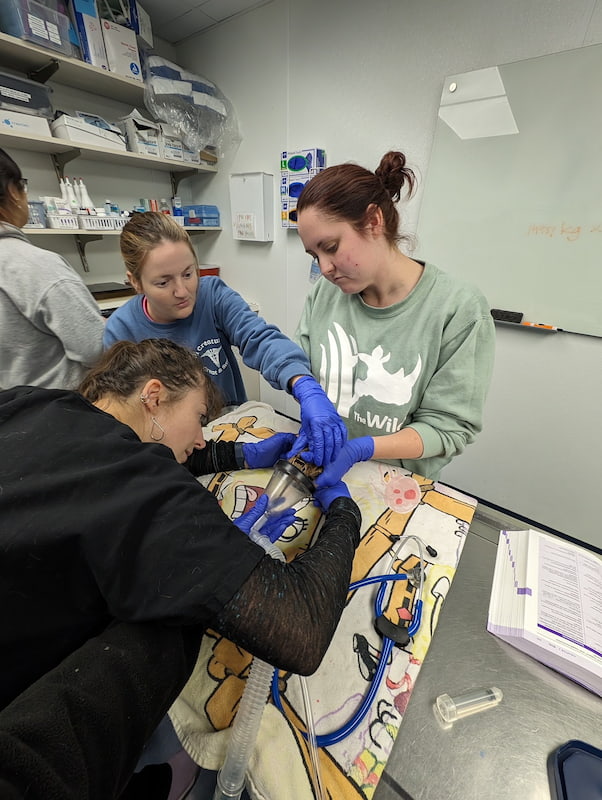
Spring is the season of changes, and at the Wildlife Medical Clinic, we are experiencing our bittersweet moment. Every year around springtime, we prepare for the big transition of the manager position where our senior student manager leaves the wildlife clinic as they enter their clinical year. The Wildlife Medical Clinic is a fully student-run organization with the supervision and support of the faculty and house officers. It is a one-of-a-kind environment that provides unique experiences to our students for their growth in leadership, medical knowledge, and hands-on skills. Everyone is an intricate part of ensuring top-notch care to our patients. However, the unsung hero who works tirelessly in the background and polishes every screw and plate in this process are our student managers. They have dedicated an enormous amount of time, brain power, and labor to provide the best patient care and a high-quality learning environment for our students.
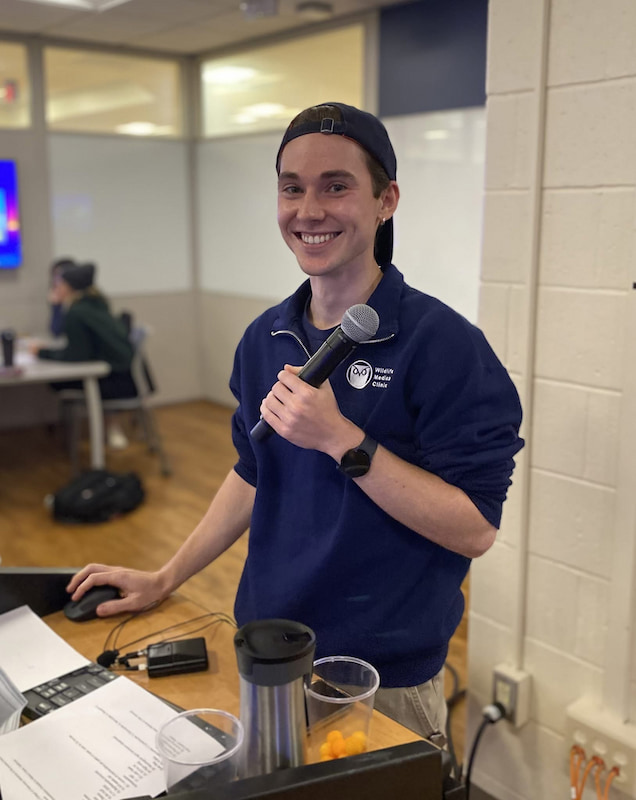
Tyson Jenkins (VM26) is our current senior student manager who will be transitioning out of his position over Spring break as he prepares to enter his clinical year as a veterinary student. We are honored to have the chance to chat with him and excited to share the interview with you. His commitment to this position and all the hard work that he devoted to advocating for the volunteers, patient care, and his fellow classmates is something that we will be forever grateful for. We cannot wait to see his amazing accomplishments and the extraordinary clinician he will become. Thank you, Tyson! The clinic will surely miss you a lot!
Q & A with the Man Himself
Q: What is the next step for you after clinical rotations?
A: “My goal is to apply for a wildlife specific internship. I’m currently looking at the Partners 4 Wildlife internship in Washington, Virginia Wildlife Center internship, and the Nebraska Wildlife Rehab internship. My main goal is to work in Wildlife Rehabilitation Medicine, they are currently working on having it established as an actual official specialty, so eventually I would like to be boarded in it if I can. My ultimate goal is to do wildlife full time.”
Q: What is one or a few of your best memories from the Wildlife Medical Clinic?
A: “I think it was really funny when we moved the bear”. [a brief pause with laughter]
A: “I don’t really have a specific memory, but just the summer period in general where we have a smaller team, more targeted mentorship, and a much higher caseload. That was always my favorite part of the job, especially because I could focus on doing wildlife all day every day instead of having to balance schoolwork and other responsibilities. I very distinctly remember my very first treatment shift as a volunteer. One of the team leaders asked for volunteers to help with the hawk and I had zero training going in and she was basically like “If you don’t do it now, you’re never going to do it”, so she had me catch up the hawk my very first day in wildlife. I will never forget that because that set the expectation that hands on learning is the requirement in the clinic”.
Q: Do you have a favorite patient?
A: “I really like the resident snapping turtle even though he is so grumpy all the time. He is just fun to work with especially because he is a small snapping turtle, so he is good to learn on.”
A: “We had a neurologic goose my first summer that we basically built a wheelchair sling kind of thing for, and we would give it pool time, that was really fun.”
Q: What is something you’ve learned during your time as the clinic manager and also being a volunteer?
A: “I think I have grown the most in my people skills. I kind of expected the clinical skills and the veterinary knowledge that comes with the position, but I didn’t fully expect how much being a manager and even being a volunteer is dependent on the people that you work with. Especially team building and conflict resolution and management and even just how to encourage people to do things successfully, that has been the biggest takeaway for me”.
Q: Out of all the species you got to work with during your time, which one would be your favorite?
A: “I really love Cooper’s Hawks; I’ve said that all 3 years. Mostly because they are a nightmare and I think that’s really fun. We also had a Bull Frog that I loved very much”.
A: “The otters were very cool. I never really expected to get otters. The experience of working with a carnivore like that was really cool.”
A: “I also just really love Canada Geese as patients, I think they are really rewarding to work with as much as people don’t like them.”
Q: What is your biggest piece of advice for current and future volunteers?
A: “Take every learning opportunity that’s given to you. I think the Wildlife Clinic is much better suited for the hands-on learning that students are looking for. I remember going on clinical rotations my 1st and 2nd year and being really disappointed because it felt like my learning as a 1st and 2nd year wasn’t a priority. Whereas when you’re in the wildlife clinic, you are there because we want you to practice those clinical skills and soak up all the knowledge from everyone around you. Remember that you are there to learn and take all those opportunities that you can, especially being a primary because that is huge that you can have primary case management as a 1st or 2nd year because you don’t get that anywhere else in the hospital”.
Q: What are you going to miss the most about WMC?
A: “Number one are the people. I think going into clinical rotations, I’m really going to miss the creative aspect of working in the Wildlife Medical Clinic, like the directly creative aspect where I was always putting together posters and learning materials and presentations. But also, there is something about Wildlife Medicine where you are kind of always making it up as you go. That sounds bad, but there are a lot of patients that we either don’t have the husbandry resources for or they have really specific requirements for care that you have to figure out how to create and that’s one of the things that I enjoy the most about wildlife medicine and I think I’m going to really miss that in a more standard hospital setting”.
Q: Lastly, is there anything else you would like to share with the readers?
A: “Peace!”
A: “I’m going to miss everyone and I know the clinic is going to continue to grow and do amazing things and I’m very happy and extremely lucky to have been a part of that for the past 3 years”.
Praise for Tyson
We would also like to share a few quotes from our clinic directors and student volunteers that highlight Tyson’s dedication and achievement as a student manager!
-Interview conducted by Rachel Eggleston (VM27), article organized by YiYing Tung (VM26)
Sydney Oliveira, WMC Program Coordinator and Sarah Hollander, vet student and Wildlife Ambassador Care Coordinator, introduce us to one of the WMC ambassadors, Maize, the corn snake. Learn about Maize and why snakes are so important in the environment.