Join Program Coordinator, Sydney Oliveira, as she visits CiLiving to discuss safe practices when fishing to help minimize your impact on wildlife and the environment.
Category: Birds
Bird Migration
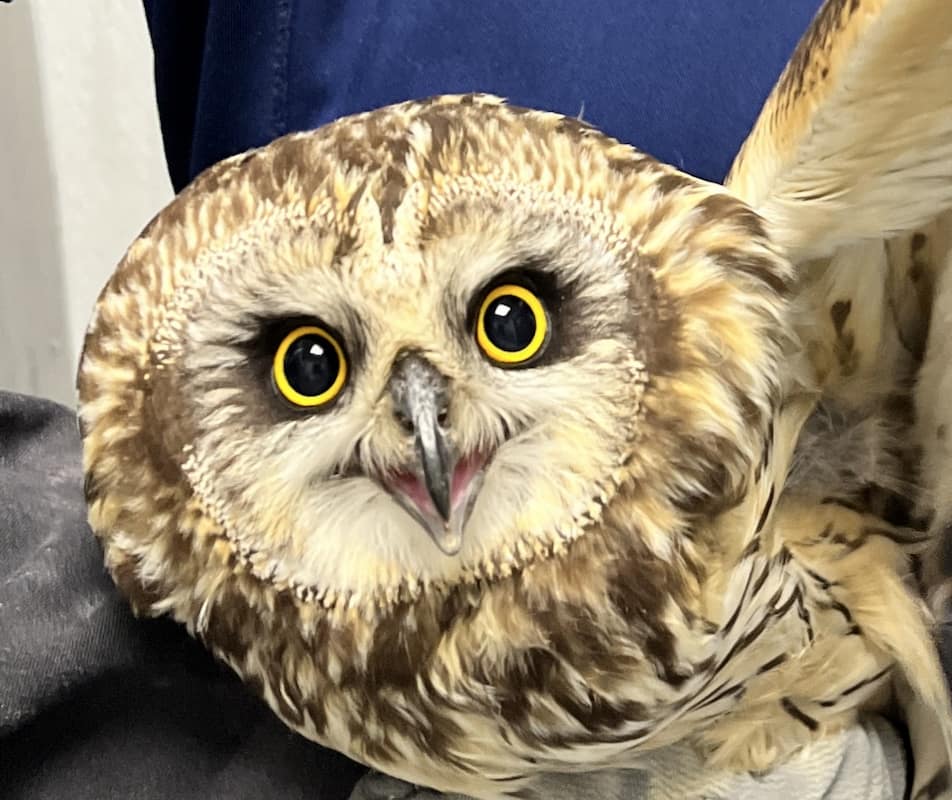
Whether you’re an avid bird-watcher or a person who avoids parking under trees so that you don’t have to wash the droppings off your car for the nth time this week, you’re bound to have noticed that bird populations seem to ebb and flow with the seasons. You might be wondering, “where do they go?” Some might even notice that a few of these birds are only around during certain parts of the year, such as the famed Swallow-tailed Kite in the southeastern U.S. Then, you might be wondering, “why don’t they stick around?” As the seasons change, so do the food sources and the climate. Birds don’t have the luxury of bringing out-of-season foods back to their home or adjusting their thermostat with the changing temperature like we humans do, so they resort to travel. Each species’ resource needs will dictate where they go during migration and how far they need to travel for it.
Fall Migration
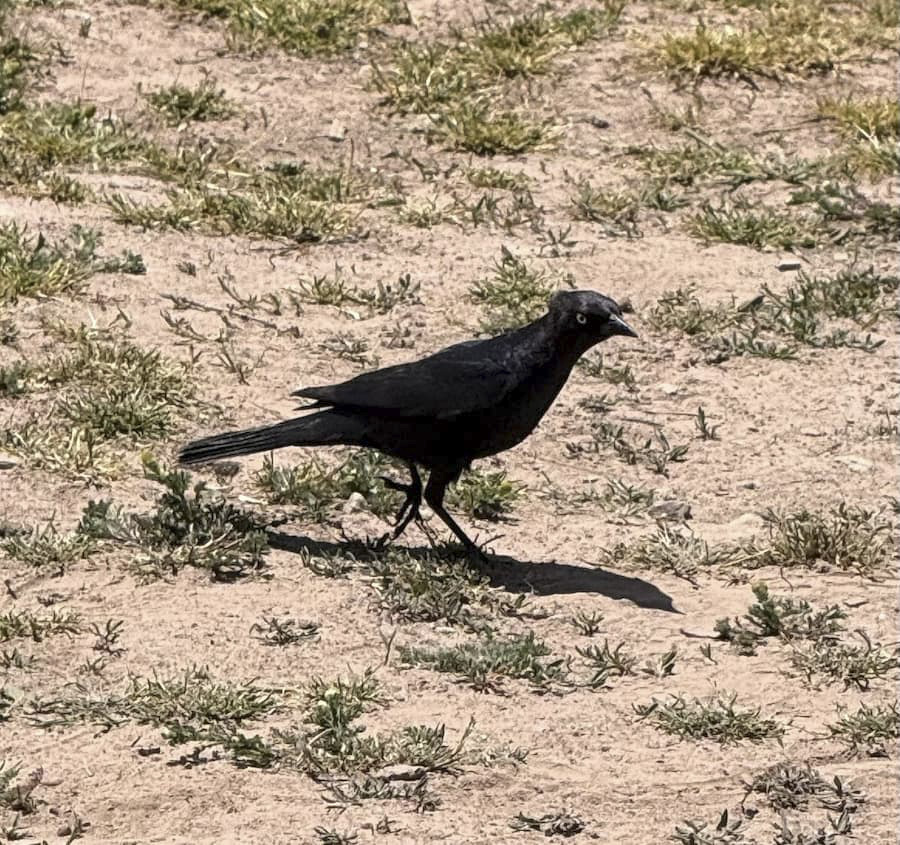
We are actually right in the middle of the Fall migration season, which runs from approximately August 1st to November 30th. Each night, up to 45 million birds fly over Illinois on their way South to the southern U.S., Central America, and South America to escape the winter cold and lack of food supply. During these migratory seasons, species that are not normally seen in your area might be coming through, such as the Magnolia Warbler and the American Redstart, which will be on their way South shortly, to Central and South America.
What Can You Do to Help?
Plant native trees and flowers
Because of the long journey, birds need to be able to get food along the way. With decreasing diversity of flora in urban and suburban areas, ample food sources, such as bugs and seeds, are increasingly difficult for migratory species to come by. Pesticide use and monoculture agriculture are turning their travel route from an all-you-can-eat buffet into a Nevada desert gas station scavenger hunt. Imagine Forrest Gump making his trek across the U.S. with only the occasional french fry; it wouldn’t happen. So, how can you help the birds out, you ask? Plant some native flora! Diverse flowers attract diverse insects, which help feed the immense variety of bird species that come through Illinois (not to mention the native bats!).
Build shelters and nests
Nobody wants to get caught out in the rain when they’ve got business to do, and that includes our avian friends. Building nest boxes and shelters helps our friends have a dry and safe place to rest before continuing on the air highway. Some species also nest here in Illinois during the Spring, so building nest boxes also helps them to have a safe place to raise their young; and if you planted some native plants near the box, they’ll have food delivery, too!
Put decals on your windows
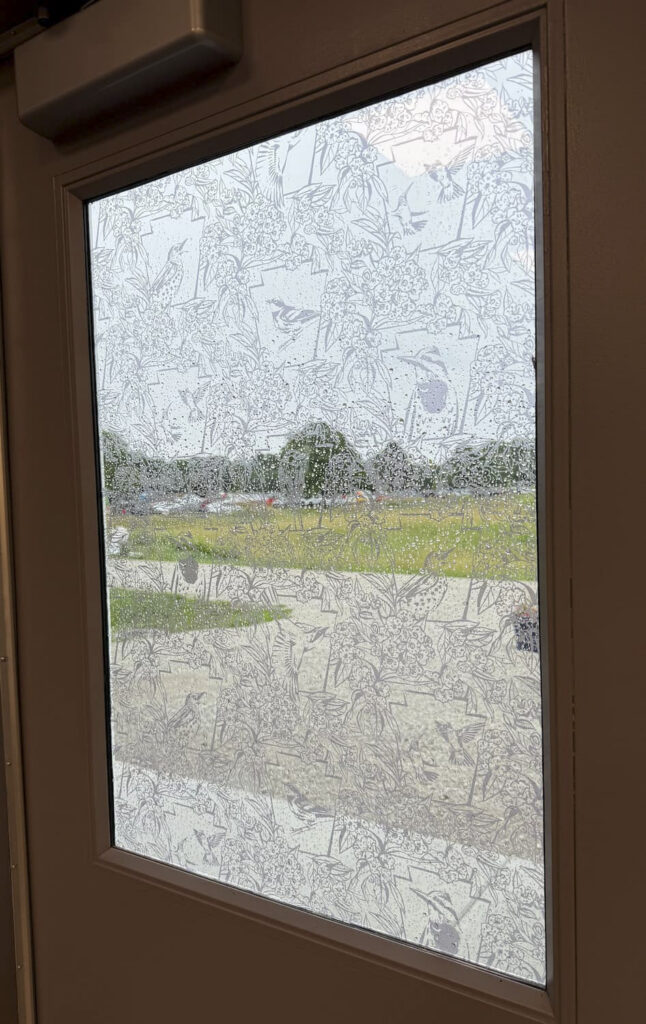
For birds, windows are worse than invisible. They reflect foliage or the sky and look like an inviting place to fly. As a result, they often fly straight into them and suffer severe head trauma – a major reason a lot of birds end up here at the Wildlife Medical Clinic. Placing decals on your windows helps them to see the window and at least slow down before attempting to fly through it, which can potentially save their lives. There are many commercially available products out there and several are listed in, “Why Birds Hit Windows-And How You Can Help Prevent It.”
Want to Learn More?
Cornell University and their Ornithology Lab have put out some incredible free resources for you bird lovers, such as Merlin and eBird. Merlin functions as a bird-identifying app through use of sound and step-by-step visual identification tools to help you figure out what obscure bird it was that you just heard or saw. Once you are able to identify which bird it was, you can hop over to eBird, Merlin’s sister-app, to record the bird you found and at what location. This is a way to help contribute to the ongoing research of bird migration seasons, which even helps us out here at the WMC! We can use the information learned from species-specific migratory seasons to know if it is okay to release a bird or if they have to over-winter; we want to make sure we’re sending them out with a band of their mates to find their feeding grounds for the winter.
Thanks for reading, and hope you enjoy seeing a new bird or two!
References
“American Redstart Overview, All about Birds, Cornell Lab of Ornithology.” Overview, All About Birds, Cornell Lab of Ornithology, TheCornellLab,www.allaboutbirds.org/guide/American_Redstart. Accessed 16 Oct. 2024.
“Illinois – Birdcast Migration Dashboard.” BirdCast, TheCornellLab,dashboard.birdcast.info/region/US-IL. Accessed 16 Oct. 2024.
“Magnolia Warbler Overview, All about Birds, Cornell Lab of Ornithology.” Overview, All About Birds, Cornell Lab of Ornithology, TheCornellLab, www.allaboutbirds.org/guide/magnolia_warbler. Accessed 16 Oct. 2024.
Written By: Ryland D., Class of 2027
Meet our Newest Resident Ambassadors
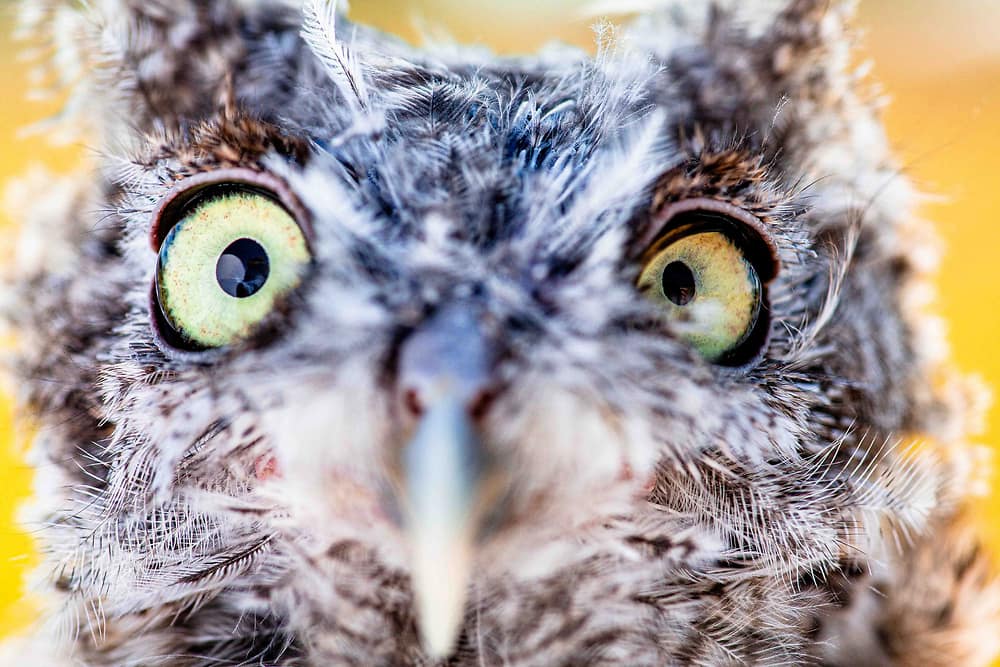
In the fall of 2025, the Wildlife Medical Clinic (WMC) ambassador program grew with the addition of a red-tailed hawk, a Virginia opossum, and an Eastern Screech Owl. While you may have seen short clips of these ambassadors on CiLiving and through our social media platforms, we would like to formally introduce our newest trio of animals.
Loki, male red-tailed hawk
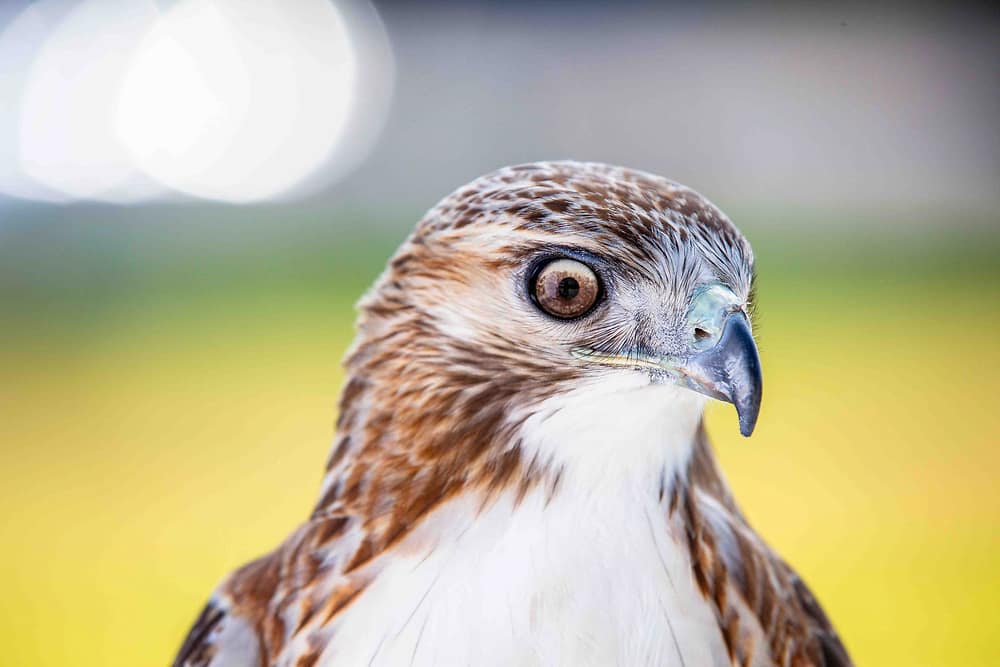
Loki is the latest red-tailed hawk to join the WMC Ambassador team, starting his tenure with us in May of 2025 at 2 years of age. Loki initially arrived at another wildlife rehabilitation facility and then was transferred to a licensed falconer to be conditioned for release. The falconer had Loki ready for release but noticed he was not hunting well and suspected he had an issue with his vision. Due to this, Loki was transferred to the WMC for evaluation, where we discovered a cataract and significant scarring in the back of his left eye, likely from trauma sustained while he was living in the wild. His vision is severely impaired on that side, and it would be very difficult for him to hunt in the wild. Instead, we have continued his training that was started by the falconer and have integrated Loki into our ambassador program. His name was chosen by our Ambassador Care Coordinator student volunteers to match that of our other male red-tailed hawk, Odin. Loki and Odin are both very prominent gods in Norse mythology.
Loki’s experience with a falconer is not uncommon for red-tailed hawks. Falconry is a form of hunting, where humans train and partner with a bird of prey to hunt wild game in the birds natural habitat. This sport is highly regulated and is a cooperative relationship built on trust where the bird retains its wild instincts while working alongside a human partner. The process of becoming a falconer takes years and requires an individual apprenticeship to a sponsor; after obtaining the required permits and passing an exam, most beginner falconers in the U.S. use a red-tailed hawk as their starter bird. These animals are less than a year old and wild-caught. In the wild, yearling red-tailed hawks face many challenges including starvation due to poor hunting success, rodenticide toxicity after eating poisoned mice or rats, trauma from hitting a car, window, or other object, and even electrocution. In fact, it is thought that anywhere from 60-80% of red-tailed hawks do not survive their first year of life. For the red-tailed hawks that are caught and work with a falconer, they receive critical assistance during the most vulnerable time in their life and are released as an adult in optimal physical health and have perfected hunting techniques, greatly increasing their survival rate.
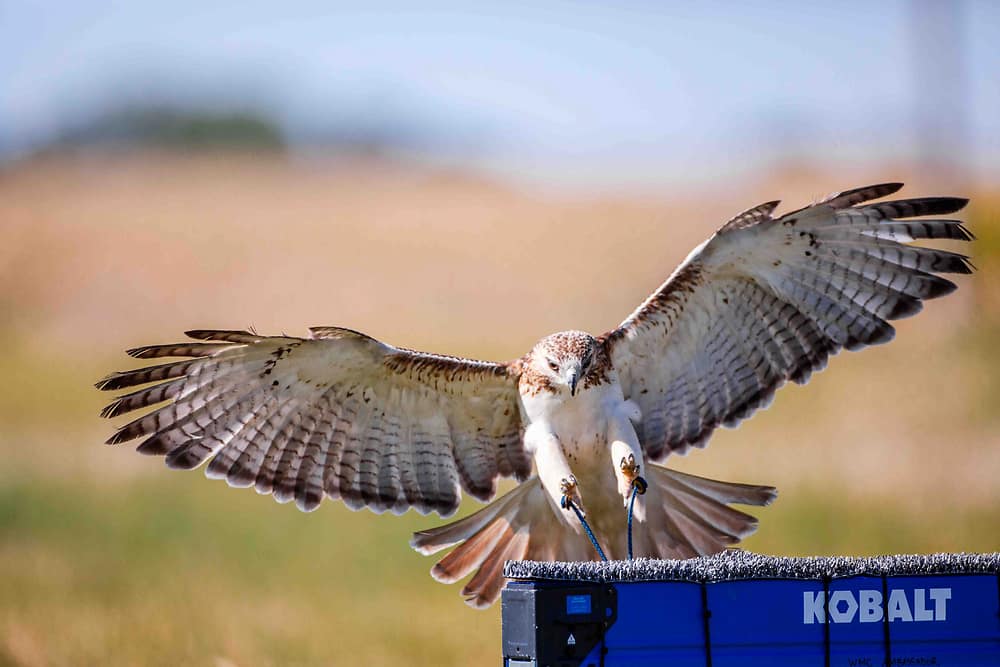
While Loki’s vision deficits keep him from being able to return to the wild, he is still able to engage in plenty of natural hawk behavior. With no damage to his bones or feathers, he is fully flighted and will often spend part of his day swooping from one perch to the next in his outdoor enclosure. On days when the weather allows, we are also able to creance him, using a long weighted line, he is able to fly longer distances from one trainer to another or from a trainer to a perch keeping him in great body condition. This also gives Loki a chance to stretch his wings, and a chance for all of us to appreciate his talent. Perhaps you will have a chance to see him fly at an upcoming program!
Sources:
Pesto, male Virginia opossum
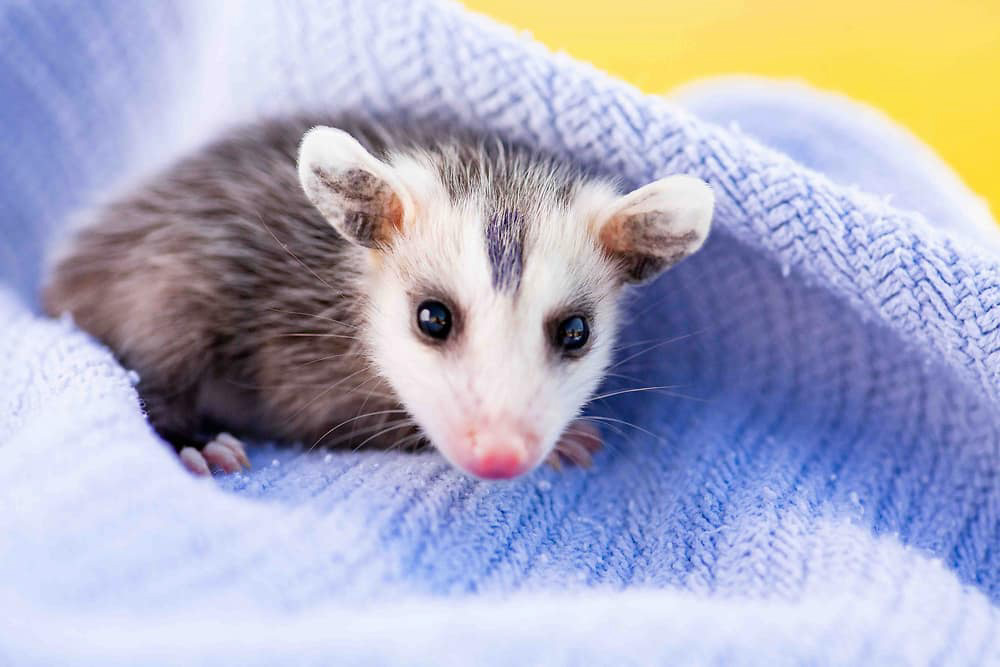
On September 2, 2025, a passel (litter) of baby opossums was brought into the Wildlife Medical Clinic. Their mother had been hit by a car and unfortunately passed away leaving Pesto and his siblings orphaned. While the majority of the young were perfectly healthy, Pesto’s tail had gotten caught, and was barely hanging on by a thread. Our team determined the tail could not be re-attached, and was amputated, fully removing the tail at its base. Pesto was prescribed pain medication, and he along with his siblings were set up in a small incubator and started on several feedings per day.
The tail of the Virginia opossum is hairless and prehensile, meaning it can grab and carry objects. When they are young, joeys (baby opossums) can occasionally hang by their tails, but as they grow up they become too heavy for such behavior. Opossums use their tails to carry nesting material, like fallen leaves, or to balance while they are climbing trees and suburban fencing. The tail is integral to how the opossum behaves in the wild, and as such, losing the entirety of it disqualified Pesto from being a candidate for release. Instead, he was accepted into our ambassador program as our newest opossum member, and he was fully hand raised and habituated to people to ensure he would thrive as an ambassador animal.
Pesto was housed in the WMC for the first few months of his life, where he received multiple formula feedings each day before being transitioned onto more solid foods like veggies, fruits, yogurt, and kibble. At this point, he moved out of the clinic and into his permanent enclosure within the ambassador building, where our volunteers were very excited to work with him more closely. At first he was restricted to a small portion of his enclosure but as he grew, he was given more space until he had full access to his room. Having never had a tail that he could remember, Pesto is still able to move around his enclosure freely, and does still climb very well. His name was chosen by popular vote by members of both the WMC and the ambassador volunteer team, since it took everyone’s combined efforts to take care of him in his infancy.
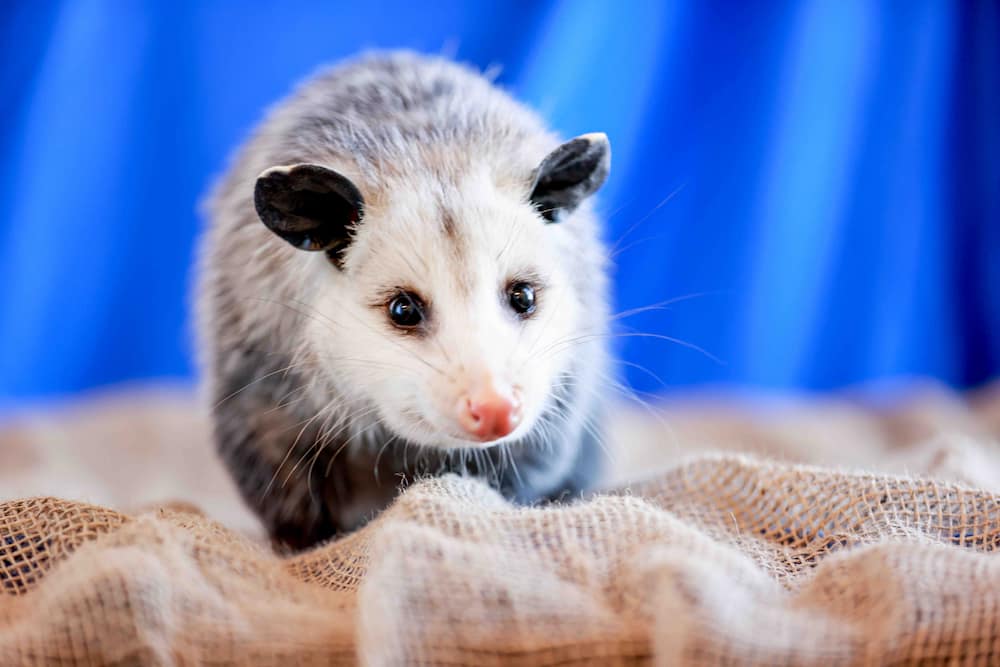
Virginia opossums (Didelphis virginiana) are the only marsupial species found in North America (North of Mexico). Females will give birth to up to 13 underdeveloped young that then migrate to a specialized pouch on their body, where they continue to grow and nurse until they are large enough to go off on their own. They have very few defenses beyond their impressive set of teeth (50 in total), and instead will “play dead” when they feel trapped, in an effort to make the predator lose interest. Opossums are omnivorous opportunistic feeders, and are primarily nocturnal. While many regard them as pests, they play an important role in disease control within their habits, scavenging what’s been left behind, be it a deer carcass or a discarded sandwich. Pesto travels to many of our ambassador program events to help demystify these animals, and to show how important these misunderstood creatures are in the environment.
Sources:
- North Carolina Wildlife Resources Commission
- Virginia Department of Wildlife Resources
- National Park Service – Virginia Opossum
- Hitchcock Center
Whittington, male Eastern Screech Owl
The newest Strigiforme to join the ambassador program is Whittington, an Eastern Screech Owl! Fully grown at 115 grams (¼ of a pound), Whitt was brought to us by the Illinois Raptor Center in Decatur, Illinois, as a month-old fledgling. They were concerned that he had an injured wing and eye. After examining him, we discovered chronic fractures spanning the length of his left wing. We have no way of knowing what caused this degree of trauma in such a young owl, but his body was able to heal and Whitt can still take short flights without issue. When examining his eyes, our team found an immature cataract in the right (meaning his vision is likely cloudy but still present) and a pupil that was not responsive to light in the left. We suspect the left eye is a case of microphthalmia, in which the eye did not develop properly before hatching; he likely cannot see much of anything on that side.
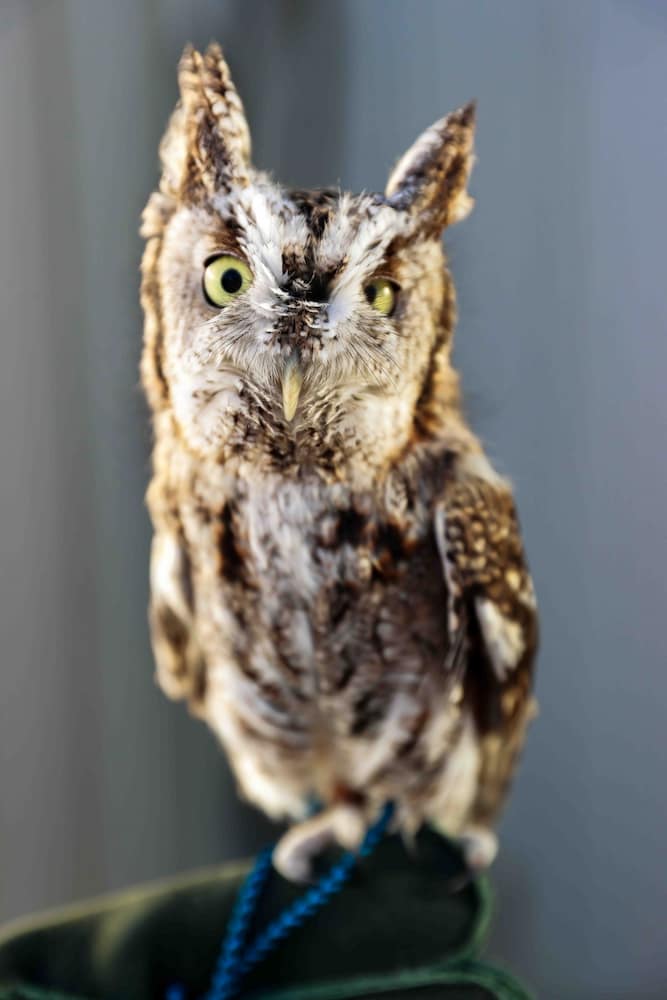
Whittington was found but then held for over a week before he was brought to a licensed rehabilitator. Unless you are a licensed wildlife rehabilitator, it is illegal to keep wildlife in your home for an extended period of time. Many species of baby birds imprint quickly on humans who handle them, which renders them incapable of release because they do not recognize other members of their species as “self.” Imprinted animals will rely on humans for everything, including food, shelter, and once mature, even seeing humans as their mate. They have no fear of people and never learn species-specific behaviors that would allow them to survive in the wild. Unless the animal has a temperament suitable for an educational program, it can be very challenging to find them a home. Luckily for Whitt, we were able to add him to our ambassador program, where we hope he will spend many years with us helping demonstrate to the public the importance of keeping animals wild.
Eastern Screech Owls (Megascops asio) are native to the majority of the U.S., east of the Rocky Mountains. They are nocturnal, non-migratory, and tend to live in deciduous, wooded areas where they can camouflage into the trees. They eat small mammals, birds, and all sorts of insects. Males typically are smaller than their female counterparts, but both sexes stand between 6 and 10 inches tall. The oldest recorded Eastern Screech Owl in the wild was fourteen and a half years old. Whittington is a gray phase Eastern Screech Owl, but there are two less common morphs, the rufous or red phase and intermediate or brown phase.
Whittington’s name was selected by a generous donor, who chose to name him after Dr. Julia Whittington. Dr. Whittington was the Director of the WMC for 16 years, before the mantle was passed to Dr. Sam Sander and then to our current Director, Dr. Stephany Lewis. Dr. Whittington is a 1997 graduate from the University of Illinois’ College of Veterinary Medicine. After practicing locally for a few years, she returned to the University of Illinois Urbana-Champaign to develop the College of Veterinary Medicine’s exotic “zoo med” service, and expand student access to wildlife experiences. She led the WMC from 2001 through 2017, before accepting a position as the Director of the Veterinary Teaching Hospital and Assistant Dean of Clinical Services. Though she retired at the end of 2023, she has stayed local and still keeps in touch with our zoo med and wildlife services. We hope she is excited to have one of our ambassadors named in her honor.
Sources:
- Wildlife Center of Virginia – Human-imprinting in Birds
- Cornell Lab – Eastern Screech-Owl
- Audubon – Eastern Screech-Owl
- WMC Blog – Dr. Whittington
- International Owl Center – Owls as Pets
Written By: Lydia T., Class of 2027