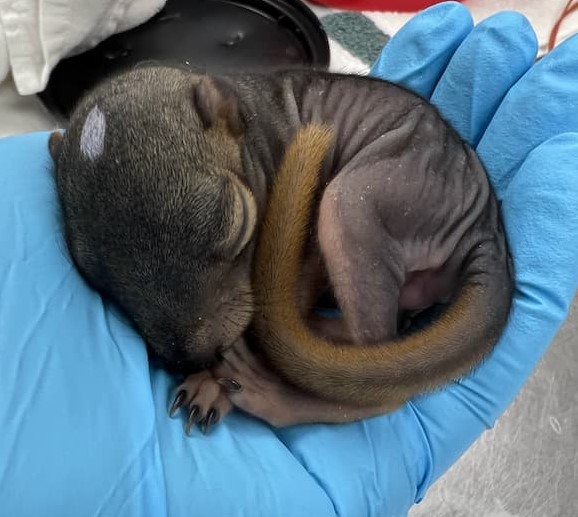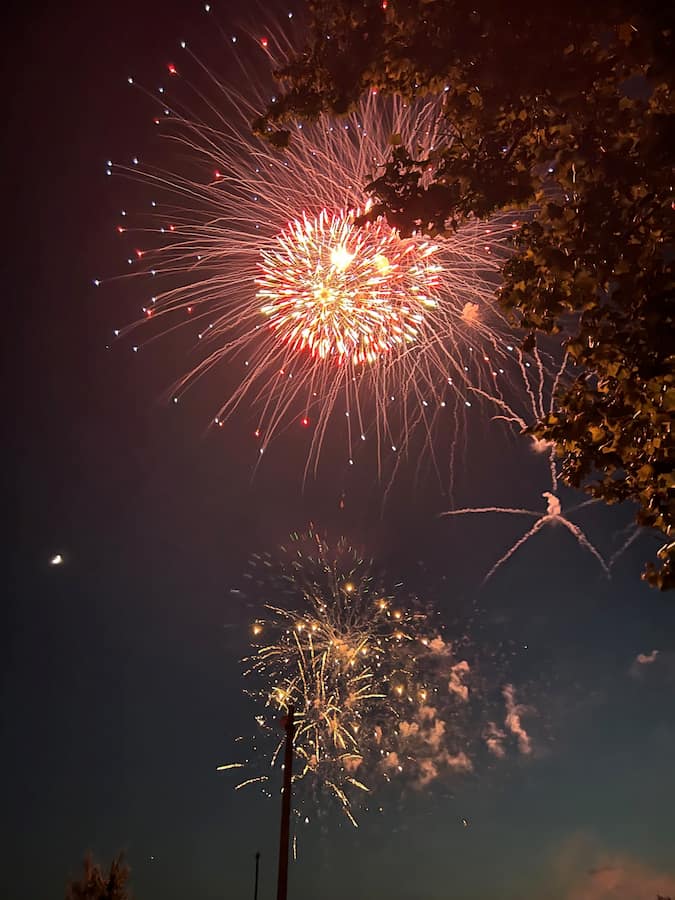
Wildlife and Fireworks

It is often discussed how fireworks impact people and even their pets, but did you know that fireworks can also have negative impacts on our native wildlife populations. Every year wildlife hospitals and rehabilitation centers around the country, including the Wildlife Medical Clinic (WMC), see an increase in the number of orphaned and injured wildlife in the weeks surrounding 4th of July.

How do Fireworks Harm Wildlife?
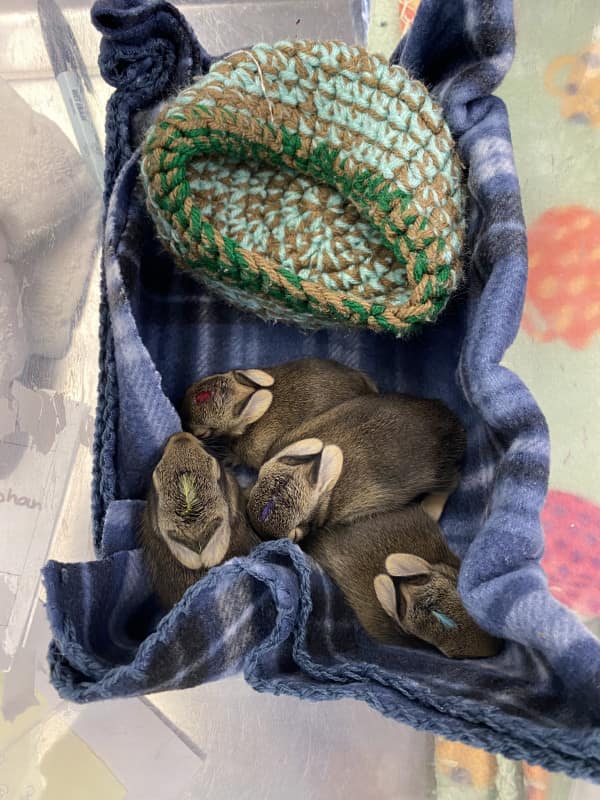
Litter of Eastern Cottontail Rabbits and an artificial nest.

Just like you and me, wildlife are scared by loud noises. The loud thunderous sound of fireworks can frighten wildlife causing them to panic. Birds might fly into windows. Small mammals like rabbits and squirrels may flee in fear, injuring themselves in the process. There is also a greater risk of animals abandoning their babies. Because of the loud and often disorientating noises animals fleeing in a panic may not think it is safe to go back for their babies afterwards. This leaves them in the care of wildlife rehabilitators if they are found by good Samaritans. While wildlife rehabilitators have the tools and knowledge to raise these animals, they can never fully replicate the care that the parents provide to their offspring. Raising orphaned wildlife often poses many challenges, so it is much better if these animals are able to stay in the wild with their parents.

You also must consider the waste produced from fireworks. Like small children and puppies, wild animals tend to pick up things with their mouths and eat them without knowing that they may be harmful. Paper, cardboard, strings, and plastic are all waste products from fireworks, and they all pose a risk to animals if eaten. Not to mention the trash is coated in the chemicals that allow fireworks to light and give them their unique colors, many of which are toxic to wildlife. Unfortunately, ingesting trash from firework shows may lead to death for some animals. If you have ever had a pet eat something they shouldn’t and had to rush them to the vet, you will understand just how critical these cases can become and unfortunately, we are often too late for wildlife who have ingested foreign materials and are having complications. String like materials are also detrimental to birds as it can easily become tangled in their wings, leaving them unable to fly, unable to get food, and defenseless against predators.

And last but not least, fireworks have the potential to start wildfires. Wildfires can be a huge ecological disaster on top of the devastation they can cause to humans. Anytime fire is being used there is a risk for it to get out of control and fireworks are no exception this.

How Can You Help?

The absolute best thing to do would be to completely stop using fireworks. Things like drone light shows are a much safer alternative to actual fireworks. In some situations, they can look just as good if not better than fireworks. Not to mention, they are also a lot quieter and don’t come with the all of the litter or the potential to start wildfires.  However, they do require professionals with equipment to set up, which is not feasible for someone to do in their backyard.

If you’re not able to cut out fireworks completely there are other options to try. One would be to consider going to your local community fireworks show instead of setting them off at your home. Many towns, parks, and other organizations put on firework shows for the public to watch each year. Not only is it a lot safer for the people involved, but it also reduces the total number of fireworks being set off, lessening the impact to local wildlife.  

If you are going to be putting on a show at home, there are also a few things to consider. One, setting off smaller fireworks that aren’t as loud can help prevent scaring wildlife. Two, making sure that you are picking up any trash left behind from the fireworks can prevent wildlife from becoming tangled or ingesting the firework debris. Three, you can make sure you are not setting fireworks off in a dry field or next to dry brush that may catch fire. Being mindful of the risk that a fire can pose is often the first step and helps to prevent it. And finally, you can consider donating to a local wildlife center. Taking care of orphaned or injured wildlife can be costly and most rehab centers rely on donations to keep running.

              So, before you celebrate this upcoming Independence Day, remember to keep our wildlife friends in mind and do your best to have a safe and animal friendly celebration!

Written by Grace L, Class of 2027

How Bird Feeders Contribute to the Spread of Disease

From avid bird watchers to casual onlookers, bird feeders are a staple in many yards across Illinois and throughout the country. While these well-meaning people may simply be offering their wild, feathered friends an easy meal, these feeders can spread illness like a preschool classroom full of kids in the thick of cold and flu season. Yuck!

Mycoplasmal Conjuctivitis in Wild Birds

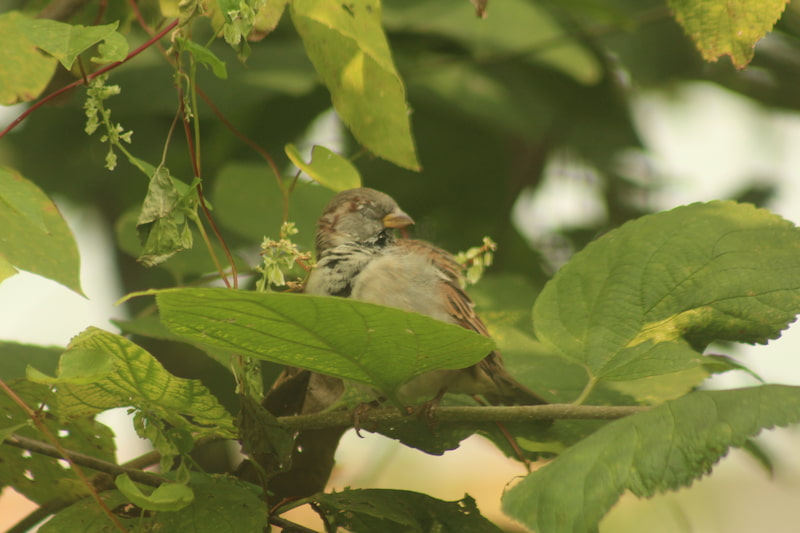
House sparrow perched in the middle of a tree with it's eyes closed.

Mycoplasmal conjunctivitis is an ocular disease seen mostly in finch species but has also been reported in other songbird species such as but not limited to sparrows, grosbeaks, and blue jays. While this disease is thought to have originated as a respiratory illness in domestic bird species (e.g., chickens and turkeys), in wild birds it manifests in a comparable way to what we may think of as “pink eye” in humans. This includes red, swollen eyelids and conjunctiva, along with watery ocular and/or nasal discharge. Oftentimes, this can impact a bird’s ability to visualize and find food, leaving them prone to starvation and predation.

The most common route of transmission of mycoplasmal conjunctivitis is thought to occur at bird feeders, where many birds come into close contact with one another. This is especially exacerbated in late fall and winter, when food is scarcer and it becomes more convenient for birds to visit bird feeders rather than forage for food. When hundreds of birds are gathering at one small bird feeder in a single day, it is easy for disease causing pathogens to jump from bird to bird and cause illness in a sizable portion of the population.

Ways to keep birds safe at your feeder

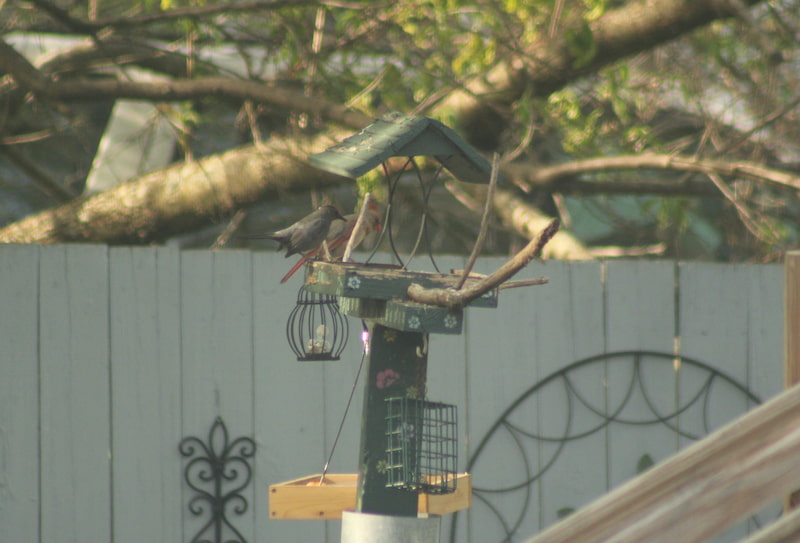
Bird perched on a backyard feeder

So, what can you do to stop the spread of mycoplasmal conjunctivitis and other diseases in your backyard? The simplest answer is to stop promoting large gatherings of birds within a small space by tossing that bird feeder in the trash. However, if you prefer to keep a bird feeder in your yard, there are some things to keep in mind to ensure local wild bird populations remain healthy and continue to thrive. Those items are as follows:

  • Regularly clean your bird feeder with 10% bleach to kill any pathogens.
  • Avoid tube feeders, as they are hard to clean and possess too many surfaces for birds to touch and spread disease through.
  • Use a platform feeder with ample space to allow birds to feed and to prevent overcrowding.
  • Avoid using moldy feed and continue to clean up the ground below the feeder.
  • Only put out the amount of food birds can consume within a few days, and throw out leftovers when cleaning and refilling the feeder.

If you find a bird that is infected with mycoplasmal conjunctivitis, contact a licensed wildlife rehabilitator right away. Sanitize and put away any bird feeders for at least two weeks to help stop the spread of this disease.

Sources:

Written by Allison, Class of 2027

Should You Feed Wildlife?

At the Wildlife Medical Clinic, we receive many phone calls from caring members of the community asking if they should be feeding healthy and/or injured wildlife. We truly appreciate when citizens care enough about our native wildlife to reach out and ask these commonly asked questions. The short answer is no, you should not feed wild animals. Although we understand that this gesture comes from a place of love for our wildlife species, it can cause harm to them and provide hazards to humans, as well.

That being said, let’s get into some specific examples of commonly fed wildlife.

Squirrels

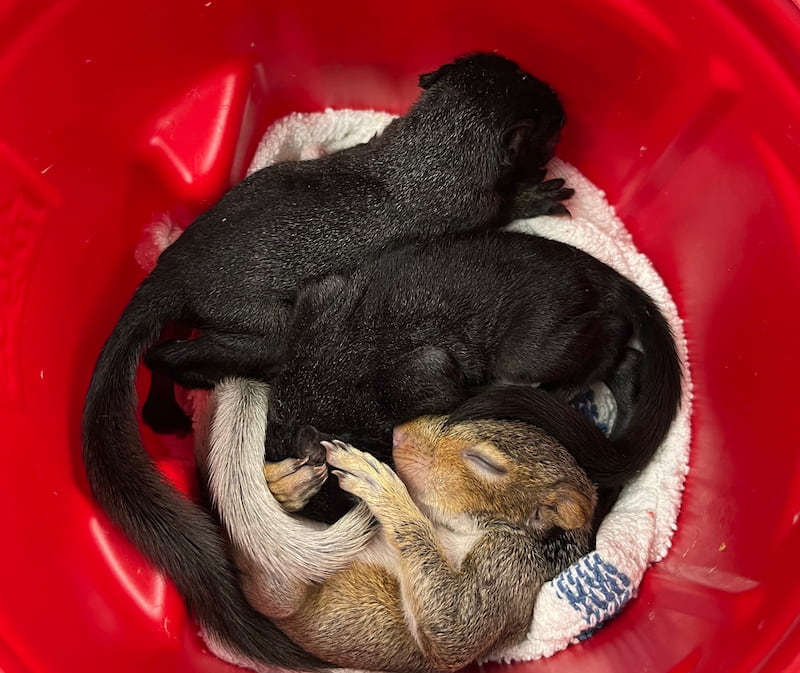
Small plastic container with three baby squirrels curled up asleep.

Squirrels are a common species of wildlife that we see frequently, even in urban areas! It is common for people to leave food out for the squirrels that live nearby, but let’s rethink that. Human food is often not nutritionally appropriate for their needs and can even cause illness when consumed. Not only can it be bad for their overall health, but it trains the squirrel to stop hunting and foraging for food. Then, if you forget to feed them once you’ve already started, or if you are away from your home for a period of time, these squirrels are unable to find food for themselves, which can lead to starvation. Squirrels that are being fed by humans often lose their fear of us and are therefore more likely to show aggression, which could result in biting a person. There are a multitude of human medical concerns that arise when bitten by a wild animal. To ensure your safety, your fellow neighbor’s safety, and the squirrel’s safety, please refrain from feeding them.

Raccoons

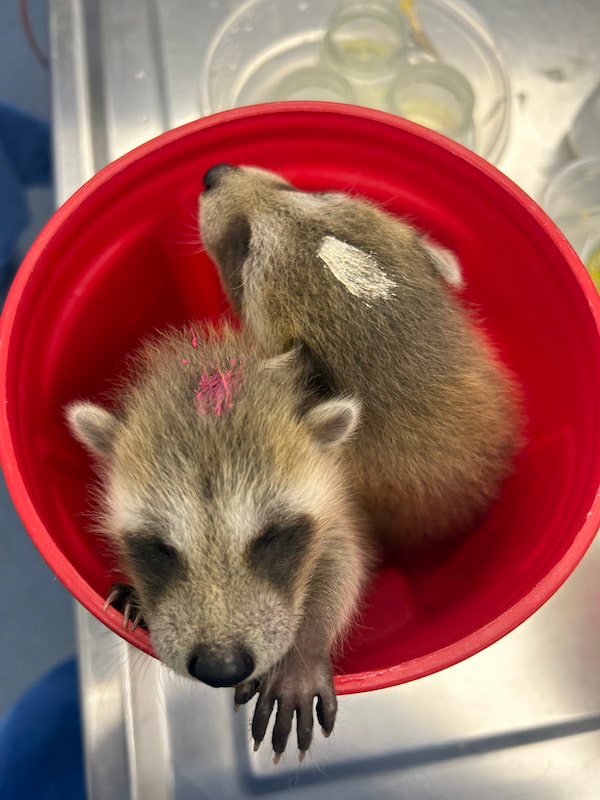
Two baby raccoon patients in a bucket.

For similar reasons to that of the squirrel, we also do not recommend feeding raccoons. When feeding raccoons, it can cause them to congregate in higher-than-normal numbers at your home. This upsets the balance of the local ecosystem and can increase competition for food. Thus, inducing more aggressive behaviors between raccoons, which can lead to conflict with humans. Raccoons are a common rabies vector species, and if bitten it would be considered a medical emergency. You should seek medical attention immediately or even go to the emergency room.

Birds

Bird feeders are a common route for feeding wildlife. One of the problems with using bird feeders is that it can aid in the spread of disease between birds. It can also lead to a higher rate of predation because there is now an influx of birds going to the same spot, on a predictable schedule. As bird feeders are usually next to or near windows, it can also increase the likelihood for window strikes, which can cause injury or even death to birds. Feeding birds has also been shown to change the behavior and health status of the bird.

What about Hummingbird Feeders?

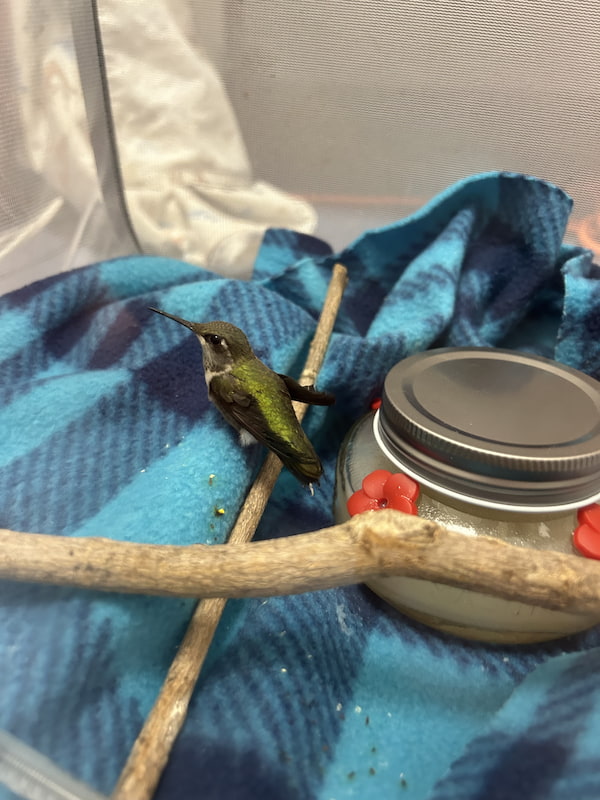
Hummingbirds are another species where there is a commercially available diet that people purchase to feed them. However, if regular cleaning is not completed, the nectar that is used to fill hummingbird feeders can easily become contaminated with various molds, bacteria, bugs, and fungus. This can cause illness and even death to the hummingbirds that visit those feeders.

Healthy Wildlife Should Not Need Help Finding Food

To ensure the health, safety, and protection of our native wildlife, please refrain from interfering in their natural behaviors by feeding them. We cannot match the same diet that these animals would be foraging for themselves in the wild and most commercially available diets marketed for feeding wildlife are not nutritionally balanced. As a licensed rehabilitator, we do have access to more nutritionally sound diets backed by research to help support these animals while they are in our care. We are also trained to take very strict precautions when overseeing these patients to ensure their safety and the safety of our staff. But the goal of our clinic is to safely rehabilitate wildlife and release them to their natural habitats as soon as possible.

How to Safely Interact with our Native Wildlife

As adorable as wildlife is, they are wild for a reason and do not need our intervention with food. However, there are some ways that you can still enjoy the beauty of our wildlife! For example, bird walks are a wonderful way to view different native avian species from a far. Also, cameras outside your home are a cool and interactive way to view your wildlife visitors!

Thank you for caring and protecting our native wildlife!

Written by Maddie, Class of 2027

When should an animal come to the Wildlife Medical Clinic?

Sometimes it can be difficult to know when an animal should be taken to the Wildlife Medical Clinic. In cases where there are signs of an overt injury with blood present, unwillingness to move when approached, exposed bone, and maggots, we highly recommend safely transporting the animal to us! However, not all cases are as clear as that. Below I have outlined some very common questions the Wildlife Medical Clinic receives and what we think is the best course of action.

“Help! There is a bird in my yard on the ground and it hasn’t moved. It also seems to be wobbly when it walks. Should I bring it in?”

This is a super common question that we receive phone calls about a lot during the summer months. In these situations, it is very important to consider how old the bird in question may be. If the bird is an adult and fully feathered, it is uncommon to find them in that state. There is also a concern if the bird has no feathers and is looking dull and unresponsive. In these situations, it would be appropriate to give the WMC a call prior to capturing them. However, if the bird is smaller and lacking full plumage, then this may be a fledgling bird that is learning how to fly. Most songbirds will spend 3-5 days on the ground during this time. It is common to find fledgling birds near the bases of trees below their nest while they are learning to navigate the world.

“I found a tiny bunny on the sidewalk, what should I do?”

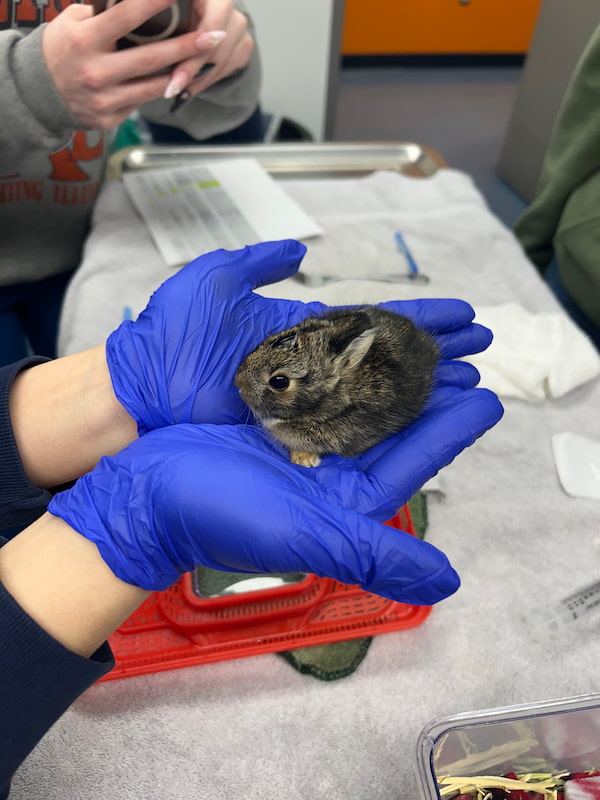
A baby bunny is being held in gloved hands by a volunteer

It can be quite alarming to find an abandoned baby bunny! If you come across an abandoned wild young cottontail, it is important to first assess them for any injuries. If the bunny otherwise appears healthy, the next course of action should be to locate the nest. Bunny nests can be difficult to find as they are usually not in plain sight. They can commonly be found at the bases of bushes, hidden in taller grass, or under decks or sheds, in depressions found in the ground.

Eastern Cottontails are a common bunny species in the Champaign-Urbana area. They do not burrow in the ground. Instead their nests will be on the ground level, lined with the mother’s fur and then covered with soft grasses. If the nest is successfully located, we advise you to gently place the found bunny in the nest and cover it with grass and leaves. To ensure that the mother is visiting the nest, a pattern of ribbon can be placed on top of the nest and flour can be used to create a trail around the nest. These aspects will be disturbed if the mother is actively visiting the nest. If you are unable to find a nest for the bunny, we advise you to give the WMC a call for further steps! 

If you are concerned about your dogs finding the nest, you can cover it with an upside-down laundry basket, with a hole cut into the side large enough for the mother rabbit to access her nest. The laundry basket can have a heavy object, such as a brick, placed on top to prevent dogs from pushing it over. 

Another important consideration is that eastern cottontail rabbits leave the nest and are independent at only 4 weeks of age! At that time, they are only about the size of a tennis ball! If you find a healthy young cottontail about that size with upright ears, it’s best to let them be. Many people mistake these young rabbits as orphaned, but they have actually already left their mother!

“I found a nest of baby birds, but I don’t see the parents, should I bring the nest in?” 

It is very normal to not see the parents for a nest of baby birds! Birds, along with other wildlife species, are terrified of us and will likely not visit the nest with us nearby. It is best to watch the nest from far away, either from across the street, through a window, or from inside a car. If there are no signs of the parents after a few days, it would be appropriate to give the WMC a call. In situations where there has been a recent storm, bird nests can be knocked out of trees. After accessing inhabitants of the nest for any signs of injury, the nest can be placed securely into the nearest tree. 

“I found a baby squirrel in my backyard, what should I do?”

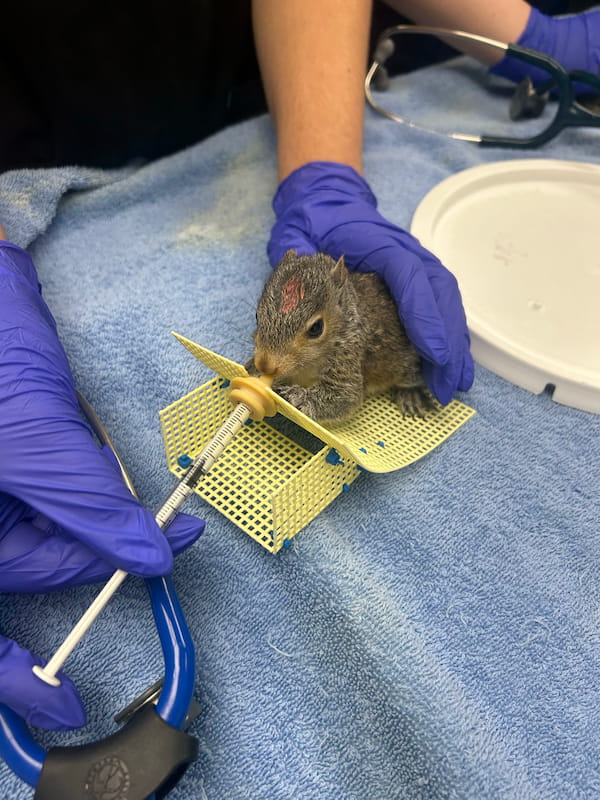
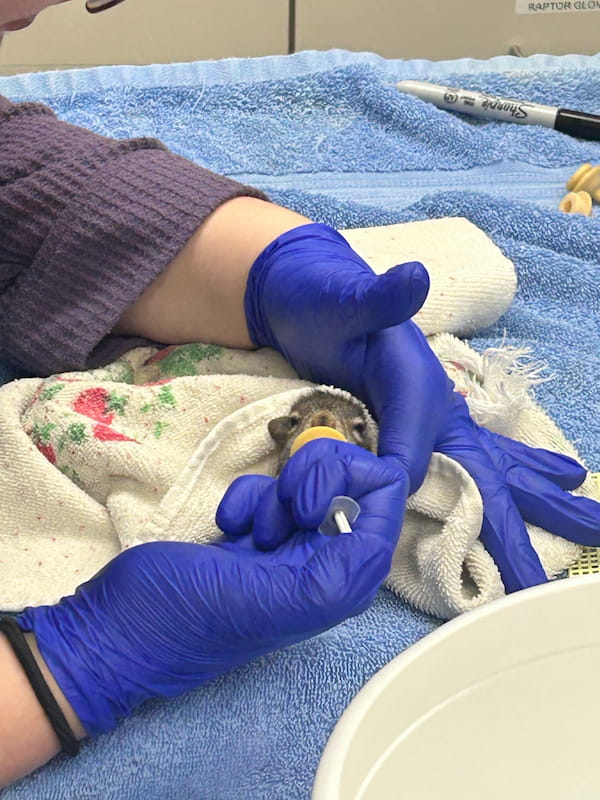
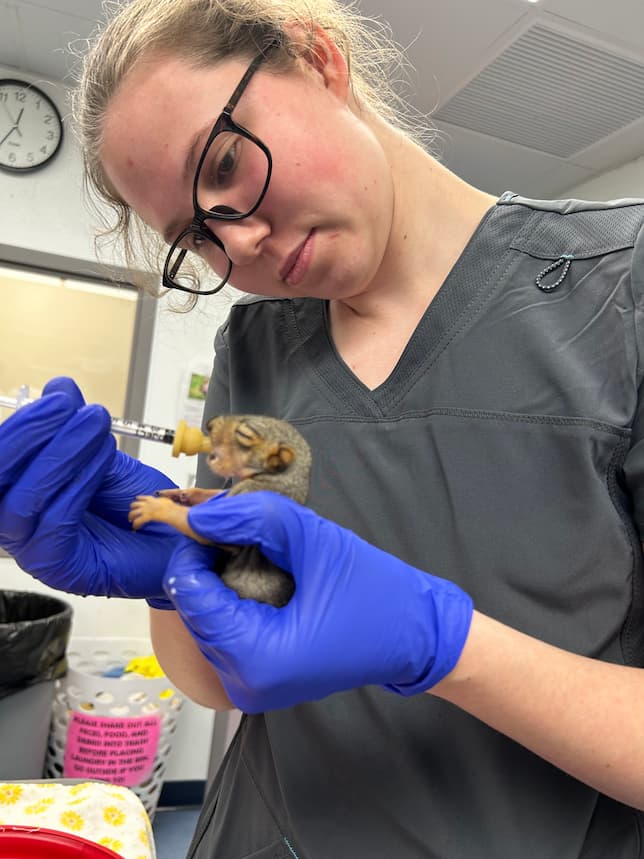
A baby squirrel is being hand fed through a syringe while it is covered in a towel to keep warm

Baby squirrels typically wind up on the ground if they have fallen from their nest. If there are not any obvious signs of injury, it is completely okay to pick them up and place them back into their nest. In the event that you are unable to locate the nest or perhaps it is too high up, you can place them into a wicker basket close to where they were found. This gives the mom an opportunity to collect her baby and take it back to the nest. Even if the nest has been destroyed, it is common for the mother to have a back-up nest to move her babies to. If you don’t see her after a few hours or it is getting dark, you should bring the squirrel to the Wildlife Medical Clinic.

So you’ve determined it needs to come to the clinic, now what?

If you are planning to safely transport an orphaned or injured animal to the Wildlife Medical Clinic, it is important to understand the do’s and don’ts. Please do not feed them anything! Almost all species of wildlife can survive up to 24 hours without any food or water. Unfortunately, any attempts with feeding will likely result in serious issues for the animal. Inappropriate food items can cause harm to the animal’s digestive system and inappropriate feeding methods can pose a risk for the inhalation of food material. 

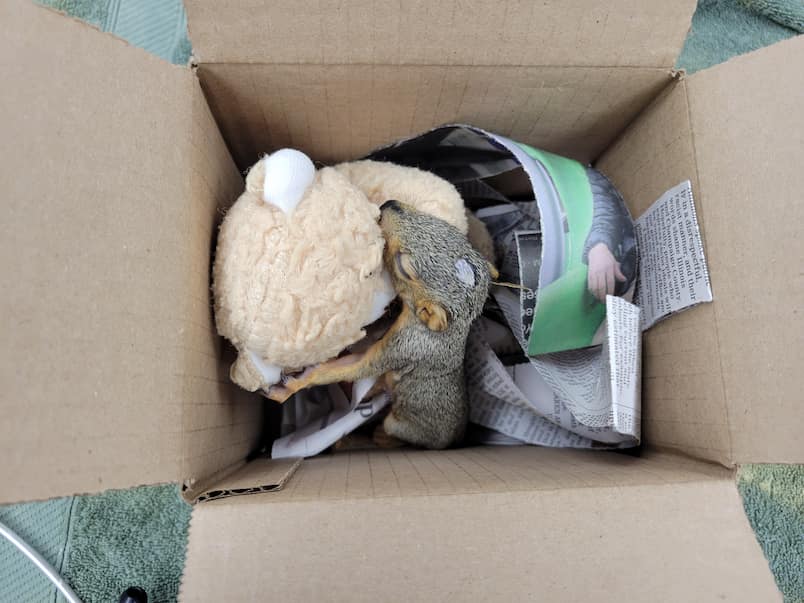
The best thing that a finder can do is place the animal in a small box with air holes, keep them warm, provide them with a quiet, dark environment, and avoid handling the animal. Minimizing the amount of stress the animal is exposed to gives the animal the best chance of being able to make strides towards recovery. 

For more information, follow the link below: Dr. Stephany Lewis, the current director of the Wildlife Medical Clinic, discussed with The News Gazette on when to bring wildlife here!

Written by: Rachel, Class of 2027

I found an injured animal, now what?

Bringing Wildlife to the Clinic

You’ve potentially found an injured wild animal and called the Wildlife Medical Clinic (WMC) to discuss what you should do. The volunteer at the WMC determines the animal should be brought in, but they tell you that they do not send volunteers out to pick up the animal, and that they can see the animal if you can bring it in. Oh no! You have never done this before! How can you safely capture and transport the animal??

Don’t worry, the WMC has advice on the dos and don’ts of transporting wildlife to the clinic. Remember, this is an incredibly stressful time for the animal, not only because of their injuries, but also because they are fearful of humans. It is important to know that proper capture and transportation is essential to the health of the animal. Stress from events prior to arriving at WMC can be very detrimental and could reduce the animal’s chances of being released! Do your best to follow these guidelines and to stay calm and quiet during this process.

Preparing for Capture

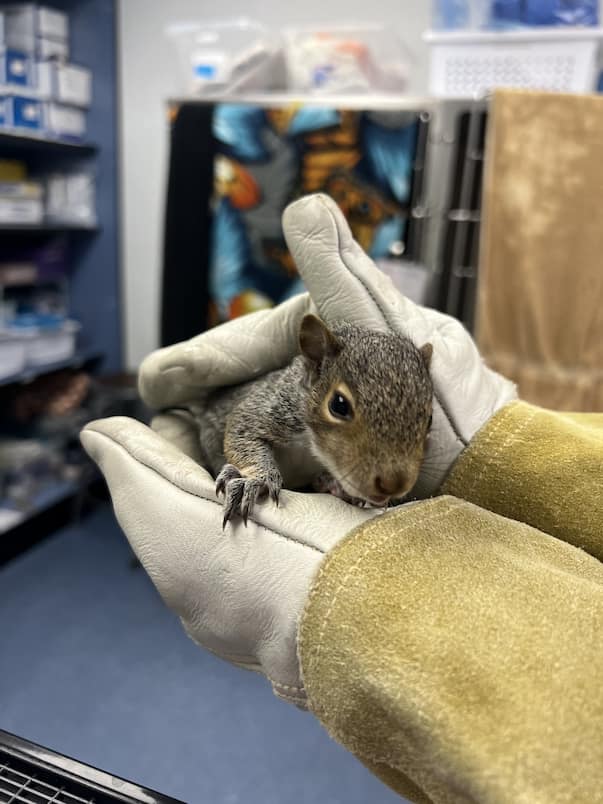
Eastern Gray Squirrel being held with thick gloves on as PPE.
  • Gather capture materials before approaching the animal.
    • Having a towel, blanket, or other light-weight material to wrap around the animal is important for providing a barrier between you and the animal and can aid in controlling the animal.
    • Thick work or gardening gloves are recommended to provide protection from possible bites and scratches.
    • An appropriately sized, secure carrier is important to have nearby to place the animal in after capture.
      • This can be a cardboard box, plastic bin with holes for ventilation, or a pet carrier. A container with an open top is not ideal because the animal could escape. The carrier should be lined with soft material that is not too stringy to avoid entanglement (T-shirt, towel, blanket).
  • Capture
    • Calmly approach the animal and completely cover it with the towel or blanket.
    • Carefully restrain the animal as you pick it up and place it into the box. Avoid handling the animal for longer than necessary.
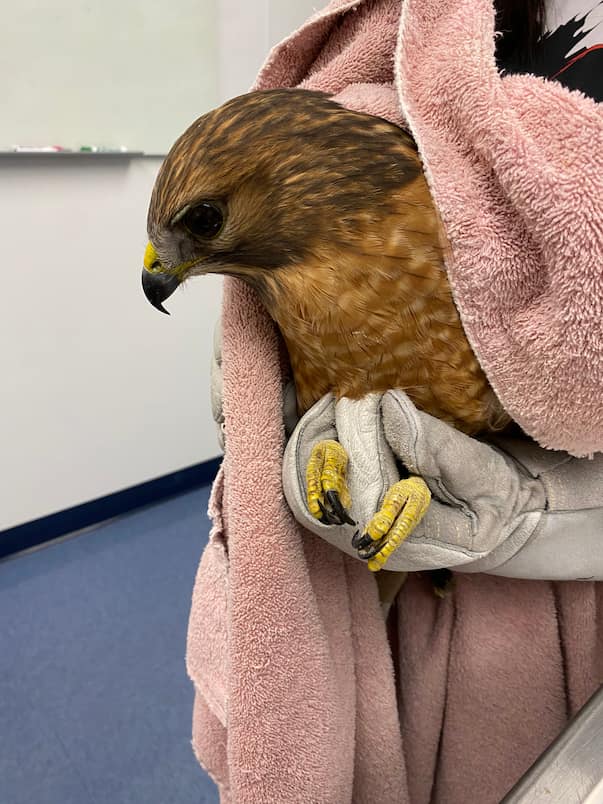
Red shouldered hawk wrapped in towel and feet restrained with thick gloves on.
  • Cautions
    • All wild animals have the potential to transmit disease to humans. Be particularly cautious with mammals, especially raccoons, coyotes and fox as they have the potential to transmit rabies if they are infected and you are bitten. This is why personal protective equipment (PPE), such as gloves and a towel, are very important. For mammal species that are carnivores, it may be advised to contact animal control for assistance with capture.
      • We unfortunately cannot accept any bats or skunks. If you find one of these species in distress, please do not touch the animal and call animal control for further assistance.
    • If capturing a raptor (hawks, eagles, owls, kestrels, falcons) be particularly cautious around their feet. While they can bite, they are more likely to talon you.
    • If capturing a heron or long beak bird, mind their beaks. They have long necks that can produce powerful strikes and a pointy beak at the end of that strike.
    • Avoid touching your face after handling the animal and its carrier. Washing your hands is a very important step to take after interacting with wildlife, even with gloves on! Disinfecting any items or surfaces that may have come in contact with the animal, the carrier, or unclean hands is a good idea as well.

Care

  • If you cannot come to the WMC immediately after capture, keep the captured animal in a dark, quiet, and warm place in the meantime to reduce their stress.
  • Do not attempt to feed or offer water to the animal. This can do more harm than good as they can aspirate or choke on what is offered. Additionally, the food may not be appropriate nutritionally as wildlife have very specific needs, especially young animals.

Transportation

  • Place the covered, secure carrier on the floor or seat of your car. Make sure the carrier will not rattle or slide around during transport.
  • Keep the car ride as quiet and smooth as possible. Noise will only stress the animal more during this time.
  • Do not let someone hold the animal during transportation as it is dangerous for you, them, and the animal. Bites and scratches could occur. Furthermore, the animal could escape their grasp and cause dangerous hazards while driving.

In Conclusion

Thank you for caring about wildlife and helping when you can! We hope these tips have relieved your concerns about bringing in a patient! If you have any reservations or need further guidance for an injured, ill, or orphaned animal you found, please reach out to us at 217-244-1195 and we will do our best to respond to you as soon as possible.

Written By: Madelyne, Class of 2027

Volunteer Opportunities in the Wildlife Medical Clinic

Who are we? What do we do?

Logo of the Wildlife Medical Clinic. It is an orange open circle with a blue outline and a generic blue colored owl in the center with orange outlined eyes, eyebrows, and beak. Bottom of the circle has lettering saying Wildlife Medical Clinic.

We are the Wildlife Medical Clinic and it is our mission to provide care and treatment to sick, injured and orphaned wild animals, offer hands-on training to veterinary students, and educate members of our community about coexisting with native wildlife. We see around 2,000 patients per year and close to 115 species. Some of the most common species we see are squirrels, rabbits, opossums, raccoons, songbirds, raptors, waterfowl, and turtles.

Overview of Volunteer Opportunities

  • Orphan Feeding Team – Open to all applicants, but volunteer positions are limited. To apply, fill out the google form, submit a resume/cv to the WMC co-chairs, and send proof of rabies vaccination to Dr. Stephany Lewis.
  • Ambassador Team – Open to all applicants, must have prior animal handling or animal care experience. To apply, complete the google form, submit a resume/cv and letter of intent to Sydney Oliveira.
  • Transport Team – Open to all applicants. To apply, fill out the google form.
  • Wildlife Medical Clinic Student Internship Program – Student only. To apply, complete the google form, submit a resume/cv, letter of intent to the WMC co-chairs and proof of rabies vaccination to Dr. Lewis.

Orphan Feeding Team Requirements/Commitment

Junior student manager feeding a baby squirrel with a small syringe.
  • Requirements/Commitment:
    • Must be at least 18 years of age to volunteer. Volunteers are prohibited from performing medical procedures and handling of adult, sensitive, or potentially dangerous patients.
    • Rabies vaccination (First vaccine must be completed by date you start volunteering).
    • 2 shifts per week during the academic year.
    • 4 shifts per week during the summer.
    • Must commit to at least 1 session.
      • Fall Semester: September-October (deadline to apply September 1)
      • Spring Semester: March-May (deadline to apply February 1)
      • Summer Semester: May-August (deadline to apply April 1)
  • Responsibilities:
    • Feeding orphaned wildlife.
    • Routine cleaning around the clinic.
    • Additional tasks as needed.

Ambassador Team

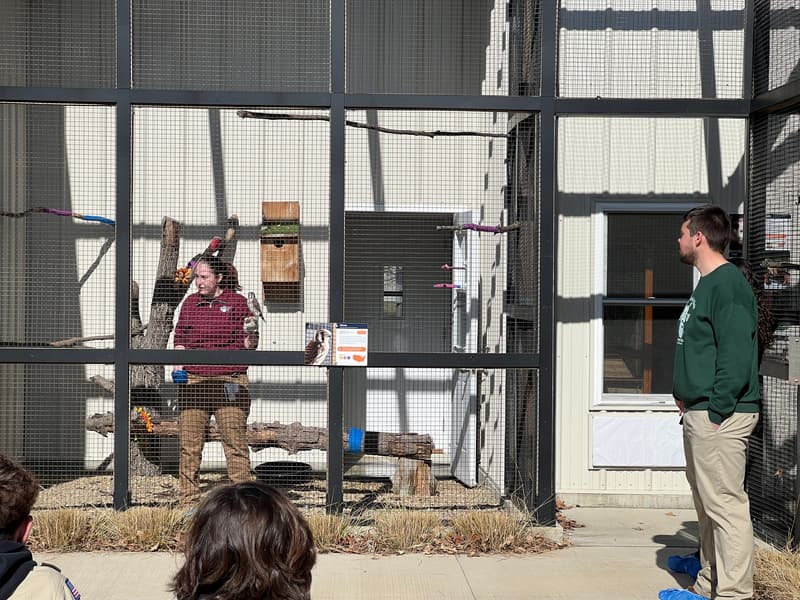
Two volunteers talk to a group of people about our ambassador animals. One volunteer has an American Kestrel on the glove in her outdoor enclosure and another student stands out in front of the enclosure. The student in the enclosure is talking to the group.
  • Requirements/Commitment:
    • Shifts:
      • 1 care shift per week (~1-3 hours).
      • 1 enrichment shift per week (~30-60 minutes).
      • 1 PR event per semester (education outreach program with our ambassador animals).
      • Must commit to either of the following:
        • Academic Year (Fall and Spring Semesters, August to May).
        • Entire Year (August to August).
    • DO NOT need the rabies vaccination.
  • Responsibilities:
    • Providing daily husbandry that includes feeding and enriching the ambassador animals.
    • Routine cleaning of the ambassador building and associated enclosures.
    • Assisting with educational opportunities to the public.

Student Internship Program

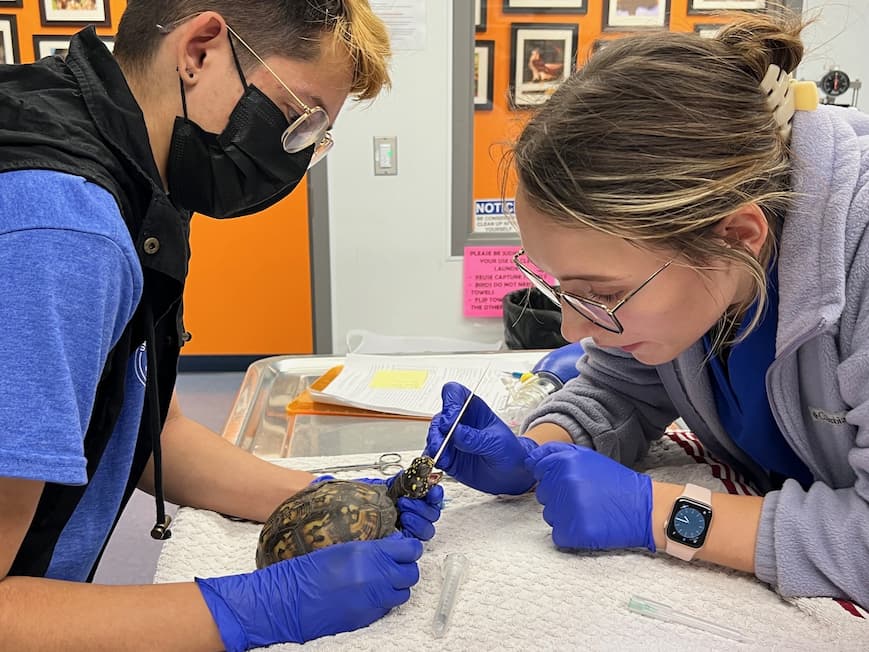
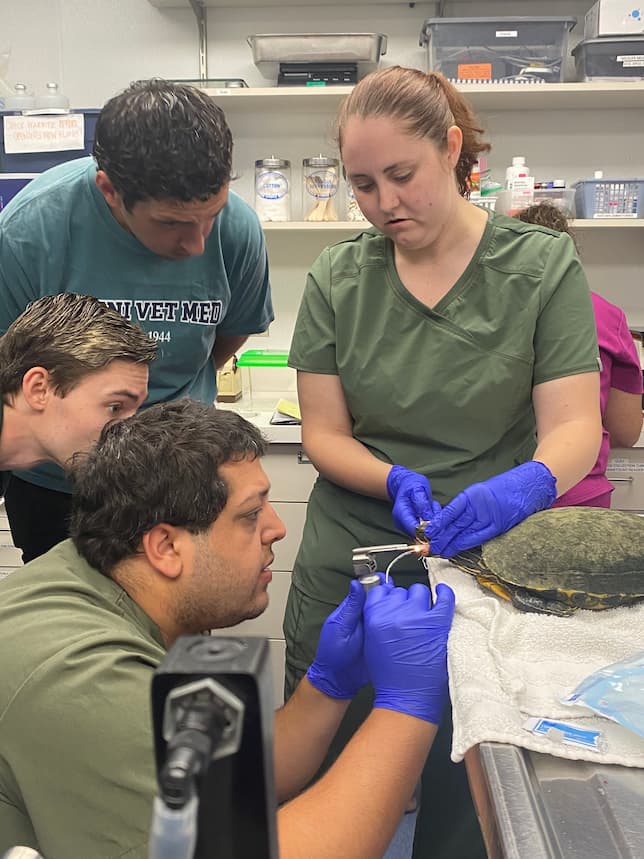
Group of students are circled around watching a student intubated a large red eared slider, while another student keeps the turtles neck extended.
  • Requirements/Commitment:
    • Must be a University of Illinois or Parkland student.
    • Rabies vaccine (First vaccine must be completed by start of first shift).
    • Able to commit for the entire academic year (Fall and Spring semester).
    • Interview required.
  • Responsibilities:
    • Triage exams for incoming wildlife patients.
    • Designing and executing treatment plans alongside other students, house officers, and faculty.
    • Routine cleaning around the clinic.
    • Additional tasks as needed.

Transport Team

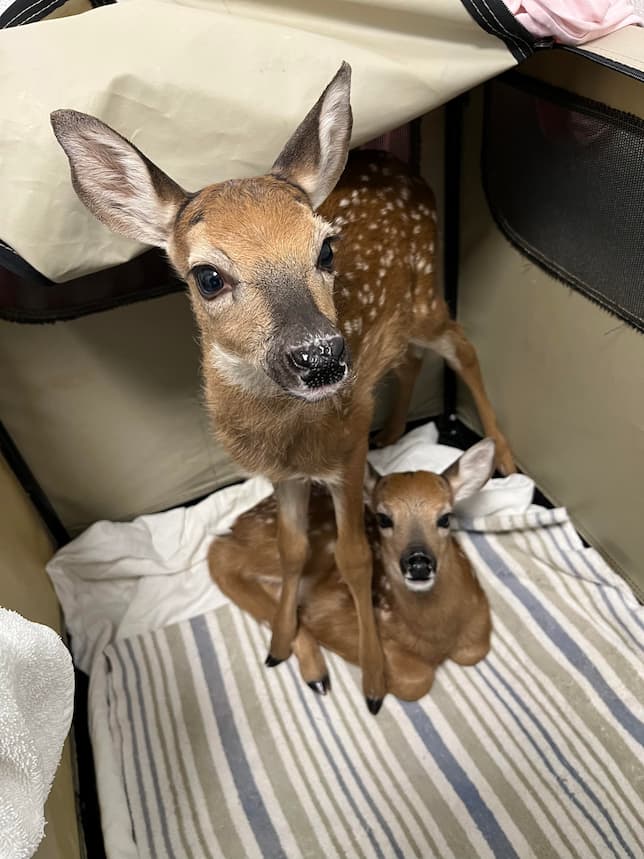
Two white tailed deer fawns are pictured in a soft kennel. One fawn is standing and the other is sitting underneath the one standing.
  • Requirements:
    • Must own a personal vehicle.
    • Willing to travel 1-4 hours away from the Wildlife Medical Clinic.
    • Will not be reimbursed for gas or mileage on your vehicle, this is strictly done on a volunteer basis.
    • DO NOT need the rabies vaccination.
  • Responsibilities:
    • Provide safe transport of wildlife patients to licensed rehabilitators or other wildlife centers, as needed.

Wildlife Medical Clinic Leadership Info

Q & A from our August 1, Zoom Meeting

  • When are applications due?
    • Fall – September 1
    • Spring – February 1
    • Summer – April 1
  • How many spots available for internships?
    • 12 spots available. We have 6 teams and 2 spots per team. Can volunteer for both clinic and ambassador but letter of intent is needed for ambassador program. Please send different letters of intent for each program you are interested in.
    • 2 shifts per week include weekend days as well. Schedule rotates so not always sure what day you are on until schedule is set. There are several shifts available per days.
  • How do I apply?
    • Fill out the google form. Then send additional material (resume/letter or intent) to the email associated with the team you are applying for.
  • What is a letter of intent?
    • Basically, a cover letter. States why you want to join our program.
  • Do previous volunteers have to send resume and letter of intent again?
    • No, just let managers know you are interested and fill out the google form.
  • How soon will I be contacted after application period closes?
    • Usually within 1 week of it closing, we will schedule interviews. Transport team – no deadline.
  • How do we sign up for a shift once we join?
    • We usually have a google calendar for shift sign up. This may change but it will be some sort of shared electronic document that the whole team has access to.
  • Can you provide more information on the shifts?
    • There are 3 shift times available, and each shift is a 2-3 hour commitment. You sign up based on your availability. Shifts are also based on patient load so may adjust accordingly.
    • Shifts are: 8-11 a.m., 11:30 a.m.-3:30 p.m., and 5-9 p.m. (This is slightly longer as most, if not all, the orphans are fed during this shift).
  • For the Ambassador Program, is it possible to just volunteer on the weekends?
    • Depends on the team’s schedule. If conflict occurs, schedule may need adjusted. This will be assessed on a case-by-case basis. 
  • How do we train ambassador volunteers?
    • Usually, one on one or in small groups or pairs. You will not complete a shift on your own until you and your trainer are comfortable. We will make sure you get the training you need.
  • If I can’t make a shift, who do I notify?
    • Orphan team – Contact managers and others you are on shift with.
    • Internship team – Contact team leaders first and managers if team leaders not available.
    • Ambassador team – Contact WACC’s and then managers.
    • You are humans first, students second, and volunteers third. School comes before volunteering. If conflicts arise, please just give us as much advanced notice as possible.
  • Where would non-students get vaccinated for rabies and what is the cost?
    • Check with local hospitals as some carry this vaccination. Most places with a travel clinic carry this vaccination. Walgreens and McKinley Health Center also carry this vaccination.
    • Cost will vary depending on clinic and your insurance.
  • More questions?

To Help or Not to Help

Steps to take if you are concerned about wildlife.

At the Wildlife Medical Clinic, we frequently get calls and emails asking how to help the amazing wildlife in our community. Thank you for caring; we couldn’t do this without you!  If you are concerned about an animal that you saw but aren’t sure what you should do, here are some steps you can take!

Is the animal actually sick or injured?

Generally, wild animals should be scared of humans, so they will normally want to keep their distance or run away if humans are nearby. If an adult animal doesn’t want to escape and hide when you approach it, this is NOT normal behavior. In animals, an observation of a behavior change is often one of the first signs (besides unwillingness to eat), that an animal isn’t feeling well. This animal may be sick or injured and should therefore be brought to us if you are able to do so!

Additionally, physical injuries are quite common in wildlife. A bird striking a window or a squirrel getting hit by a car will likely have serious injuries that require medical attention to ensure survival.

If you can, safely pick up the animal with a blanket (always wear gloves if you have them), put it in a box, and bring it to us!

Is the baby REALLY an orphan?

Just because a baby animal is found alone doesn’t mean it is an orphan. Some animals, such as birds, will be close by but not right near their young. Also, when these youngsters leave their nest, they are not great at flying and may look injured because you only see them hopping on the ground. If you observe them from a distance, you will usually see mom and dad feeding them and in a couple days, they should be better at flying and will be on their way.

Then, some wild animal moms, like rabbits for example, only return to their babies twice a day, once in the morning and once at night. Therefore, if you disturb a bunny nest while mowing the lawn, and see no mom nearby, it is likely the mom is just out looking for food. It is important to note that since rabbits are scared of humans and view us as threats, you must not hover around the nest or the mom will not want to return. However, if you would like to double check to ensure that the mom has returned later on, lay some leaves and sticks over the den and return into your house. The next morning, check the den; the leaves and sticks will have moved if the mom returned that night.

If the babies are indeed orphans, you can find a licensed wildlife rehabilitator near you. You can also bring them to us if a rehabilitator can’t be found or if you are concerned that the baby may be in need of medical treatment.

If in doubt, call us!

If you have questions or concerns, our volunteers are always more than happy to talk to you! Our contact information is wmcchair@vetmed.illinois.edu or 217-244-1195.

Written By: Aimee, Class of 2025

Wildlife Medical Clinic
John A. Coyne South Clinic
2100 South Goodwin Avenue
Urbana, IL 61801
217-244-1195