Every predecessor Wildlife Medical Director has shaped the clinic into something greater than before, ultimately leaving a new blueprint behind. Students’ hearts ache as they say their farewells to the incredible Dr. Samantha Sander, DVM, CWR, DACZM as she transitions out of the director position. She has mentored countless veterinary students and has left such an impeccable legacy behind. When you ask veterinary students who they inspire to be like, many will shout out Dr. Sam Sander’s name. It is clear as to why. She is a role model, a fabulous leader, and an inspiration to many. We look forward to supporting Dr. Sam Sander’s prosperity in the Zoo Med service and seeing how she continues to improve our college. While we are sad to lose Dr. Sander’s leadership, we are confident she has left the clinic in very capable hands.
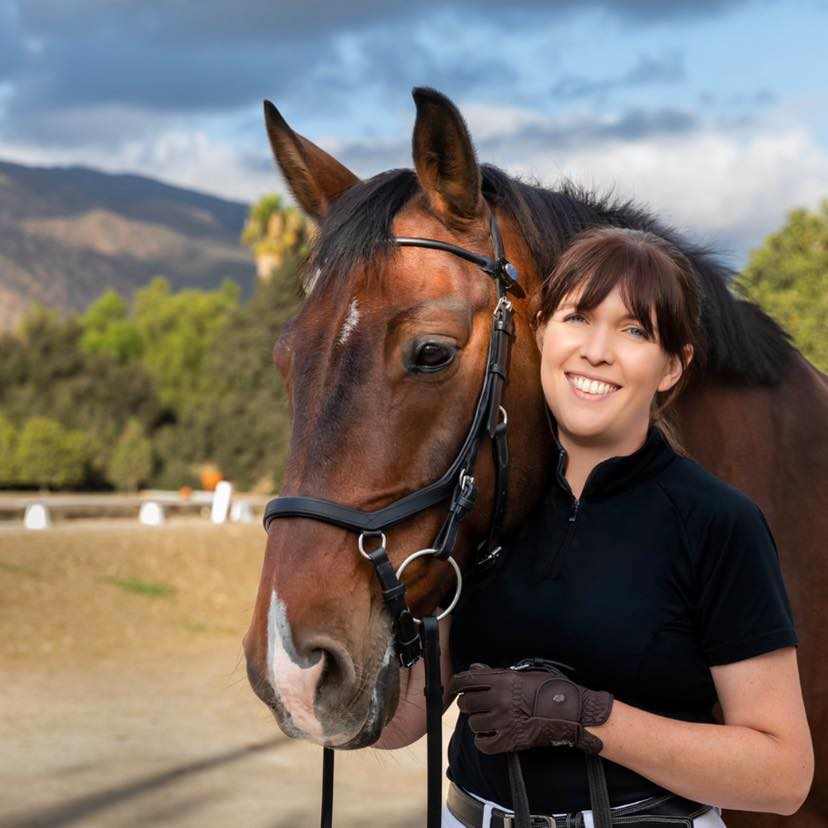
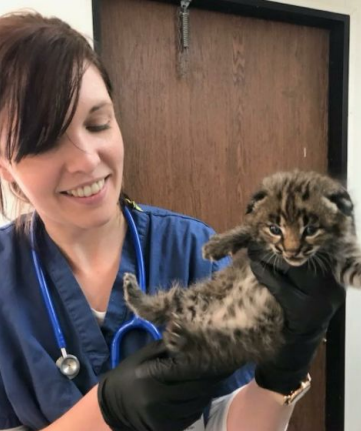
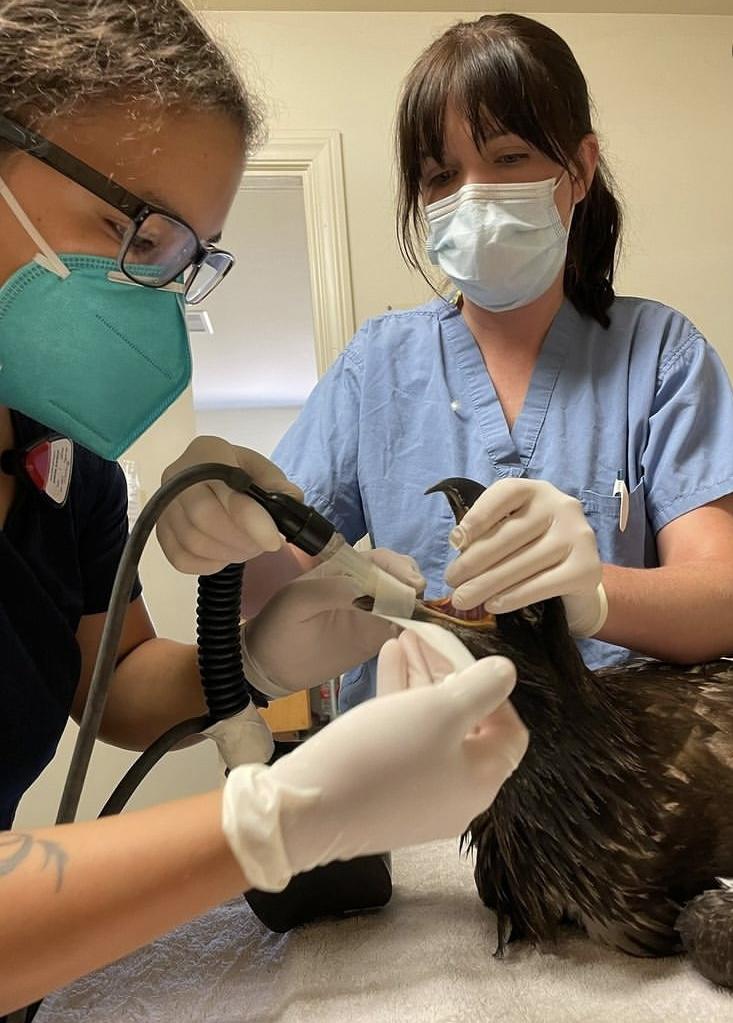
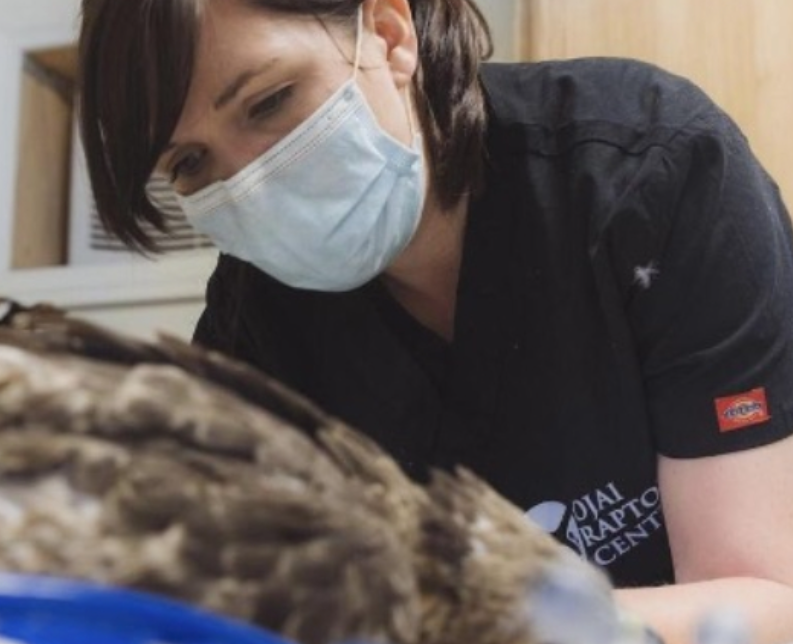
We are, however, very excited to introduce Dr. Stephany Lewis, DVM, CWR, DABVP (Avian) who will be our successor Wildlife Medical Director. As soon as Dr. Lewis walked into the clinic doors, she captivated us all with her kind-hearted, generosity, and contagious energy. It is super exciting to be surrounded by such a monumental figure in the field of wildlife medicine. Dr. Lewis has gone out of her way to improve the welfare and well-being of our patients as she is equipped with so much knowledge and always brainstorming ways to improve the students’ experiences in the clinic. If you ask students their favorite quality about Dr. Lewis, they will say it’s her talent to teach and mentor students. We look forward to seeing the supportive environment that she will cultivate at the University of Illinois College of Veterinary Medicine.
I recently had the chance to sit down with Dr. Lewis to discuss her career, personal life, and why she chose the University of Illinois.
HH: Tell us about your background and interests.
SL: “I started riding horses at age 9 and wanted to be an equine veterinarian starting in middle school. During undergrad, I applied for a wildlife rehabilitation internship just for something different to add to my vet school applications, even though I was 100% convinced that I wanted to be a large animal veterinarian. I ended up staying on at that wildlife center as part-time staff, then came back the following year as seasonal staff. I later completed other internships at wildlife rehabilitation centers in Scotland and British Columbia, and realized that if I could, I wanted to dedicate my career to wildlife rehabilitation. I went into veterinary school still with an open mind, thinking perhaps I would be swayed back into the more “mainstream” large animal medicine, but had strong mentorship and opportunities in wildlife medicine at Tufts, and kept pursuing as many wildlife experiences as I could.
After vet school, I completed a small animal rotating internship at Michigan State University, followed by a wildlife and conservation medicine internship at Tufts University. I worked in zoological companion animal medicine for a few months before moving to California, where I was the staff veterinarian for California Wildlife Center and Ojai Raptor Center.”
HH: What brought you to Illinois?
SL: “The only thing I love more than working with wildlife is teaching veterinary students about wildlife medicine. There are not many veterinary schools with a wildlife caseload large enough to support a dedicated wildlife faculty, and none of them provide as amazing of a student experience as our Wildlife Medical Clinic. The WMC is a truly special place, where student education is prioritized. With our amazing faculty and resources at UIUC, we are also able to contribute a great deal to the community in terms of research and education.”
HH: Tell us about a favorite case of yours.
SL: “I have a soft spot for gallinaceous birds (chickens, turkeys, quail, etc.), and once successfully treated and released a 20-pound turkey tom with a tarsometatarsal (leg) fracture. He required some unconventional treatment and outside the box thinking, due to his strength and weight. He was housed within a short distance of our elephant seal pups, and so that corner of our facility became quite noisy, between his gobbling and the seal pup vocalizations!
My other special case was a fledgling bald eagle whose entire life had been featured on a very popular nest cam. She arrived at my rehabilitation center with a name and massive public following. From the day she arrived, my wildlife center would receive dozens of calls and messages about her every day. She presented paretic, and I was able to very thoroughly work up her case, even with a CT scan, and diagnosed her with zinc toxicosis. She was successfully rehabilitated and released.”
HH: What most excites you about your profession?
SL: “I am so excited to see how wildlife rehabilitation medicine continues to grow and evolve. Just a few decades ago, wildlife rehabilitation consisted entirely of individuals trying to treat wild animals and raise orphaned wildlife out of their homes. These rehabilitators would be lucky to find a general practice veterinarian who would even be willing to see one of their animals. Since then, wildlife rehabilitation has grown exponentially. Every year, new wildlife centers are adding veterinarians to their staff. Many centers that started out with one individual have now grown into huge non-profit organizations that each help thousands of animals every year.
Wildlife rehabilitation centers are also providing a wealth of knowledge about what is going on in our environment. We are often the first to know about new disease outbreaks and new toxins affecting our ecosystems. We are important resources for public health and public education. Our work can help inform public policy and direct conservation efforts. There is so much to learn in this profession, and so many ways we can use our unique knowledge and perspectives to better our world.”
HH: What would you like the public to know about your field?
SL: “Many people do not realize that the vast majority of animals presenting to wildlife rehabilitation centers like the Wildlife Medical Clinic have been negatively impacted by human activities. Many presenting animals have experienced vehicle strikes, window strikes, or domestic cat attacks. They may have ingested lead, pesticides, or trash. Marine wildlife often ingests or becomes entangled in fishing lines, hooks, and lures, or contaminated by toxicants such as crude oil. Young animals are often inadvertently “kidnapped” by well-meaning citizens. Even if wildlife rehabilitation doesn’t make a significant impact on an entire population, I think it is important to improve the welfare of those individual animals when we can, because more often than not, they need our help because human activity has made it more challenging for them to thrive in their native environments.”
HH: What hobbies and activities do you like to do outside of work?
SL: “In my free time, I am usually riding my horse or spending time with my partner and our four dogs and three silkie chickens.”
– Interviewed and written by Hassan, Class of 2025.
What do wild animals do during the winter? Some migrate to other parts of the world and some stay right here year round. Join CiLiving, Dr. Stephany Lewis, and student, Tyson Jenkins to learn what happens when things get colder.
Imagine: a grassland stretching as far as the eyes can see, dotted here and there with small patches of trees. Great herds of animals cross the land, grazing on the plentiful vegetation. The disturbance they cause sends insects soaring into the vast sky, where thousands of birds swoop and feast. Smoke drifts on the horizon as gentle fires sweep across the hills, sending nutrients back into the rich, dark soils. This is the landscape that once covered more than a third of America and gave Illinois its nickname “the Prairie State.” What was this iconic ecosystem that supported a vast amount of animal (and human) life, and where did it go?
What is a Prairie?
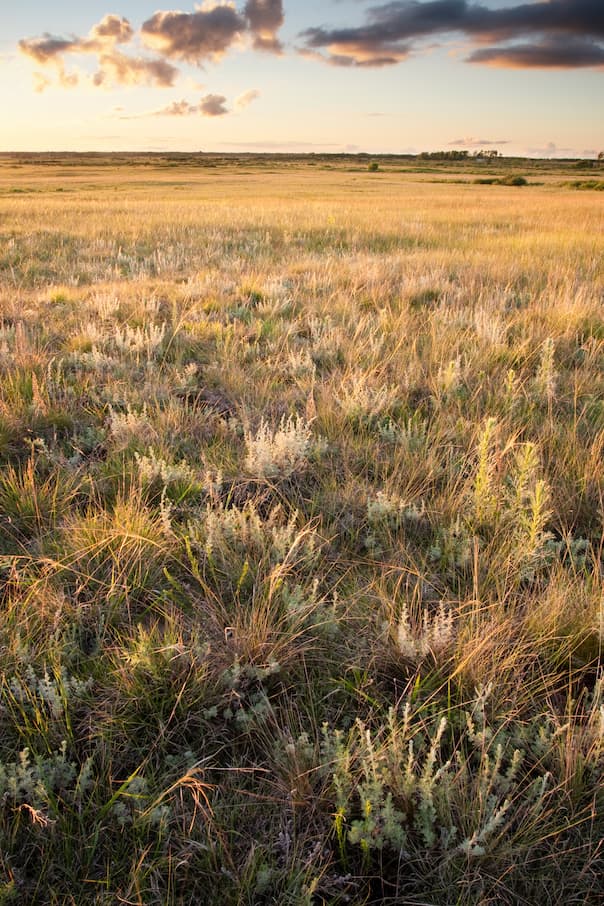
Image retrieved from Wikimedia Commons
A prairie is a type of North American grassland that originally stretched from Ohio to the Rocky Mountains. It was formed in the rain shadow created by the Rockies as they stretched taller and taller, blocking the rains from the humid Pacific air from reaching the Midwest. There are three main types of prairies: shortgrass, found in the westernmost range, midgrass, found stretching from the Dakotas south to Texas, and tallgrass, the easternmost prairie that was once found across almost all of Illinois.
The tallgrass prairie was once the largest continuous ecosystem in North America, covering more than 170 million acres and supporting such a diversity of life that it was only rivaled by the Amazon Rainforest. When the glaciers of the Pleistocene (the most recent ice age) swept across Illinois, they left behind a landscape characterized by gentle hills and deep soils. This soil allowed tallgrass prairie plants to create extensive root systems that could reach more than ten feet deep, allowing them to survive in the harsh conditions prairies often experienced.
One such harsh condition that dominated the prairie: fire. During late summer and early fall, lightning strikes would ignite the landscape. The fire would burn the above-ground portions of the plants, but the deep roots would give rise to new growth next spring. The ash left behind would provide further nutrients, creating the incredibly rich soils prairies were known for. The seasonality of these fires protected plants as well, as there was never enough material built up to create massive fires whose heat could penetrate the soil. Additionally, the fires prevented tree growth, an incredibly important aspect of prairie maintenance as shade can kill prairie plants adapted to life under a constant, harsh sun.
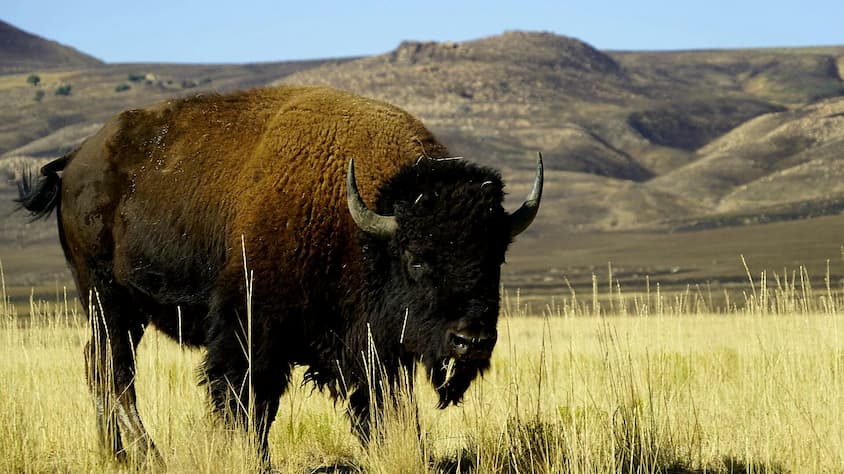
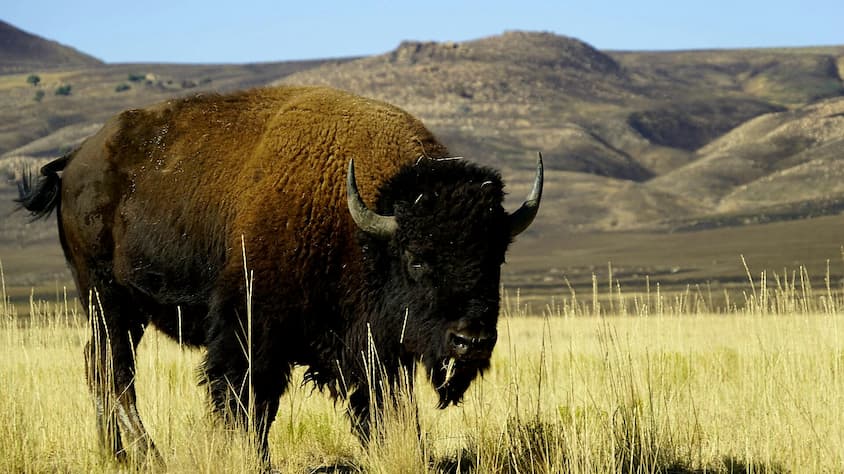
These fires benefitted the grazing animals that called the prairie home, as new growth is more palatable and nutritious than old growth. One such grazer is our national mammal, the American Bison (Bison bison). Bison graze on the prairie grasses for nine to eleven hours per day, working their way across the landscape. Compared to cattle, bison are more efficient grazers, utilize rougher terrain that cattle cannot, consume less, and are much less likely to graze the same area more than once per season. All of this means that the estimated 21-88 million bison present prior to European settlement coexisted with the landscape and improved it, acting much like fires did to add nutrients back to the soil and clear out dense plant life.
Bison (Bison bison) once roamed the prairie ecosystem in incredible numbers. Image retrieved from Wikimedia Commons
What Happened to the Tallgrass Prairie?
When European settlers first made their way across the American west, they described the land as “park-like” and filled with endless abundance. It was this belief that led to the disappearance of the prairie and the loss of its residents.
Purposeful overhunting of bison caused the species to drop to a record low of less than a thousand individuals by the start of the 20th century, removing an important ecosystem engineer and cultural cornerstone of Indigenous tribes. It was only through the conservation work of these tribes, as well as important public and private stakeholders such as the National Park Service, that bison are once again roaming what is left of the Great Plains.
Today, the “Prairie” state is better known for its agriculture, but prior to the 19th century it was thought to be unfarmable. All that changed with the invention of the steel plow by John Deere in 1837. Previously, plows were made from cast iron. Prairie soil and roots would stick to the metal, so farmers needed to continuously stop and clean them. The steel plow was thought of as “self-cleaning,” as the thick soil did not stick to it, allowing for continuous plowing. This invention tore through the prairie, opening the doors to some of the most fertile farmland in the entire world.
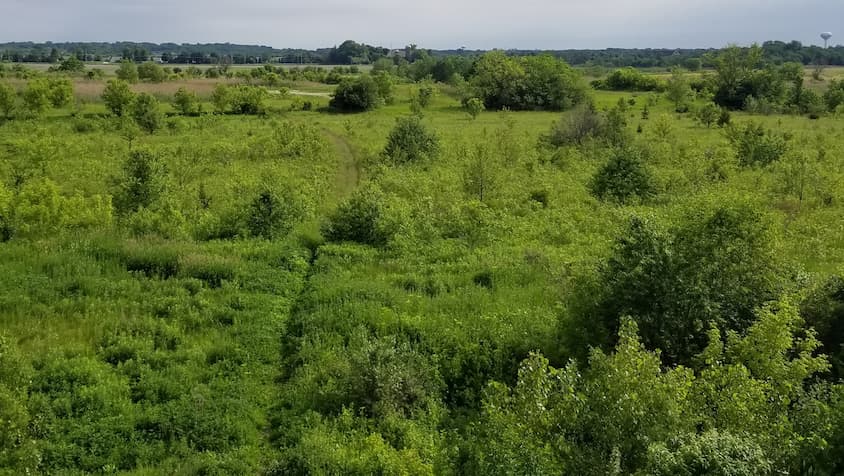
When not effectively managed, trees will encroach into the prairie.
European expansion also brought about an age of fire suppression, as fire and its effects on the land were relatively unknown by settlers until very recently. It wasn’t until the Yellowstone fires of 1988, in which centuries of fire suppression and brush build up led to the largest wildfire in Yellowstone history, that fire suppression policies were abandoned in favor of prescription fire and controlled burn practices, yet logistical and legal hurdles to these practices still exist. Prairie remnants that weren’t plowed slowly disappeared under the shade of trees previously prevented by grazers and fires.
Living Up to Our Name
How do we continue to feed a growing world while protecting and maintaining our natural resources? This is one of the greatest challenges to prairie protection and restoration in Illinois and across the Midwest. This question also continues to grow in relevance as research into the carbon sequestration abilities of prairies and grasslands sheds new light on their impact; since most of a grassland’s mass is beneath the soil, restoring grasslands has the potential to trap massive amounts of carbon much faster than newly planted forests can.
To understand our impact on the prairie, we must learn from one of the most important prairie engineers: humans. Prior to European settlement, the Plains Tribes managed prairies very similarly to the newly emerging management styles today. In many cultures, September was known as the “burning moon,” the time when the prairie was purposefully set ablaze to give rise to new growth. This new growth attracted grazers closer to tribal settlements, providing ample hunting opportunities. Unlike modern fire regimes, these ones were cultural: the act of burning provided access to traditional foods and materials that were sustainably utilized for centuries.
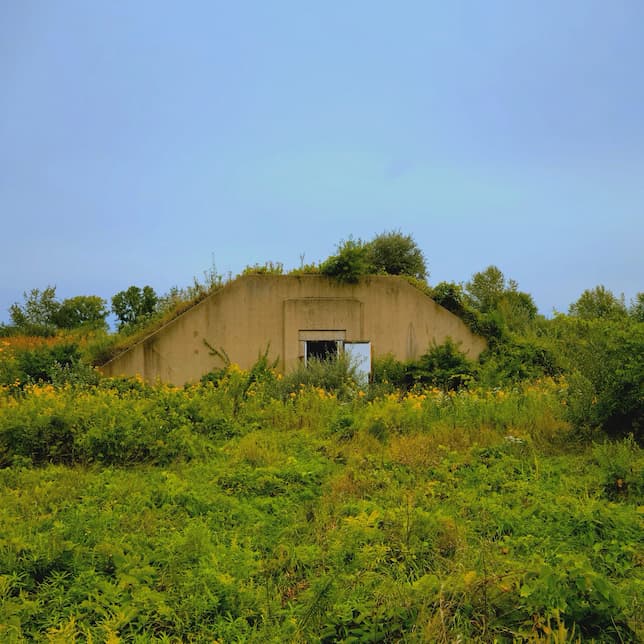
The tallgrass prairie can thrive in places it once grew, as seen in this image taken at Midewin National Tallgrass Prairie, a former munitions factory complex restored to a thriving ecosystem.
It was humans that shaped the prairies we recognize today, and it is humans that can bring them back. One important way to do that is to rethink how we utilize space. A typical grass lawn consists of only a few types of plants with very shallow root systems, in stark contrast to the deep-rooted prairie grasses. Very few animals can utilize grass lawns for food or shelter, whereas even a small area of native prairie plants can provide countless opportunities for all manner of living things. Bringing back the prairie can start in our own yards through the planting of native prairie species, many of which feature brilliant flowers and showy growth patterns that rival many non-native annuals. Utilizing plants adapted to this region also means less water and overall maintenance for the owner. It doesn’t need to stop at yards, either. Underutilized natural spaces are all around us. Along the edges of highways, underneath power lines, in the medians of parking lots: all it takes is a little soil and sun to create a patch of prairie.
Aside from physically planting new prairie, one of the most impactful ways to bring them back is to change people’s perceptions of them. Environmental education and access to high quality outdoor spaces have been positively correlated with improved awareness towards and positive attitudes regarding conservation and the environment, especially among children. One way to utilize this is to simply visit a prairie and truly take in what it has to offer. You can use the Prairie Scavenger Hunt resource featured in this article to encourage your children to explore and discover. When perceptions change and people understand and appreciate what prairies provide, conservation initiatives, public and private funding, and local, state, and federal policy changes follow.
Less than one hundredth of one percent of Illinois’ original prairies remain, but the number of new and restored prairies have steadily grown throughout the past decade. Together, through simple acts such as gardening and spreading awareness, we can finally live up to our nickname again and welcome people back to the Prairie State.
For information on how to landscape with prairie plants and where to find prairie remnants throughout Illinois, explore this website from the Illinois Natural History Survey.
To see the impact of prairie restoration and what a large prairie ecosystem looks like, visit the Midewin National Tallgrass Prairie, a part of the Chicago wilderness.
To learn more about the efforts of Indigenous tribes to improve bison populations and resecure food sovereignty, check out this website from the Intertribal Buffalo Council, a group of over eighty tribes facilitating the management of thousands of bison.
Dreitz, V. J., Stinson, L. T., Hahn, B. A., Tack, J. D., & Lukacs, P. M. (2017). A large-scale perspective for managing prairie avifauna assemblages across the western US: Influences of habitat, land ownership and latitude. PeerJ, 5, e2879. https://doi.org/10.7717/peerj.2879
Anderson, R. C., & Anderson, M. R. (1975). The Presettlement Vegetation of Williamson County, Illinois. Castanea, 40(4), 345–363.
Ardoin, N. M., Bowers, A. W., & Gaillard, E. (2020). Environmental education outcomes for conservation: A systematic review. Biological Conservation, 241, 108224. https://doi.org/10.1016/j.biocon.2019.108224
Aune, K., Jørgensen, D., & Gates, C. (2016). IUCN Red List of Threatened Species: Bison bison. IUCN Red List of Threatened Species. https://www.iucnredlist.org/en
Axelrod, D. I. (1985). Rise of the grassland biome, central North America. The Botanical Review, 51(2), 163–201. https://doi.org/10.1007/BF02861083
Bach, E. M., & Kleiman, B. P. (2021). Twenty years of tallgrass prairie restoration in northern Illinois, USA. Ecological Solutions and Evidence, 2(4), e12101. https://doi.org/10.1002/2688-8319.12101
Copeland, T. E., Sluis, W., & Howe, H. F. (2002). Fire Season and Dominance in an Illinois Tallgrass Prairie Restoration. Restoration Ecology, 10(2), 315–323. https://doi.org/10.1046/j.1526-100X.2002.02023.x
Frost, C. C. (n.d.). Presettlement fire frequency regimes of the United States: A first approximation. Fire in Ecosystem Management: Shifting the Paradigm from Suppression to Prescription, 70–81.
Garfinkel, M., Hosler, S., Whelan, C., & Minor, E. (2022). Powerline Corridors Can Add Ecological Value to Suburban Landscapes When Not Maintained as Lawn. Sustainability, 14(12), Article 12. https://doi.org/10.3390/su14127113
Nature—Tallgrass Prairie National Preserve (U.S. National Park Service). (n.d.). National Park Service: Tallgrass Prairie National Preserve, Kansas. Retrieved October 17, 2023, from https://www.nps.gov/tapr/learn/nature/index.htm
Purakayastha, T. J., Huggins, D. R., & Smith, J. L. (2008). Carbon Sequestration in Native Prairie, Perennial Grass, No-Till, and Cultivated Palouse Silt Loam. Soil Science Society of America Journal, 72(2), 534–540. https://doi.org/10.2136/sssaj2005.0369
Ries, L., Debinski, D. M., & Wieland, M. L. (2001). Conservation Value of Roadside Prairie Restoration to Butterfly Communities. Conservation Biology, 15(2), 401–411. https://doi.org/10.1046/j.1523-1739.2001.015002401.x
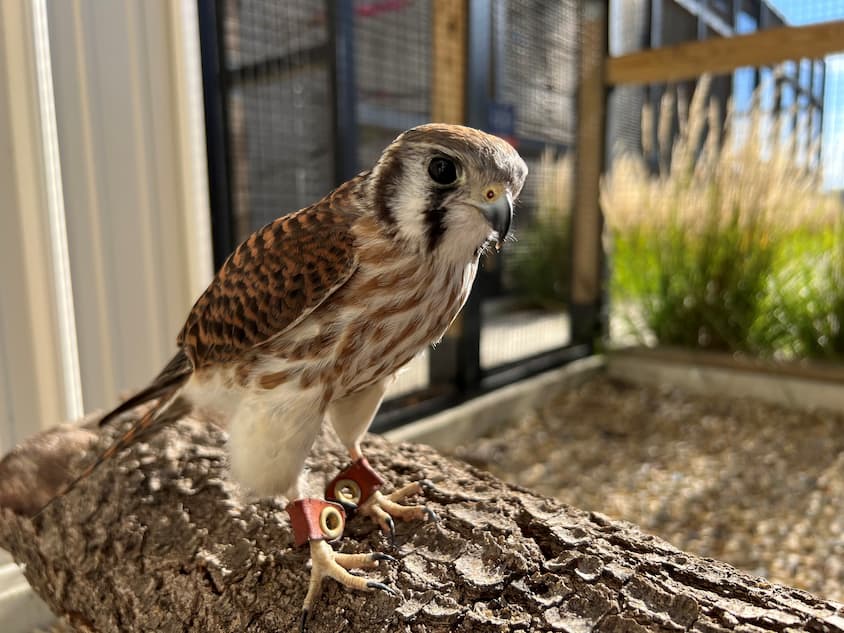
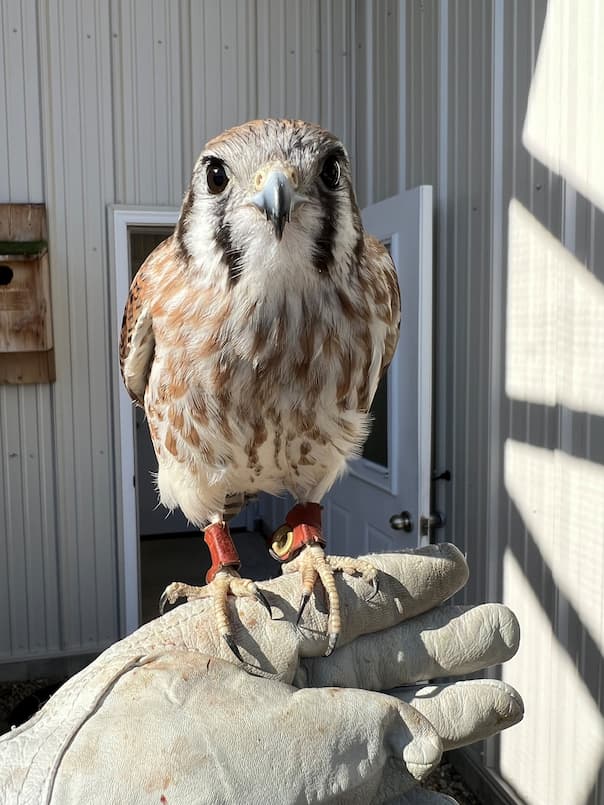
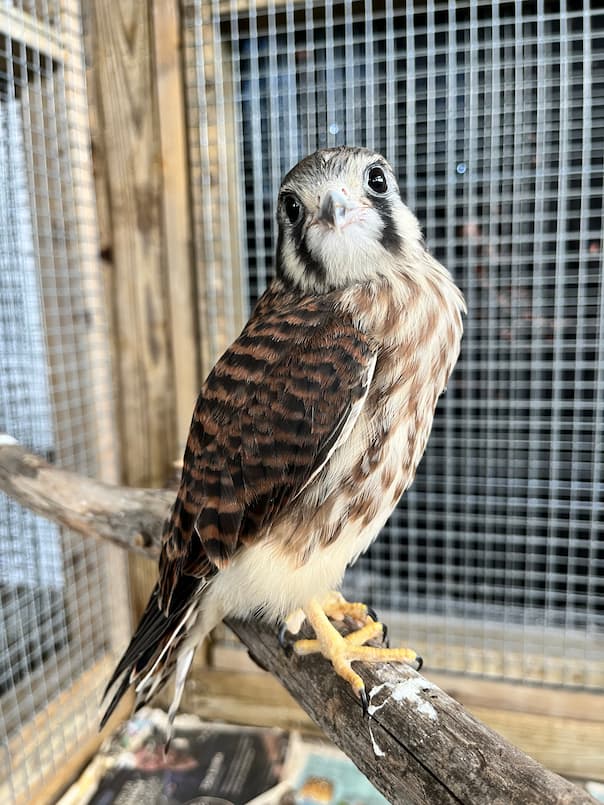
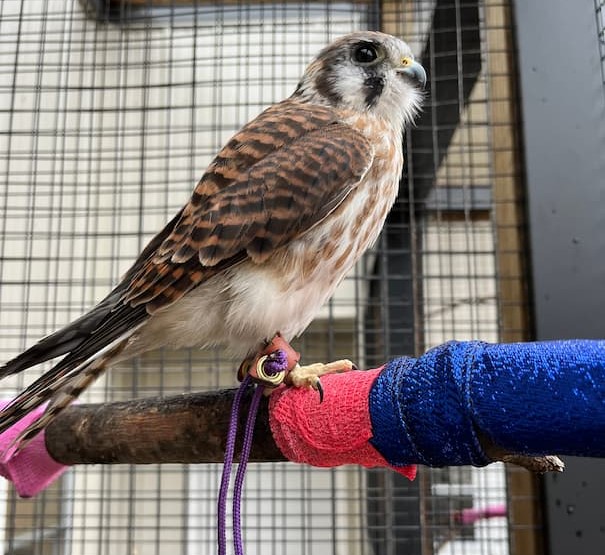
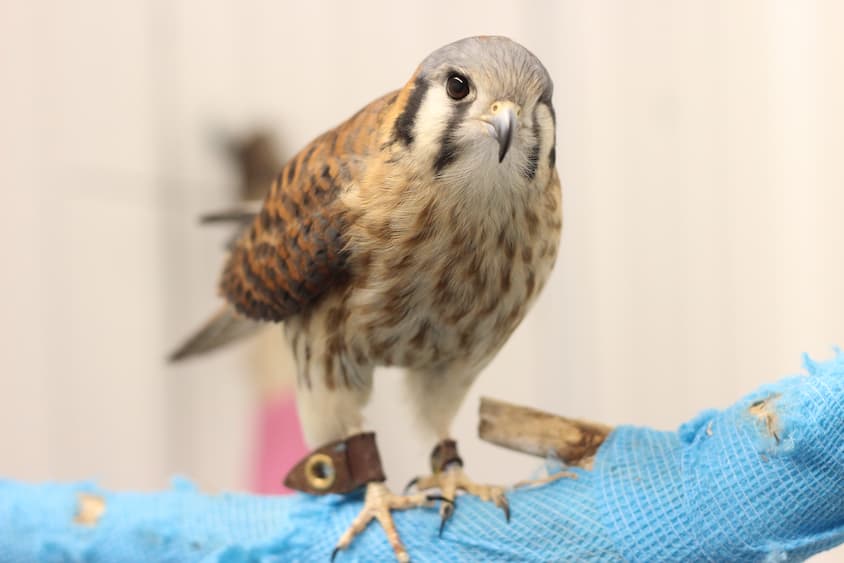
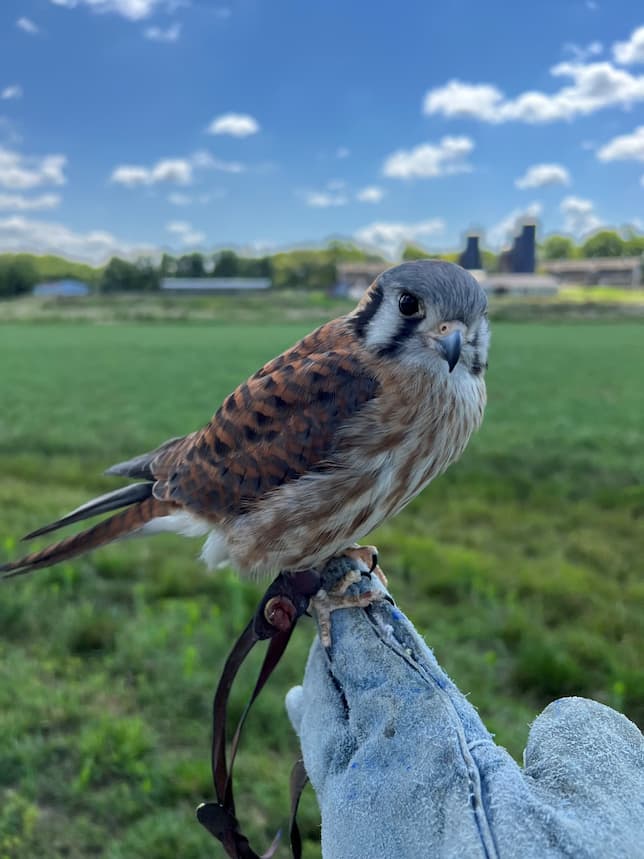
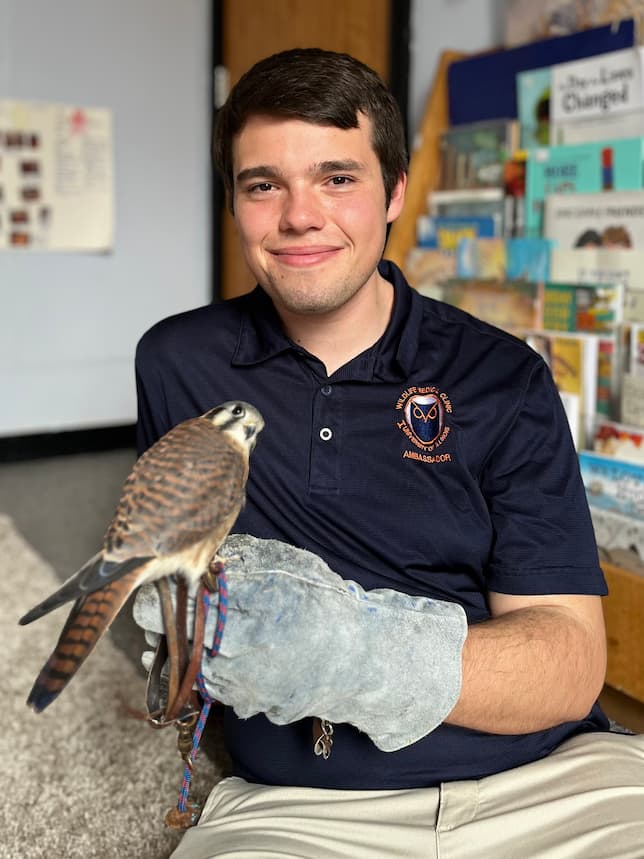
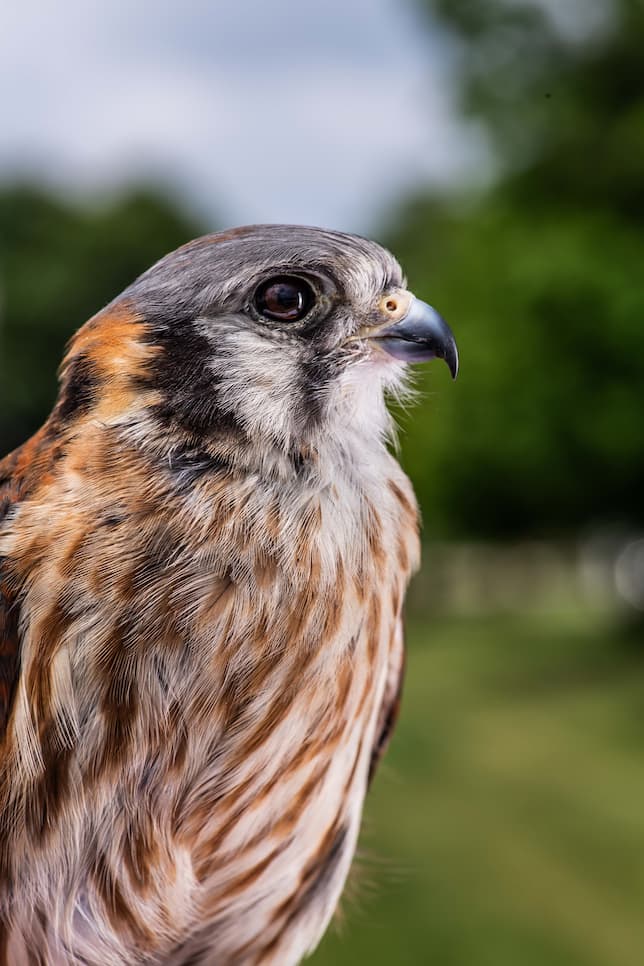
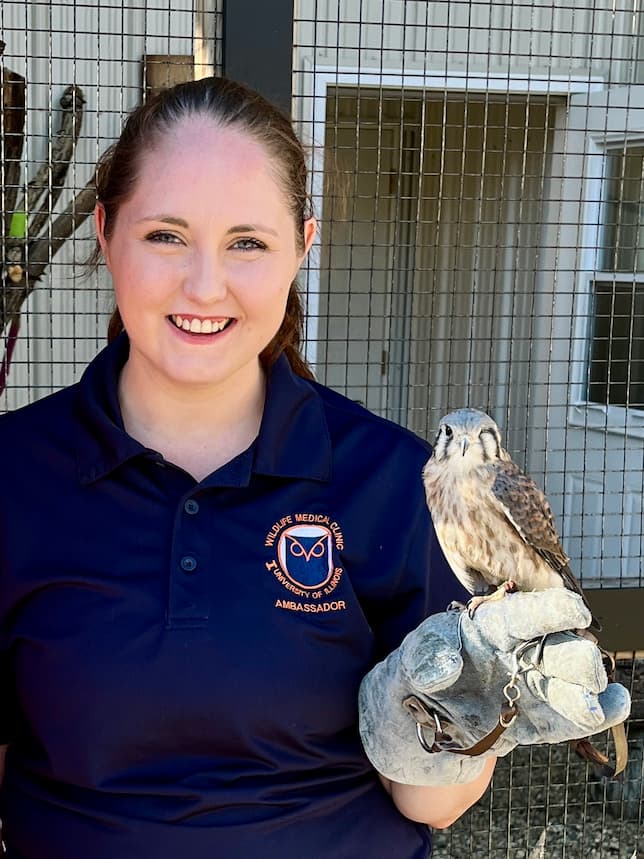
The Wildlife Medical Clinic’s Ambassador Program is delighted to introduce you to our newest member – Clover the American kestrel!
Why Clover, you ask? Well, we are very fortunate to have support from the University and surrounding area and are thrilled that a generous community member, Rich Sivicek, helped us to name her. Our previous American kestrels have had rhyming names (Pistol before Thistle). To continue with related names, since Thistle is a type of plant, another plant-themed name was selected, being Clover!
Clover was initially found in Springfield, Illinois, and brought to the Illinois Raptor Center in Decatur, Illinois, in the middle of June. She had only minor injuries but also presented with neurological symptoms. It was thought that she may have flown into a wall or window but with no improvement of her neurological symptoms after a couple weeks, IRC transferred her to the Wildlife Medical Clinic on the first of July.
At the Wildlife Medical Clinic, we assessed the same mild injuries but did not find anything out of the ordinary on radiographs, so nothing was broken or required surgical intervention. After a few days of keeping her and managing potential pain, we started to see that she did not act like a normal kestrel should. She was eager to see people and would try to run towards us when her cage was opened instead of trying to get away from us, and she was not eager to fly. This habituation to humans meant that, even when healed, she would likely not be successful in the wild.
Due to her non-releasable status, we started looking around for a permanent placement for this little kestrel. While being kept at the WMC, we started reinforcing her comfort around people so that she would be comfortable wherever she ended up. She turned out to be very food motivated – she very quickly learned to perch on a small scale for stress-free weight checks as long as there was a bite of mouse for her afterwards. We admittedly became fond of her and, after many conversations with the WMC faculty and student volunteers, it was decided that we had a place for her in our Ambassador program. Our ambassador American kestrel Thistle was getting older, and we were hoping a new kestrel would put less strain on Thistle, so she could travel to fewer off-site programs and mainly be used for on-site programs. Unfortunately, Thistle passed away before we had Clover ready for programs so we will have a few programs without a kestrel, until Clover is fully trained.
Clover has been in training for a few months now and has made great strides. She flies to select perches when we ask, steps up onto the glove, and still stands on a scale for weight checks. She also flies to the glove on command, which is not something our other Ambassador raptors do. She is beginning to become comfortable with jesses in her anklets. These cords will allow us to eventually secure her to the glove so that she will be safe and contained during programs and while on walks outside.
Training can be a slow process, and every bird is different, but she’s doing well so far and once we are sure she is comfortable and ready, we will start bringing her with to some of our outreach events! In the meantime, she can be seen during on-site programs or at any time by visiting the Ambassador Building, which is located behind the South Clinic. Clover loves to sit on the high beams of her outdoor enclosure, so if you don’t see her, try looking up!
In November, the Non-Traditional Species Club at the University of Illinois College of Veterinary Medicine hosted the fourth annual Wildlife University conference. Wildlife University is a student-organized conference for veterinary students, pre-vet students, and anyone else that is part of or interested in veterinary medicine or wildlife. This two-day conference consisted of lectures on various topics, a workshop opportunity, a trivia night, and a career panel.
This year, we had several amazing speakers who graciously took their time to give very informative and exciting lectures. Our speakers on the Saturday of the conference included: Dr. Margarita Woc-Colburn, Dr. Greg Lewbert, Dr. Tamara Qabazard, Dr. Lily Parkinson, Dr. Alida De Flamingh, and Dr. Karisa Tang. After these lectures, the day concluded with a fun and informative trivia night! On Sunday, our lecturers included: Jacob Dalen, Sarah Hollander, Dr. Giovana Miranda, Dr. Laura Adamovicz, Dr. Mandy Womble, and Dr. Michelle Borsdorf. The conference then concluded with a career panel where attendees were able to ask questions and learn about the variety of careers available in wildlife and veterinary medicine.
Wildlife University 2023 was a fun and successful conference enjoyed by many attendees. Much was learned through the various lectures on topics such as fish medicine, emergency zoo medicine, aquatic veterinary pathology, and so much more. The Non-Traditional Species Club and the Wildlife University planning committee would like to thank all of the speakers that took time out of their busy schedule to share their knowledge and experiences with the attendees. We would also like to thank our sponsors at the Wildlife Medical Clinic and the Illinois Raptor Center, as well as all the attendees who attended our conference. Our club will begin planning the 2024 Wildlife University conference in the spring, so keep an eye out for more information on next year’s conference!
Wildlife Medical Clinic Program Coordinator, Sydnee Oliveira, and Ambassador Care Coordinator, Jacob Dalen, are joined on CiLiving by our Ambassador, Ruby the Red-Tailed Hawk. Learn more about Ruby’s care, training, and the role she plays in educating the community as an Ambassador!
We are saddened to announce the recent passing of Thistle, an ambassador American kestrel in the Wildlife Medical Clinic’s Ambassador Program. She passed away on Tuesday, October 17, 2023. Thistle was a well-known animal to the community and was enjoyed by all when she attended various outreach events throughout her time in our program. As a cornerstone of the Ambassador program, the loss of Thistle was difficult for the program’s many volunteers and faculty members. We are glad, however, to have cared for Thistle for the last eleven years.
In 2012, Thistle was admitted to the Wildlife Medical Clinic with an injury to her left eye. Unfortunately, there was not much that could be done to save the eye, so Thistle was given supportive care until the infection subsided and she recovered from the injury. Without this eye, Thistle’s future in the wild would not be successful as she would not have the proper depth perception to hunt and find prey. Luckily, Thistle was quite friendly and was not showing signs of aggression towards humans. This personality and amiability prompted clinic faculty at the time to keep Thistle at our facility as an ambassador animal. As she began to train with volunteers, it became clear that Thistle was very eager to participate in training and learn how to step onto a glove for educational purposes. Over the next year, Thistle began to feel comfortable in front of the community and grew to be a curious, attentive, well-versed ambassador.
During Thistle’s time in the program, she was able to lighten many lecture halls, birthday parties, conferences, and student activities around the University of Illinois campus and surrounding community. Many people knew her from across the room and were eager to learn about her and her species. Thistle happily participated in our educational events. She would show off characteristic behaviors of American kestrels, such as head and tail bobbing that can help us differentiate wild kestrels sitting on telephone lines from similarly sized pigeons. Thistle also allowed us to point out certain anatomy specific to falcons, like the tomial “tooth” notch on her upper beak. Thistle helped us to talk to people about our goals with rehabilitation – returning wildlife to the wild – and the strict requirements for those goals to be met.
American kestrels are not long-lived in the wild as most live less than 5 years, with a few individuals reported to have lived 10-14 years. In managed settings, these little falcons can live slightly longer. Our estimate is that Thistle was 12-13 years old. During the fall of 2022, she started showing signs of older age with some arthritis developing in her feet. She received frequent medical checks from the Wildlife Medical Clinic veterinarians and was put on a long-term, low-dose medication to manage her pain. Once her pain symptoms subsided, Thistle remained an active, curious ambassador. We were hoping to have a few more years with her but are so grateful for the time that we did have.
Thistle was infamous among volunteers for her piercing screams. These vocalizations came when she was excited, like when one of her favorite people entered her enclosure, but Thistle would also scream when she felt she was not getting the amount of attention she thought she deserved. Thistle sought out time with people – she would follow volunteers around as they cleaned, step on their shoes, and rarely had to be asked twice to step up on a glove for training sessions. She loved to go for walks outside with her trainers, especially if it was just slightly windy so her feathers would ruffle up. Some of our ambassador birds prefer to hang out near their trainers on perches during training sessions and educational programs, but Thistle invariably chose to stay on glove.
Thistle was an incredibly special bird. She changed the lives of many who worked with her and educated thousands of people over the years. Though she was small, she has left a huge hole in our hearts. We sincerely appreciate the community’s support as we take the time to grieve this loss.
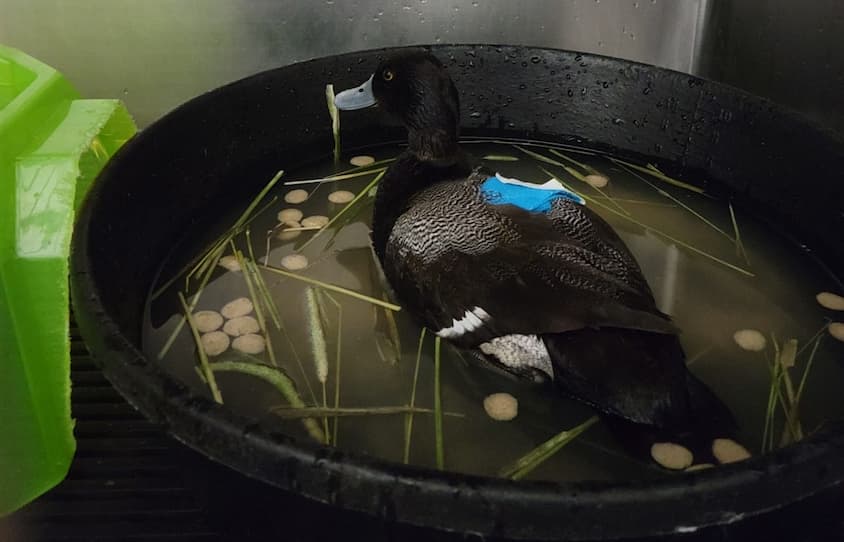
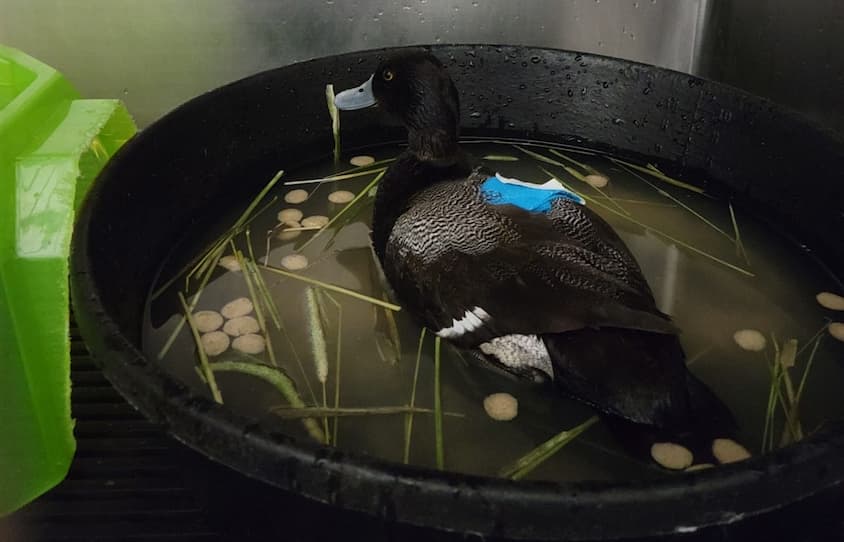
On February 28, 2023, an adult male lesser scaup presented to the Wildlife Medical Clinic. This is a type of duck, and they are sexually dimorphic, meaning the males and females do not look the same. Males have black and white feathers and a blue bill, whereas the females have more brownish colored feathering and a white patch next to their black bill. They typically migrate from Central America, Mexico, the Caribbean, and the southern United States to the Northwest United States and Canada. The spring migration begins in February, so we believe that this patient was passing through Illinois on his way north. Our initial goals were to rehabilitate him as quickly as we could so we could reunite him with his flock on their way north to their summer home. Lesser scaups are diving ducks and like to spend most of their time on the water. They will dive in waters less than 16 feet deep, using their feet to propel them as they forage for prey.
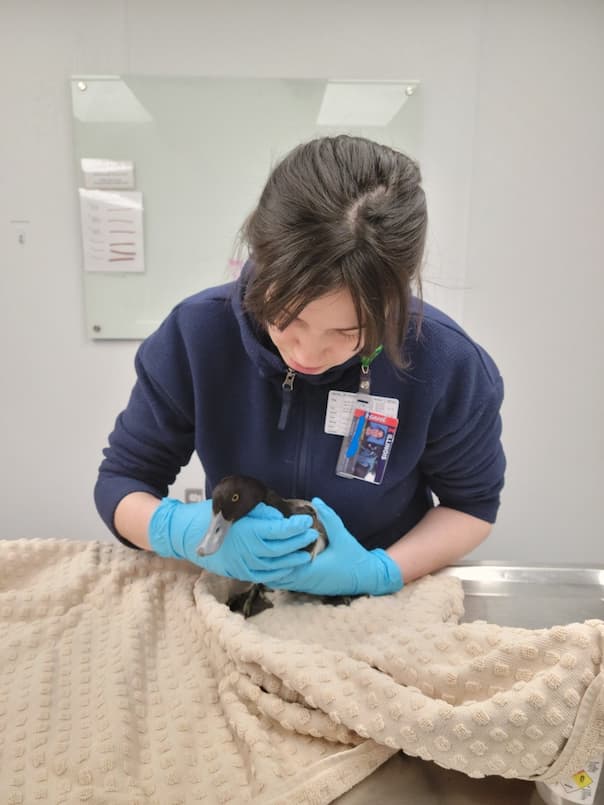
During his physical exam, we appreciated an injury in the right shoulder. We suspected that the injury was due to a traumatic event. The exam showed no other abnormalities, which meant the patient was otherwise healthy. To stabilize our patient and prevent further injury until one of our veterinarians could examine him, we placed a bandage to secure the wing to the body. We were hopeful that the injury was one that could be healed and eventually allow our patient to regain full flying capabilities.
In a few days, the patient was anesthetized to obtain radiographs (x-rays), and sadly we found that the injury was severe and could not be corrected well enough for this bird to ever regain normal flight.
This was a difficult case that I struggled with, because of course I became interested in veterinary medicine to rehabilitate injured animals. My experience prior to working in the Wildlife Medical Clinic had been primarily with domestic animals, but the goals are completely different when working with wildlife. When working with domestic animals, our goal may simply be to provide a comfortable quality of life in the care of their owners. Wildlife, however, need to be indistinguishable from other members of their species, as they need to be functioning optimally to ensure their survival in the wild. After we release them, wildlife need to migrate, find food, evade predators, mate, and raise offspring. We can’t provide them with life-long medications, or have them return later in life for recheck exams. Any animal that cannot perform these functions would not survive in the wild, and many chronically injured wild animals would not be suitable for a life in captivity. These high standards are what makes wildlife rehabilitation so difficult.
At the end of our journey with our patient, we were still able to help end his pain and suffering. As veterinary students and veterinarians, we are responsible for making the most informed decisions for our patients, no matter how difficult they may be. I am grateful that I learned this valuable lesson as a student in the Wildlife Medical Clinic. While the outcome wasn’t what I hoped for, it was still the best outcome for this individual and helped me to learn and grow in my journey to becoming a veterinarian.
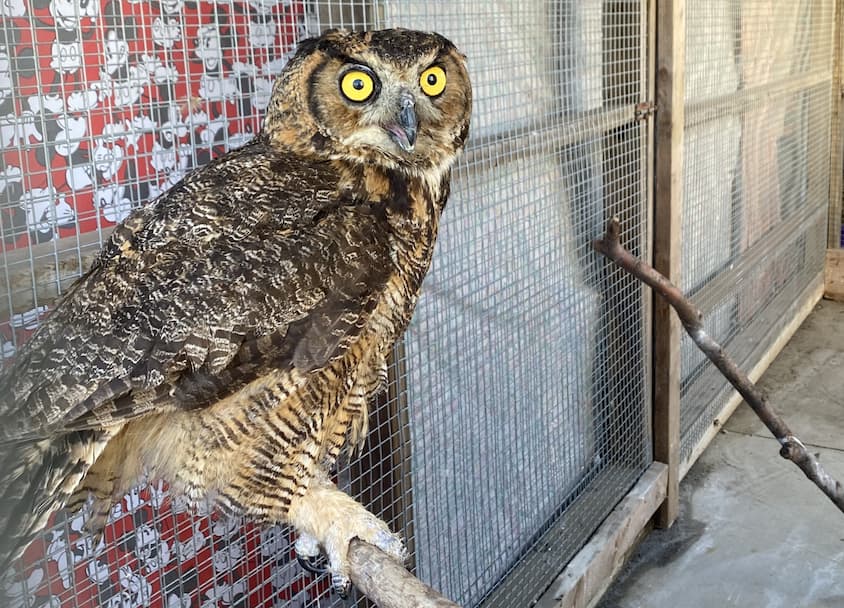
The great horned owl, Bubo virginianus, is a common patient seen at the Wildlife Medical Clinic. This species is found throughout most of North America and is easily identified by its “horns” which are actually tufts of feathers. Great horned owls are permanent residents of Illinois and can be found in a variety of habitats. This species is also known for its stereotypical “hoo-h’HOO hoo hoo” call, which is commonly heard in movies and on television shows.
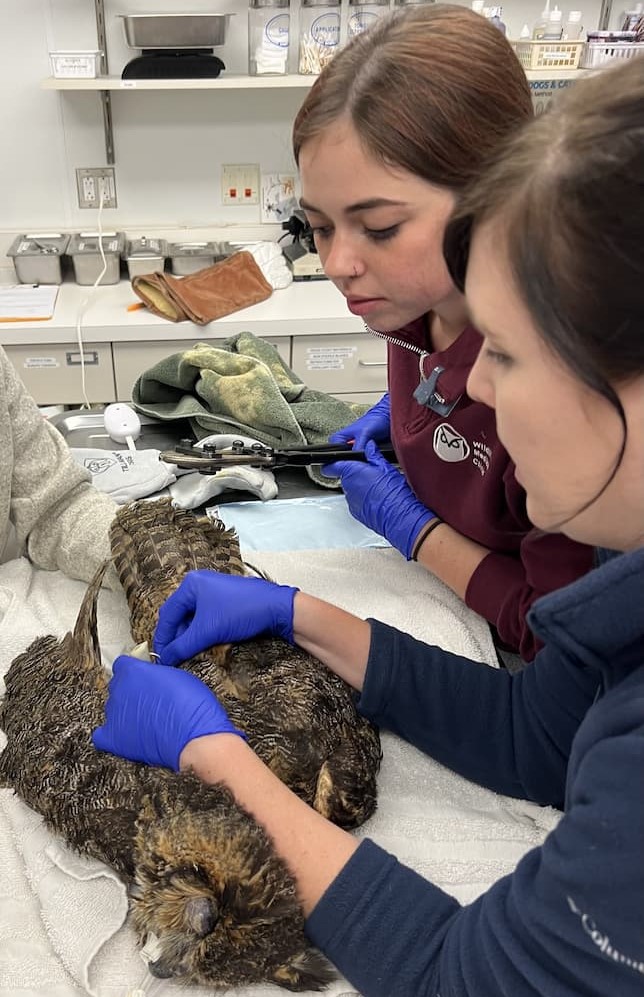
In the middle of August, a juvenile great horned owl was brought to the Wildlife Medical Clinic by a good Samaritan. The owl had been in the finders yard for a few days and was seen taking short flights but would fall out of the trees upon landing. The finder also noticed that the young bird was not using its right leg at all, and it seemed to be dangling from the joint. During the physical exam, the patient was found to have a proximal fracture of the right femur. The patient was also found to have external parasites, blood parasites, anemia, and was extremely underweight. Shortly after the initial exam, the patient had radiographs performed to confirm the fracture location and to evaluate whether surgery would be an option to repair the fracture. Upon review of the radiographs, it was determined that fracture repair was possible and had great potential to be successful, so the patient was taken straight to surgery.
During the surgery pins were placed in the bone to stabilize the fracture and allow for the fractured pieces to be joined back together. Over the next six and a half weeks the patient was placed on cage rest while the bone healed. During this time, the patient was placed on antibiotics to help prevent infection, as well as medications to control pain and decrease inflammation or swelling. The patient was also treated for its parasites, which in turn treated the anemia the patient presented with. This period of rest also allowed the patient to gain weight and return to a healthy body condition. The patient’s surgical site was monitored daily for signs of healing and was kept clean by the volunteers. During the last week of cage rest, radiographs were repeated and confirmed that the patient’s fracture was healing properly and the surgical implant holding the bones in the correct position was ready to be destabilized. Destabilization essentially allows for the bone to slowly get used to supporting the weight of the patient.
When the pins were removed there was slightly more exudate than what would normally be expected. The material was cultured and sent to the Veterinary Diagnostic Laboratory at the University of Illinois to be examined by pathologists. The sample came back as an antibiotic resistant bacterium, staphylococcus epidermis. The bacteria was tested against different antibiotics until one was found to be effective against it. This type of infection is known as osteomyelitis, or a bone infection. Osteomyelitis happens infrequently but is associated with surgical repairs using pins in raptors. The patient was put on a course of twice daily antibiotics, and pain medications.
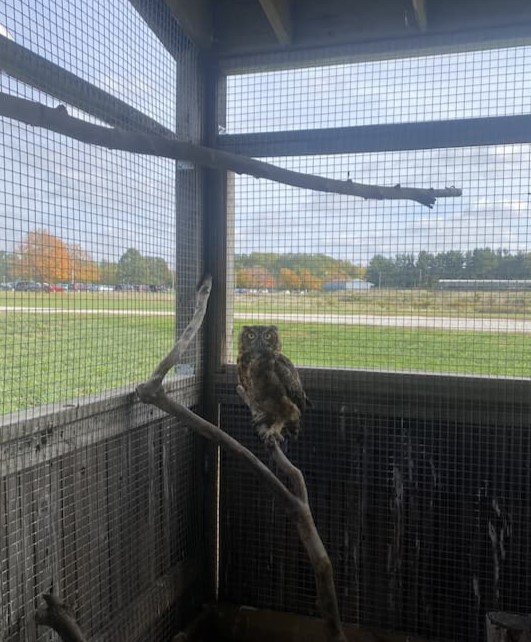
During this time, the owl was also moved to a larger enclosure in our flight cage, for further monitoring. This allows the doctors to confirm that the bone is continuing to heal properly and that the patient can use the limb correctly. This also allows for the patient to get used to using its leg and rebuild any muscle that may have deteriorated during the healing process. This is especially important because owls are birds of prey, which use their legs and talons to capture the food they eat. Owls also nest and perch in trees, which allow them to stalk their prey and stay safe from predators. Proper limb function is needed to keep the bird steady in the tree, and to catch their prey silently.
After three weeks of antibiotics and pain management the medications were discontinued, and the patient was monitored for any signs of pain, discomfort, or improper limb use. During this observational period the patient showed no clinical signs of infection or pain. Radiographs were also repeated and showed no evidence of damage to the bone from the infection. Upon further examination the patient was deemed ready for transfer to a rehabber to build up strength and sharpen its skills before being released to the wild. This is an important success story as Osteomyelitis is a rare surgical complication that can lead to the downfall of a patient. Luckily, the infection was caught early, and the patient responded well to the course of antibiotics giving him a chance to return to the wild, where he belongs!
As we enter spooky season, the Wildlife Medical Clinic would like to share some ways to ensure the safety of wildlife around us. Join CiLiving and Sydney Oliveira, the Wildlife Medical Clinic Program Director, to learn about the impact of Palm Oil on wildlife and how to go about choosing environmentally conscious Halloween treats this season.