Thank You, Bri!


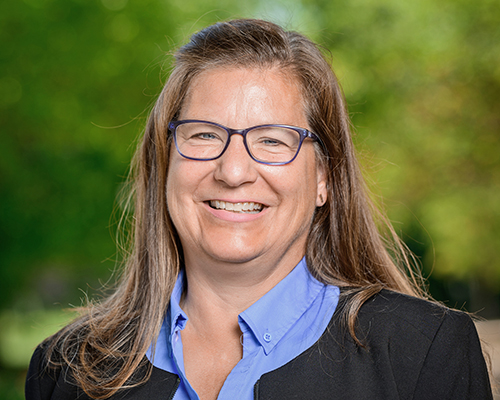
Our wonderful student managers have one of the most important roles in the Wildlife Medical Clinic (WMC). They are the eyes on the floor that keep track of every single patient that comes through the clinic while balancing all the minute details to ensure the clinic continues to run smoothly. In addition to that, they also provide immense support to our student volunteers and do their best to make sure that each student gets the most out of every case and continues to learn and grow during their time in the clinic. This March, we will be sending off our amazing senior manager, Bri Huff, as she heads to clinical rotations. Bri is a very dedicated, compassionate, and hard-working student. She always makes sure every student in the clinic is getting the opportunity that they deserve and never hesitates to share her knowledge and skills. We interviewed Bri and asked her what her plans are after graduation and for a few thoughts on her time as a manager in the Wildlife Medical Clinic.

What is the next step for you after clinical rotations?
After graduating, I hope to pursue an internship and residency through the veterinary match program, with the ultimate goal to become board-certified in zoo medicine. I plan to continue to remain involved with wildlife rehabilitation medicine after graduation and beyond!

What is one (or a few) of your best memories from the Wildlife Clinic?
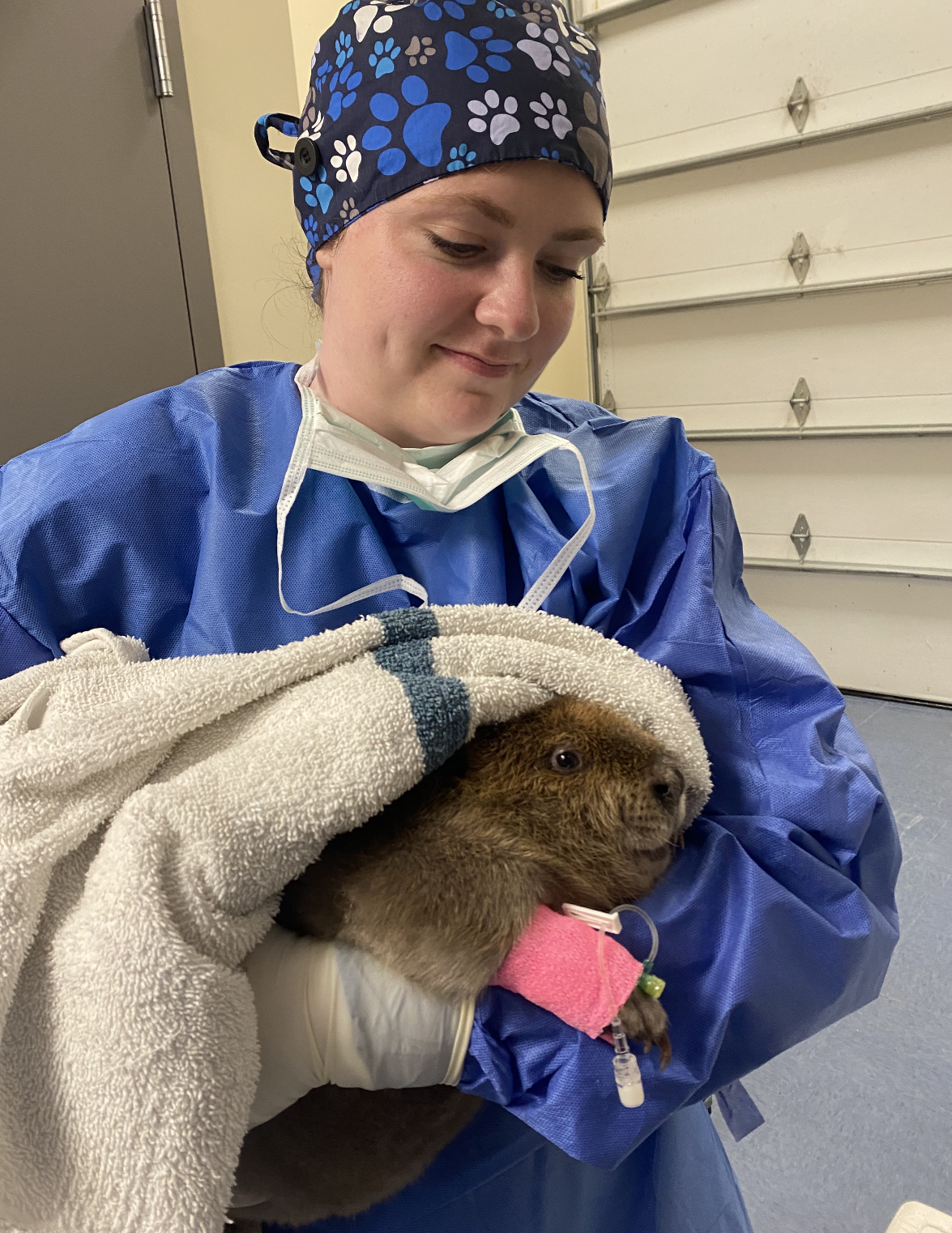
There have been so many moments during my time in the WMC that I now look back on as fond memories. Though it is terribly difficult to highlight just a few, I think one of my favorites was participating in an FHO procedure for a beaver kit that presented to us over my last summer as manager. While part of my attachment to this memory stems from the patient being one of my favorite species, it was also an incredible experience to see several of our specialty departments within the hospital come together to perform the procedure on such a unique patient. Additionally, a very recent favorite memory was having the opportunity to present at this year’s National Wildlife Rehabilitators Association conference. It was so rewarding to be able to share knowledge with wildlife rehabilitators from around the country, and each and every individual that I encountered at the conference was so welcoming! The wildlife rehabilitator community is flourishing with support, passion, and a desire to improve wildlife medicine, and I am so grateful to have been involved in the conference as a veterinary student.
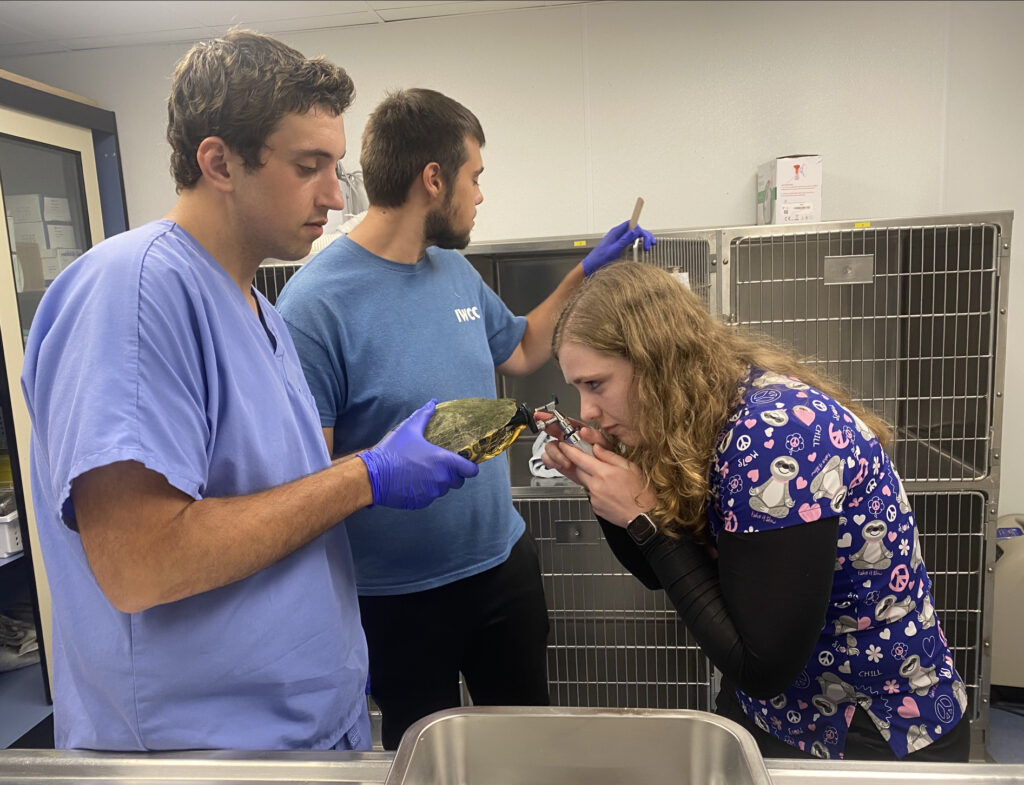
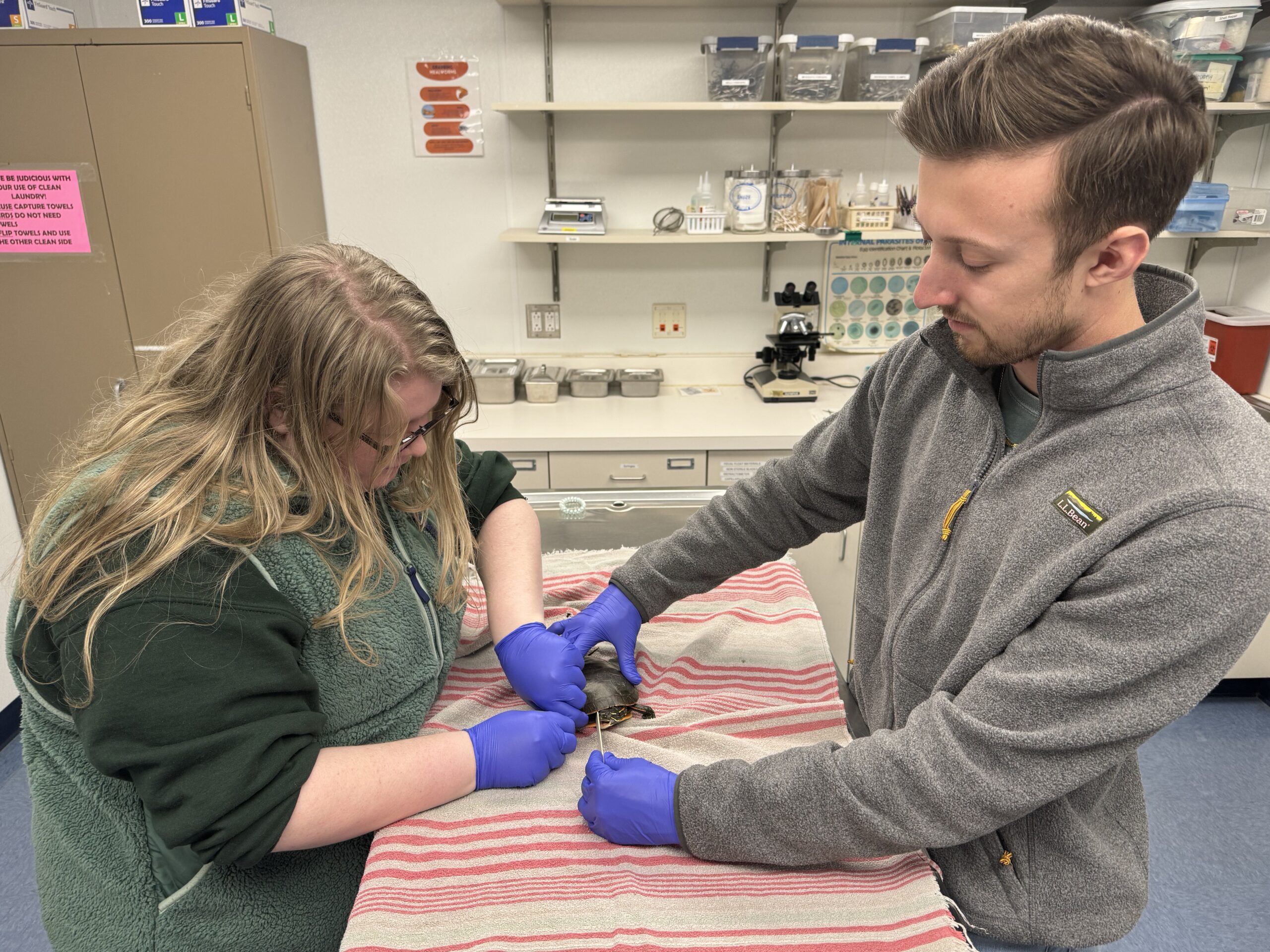
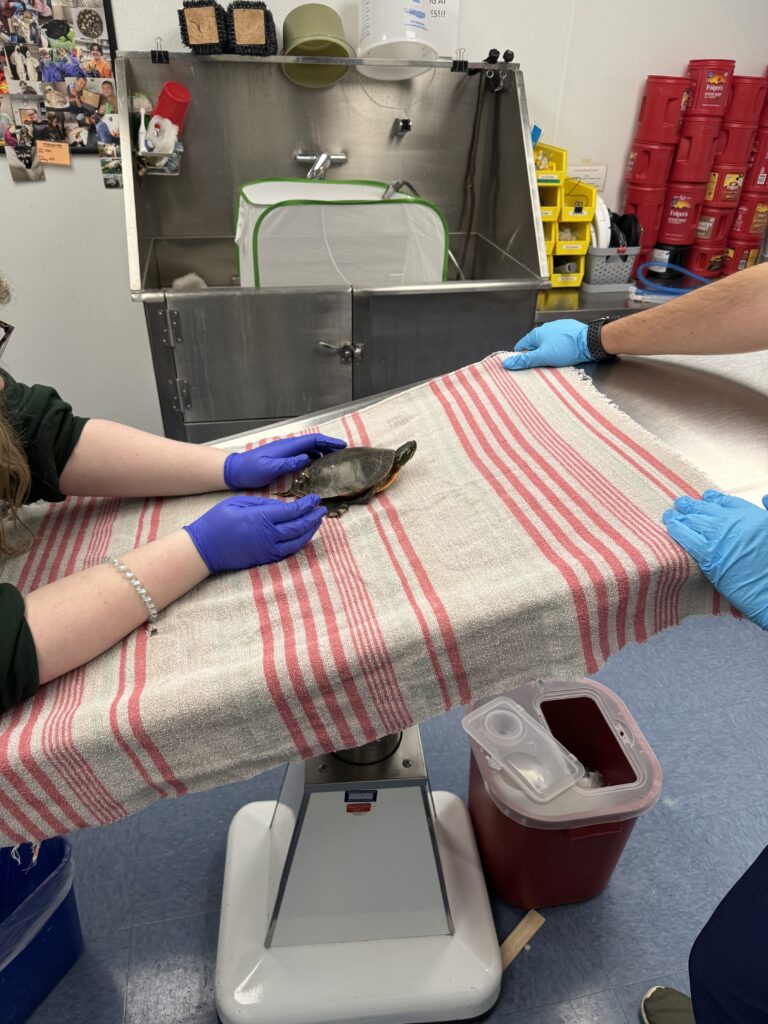
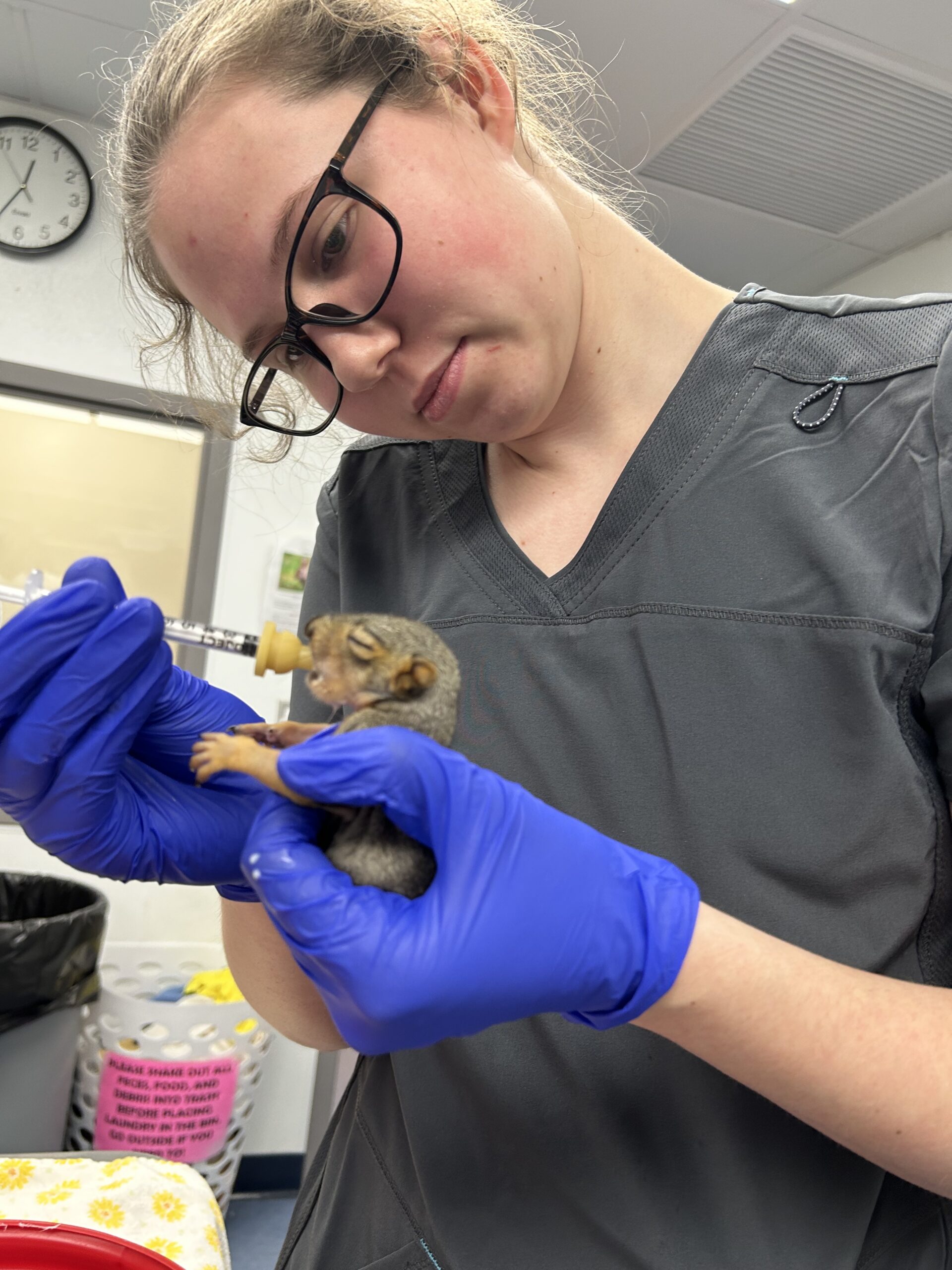
Three veterinarians examining a turtle
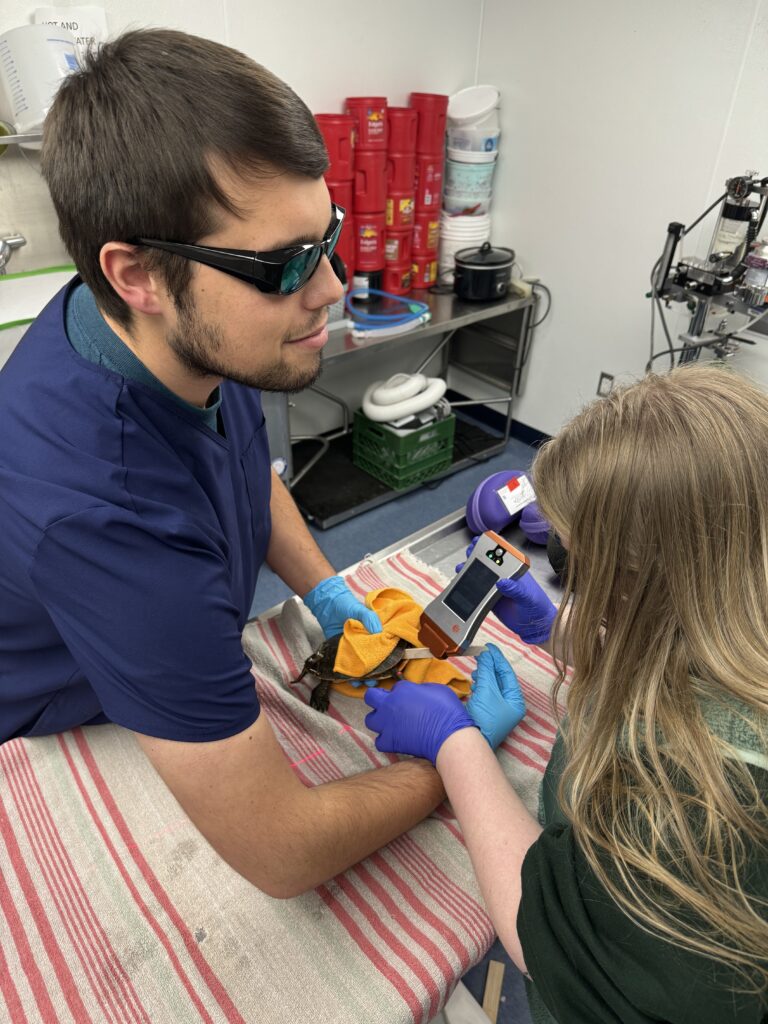
Bri doing an ophthalmic exam on a turtle!


What is something you learned during your time as the clinic manager/volunteer?
The WMC has taught me so much more than I had anticipated since I first set foot into the clinic. Not only have I gained such valuable knowledge about wildlife medicine, but I have also learned a great amount about myself, veterinary medicine as a whole, fostering collaboration, and building a community. I have learned and witnessed the incredible impact of kindness and compassion. I have recognized the importance of sharing knowledge and leaning on others for support. I have seen the influence an individual can have, starting with just the simple desire to learn. But most importantly, I have learned the importance of adaptability: a necessity in order to foster an environment in which humans and animals in need of healing can flourish.

Anything you would like to share with our readers?
Firstly, I would like to acknowledge those that have shared this journey with me, and made my experience as a manager one that has left a profoundly positive impact on me. Dr. Sam Sander, Dr. Stephany Lewis, my co-manager Tyson Jenkins, Sydney Oliveira, our student volunteers, ZooMed faculty/staff/house officers, our south clinic receptionists, our local wildlife rehabilitators, and so many more: thank you for all you have taught me – I will be forever thankful for the relationships that we have built throughout my time within the clinic. And to our readers – whether you have supported me along my journey, support a student within our clinic, or support the clinic as a member of our community – thank you! Your support for the individuals and patients within our clinic makes what we do not only possible, but also so very rewarding. YOU have also made this journey one to remember!


We had also reached out to our faculty and colleagues who worked closely with Bri for a short post of appreciation that we would like to share with Bri!
Since my first day in WMC, I was struck by your maturity and leadership. I truly do not know how I would have functioned these past months without you, and I will forever be grateful for your guidance and your ability to accept my transition into this new role with such grace. You are a smart, strong, compassionate, and capable
veterinarian and person. I hope you will treasure your time in the WMC and know that you have left a lasting positive impact. I will forever be proud to call you my student, colleague, and friend, and I am so excited to watch you grow as a veterinarian. There is not a doubt in my mind that you will accomplish everything you set out to do, and more. – Stephany Lewis, DVM, CWR, DABVP (Avian Practice)

It has been such an honor to work with you over the past two years and watch you blossom into a confident, passionate, and talented veterinarian. Your empathy for your patients knows no bounds and is an inspiration to us all. Your dedication and commitment not only to wildlife, but also to the students of the Wildlife Medical Clinic, is evident to everyone who steps inside. I am so fortunate to call you not just a colleague, but also a dear friend, and can’t wait to share so many new experiences with you as we head off to clinics. I am beyond excited to see where the future takes you. – Haley Kenyon, Class of 2025
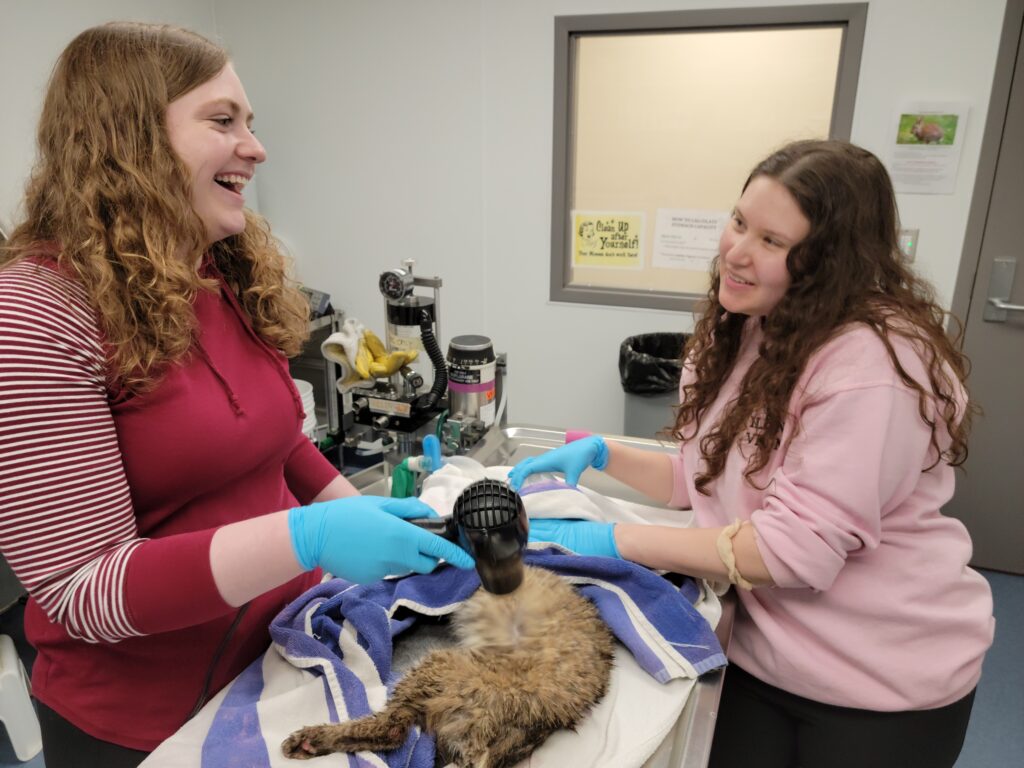
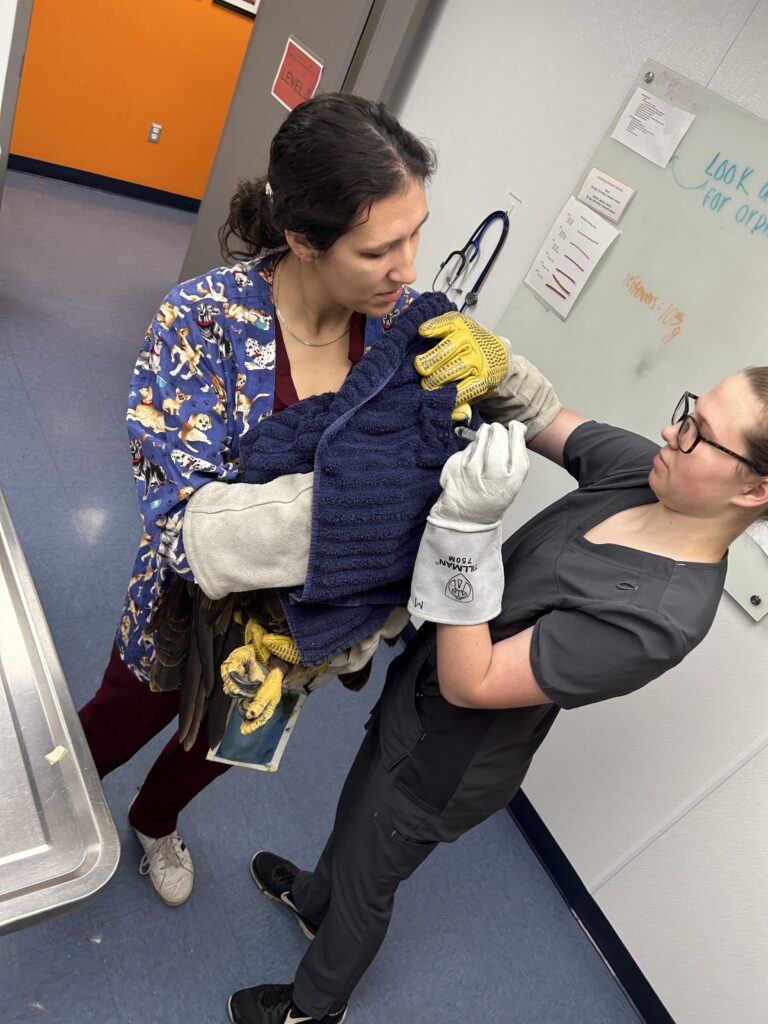
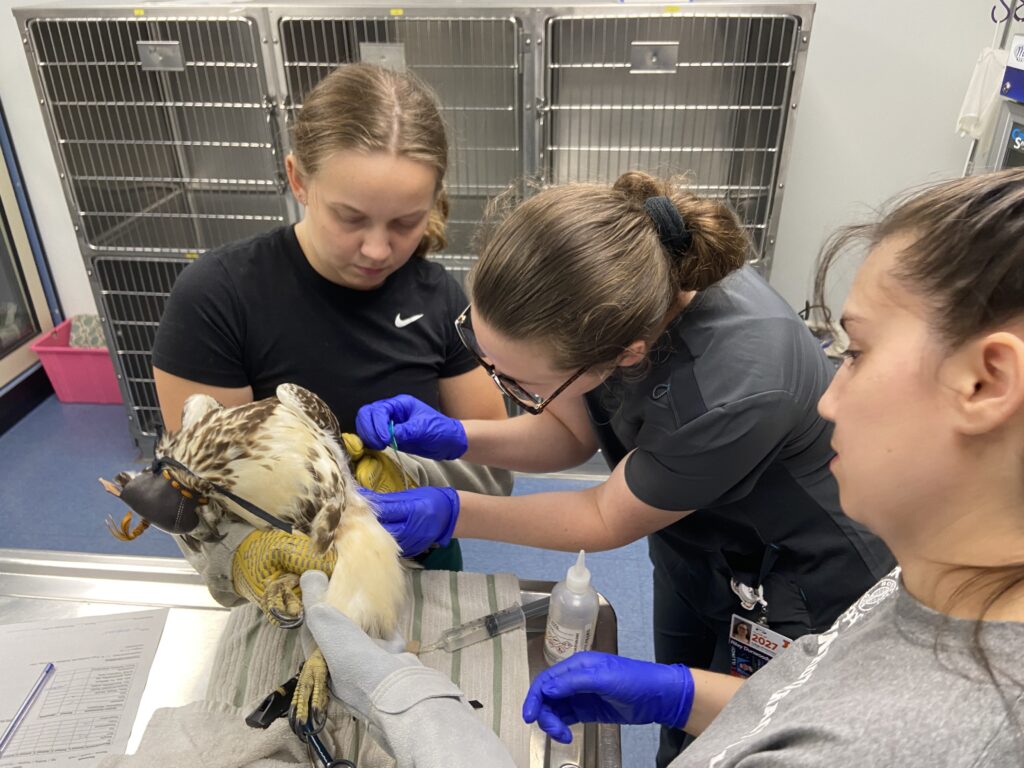
Bri and Haley drying an animal
Bri blow drying a bobcat with third year Haley

There are countless words to describe Bri’s legacy as the Wildlife Medical Clinic Manager. Courageous, compassionate, dedicated, humanitarian, nurturing…the list can go on. Bri Huff will probably be one of the most incredible managers that the Wildlife Medical Clinic ceases to have. She is not only an incredible leader, but a kind-hearted soul to countless volunteers who have devoted an enormous amount of time to the clinic. Bri will be a spectacular doctor. The love and effort that goes towards every admitted patient that has come through that clinic door will never go unseen. Bri’s heart fills up every room that she walks into. From triaging debilitated raptors to making a waterproof sling for a non-ambulatory Canada goose to engineering extraordinary enclosures for our patients. It is abundantly clear that Bri is always thinking about the well-being and welfare of our patients. She is always thinking about how to make their time spent in the clinic less stressful and as comfortable as possible. Thank you, Bri, for making a difference to our patients and the students. You have been an incredible mentor, supporter, and educator to many. We will always be super appreciative of your devotion to this magical place that we know as the Wildlife Medical Clinic. We can’t wait to see where you go because every person and animal that you encounter on that journey will be so lucky to experience the care that you will provide. I can’t wait to see how Bri Huff continues to change the world! – Hassan Hanna, Class of 2025

Bri, when I decided to apply for the manager position, I truly had no idea what I was getting myself into. The scope of this position, the level of responsibility required, and the skills needed all greatly exceeded what I was capable of at the time I was chosen. Yet, somehow, you saw the potential in me, and I will forever be grateful for that fact. You have been an incredibly kind and patient mentor, teacher, and friend, and I would not be where I am today without you. I am beyond appreciative for everything you have given me, and I hope that I was able to help you achieve your goals as well. I know with absolute certainty that you will make an incredible doctor. I don’t know that I’m ready to be senior manager (I don’t think you can ever be fully ready for a position like this) but I hope I can carry on your legacy and mold the clinic into everything we know it can be. This next year won’t be the same without you by my side, but I am so excited to see where you go and what amazing things you will do. Good luck in clinics, and, once again, thank you! – Tyson Jenkins, CWR, Class of 2026

Thank you, Bri, for all your contributions to the Wildlife Medical Clinic! We wish you the best of luck on your soon-to-embark journey. And we will all miss you dearly at the Wildlife Medical Clinic!

Written by YiYing, Class of 2026

Preparing for Spring Migration

Spring migration is a magical time when birds return to their breeding grounds after a long winter. However, this journey can be perilous, with various challenges along the way. Dr. Stephany Lewis DVM CWR DABVP (Avian Practice), and Sarah Hollander, Wildlife Ambassador Coordinator will share insights on how to support migrating birds and other wildlife during their stopovers in your yard. 

https://www.wcia.com/ciliving-tv/wildlife-medical-center-is-preparing-for-spring-migration/

Third-Year Students’ Appreciation Post

At the Wildlife Medical Clinic, students are the doctors. Under the guidance of our faculty and staff, students learn to formulate treatment plans, work up procedure details, and be closely involved with their patients’ day-to-day care. However, what is often critical in these decision-making steps is the support from their team leaders and senior classmates. Peer mentoring is one of the foundations of the student learning experience in the wildlife clinic. Senior students on the team are often the first point of support when their teammates seek advice on their patients.

They provide insight and guidance through their own experiences and are excellent mentors for our newer volunteers. Now that spring break has ended, the third quarter has officially closed, and third-year students have received their white coats. The third-year veterinary students will begin their clinical rotations for their final year of vet school. Words cannot describe how excited we are for their upcoming journey and while we are sad to see them leaving the clinic, we wish them the best in their future endeavors. Below, we would like to share some of the numerous quotes and well wishes given to our third-year student volunteers by our first and second-year student volunteers.

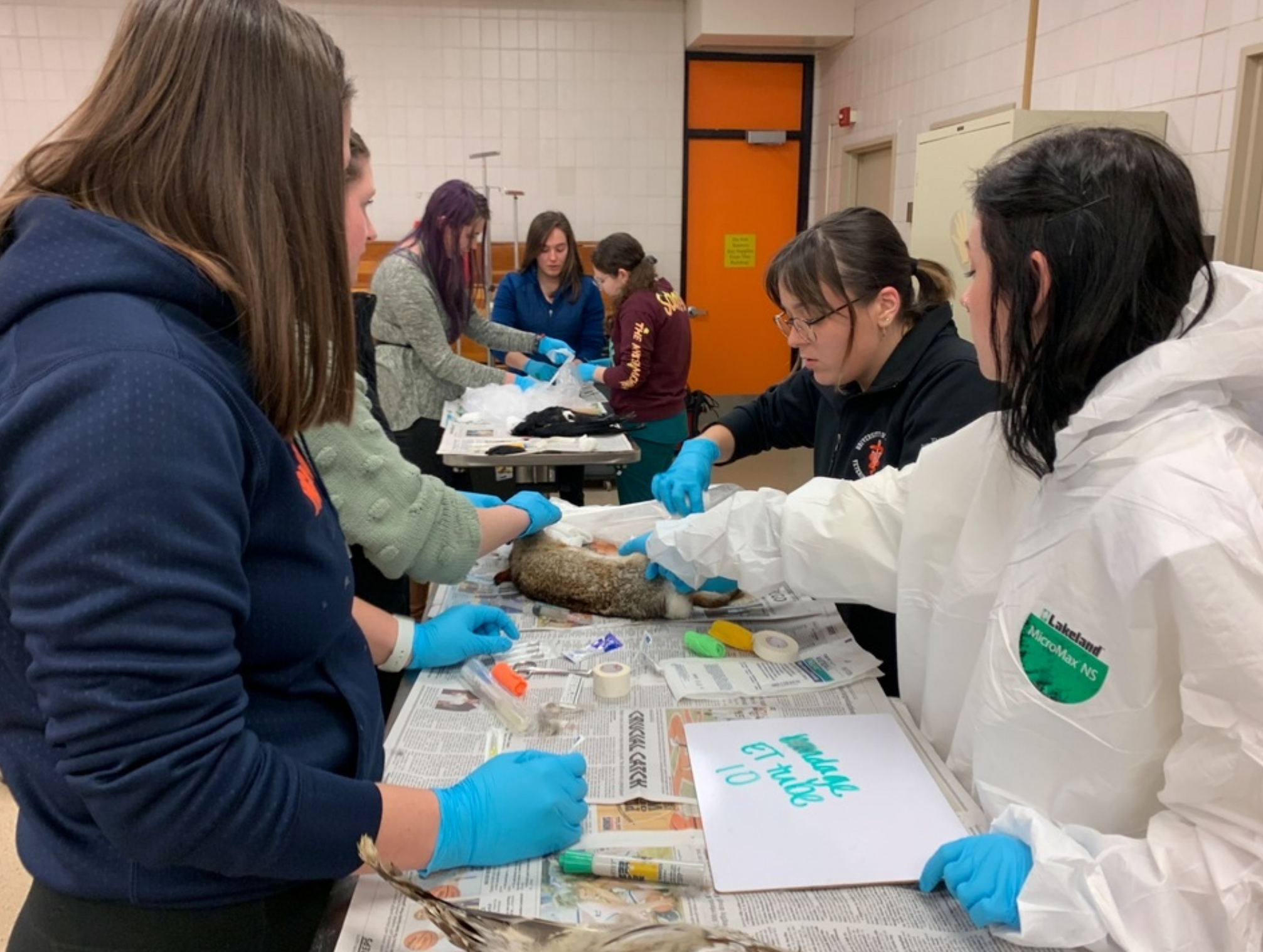
Students around an operating table operating on an animal
This image shows our past senior manager, two volunteers and a house officer preforming an exam on a wildlife animal.

Christina, after being on a team with you for the last three years, I am so glad we were able to be team leaders together! You are an amazing teacher and always lighten the mood during the hardest days. Your jokes and ability to hold the team together have made you a valuable member of AMCO! We know you’ll be doing the same on clinics and we hope you have a great time!! Good luck Christina!! – Jacob, Class of 2026

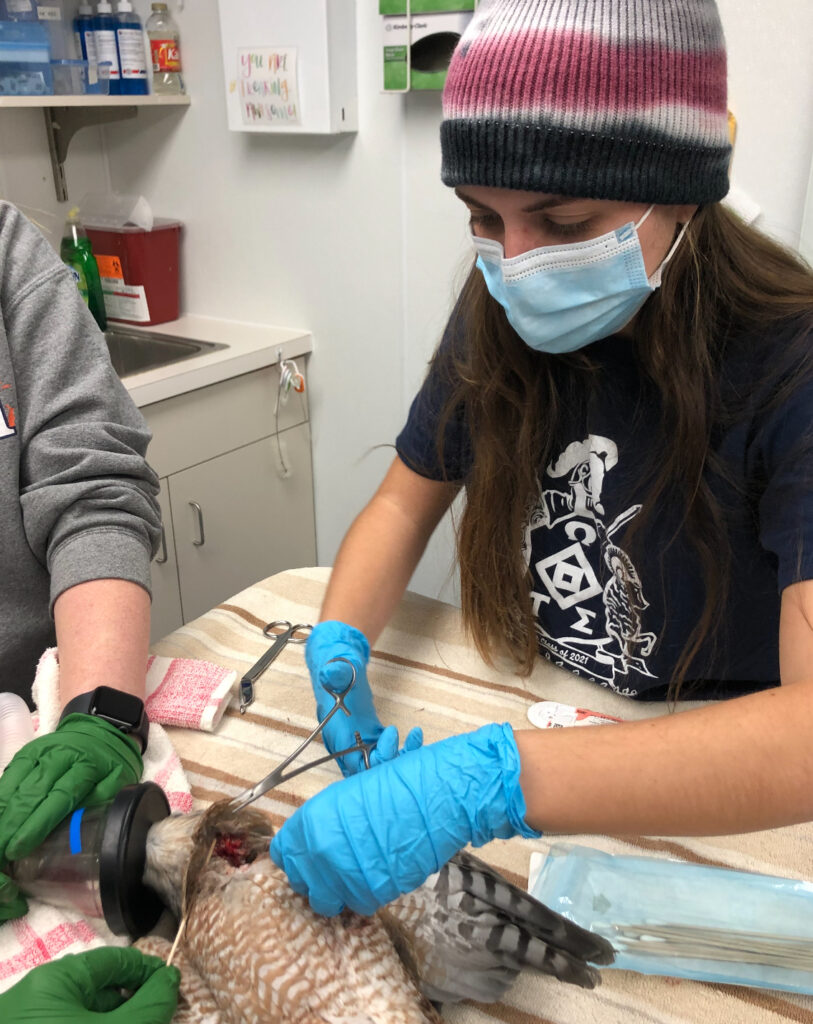
Student in a mask looking down at a bird being operated on
Third-year veterinary student Grace assisting with a surgery!

Jess, thank you so much for being a ray of light in the clinic! You have been a gem on the team. You have taught me so much, and really believed in me as a team lead. We will miss you on MAMO! I’m glad you got your WMC bucket list item checked off and finally got to hold an eagle – Maya, Class of 2026


Reagan, you have been such a wonderful team lead, teacher, and friend. You have become an amazing person to go to for knowledge, support, and advice for both in the clinic and just life in general. I have loved being able to work with you. – Riley, Class of 2027


Theo, I feel SO lucky to have had you as a team lead last year and a co-team lead this year! You have added so much to my learning and experiences not only in the WMC but in vet school as a whole. Thank you for your constant patience, kindness and support and for being a wonderful example of a team member and a leader! You will be missed, but I cannot wait to see what amazing things you will continue to do in clinics and the future! – Sofia, Class of 2026

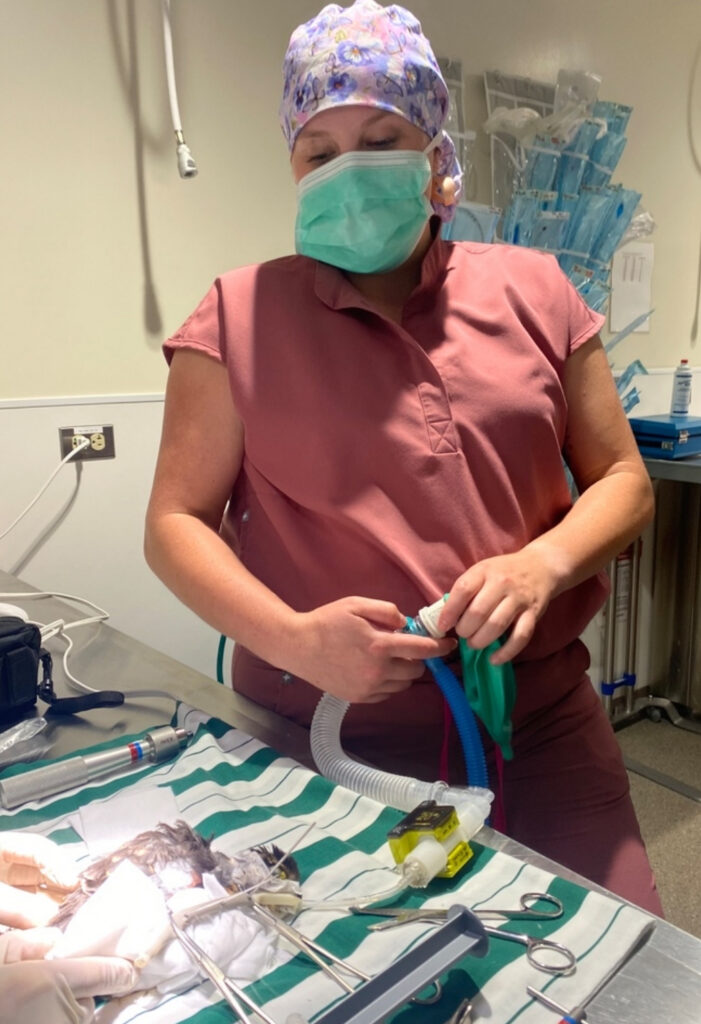
A veterinarian operating on a bird
Third year Marisa doing a surgical procedure on a avian species.


Macy, It has been so amazing to learn from you over the past 2 years. You have been such an amazing mentor to me, for both wildlife things and for how to be a leader. I have always loved the chaotic energy and sense of humor you brought to the clinic. It always made working shifts with you so enjoyable. Good luck in clinics! I know you’ll be amazing! – Angela, Class of 2026

Abbie, I have loved getting to work alongside you during my time in the WMC. You were always eager to help me and provide encouragement for things in and outside of the WMC. Not only are you confident in your knowledge, but you are also an excellent teacher that has taught me most of what I know in the clinic. I have no doubt that you will be an outstanding clinician and that you are going to do amazing in your clinicals!! – Rachel, Class of 2027

Written by YiYing, Class of 2026
Not All Heroes Wear Capes – But These Veterinary Students Do

What do Spiderman, Iron Man, Wonder Woman, and the Veterinary Student all have in common? They are all heroes. Ever since I was a child, I have dreamt of becoming a superhero. I pictured myself as this fearless, gallant character in a comic book. A bold superhero who saves the lives of animals and people. Now that comic book is coming to life.

Let us begin with our exposition. Some heroes acquire their abilities, while others are born with them. The poor sickly orphan, Peter Parker gained his superhuman strength and speed once he was bitten by a radioactive spider, then took on the heroic name of Spiderman. It is simply not that straightforward for us. Veterinary students are special as they must work super hard to become the heroes that they are today. It was their unconditional love for animals of all shapes and sizes that called them to this career. A career that is centered around mute patients who can’t communicate their problems, so you are left with detective work to discover solutions. The average veterinary student knew they wanted to become a veterinarian the day that they knew that they could use the power of science and medicine to save animals. An ordinary moment that is captured at the beginning of many veterinary students’ journeys through a baby picture is them wearing their elevated costume of scrubs covered by a white coat with the dynamic equipment known as the stethoscope wrapped around their neck sitting next to their beloved pet sidekick. Our costumes might not look as marvelous in comparison to Superman, the Flash, or Black Widow. However, once we put on our costumes, we feel invincible.

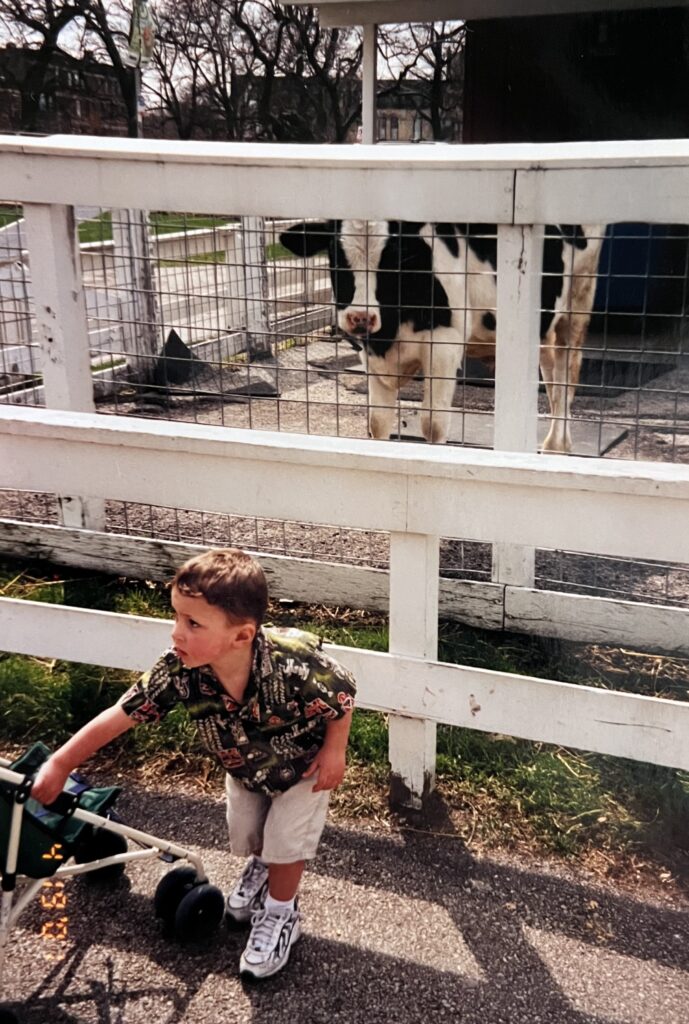
A little boy in front of a cow pen
As a child, I would beg my mom to take me to the zoo almost every weekend because I was fascinated by all the unique zoo animals. My mom expressed to me that she knew that I would become a veterinarian when she simply saw the joy that animals would bring me.

The road to veterinary school is complex. Most students attend veterinary school after obtaining a bachelor’s degree from an undergraduate college. However, others go through a nontraditional path and return to academics once they discover that veterinary medicine is their true passion. To become a Doctor of Veterinary Medicine, it requires precision, devotion, and intensive training. The exposure to numerous specialties allows students to find their calling to work in specific fields such as companion, farm, equine, zoological, aquatic, and wildlife medicine. Our opportunities are endless. They all share one similarity: being a healer for animals. When I first stepped into the Wildlife Medical Clinic, I was mesmerized by the ability to save the lives of injured and orphaned wildlife. I knew that this was my calling. A future in saving nontraditional species such as zoological, aquatic, and wildlife animals.

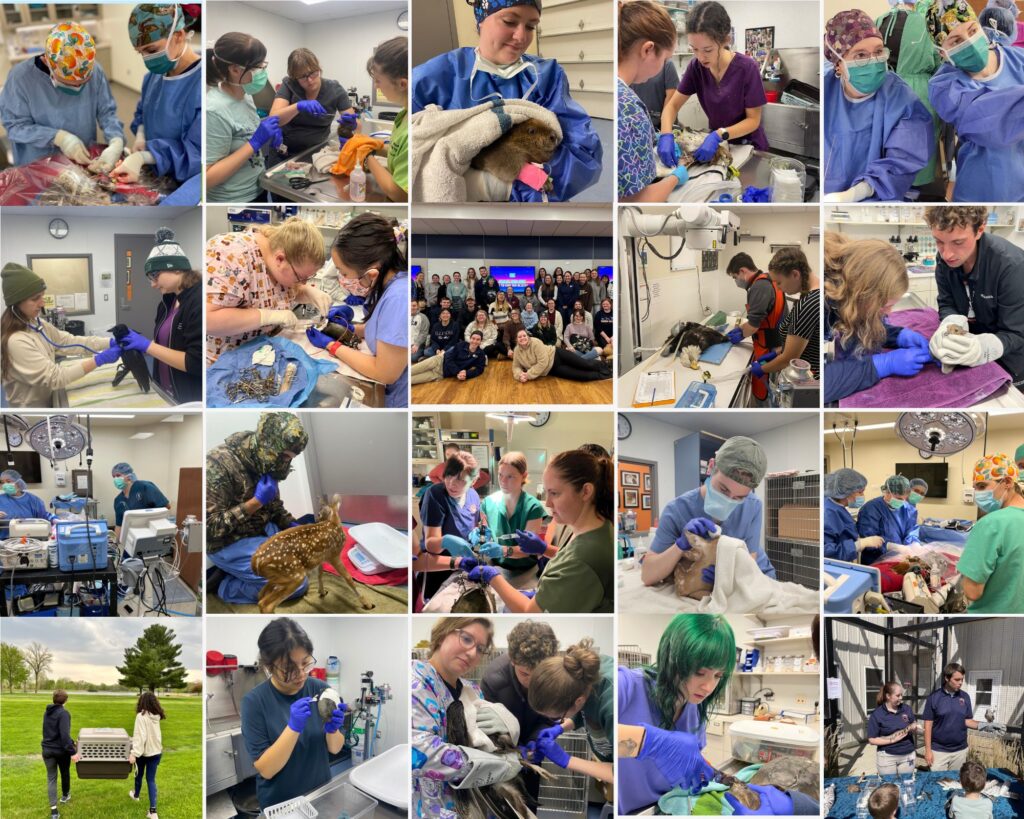
Like all superheroes learn quickly, team dynamic is necessary to become successful. We cannot do this alone. This clinic is student-run with the managers directing over eighty students broken into six teams with bold, courageous team leaders guiding the team members. We are a community of heroes. This clinic operates 365 days with the help of undergraduate students, veterinary students, house officers, and faculty members devoting countless hours. Outside of an intensive rigorous curriculum, students volunteer their time when they are not in class to provide the best care to patients. Many students dedicate their time to learning more about wildlife medicine, husbandry, nutritional needs, etc. Overall, we are working together to not only save lives but make a difference in this world. Like all superheroes, we learn the impact of allies. We depend on each other.

The climax is the moment that challenges every superhero and leaves them with difficult choices to make. During the summer of 2023, every day was filled with adventure from feeding orphans to triaging patients to providing medical treatment. At the end of a very long day, we were notified that an injured five-day-old white-tailed deer was waiting in the front lobby to be admitted to the clinic. This patient was in rough shape and presented as weak, non-ambulatory, and almost lifeless. The team quickly sprang into action and used whatever power that they had left and put it into this fawn. After providing intensive medical care, the outcome was not what they hoped and worked for. We spend most of our days in the clinic staying positive and living through joyful moments. Even so, we are sometimes faced with the realization that we can’t save them all. We are reminded that even for the patients that we lose, so many others are given another chance at life and released back into the wild through incredible care such as a red-tailed hawk with an ulnar fracture, a bald eagle with lead toxicosis, or a sickly red fox with mange. Even when we are faced with a difficult decision, supporting an animal through its toughest moments is the most courageous thing that we can do. That is the true power of our field.

Our journey through the Wildlife Medical Clinic has taught us to be advocates for all animals. Our work is not only done in an examination room. We can inspire the world to strive for lifelong education and preserve the environment through conservation efforts. We are in this field to be heroes for our patients. We are here to make a difference in this world. My comic storyline is not over. I have many unwritten pages awaiting me. Patients for me to learn and grow from. The Wildlife Medical Clinic will always be a monumental moment in my journey as a veterinary student.

Not all heroes wear capes – but these veterinary students do.

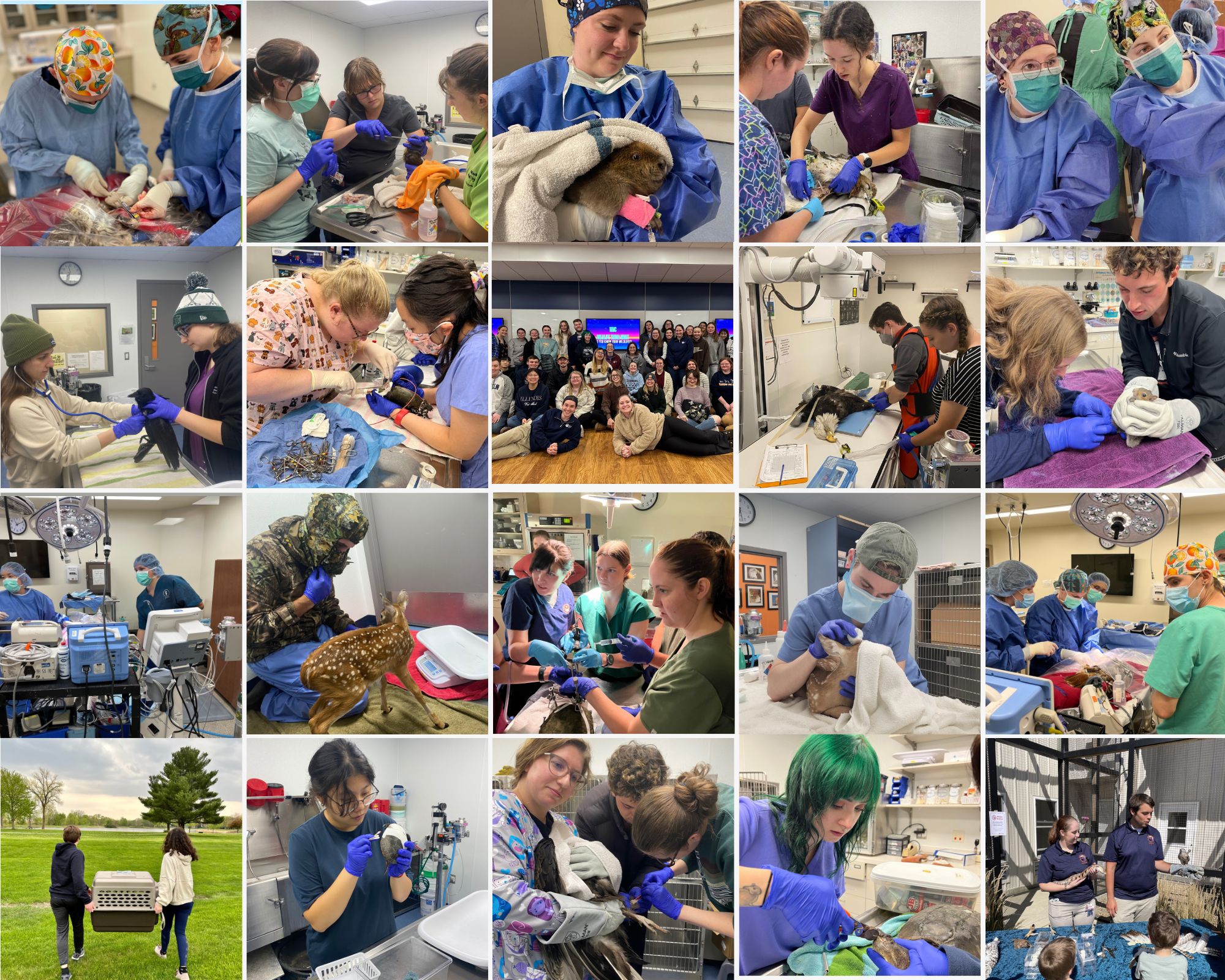
Collage of veterinary students in action

This article was written by Hassan, Class of 2025 DVM Candidate

Therapy in Reptiles

At the end of August, an adult male Midland Painted Turtle presented to the Wildlife Medical Clinic from a rehabilitator after it was suspected to have been hit by a car. This patient had a fairly severe fracture of his carapace (top of shell) and required extensive treatment to repair it. While receiving these treatments, the turtle developed neuropathy (nerve damage) in his right front leg. This problem caused him to incorrectly place his foot when walking. To correct the placement, we started him on a routine of PROM, laser therapy, and physical therapy three times a week.

Two veterinarians taking a turtle's temperature

PROM stands for passive range of motion and is performed by slowly and repetitively stretching the joint. The goal of PROM is to increase the stretch and movement of the structures that surround the joint. For this specific patient, PROM consists of extending the carpus (wrist) & phalanges (fingers) as far as possible, three times for thirty second intervals.

We are using laser therapy to increase healing and blood flow to the limb as well as to decrease pain, inflammation, and swelling. This patient’s front leg has been inconsistently swollen since the nerve damage took place. With the laser therapy, our goal is to decrease the swelling and promote faster healing. We perform the lasering from the top of the radius/ulna (area between elbow and wrist of front leg) to the tips of the phalanges (fingers) to achieve this goal.

The final part of this patient’s therapy plan is physical therapy. When developing a physical therapy plan, it is important to focus on a specific area while building up strength and correcting incorrect habits that have developed. We complete this through repetitive exercises. Our turtle’s physical therapy plan involves walking up a ramp six to seven times per session, while a volunteer places their fingers behind his limbs to help him properly place his foot on the ramp.

Overall, therapy in reptiles is like other animal species and is tailored to the patient’s specific needs. This patient has been showing great improvement with this therapy plan and we plan to continue until the spring weather reaches Illinois, which is when he will be able to be released back into the wild.

A turtle on an operating table

This article was written by 2nd year veterinary student Becky.

New Student Manager

We would like to introduce our new student manager- Riley Dunwoody! Riley will transition full time into her new role as a student manager in March when Brianna Huff, our current senior student manager, moves onto clinics. Here are some questions we asked Riley to get to know her better!


Where are you from? Where did you get your undergraduate degree? Specific
degree and graduation year?

I am from Wilmington, North Carolina. I just graduated with my BS in Zoology from
North Carolina State University in May of 2023.
Tell us about your veterinary career journey so far.
With my veterinary career so far, I was very lucky to be offered a job as a vet assistant at the vet office where we took our family cat. I worked there from the age of 16 up until
my first year of undergrad. From there I took a step back from working in veterinary clinics and did a summer internship at a local reptile rescue. The following year, I did a
summer internship with a production turkey farm. While neither of these were specifically veterinary medicine related, I still gained valuable experience working with animals. Then the summer before my last year of undergrad, I returned to veterinary medicine and completed a summer internship at a small animal and exotics veterinary clinic.

Two veterinarians holding a bird wrapped a blanket

What field of veterinary medicine are you interested in?
I am currently very interested in zoo, wildlife, and exotic veterinary medicine, but haven’t quite decided where I want to go specifically with that.
What made you want to join the Wildlife Medical Clinic (WMC)?
I wanted to join the WMC because I thought it would be a great hands on opportunity to get to use veterinary techniques and I thought it would be a great way to learn about new species that I haven’t been able to work with previously.

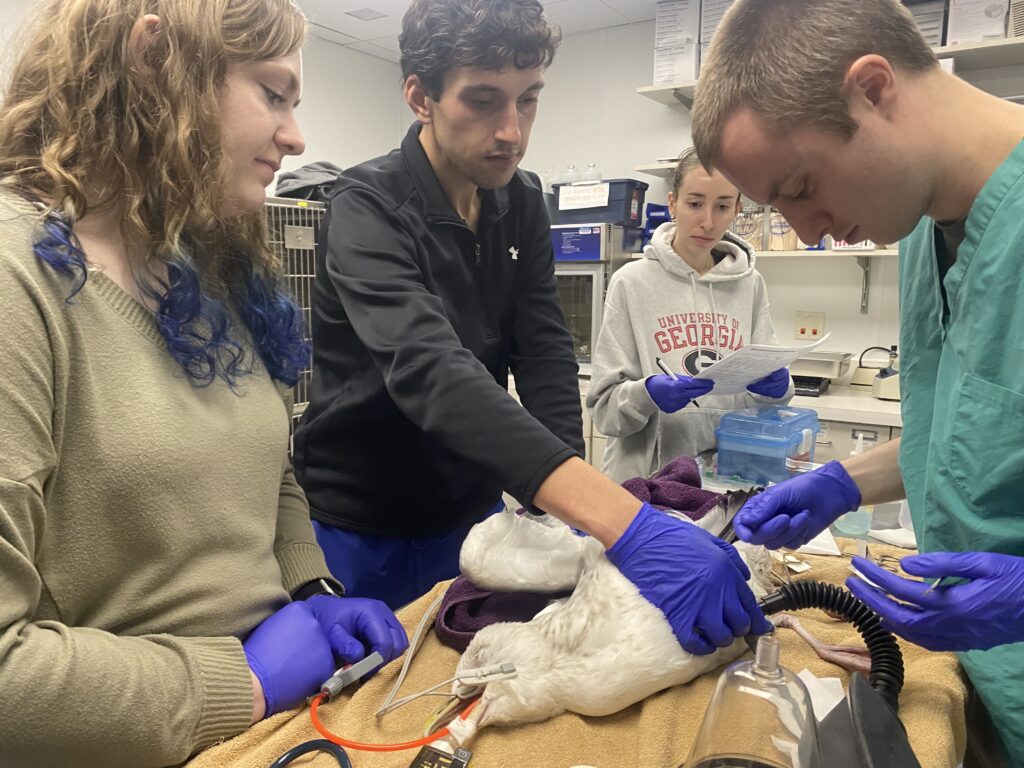
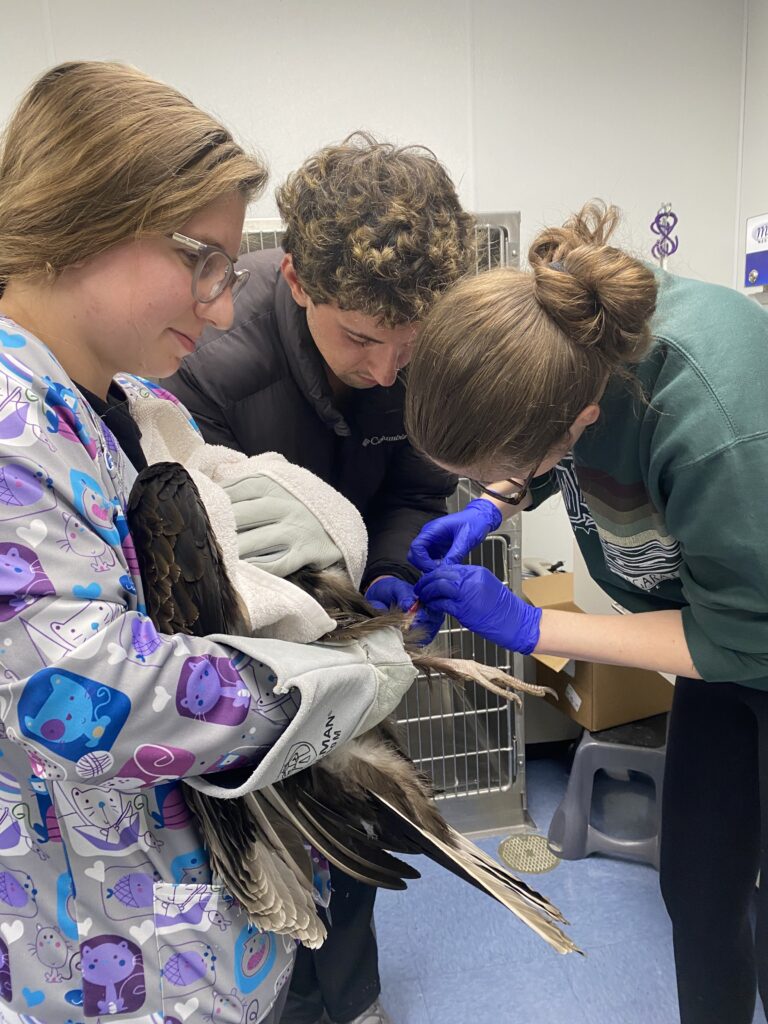
Three veterinarians operating on a large bird

Why did you want to become a manager at the WMC?
I wanted to become a manager at the WMC because I felt like it would be an amazing
opportunity to learn and continue to develop important leadership and communication
skills. I was also really interested in all the opportunities to learn more about the clinic
and the various wildlife patients we receive.
What has been a favorite memory/patient of yours in the WMC?
I think so far one of my favorite patients has been the Rock Dove that came in covered in red lithium oil. I wasn’t assigned to the case, but other students on my team were and
I helped them with the bathing procedures. I found it interesting to problem solve how to get the oil off, while managing other aspects of the bird’s care. It also led me to research
more on oil spills in general. It was interesting to be able to connect how they have an effect both inland and in coastal areas. It was surprising how their treatment and rehabilitation processes differ but also how some are similar and can be used among many different species.

Three veterinarians holding a large bird

Winter Wildlife Safety

With the weather getting colder, many wildlife are seeking warm places to spend the winter days. Dr. Stephany Lewis and Dr. Erica Bender join CiLiving to share with the community what pest control items are dangerous to wildlife and what alternatives can be used to keep critters out of your home.

Owl Oddities

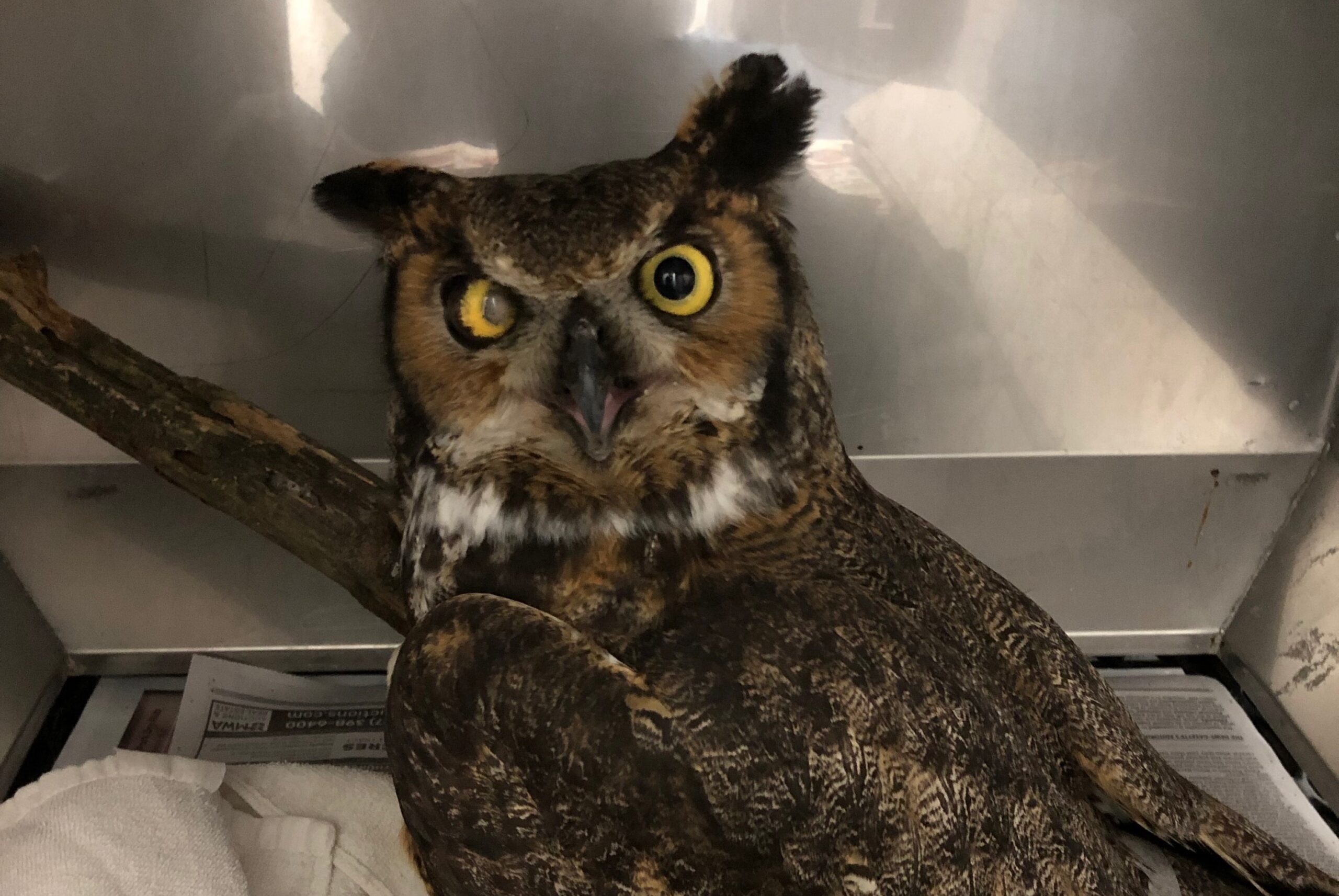
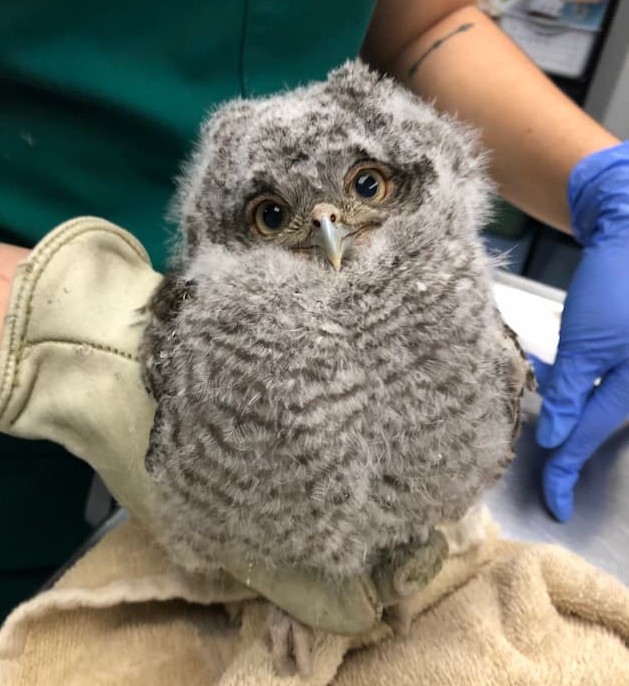
Owls are one of the most unique raptors but are also a frequent species that we see at the Wildlife Medical Clinic. From the majestic Great Horned Owl to the small but mighty Eastern Screech Owl, these birds come in all different sizes. However, they also come with some adaptations that set them apart from a hawk or an eagle.  

Owls can rotate their heads LESS than you think!  

Fluffy owl

It is a common misconception that owls can rotate their heads 360 degrees because when people see videos of them, it very much looks that way. Instead, owls can rotate their heads a whopping 270 degrees which is still far more than the typical human, who can only rotate their head 160-180 degrees. For owls to turn their heads that much, they must cut off some blood supply. To allow this, owls have evolved a vascular reservoir system. The owl will pool blood in reservoirs near the base of the head and jaw while in rotation to still supply blood to the brain and eyes. This way they can still function and see (almost) all the way around their head! 

Owls’ eyes are not circular like humans!  

The main reason why owls evolved to be able to rotate their head so much is because their eyes do not move. An owl’s eyes are tube or cylinder shaped, and they do not move in their sockets as normal human and mammal eyes do. These tube-shaped eyes are set in the socket of the owl’s skull. One of the proposed reasons for this is because of owls’ phenomenal night vision. Owls have big eyes to be able to see at night but at the same time, have small skulls. Because of the anatomical limitations, the eyes of the owl evolved to change shape to allow their large eyes to fit in their head! 

Owls are silent fliers!  

Usually the bigger the bird, the louder its flight, but that is not the case for owls! Owls are known for their silent, smooth flight, which allows them to sneak up on prey during the night. Owls have relatively large wings for their body size, which allow them to fly relatively slowly with minimal wing flapping. The architecture of their wings is also unique to them. Owls have a special type of pattern on their wing feathers that break up the air that usually creates the flapping sound. Not only that, but owls’ feathers are more velvety than other birds and that helps dampen the sound. Hunting easier is not the only benefit. Silent flight may also cause owls to hear and track prey better. They don’t have to deal with the echoes of themselves flapping while they hunt, which allows them to be more accurate at tracking and targeting food.   

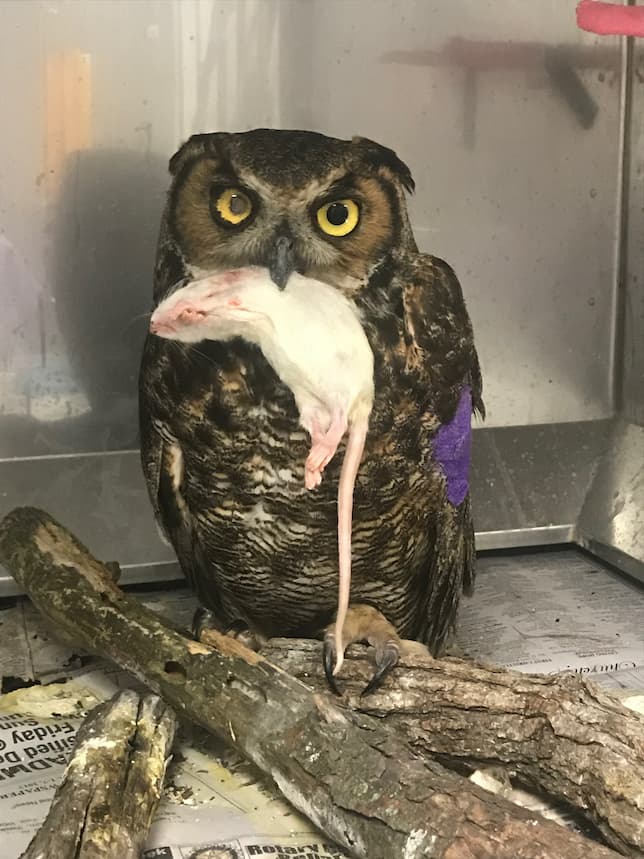
An adult great horned owl perching with prey in its beak. There is a purple wing wrap in the patient's left wing

Owls are amazing creatures, and it is pertinent that we keep these species safe and work towards conservation efforts to protect them. As stated previously, owls are one of the more frequently seen species at the Wildlife Medical Clinic and we commonly receive them after being hit by a car or after they are found tangled in a soccer net. To help minimize the number of dangers that owls face, you can help! In addition to rolling up sporting nets when not in use, people can set up an owl box in their backyard. This will help to attract owls and give them a safe place to live and raise their young. You can also contribute to owl safety by not using any rodenticide. Most owls’ main diet consists of rodents. If rodents end up ingesting rodenticide and then an owl eats that rodent, it can cause detrimental effects to the owl over time. Chronic ingestion of rodents containing rodenticide causes poisoning and this leads to the owl’s blood not clotting properly. Please do your part to help these amazing, unique, and beneficial creatures! 

Sources- 

https://www.owlresearchinstitute.org/attracting-owls-to-your-backyard

https://www.mcgill.ca/oss/article/did-you-know/owls-dont-have-eyeballs

https://www.audubon.org/news/13-fun-facts-about-owls

Written by Nina, Class of 2026 

Dr. Whittington

When we look back on 2023, it was an eventful year at the Wildlife Medical Clinic, with many joyful moments and happy tears. As we move into 2024, we are grateful to have you joining us and are excited to share more stories in the upcoming year.  

We want to take this opportunity to spotlight one of our previous clinic directors, Dr. Julia Whittington. She has recently retired from the College of Veterinary Medicine, where her most recent position was Director of the Veterinary Teaching Hospital and Assistant Dean for Clinical Services. However, Dr. Whittington established many milestones and made significant contributions as the Wildlife Medical Clinic Director from 2001 to 2017. To help us get more insights into Dr. Whittington’s influence on students and the clinic, we reached out to Dr. Nicki Rosenhagen, one of her former students and previous student manager of the Wildlife Medical Clinic.  

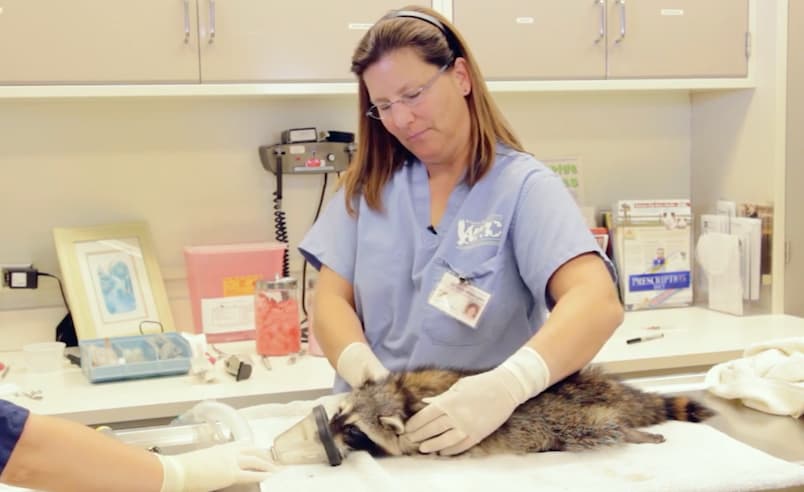
Dr. Whittington giving an raccoon a physical exam

Dr. Rosenhagen received her Doctor of Veterinary Medicine or DVM, in 2015 from the University of Illinois, College of Veterinary Medicine. She is currently the wildlife veterinarian at PAWS Wildlife Center, which is in Lynwood, Washington. While at the University of Illinois, she worked closely with Dr. Whittington first as a clinic co-manager during her time in vet school and then as an intern after completing her DVM. During our talk, she shared some heartwarming and uplifting stories that showcase Dr. Whittington’s lasting impact on her students.  

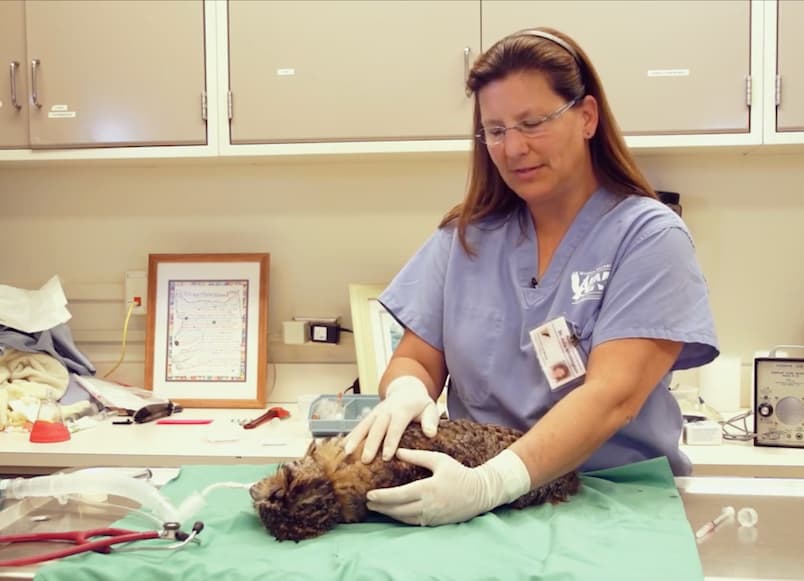
One of the heartfelt memories that Dr. Rosenhagen shared is a surgery case of a Barred owl with a humeral fracture (broken wing). Under Dr. Whittington’s guidance, she practiced surgical and suturing techniques, a rare opportunity for students to experience. Dr. Whittington was a veterinarian, but she was also a great teacher that loved to involve students in these complicated cases. She guided her students through every step, pushing them to become independent and gain clinical confidence. For Dr. Rosenhagen, Dr. Whittington was also the person who helped pave her career path and was very interested in setting her up for success. “She is an amazing mentor: a present, great teacher, and interested in making students learn,” said Dr. Rosenhagen. Inspired by the mentorship from Dr. Whittington, she is now a great mentor herself.  

Dr. Whittington’s inspiration goes beyond the clinical setting; she also has had a huge impact on the growth of the College of Veterinary Medicine, especially the Wildlife Medical Clinic. Without her efforts, the clinic wouldn’t be what it is today.  Her efforts in advocating wildlife medicine and her outstanding leadership have put our Wildlife Medical Clinic on the map. The community began to recognize the services and responded well in helping to provide support to our local wildlife. Dr. Rosenhagen shared that “… she (Dr. Whittington) sped up the process of making the clinic what it is today.”  

Dr. Whittington giving an owl a physical exam

Through Dr. Rosenhagen, we see Dr. Whittington’s work ethic, burning passion, and compassion. She set the example of “when you set your mind to do something, you show up.” She made a lasting impact on the students she worked with, and those students will continue to influence other students with the lessons they learned from Dr. Whittington.  

While we are sad to see Dr. Whittington leave, we also want to congratulate her on her retirement and give one last THANKS for everything she did for the Wildlife Medical Clinic and for the College of Veterinary Medicine! 

Interviewed and Written by YiYing, Class of 2026 
Wildlife Medical Clinic
John A. Coyne South Clinic
2100 South Goodwin Avenue
Urbana, IL 61801
217-244-1195