
Week Overview:
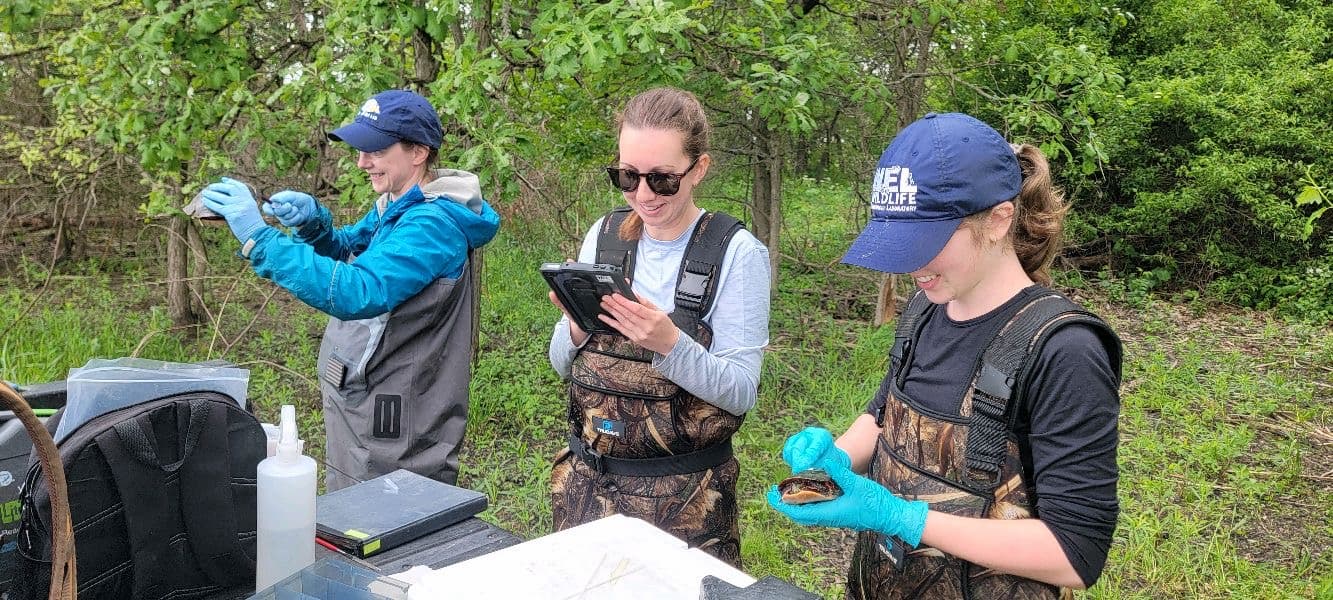
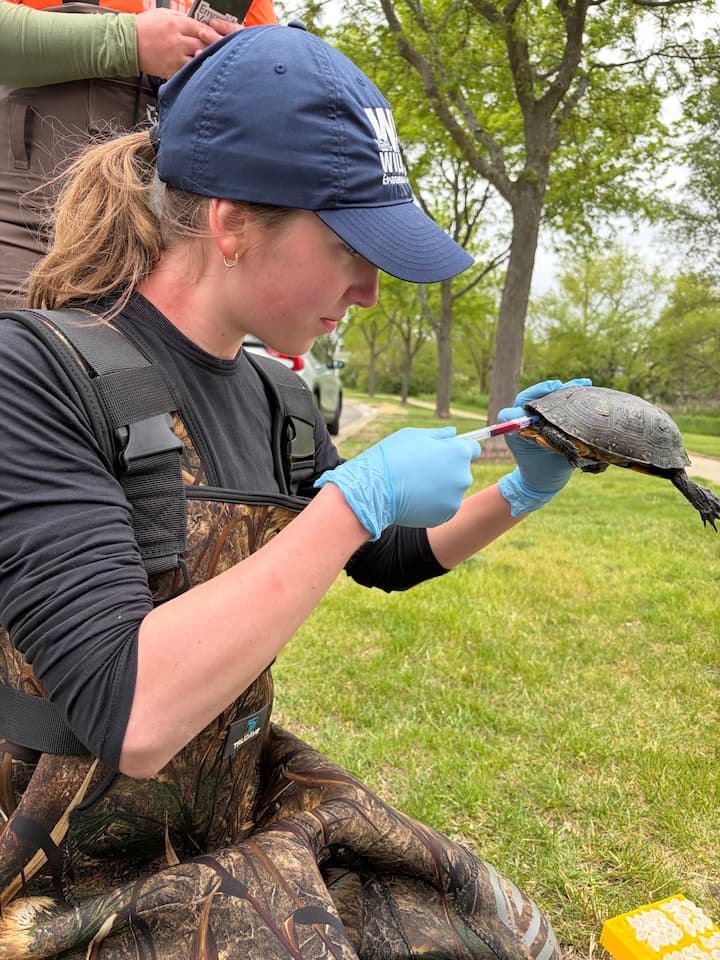
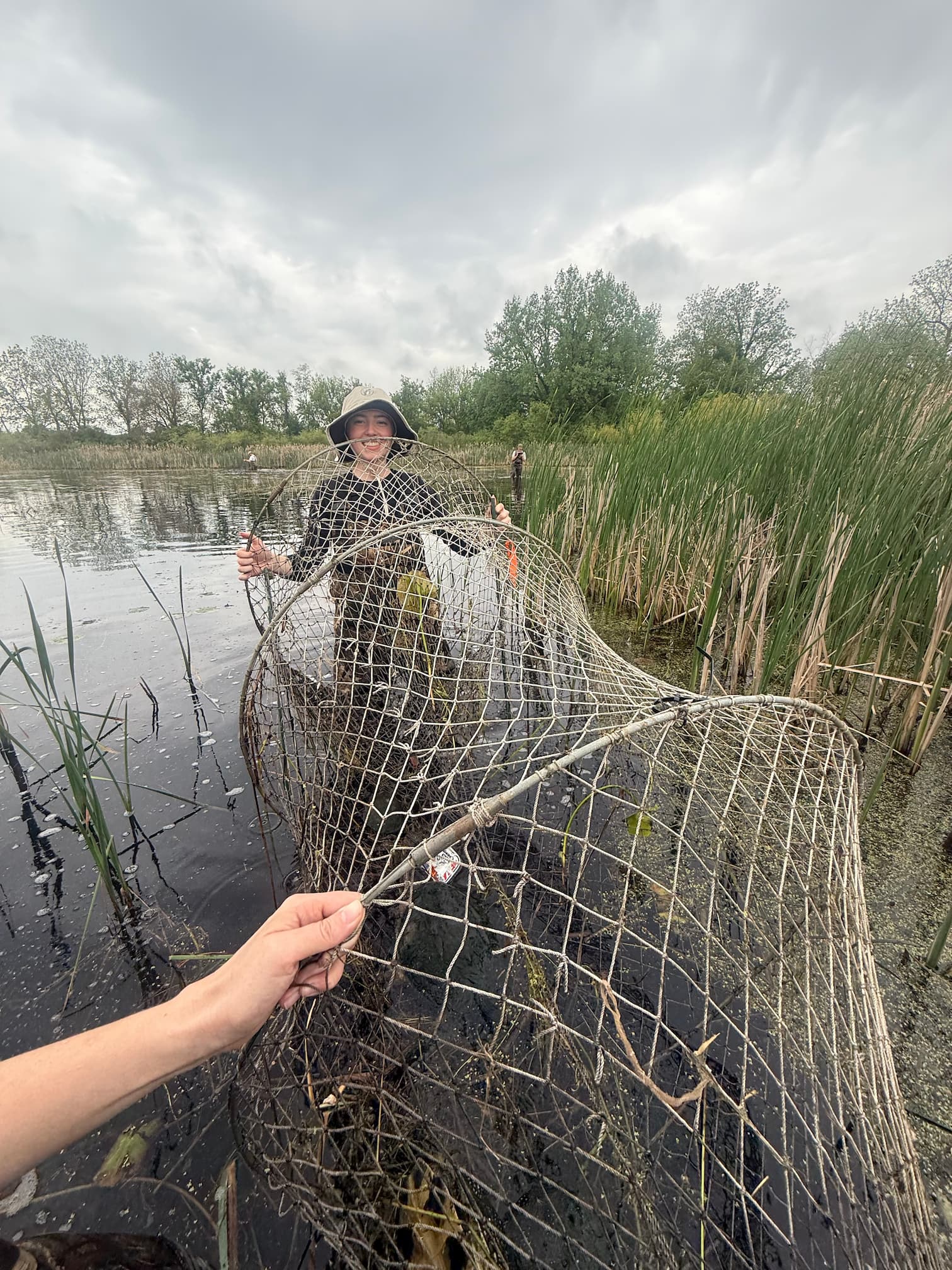
We survived our first week of the summer field season! The week was full of ups (catching turtles) and downs (falling in the marsh). We finished the week with a total of 14 Blanding’s turtles, 7 Painted turtles, and 5 Common Snapping Turtles. The turtles were captured using multiple methods: trap setting and radio telemetry. Overall, we had 54 traps set at various sites that were checked once daily. We have different trap types that we utilize for various purposes. Hoop nets consist of 3 rings and can either have entries from both ends or a single entry point. Hoop nets come in various sizes, and we choose the size based on the water depth. A fyke is a much larger trap consisting of 6 rings and a large barrier net. We often use fykes to block a channel of water and guide turtles into the trap portion. Aside from trapping, we also use radio telemetry to track specific turtles. Radio telemetry involves using an antenna to detect radio waves specific to a tracker attached to the carapace of a turtle. This method is mostly used for tracking adult female Blanding’s, but we also place short-term trackers on headstart turtles to monitor survival post-release. This week, 3 of our 16 Blanding’s were captured via radio telemetry. Increased water depths were a major obstacle that impacted our trapping and radio telemetry success. It limited where we were able to set traps and limited our ability to capture the turtles without flooding our waders.
Meet the turtles:
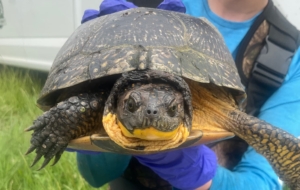
The species of turtles we typically encounter in Kane County are Blanding’s turtles (Emydoidea blandingii), Painted turtles (Chrysemys picta), and Common Snapping turtles (Chelydra serpentina). Each of these species is unique in its appearance and its personality. Starting with the Blanding’s turtle, this species is an Illinois state endangered species who are characterized by its yellow chin and throat. We consider Blanding’s turtles honorary box turtles due to their incredibly strong hinge. Our motto is “You are stronger than the turtle,” which reminds us to collect high-quality samples while always prioritizing our and the turtle’s safety. It is also quite remarkable how far these turtles can sink into their shell, allowing their head to vanish within skin folds.
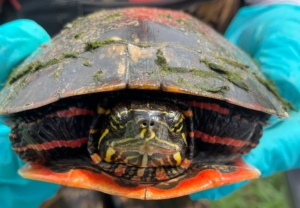
Next, we have the Painted turtles, which are the Mona Lisa of the turtle world. This species was named due to its hand-painted appearance with streaks of red, yellow, and orange beneath its shell and on its skin. Although these turtles are one of the smaller species that we sample, do not underestimate their strength and their bite. Painteds have two sharp projections on their beaks, which make them fierce while staying beautiful. Additionally, males have long front nails for courtship, where they flutter their long front claws around the female’s face and neck, a behavior often called titillation.
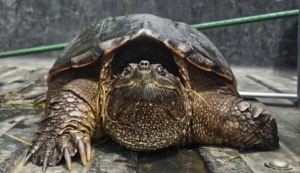
Last but certainly not least, we sample the Common Snapping turtle. Snappers are strong, willing to bite, but secretly adorable and misunderstood. By being able to reach up to two-thirds the length of its shell using its long, flexible neck, the snapper is not a turtle to mess with without proper technique. These turtles are great at ambush hunting and defense due to their reduced plastron coverage.
Memorable Moments:
While this week was full of learning and difficult physical work, we also had several memorable moments. We had special guests join us each day this week, including all of the veterinarians from the lab, visitors from Michigan, and a visitor from NYC. In between trap setting, we were warned by forest preserve biologist, Bill, of an apparent poop bandit. This bandit has been accused of using the bathroom floor instead of the designated toilet. It is a mystery to all, yet one day they will be framed. On a similar note, while checking traps, we came across a Blanding’s who was in need of a bathroom break. Though this is not uncommon for a turtle to pee while sampling, it is rare to see a poop spanning 3 inches in length!
On a sadder note, Sophia succumbed to the swamp on Thursday. Condolences to her as she flooded her waders in the most pathetic way, slowly losing balance to her demise. The worst of all was that this event occurred within the first couple of hours of checking traps on a 50℉ day. Maybe next time she could make it memorable and convenient for herself.
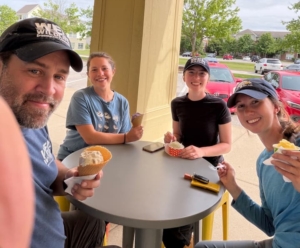
We ended the week on a high note with ice cream courtesy of Dr. Allender!
Stay tuned for more turtles as we continue with our season.
