
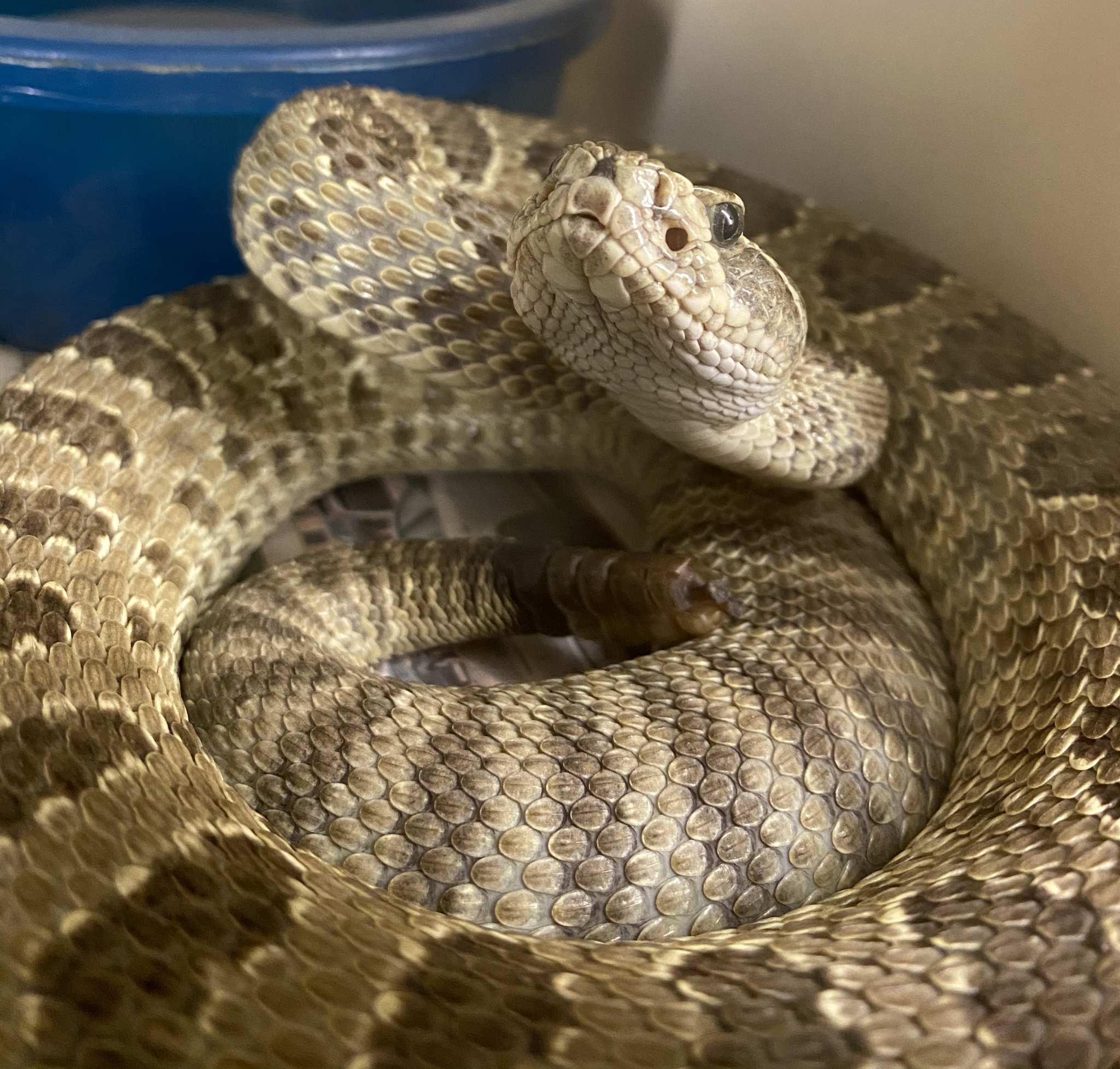
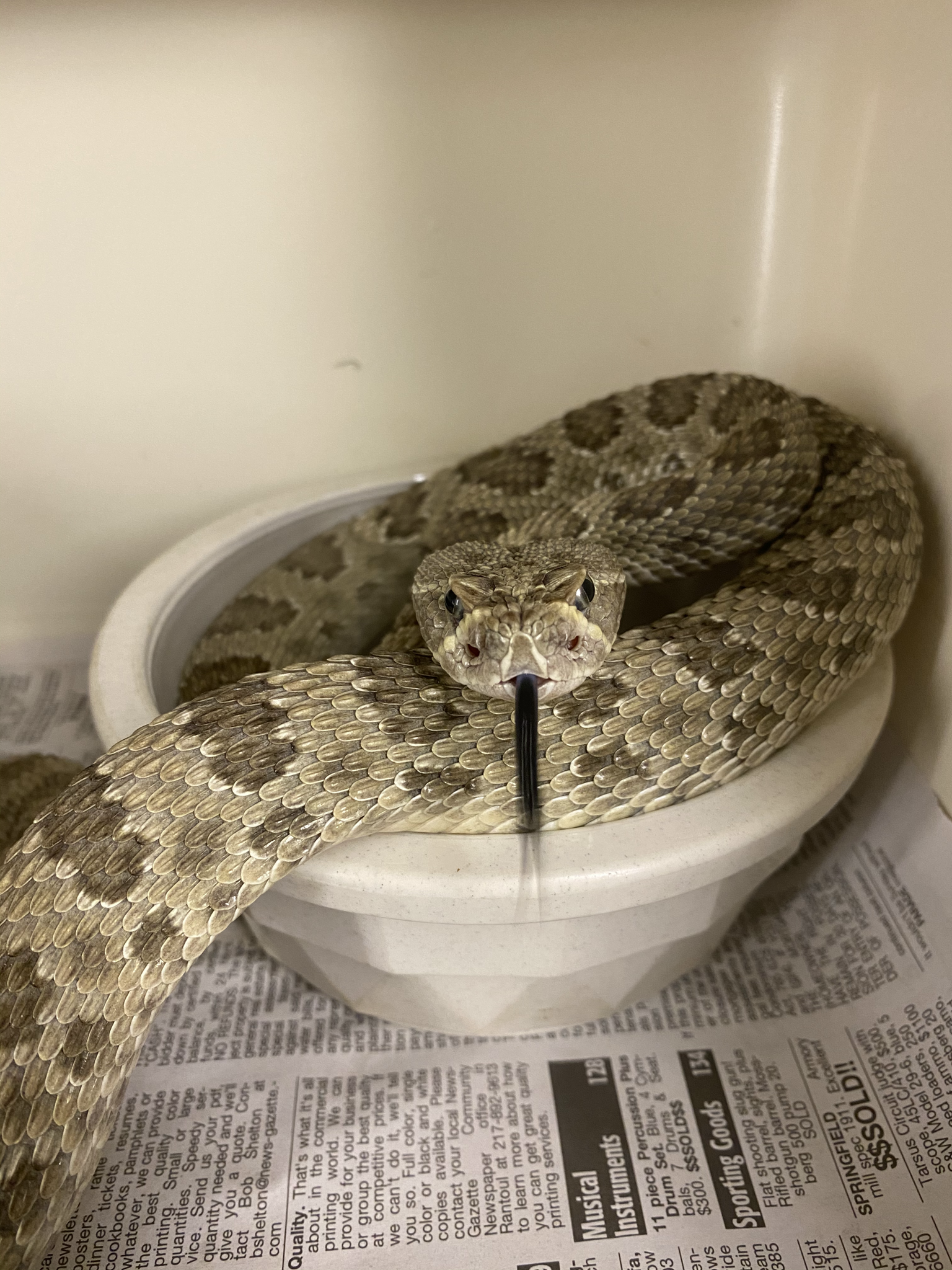
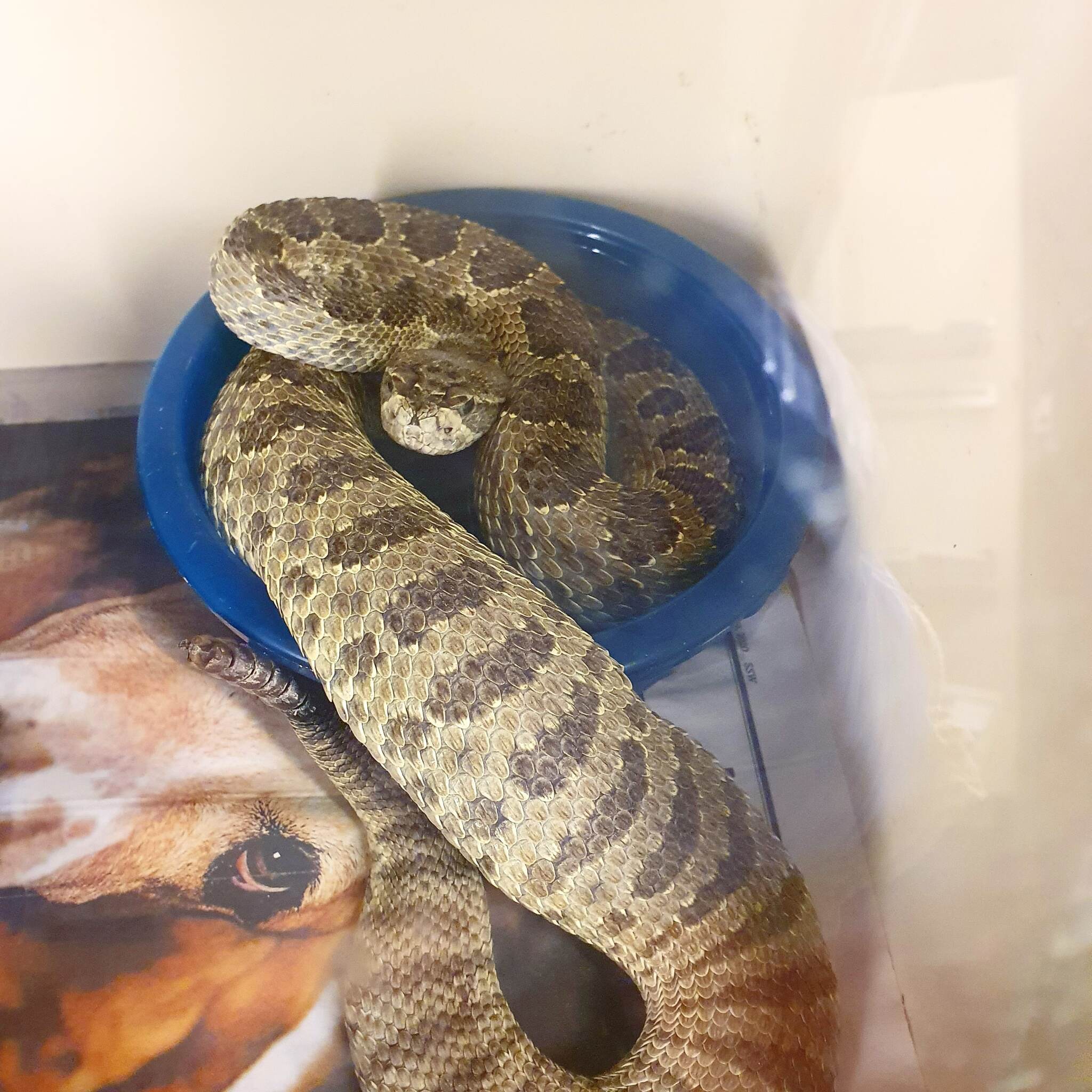
One of my favorite experiences at the University of Illinois has been helping care for our prairie rattlesnakes. Because these snakes are venomous, every student who works with them completes specialized venomous snake handling training before ever interacting with them. This training focuses on proper handling techniques, safety protocols, and understanding snake behavior to ensure that both the handlers and the snakes remain safe. By learning how to read their body language and work calmly and deliberately, we can minimize stress for the animals while maintaining a safe environment for everyone involved.
Working with venomous snakes isn’t just about following safety protocols—it’s about understanding their natural history, behavior, and biology. The more you learn about them, the more you realize there’s nothing to rattle your confidence. As future veterinarians, we spend a lot of time studying anatomy, physiology, and behavior, so getting to apply that knowledge to reptiles is pretty scale-tacular.
One of the most fascinating parts of caring for prairie rattlesnakes is observing the shedding process. Before they shed their skin, their eyes become cloudy or take on a bluish color. This “blue phase” occurs because fluid accumulates between the old and new layers of skin, temporarily reducing their vision. Since they can’t see as clearly during this time, they may be more defensive, making it especially important to recognize where they are in their shed cycle and adjust their husbandry accordingly. Luckily, unlike us during finals week, they get to literally shed their stress.
Feeding is another area where snakes challenge our expectations. Unlike mammals, prairie rattlesnakes have remarkably slow metabolisms and can go extended periods between meals. At the University of Illinois, our rattlesnakes are typically fed about once a month, which closely mimics their natural feeding ecology. After consuming a meal, they spend days to weeks digesting before they’re ready to eat again. It’s definitely a different feeding schedule than most of our veterinary patients—talk about being on the ultimate intermittent fasting plan! Safe to say, they’re never hiss-terical if lunch is five minutes late.
Another common misconception is that snakes are deaf. While they don’t have external ears and cannot hear airborne sounds the way humans do, they are far from oblivious to their surroundings. Instead, snakes detect low-frequency vibrations through their jawbones and body, allowing them to sense movement in their environment. Combined with their exceptional sense of smell through tongue-flicking and the Jacobson’s organ, they have evolved an impressive suite of sensory adaptations.
Of course, no rattlesnake discussion would be complete without talking about the rattle itself. Many people think you can determine a rattlesnake’s age by counting the segments of its rattle, but that simply isn’t true. A new segment is added each time the snake sheds, but the older segments are fragile and frequently break off. Losing part of a rattle is completely normal—it’s essentially the reptilian equivalent of losing a fingernail. So while the rattle certainly makes a fang-tastical first impression, it isn’t a reliable calendar. It’s one of those facts that’s sure to rattle a few myths.
Working with prairie rattlesnakes has been one of the most rewarding parts of my veterinary education. Every interaction reminds me how specialized these animals are and how important it is to appreciate them. They play a valuable ecological role as predators that help regulate rodent populations, making them an important part of Illinois ecosystems.
The more time I spend with these amazing reptiles, the more my appreciation continues to grow scales. They may have a reputation for being intimidating, but they’re simply wild animals doing what they’ve evolved to do. Getting to care for them has truly been a sss-sational experience, and I’m always excited to help others shed some of the common misconceptions surrounding these remarkable snakes. I hope this post has given you a few fun facts to rattle off the next time someone brings up snakes!
