If there is one thing we have learned about field season, it is that every trip has its own story.
Some trips are defined by unexpected wildlife sightings. Some are remembered for the places we visit. Some stand out because of the people who join us. And some become memorable because everything comes together at exactly the right time.
Our recent trip to Southern Illinois was one of those adventures.
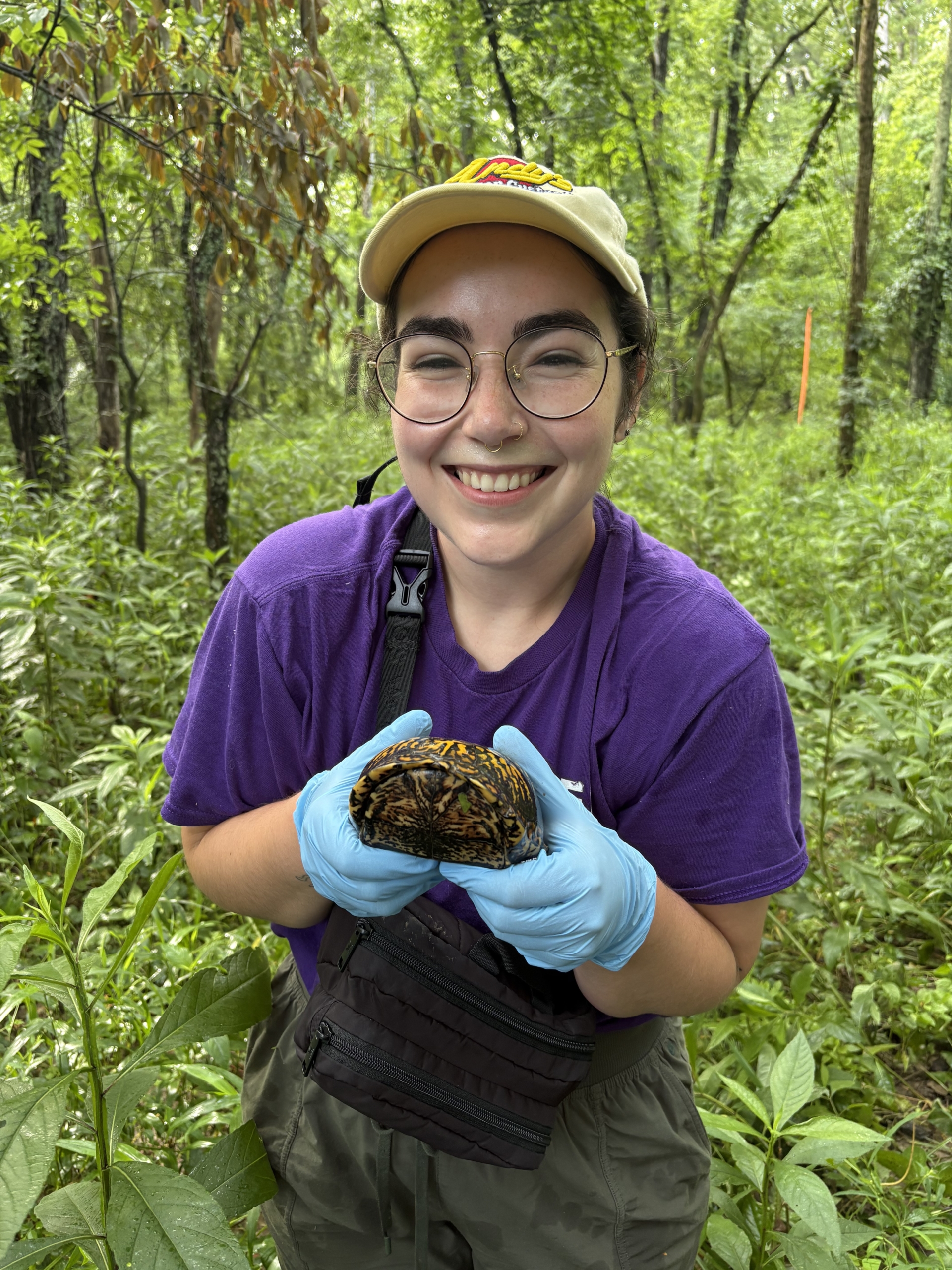
Over the course of two days, the Box Turtle Team traveled south with 10 incredible veterinary student volunteers to continue our ongoing research and conservation work with Eastern Box Turtles. What followed was a weekend filled with learning, teamwork, wildlife medicine, conservation, and plenty of unforgettable turtle encounters.
By the time we packed up to head home for the week, we had successfully located and sampled 20 Eastern Box Turtles, introduced students to hands-on wildlife field medicine, collected valuable data for long-term conservation research, and made memories that will undoubtedly be talked about for the rest of the summer.
For Becca and Tatum, this trip was especially exciting because it provided another opportunity to share the unique experience of wildlife field research with veterinary students who may never have had the chance to participate in this type of work before.
One of the most rewarding parts of field season is watching students discover just how much veterinary medicine can exist outside of a traditional clinic setting.
Many students arrive expecting to see turtles. But…they leave having experienced conservation medicine, field diagnostics, wildlife handling, research methodology, ecological monitoring, teamwork, and problem-solving all at the same time.
And that transformation is always incredible to watch.
From the moment volunteers arrived, the excitement was contagious. Students were eager to learn, ready to ask questions, and enthusiastic about every opportunity to get involved. Whether they had previous wildlife experience or were stepping into the field for the very first time, everyone jumped in with enthusiasm and curiosity.
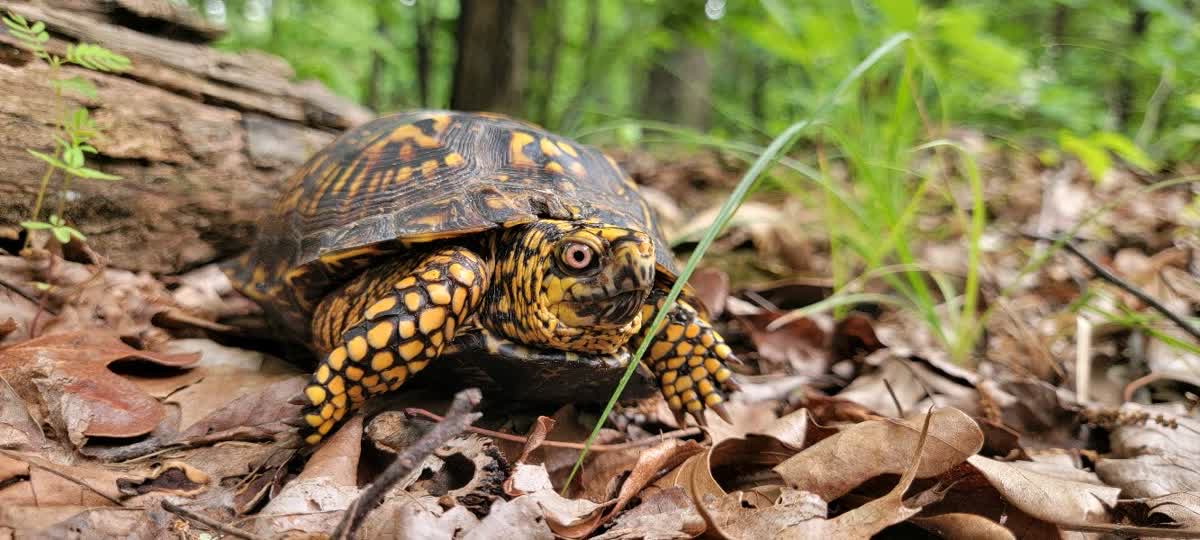
Throughout the week, volunteers learned how researchers actively search for Eastern Box Turtles in their natural habitat. Students practiced identifying suitable habitat, recognizing areas where turtles might be hiding, and developing the observational skills needed to locate animals that are remarkably good at blending into their surroundings.
What often surprises new volunteers is just how challenging—and rewarding—finding turtles can be.
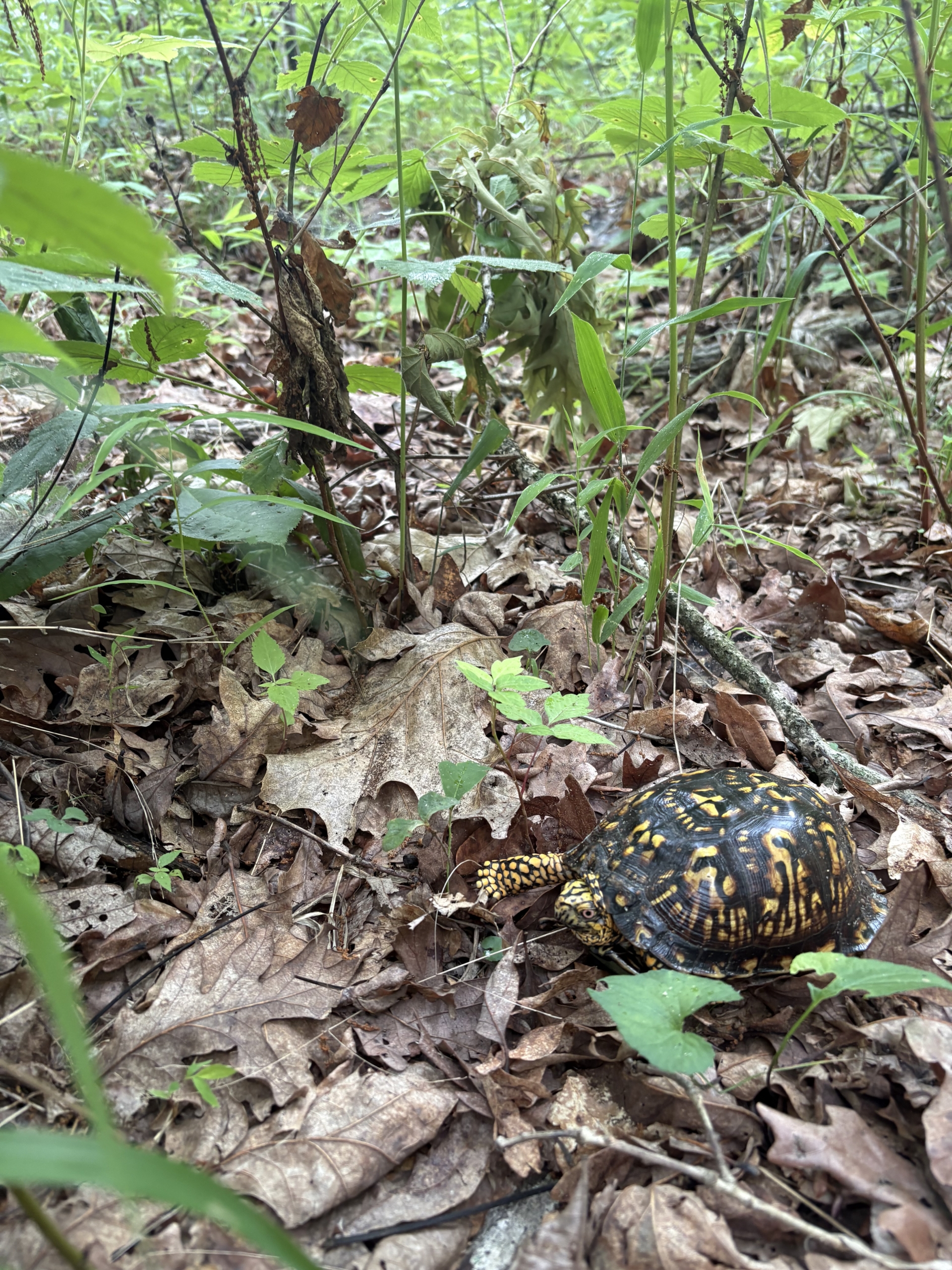
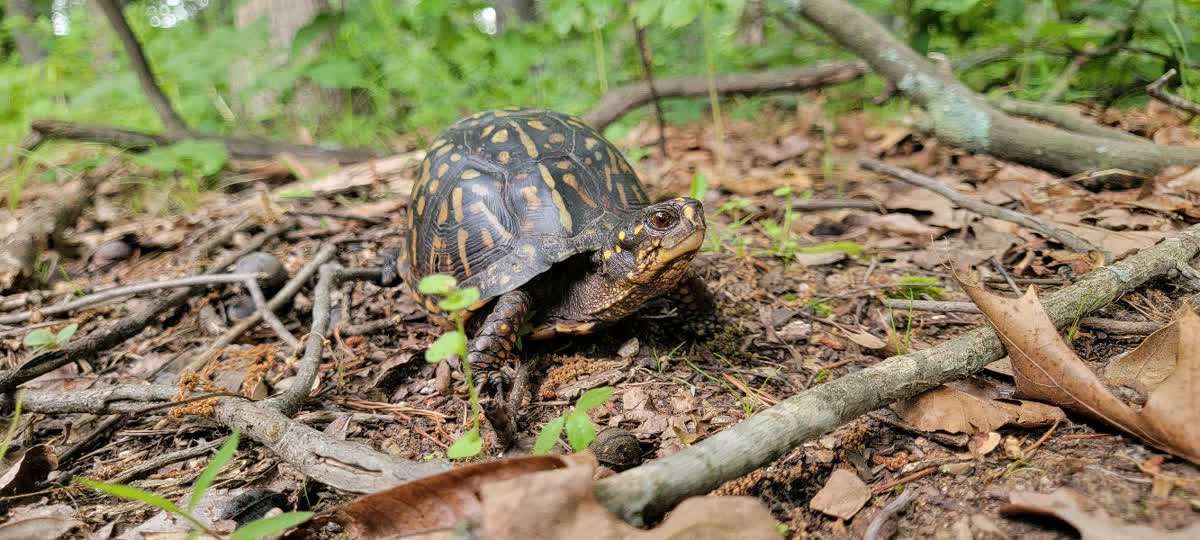
Eastern Box Turtles are masters of camouflage. A turtle can be sitting only a few feet away and remain completely unnoticed until someone catches the slight curve of a shell beneath leaves or notices a subtle pattern hidden among the forest floor.
Every turtle found felt like a small victory.
And every discovery was celebrated.
The excitement of hearing someone call out “Turtle!” never gets old.
No matter how many turtles we have worked with over the years, that moment always brings smiles, excitement, and a rush of energy to the entire team.
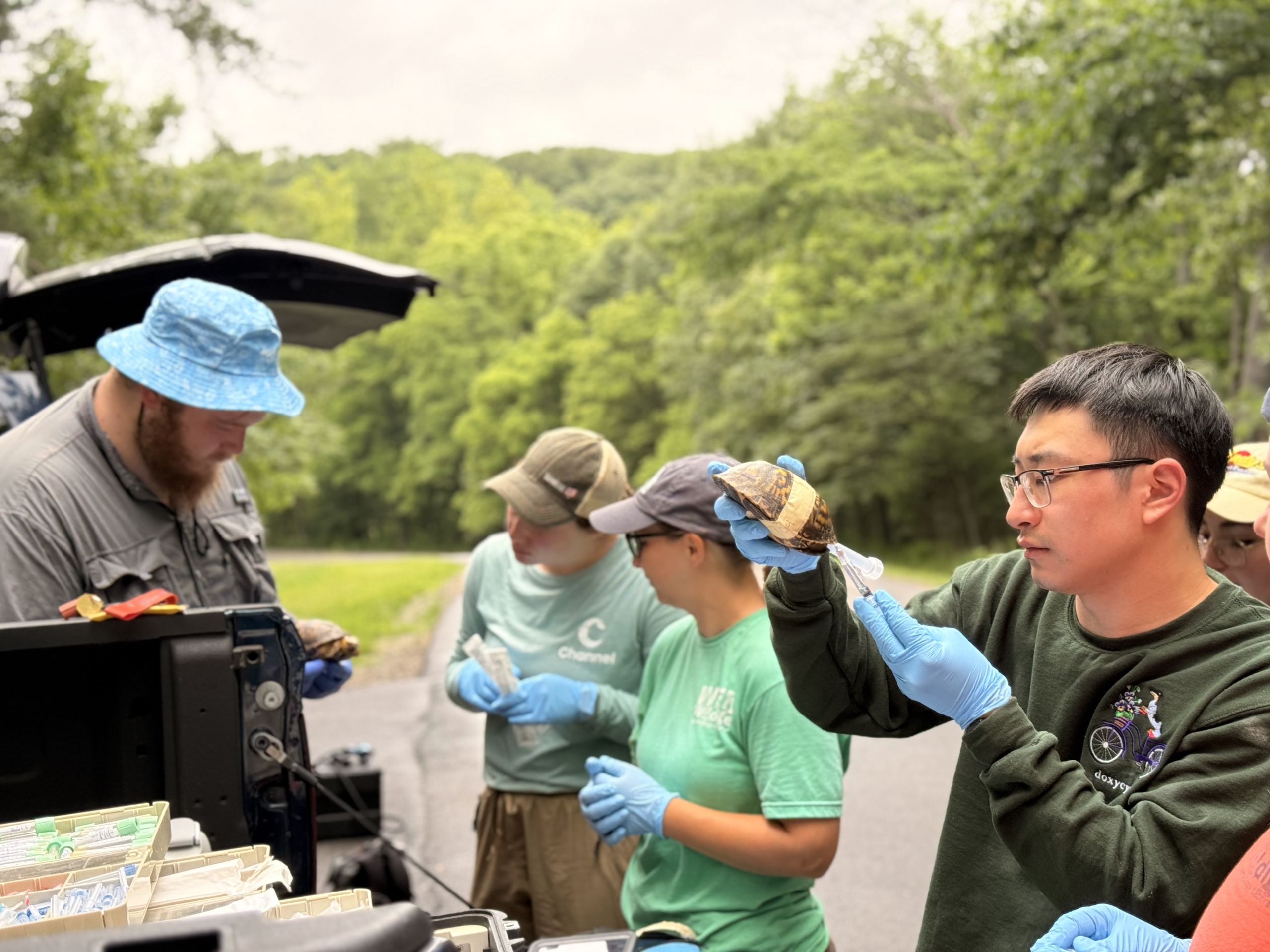
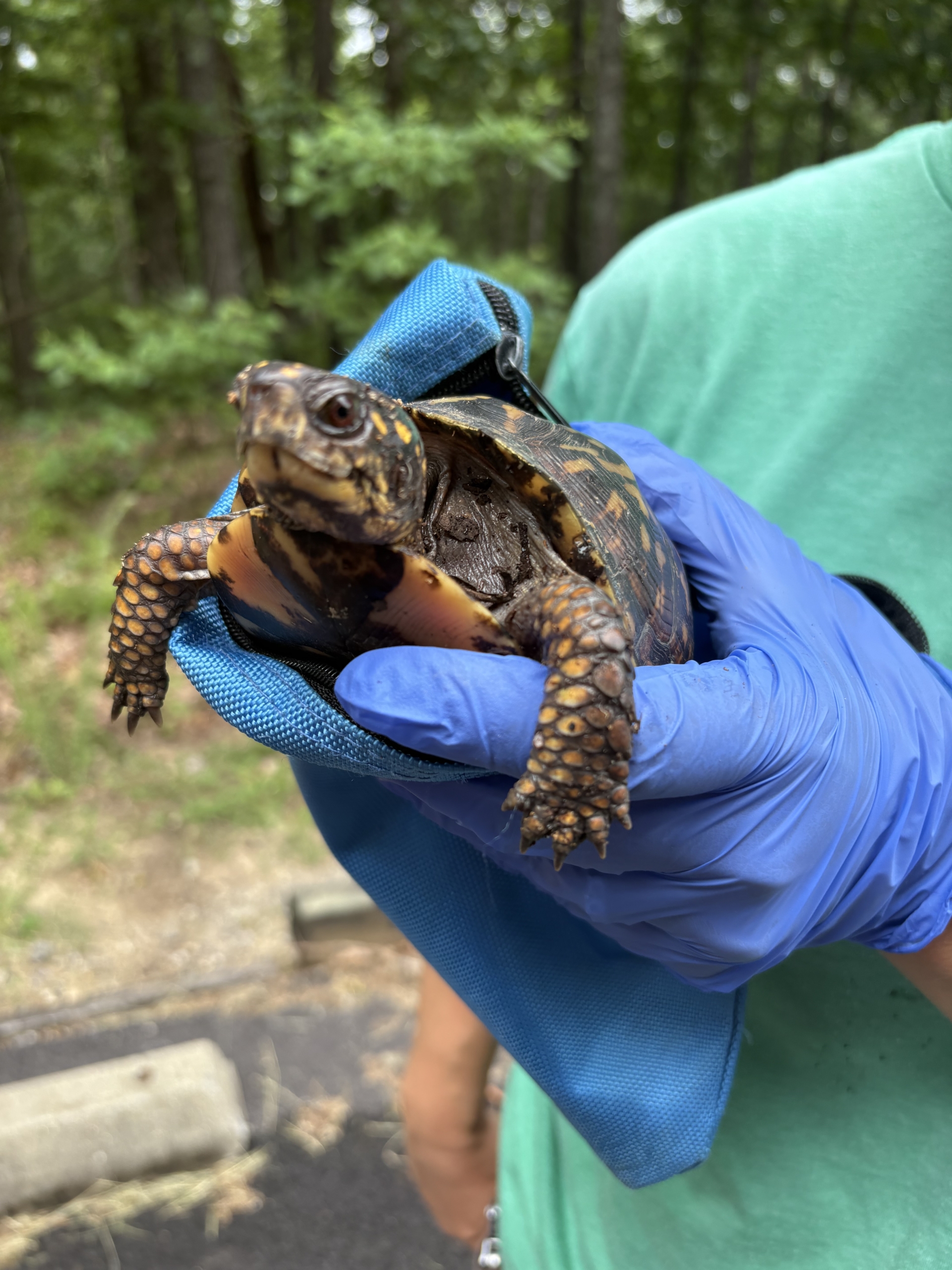
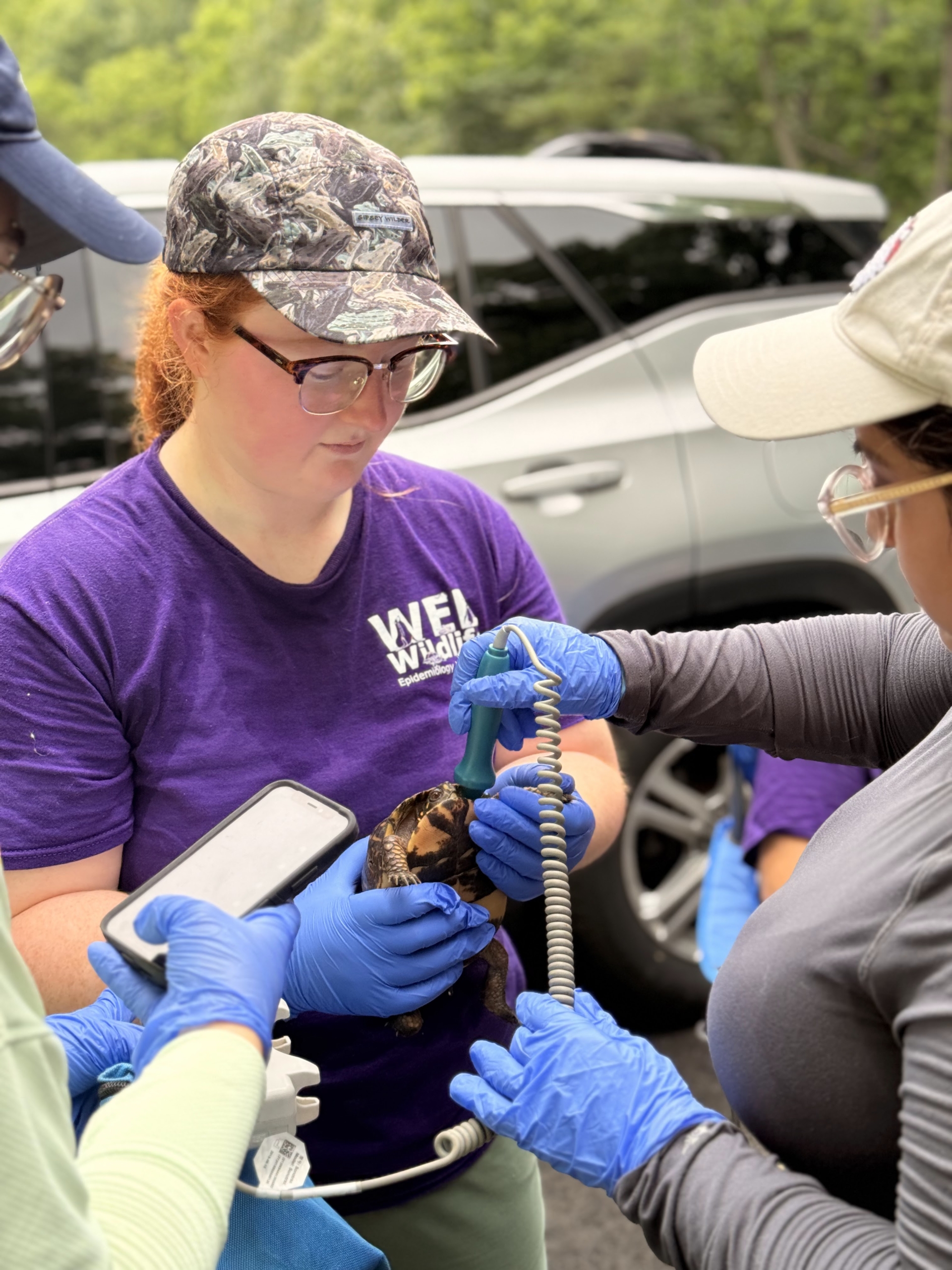
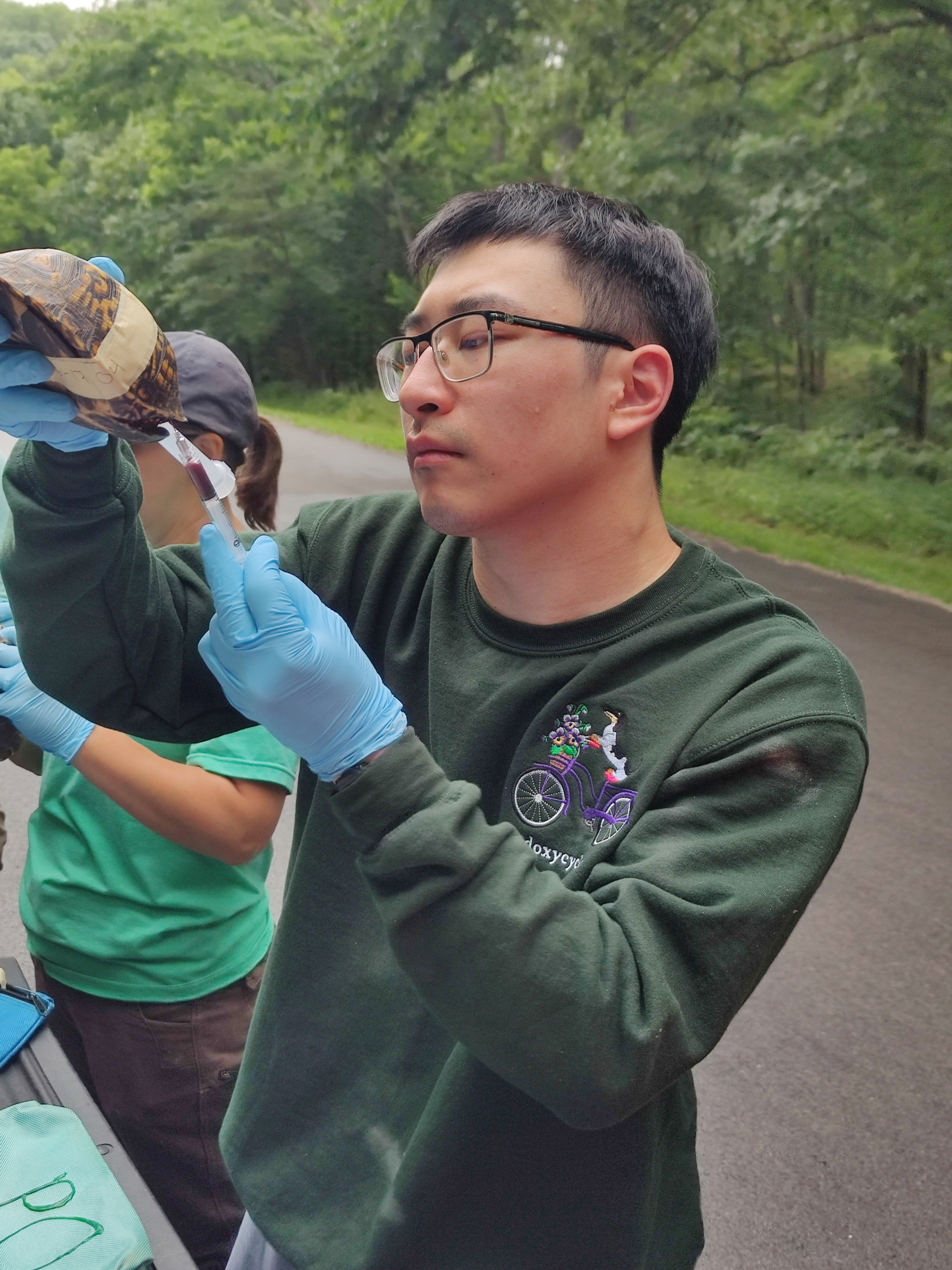
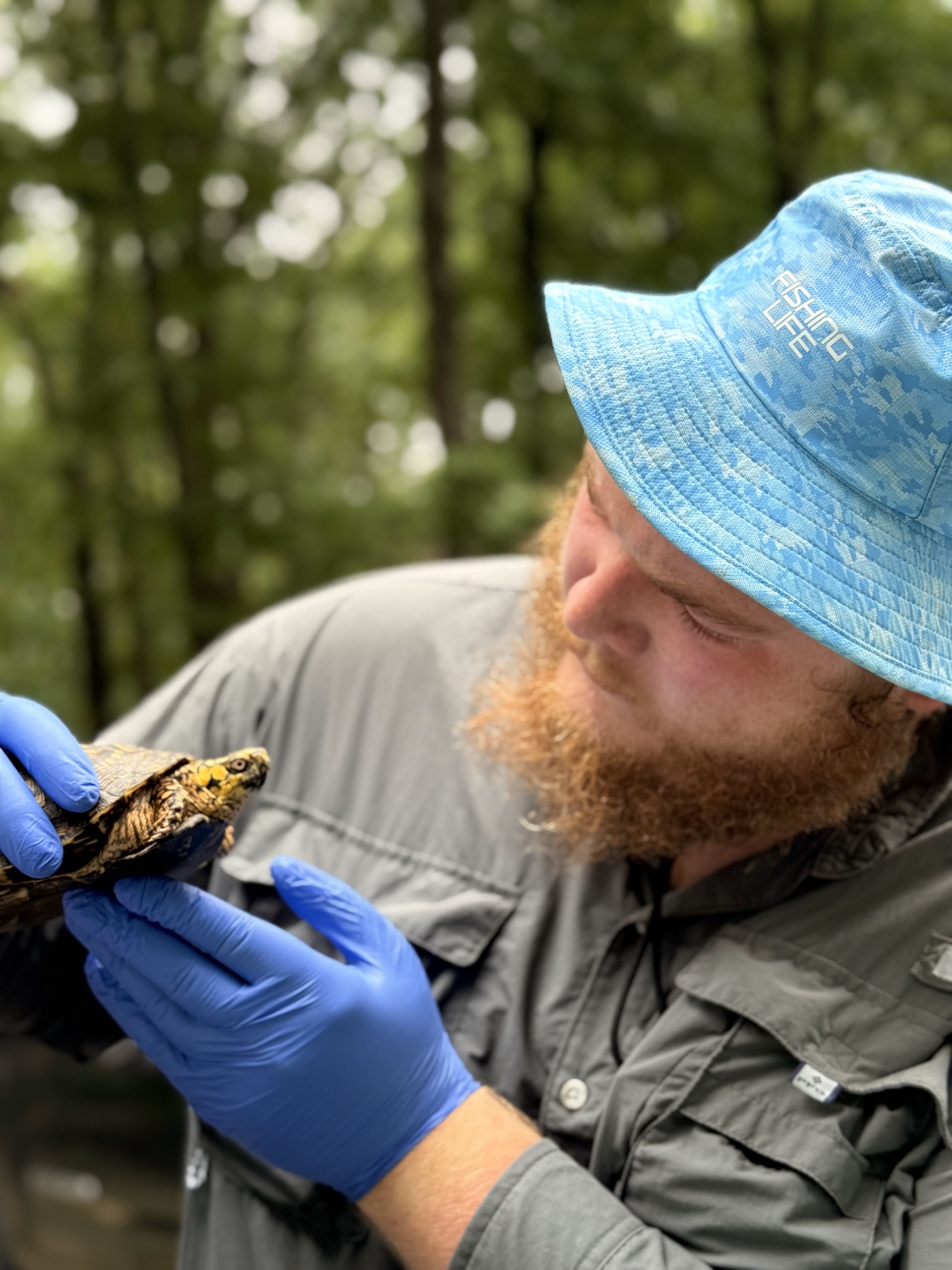
Once turtles were located, students learned how to safely handle and transport them for processing. Back at our workup area, volunteers rotated through a variety of stations and gained hands-on experience with wildlife health assessments and research techniques.
Students assisted with physical examinations, collected blood through venipuncture, learned proper turtle handling and restraint techniques, collected morphometric measurements, counted their heart rate via doppler, helped document demographic information, participated in shell photography for long-term identification purposes, and assisted with diagnostic sampling.
For veterinary students, there is something incredibly special about applying clinical skills in a completely different setting. The same concepts learned in classrooms and teaching hospitals suddenly become tools for understanding the health of free-ranging wildlife populations.
Throughout the week, students asked thoughtful questions about turtle biology, disease surveillance, conservation challenges, diagnostic techniques, and wildlife management. Conversations flowed constantly between volunteers, team leaders, and faculty as everyone worked together to understand not only what we were doing, but why each piece of information matters.
Every measurement collected.
Every blood sample processed.
Every photograph taken.
Every data sheet completed.
All contribute to a much larger picture of wildlife health and conservation.
The turtles we sampled this week become part of a long-term dataset that helps researchers monitor population health, investigate disease dynamics, identify conservation concerns, and better understand these incredible animals over time.
For students, seeing that larger picture helps connect individual skills to meaningful conservation outcomes.
Of course, one of the greatest strengths of fieldwork is the sense of community it creates.
There is something unique about spending long days outdoors working toward a common goal. By the end of the weekend, volunteers who had started as strangers were sharing stories, celebrating turtle finds, helping each other learn new skills, and encouraging one another throughout every step of the process.
The teamwork displayed by this group was truly exceptional.
Students eagerly stepped in wherever help was needed, whether that meant carrying equipment, organizing supplies, assisting with data collection, helping process turtles, or supporting fellow volunteers as they learned new techniques.
Everyone contributed. Everyone learned. And everyone played an important role in the success of the trip.
One thing that made this adventure feel a little different, however, was the absence of one of our team leaders. This was our first major trip of the season without Grace, and while Becca and Tatum were excited to lead such an amazing group of students, we definitely felt the absence of our third turtle teammate. Anyone who has worked with Grace knows that she brings incredible energy, enthusiasm, and positivity to every field day. While we certainly missed having the full leadership trio together, we know she was cheering the team on from afar, and we cannot wait until we are all back in the field together again.
Perhaps the most rewarding part of the weekend was watching volunteers grow.
By the end of two short days, students who initially felt unsure about wildlife handling were confidently participating in workups. Students who had never seen a box turtle up close were helping collect important data. Students who arrived simply hoping to learn a little more about wildlife medicine left with a much deeper understanding of how veterinary medicine, research, ecology, and conservation all work together.
Those moments are what make field season special.
The turtles are certainly a big part of it.
But field season is also about mentorship.
It is about providing opportunities.
It is about helping students discover new interests, build confidence, develop skills, and gain experiences that cannot be replicated anywhere else.
As we packed up equipment, loaded vehicles, and began the trip home, there was a shared feeling among the group that we had accomplished something meaningful together.
Twenty turtles sampled.
Countless skills learned.
New friendships formed.
Valuable conservation data collected.
And a weekend full of memories that will stay with us long after field season ends.
To our 10 incredible volunteers: thank you for bringing such enthusiasm, curiosity, and positivity to every moment of this trip. Your willingness to learn, work hard, ask questions, and embrace every opportunity made this weekend an overwhelming success.
To the turtles: thank you for being exactly where we hoped you would be.
And to Illinois: thank you for another unforgettable adventure.
We cannot wait to see what the rest of the field season has in store.