
It’s nesting season! This means the adult female turtles are out and about searching for the ideal area to lay their eggs. The Blanding’s turtle prefers to nest in open areas with well-draining soil and will travel great distances to find the perfect spot. This often involves putting themselves in danger by crossing highways and railroad tracks. Then, without intervention, the hatchlings will eventually have to make the dangerous journey back! In order to reduce the chances of the eggs being dug up by predators like raccoons and muskrats, we will often collect the eggs, incubate them until they hatch, and then provide care for the offspring until they are ready to be released. This increases their chances of survival by allowing them to grow in a controlled environment until they are at a more appropriate size to escape predators.
During our days in the field, we palpate the adult female Blanding’s for eggs so we can get an idea of who is likely to be laying soon. Nesting typically occurs during the evenings or early mornings to avoid predators and high temperatures. In order to know where the turtles are nesting, we must keep tabs on their whereabouts, thus the night shifts have begun. Both Sophia and I had the opportunity to spend an evening this week with Bill, the Kane County biologist, tracking the adult female Blanding’s for potential nesting sites.
The night began with some classic Taylor Swift music on the way to the site. This helped bring the good, positive vibes for the night. Once at the site, we started with radiotelemetry to get a feel for where the turtles were hanging out. Bill has been doing this long enough that he has an idea of each turtle’s whereabouts in the marsh, so he often knows when someone might be making the trek for a nesting site. During our telemetry adventures, we successfully found two adult females digging their nests! We had to approach stealthily in order to not spook them, possibly leading to an abandoning nest effort if done. One of the females was digging with her back legs and seemed to be committed to her chosen spot. We were confident she would be laying very soon, and spoiler alert, she nested that night! Her eggs were successfully collected the following evening. The other turtle was face first into the soil digging with her front limbs. There were other holes nearby that she had started, so she seemed to be not quite committed yet and needed to further investigate. Picky? Nah. She has high standards! She did not end up nesting for another few nights, but her eggs have since been successfully retrieved as well.
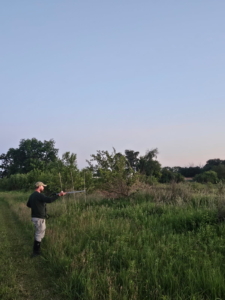
Bill doing what he does best— tracking turtles
The final task of the night shift involved going to a nesting site that Bill had found earlier that morning. Without Bill the turtle pro, I would have never known there were turtle eggs beneath the soil. The adults do a fantastic job at camouflaging the nest by covering the hole with soil, urinating on the area, and then using their plastron to pack it down. Using gloved hands, we began to dig up the nest and collect the eggs using extra care to not damage any eggs in the process. The hole itself was approximately the size of a fist, but somehow held a whopping 18 eggs! As mentioned earlier, we are currently incubating these eggs in order to increase survival chances of the offspring to help keep the population of this endangered species growing.
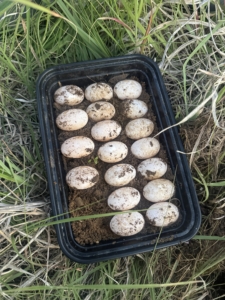
18 eggs from 1 turtle!
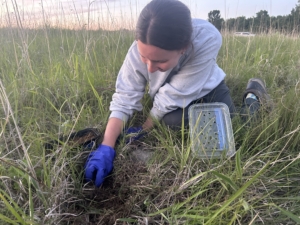
Grace digging up her first turtle nest.
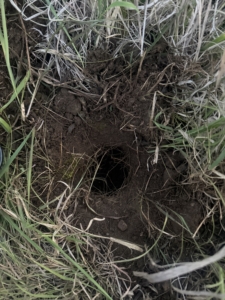
Those 18 eggs fit into this tiny hole!
The night shift was a nice change from the normal days in the marsh checking traps and working up turtles. It was very fast paced as there were many turtles to check up on in various areas of the marsh. Waders were not necessary since turtles nest on land, but bug spray was a must. I’m looking forward to spending another night shift with Bill to continue doing our part to protect the Blanding’s turtles!
