
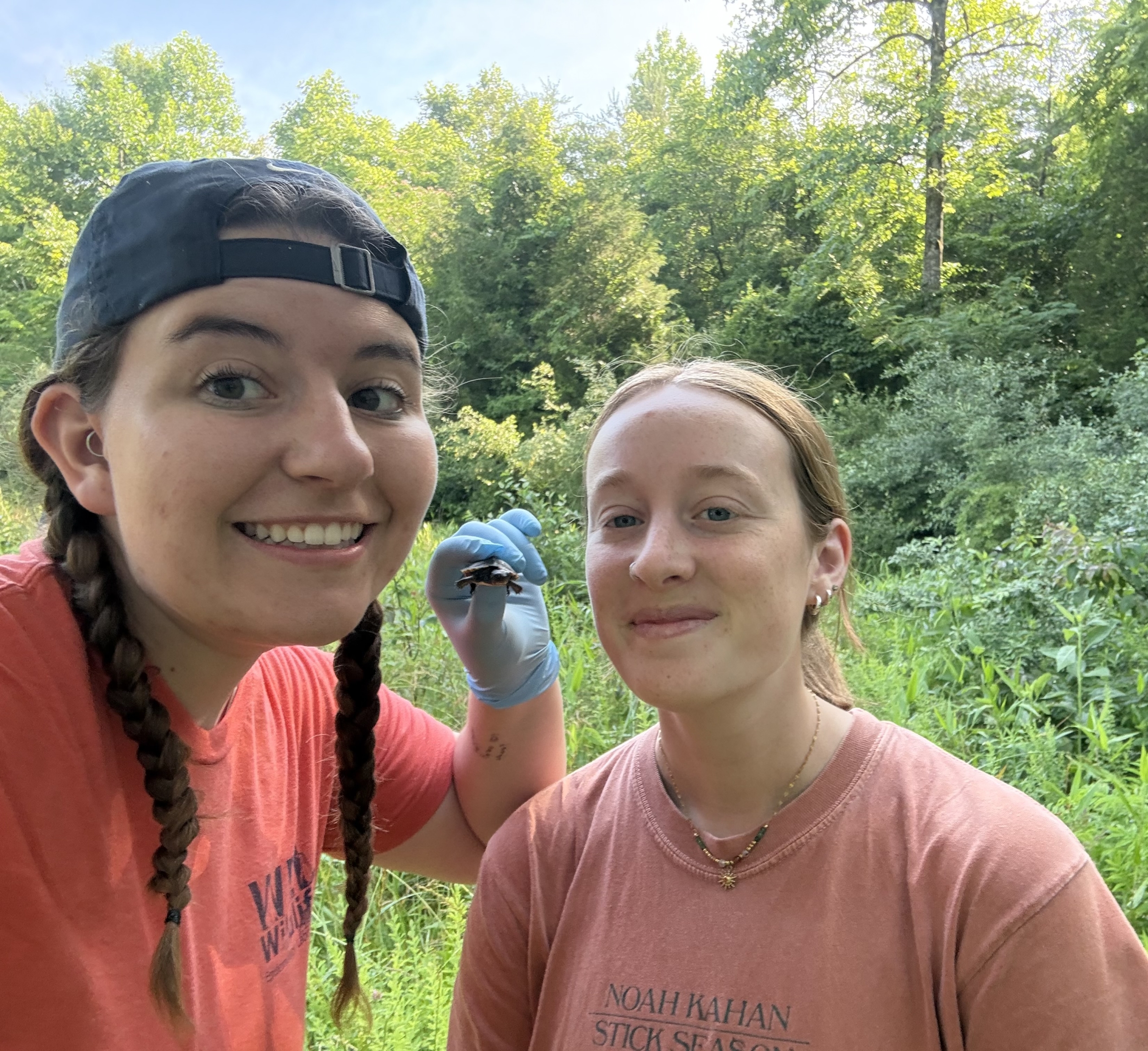
Over the course of six days, Grace and Becca logged 150 hours straight together as we bounced from northern Illinois to the Chicago area, then all the way down to eastern Tennessee and back again. Along the way, we met incredible people, sampled dozens of turtles, learned new skills, shared lots of laughs, and somehow managed to make unforgettable memories everywhere we went!!
Stop #1: Northern Illinois and the Wonderful World of Ornate Box Turtles
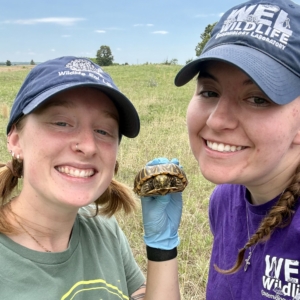
Our week began at one of our northern Illinois field sites searching for Ornate Box Turtles. If you’ve ever worked with this species, you know they have some of the biggest personalities packed into some of the smallest shells.
Ornate Box Turtles are a terrestrial species found primarily in prairie and grassland habitats. Their beautifully patterned shells, often covered in yellow radiating lines and spots, help make them one of the most recognizable turtle species in the Midwest. Beyond their appearance, they’re also incredibly expressive. Some turtles immediately retreat into their shells, while others seem determined to inspect every piece of equipment and every person around them.
As always, we conducted health assessments, collected samples, and gathered valuable data that contributes to long-term conservation and disease surveillance efforts. Every turtle has its own story, and each encounter helps us better understand the health and ecology of wild populations!
Stop #2: Trading Hiking Boots for Waders
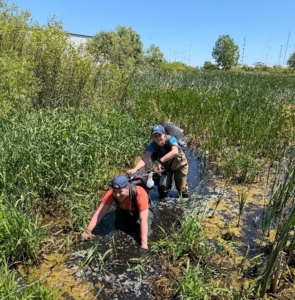
Next, we headed over to one of our Chicago-area counties to spend time with some WEL friends, Jenna and Sathvik, and learn more about the world of aquatic turtles.
While Grace and Becca spend much of their time chasing turtles through forests, grasslands, and fields, aquatic turtle work is an entirely different adventure. Suddenly, instead of navigating trails and searching under logs, we were wading through marshes, balancing on slippery banks, and attempting to convince our boots not to disappear into the mud forever.
The experience was incredible.
We learned new sampling techniques and gained valuable insight into the unique challenges associated with aquatic turtle research. During our time in the marshes, we had the opportunity to work with several species, including Blanding’s Turtles, Common Snapping Turtles, and Painted Turtles.
Each species occupies a unique ecological role. Blanding’s Turtles, with their distinctive bright yellow throats and perpetual smiles, are considered a conservation priority throughout much of their range. Painted Turtles are among the most widespread turtles in North America and serve as important indicators of aquatic ecosystem health. And, of course, Common Snapping Turtles reminded us that confidence is a personality trait shared by many reptiles.
Grace and Becca also had the privilege of meeting a few particularly *welcoming* marshes this week. By “meeting,” we mean unexpectedly discovering which patches of ground were actually several inches of water disguised as solid earth. After a series of graceful (and completely intentional) sinking events, we’d look up from our swampy predicament only to find our fearless guide, Jenna, what felt like three counties ahead (she never really left our side 🙂 ). While we were busy testing the load-bearing capacity of every mudflat, Jenna glided effortlessly through the wetlands like she’d been issued amphibious upgrades at birth.
We are incredibly grateful to Jenna and Sathvik for welcoming us into their project, sharing their expertise, and teaching us the countless differences between terrestrial and aquatic turtle fieldwork. Every field crew has its own techniques, perspectives, and experiences, and we came away having learned far more than we expected.
Between marsh adventures, boots stuck in mud, homemade banana bread, and late-night conversations catching up with old friends while making new ones, we eventually reached an important conclusion:
Grace and Becca may be at their best when their feet are on solid ground.
Stop #3: Heading South to Tennessee
With that realization firmly established, we packed up and headed south.
Or, as they might say in Tennessee:
“Y’all come on down.”
Our next destination was just outside Knoxville, Tennessee, where we joined a long-running Eastern Box Turtle monitoring project.
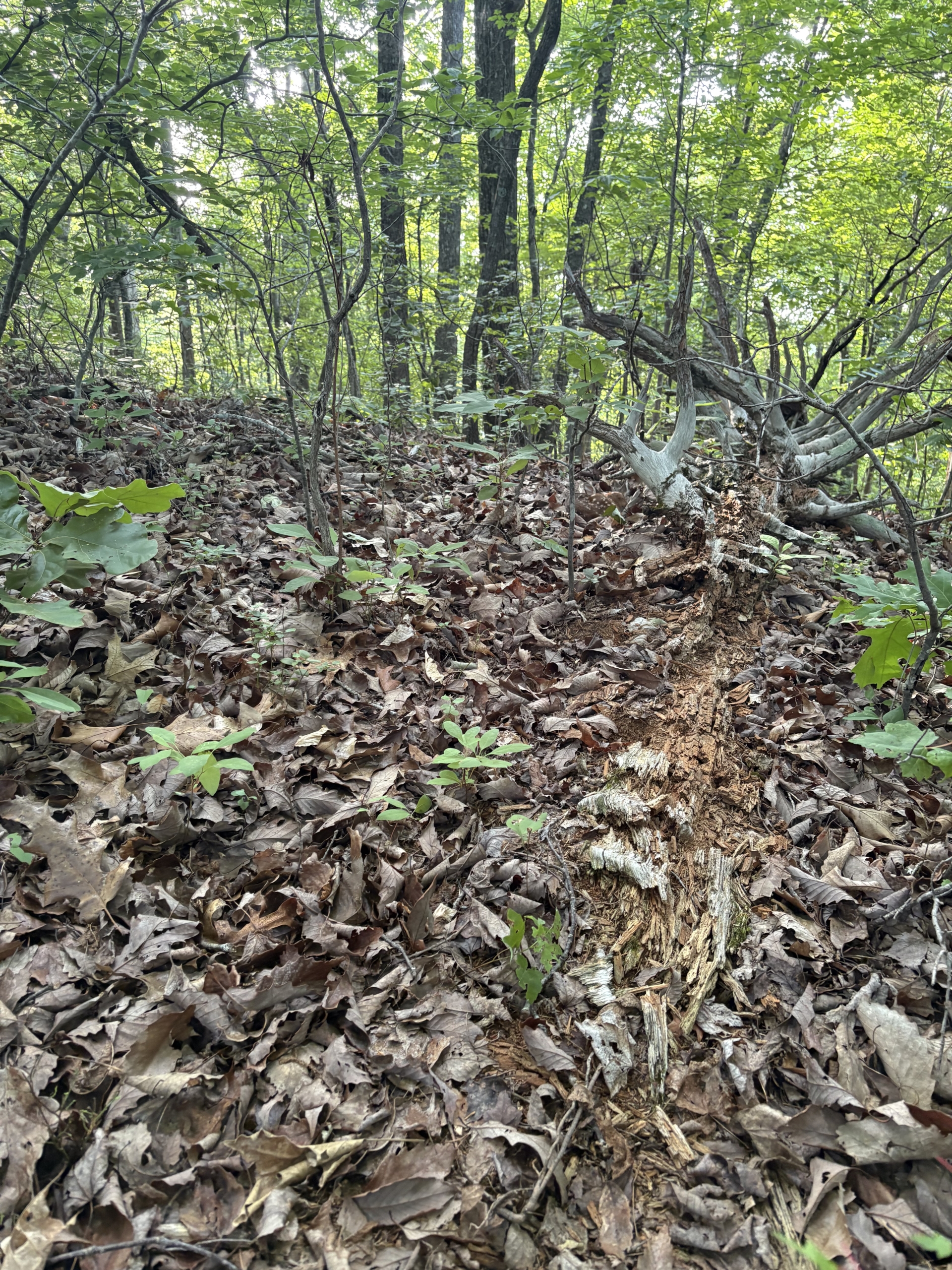
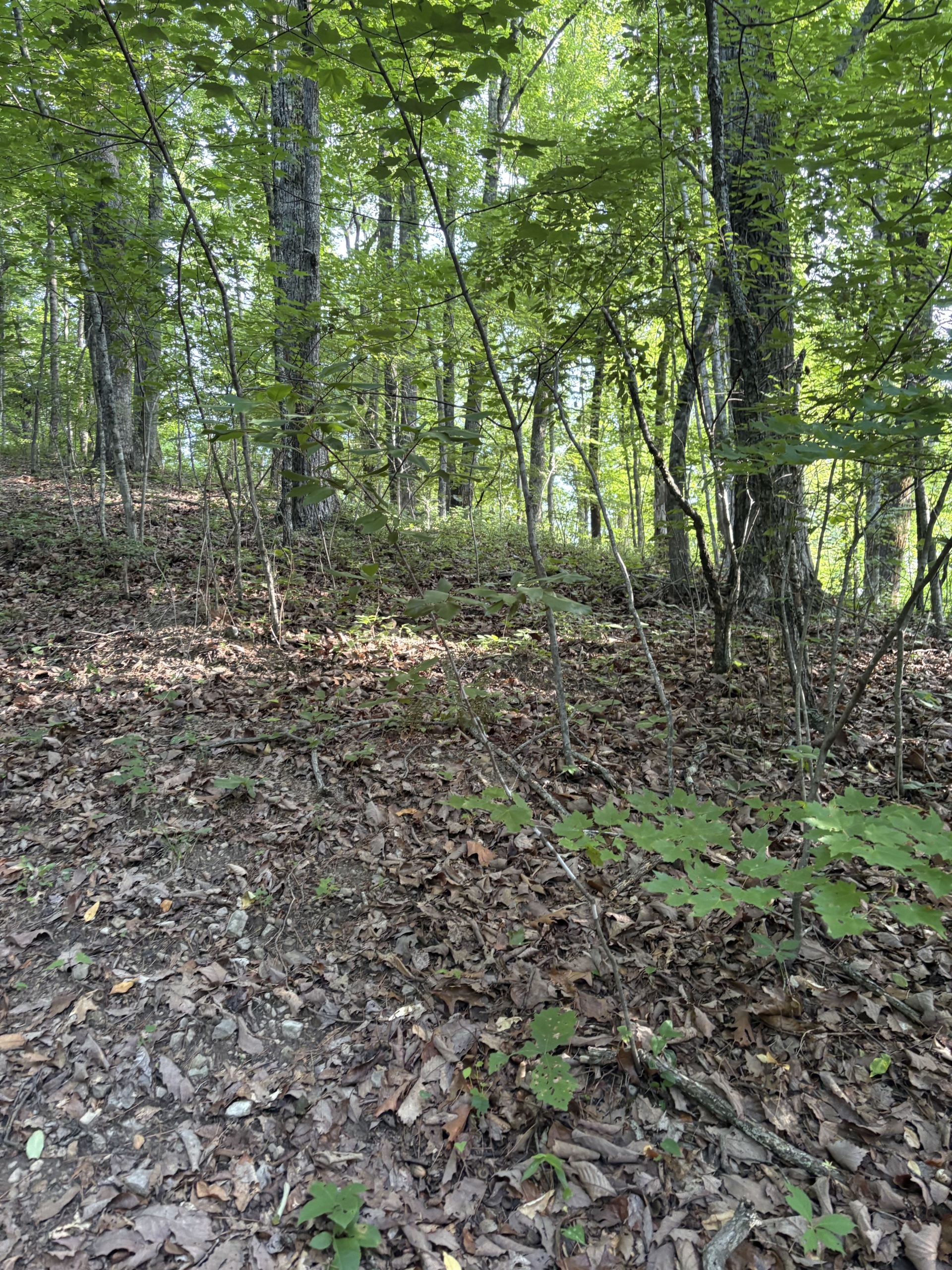
The landscape was stunning. Rolling hills, forested ridges, winding rivers, and enough scenic views to make us stop and admire the surroundings every time we turned a corner.
More importantly, we had the opportunity to work alongside an amazing group of biologists, researchers, educators, and high school students who were all united by a common goal: understanding and conserving wild turtle populations.
The Next Generation of Wildlife Scientists
One of the most rewarding parts of the trip was working with the high school students involved in the project.
From the moment they arrived, their enthusiasm was contagious. They asked thoughtful questions, eagerly learned new techniques, volunteered for every task, and jumped into field and laboratory work with impressive confidence.
Watching their curiosity grow throughout the week was genuinely inspiring.
Whether they were assisting with turtle processing, helping collect data, learning laboratory procedures, or discussing wildlife careers, they approached every challenge with excitement and professionalism. The future of conservation and wildlife medicine is certainly in good hands.
Thirty-Three Turtles and a Few Unexpected Guests
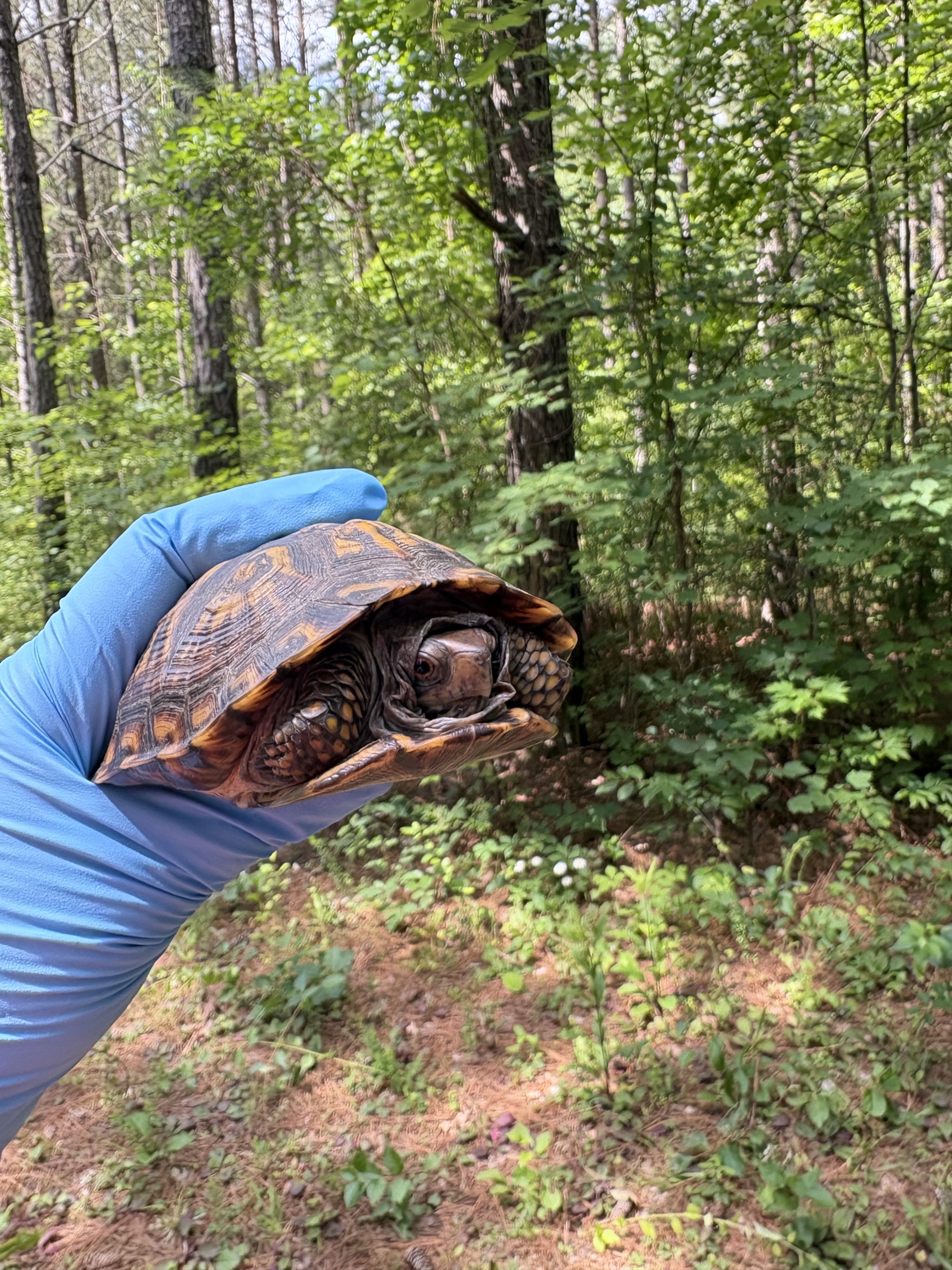
By the end of the week, our team had processed 33 Eastern Box Turtles.
Of course, no field work would be complete without a few memorable highlights.
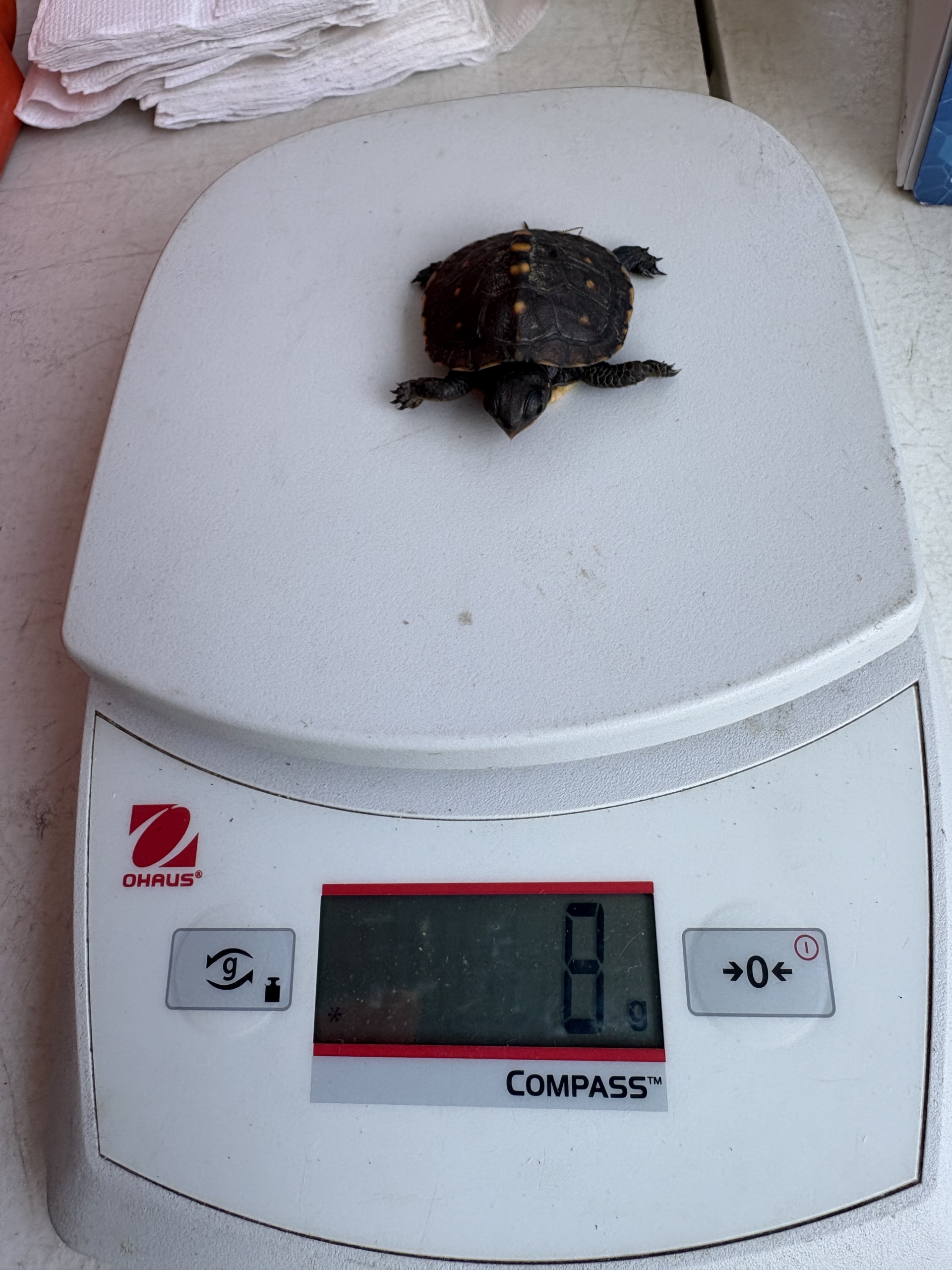
One of our favorites was an incredibly tiny hatchling weighing just 8 grams. Holding a turtle that small is a powerful reminder of how much these animals overcome throughout their lives.
From predators and environmental challenges to disease and habitat loss, the odds can be stacked against them from the very beginning.
We also encountered a large and remarkably friendly Black Rat Snake. While technically not a turtle, it quickly became one of the week’s fan favorites.
Several turtles we encountered had missing limbs or evidence of previous injuries. While these observations can initially be surprising, they also highlight something remarkable about Eastern Box Turtles: their resilience.
Despite injuries that would seem devastating, many individuals continue to survive, forage, reproduce, and thrive for years. Their ability to adapt and persist through challenges is one of the many reasons they are such fascinating animals to study.
More Than Turtle Research
Although turtles were certainly the stars of the week, some of our favorite memories happened after the fieldwork ended.
We explored local towns, walked along riverfronts, admired the beautiful Tennessee landscape, sampled local restaurants, and somehow managed to befriend a field mouse that appeared outside one of our dinner spots.
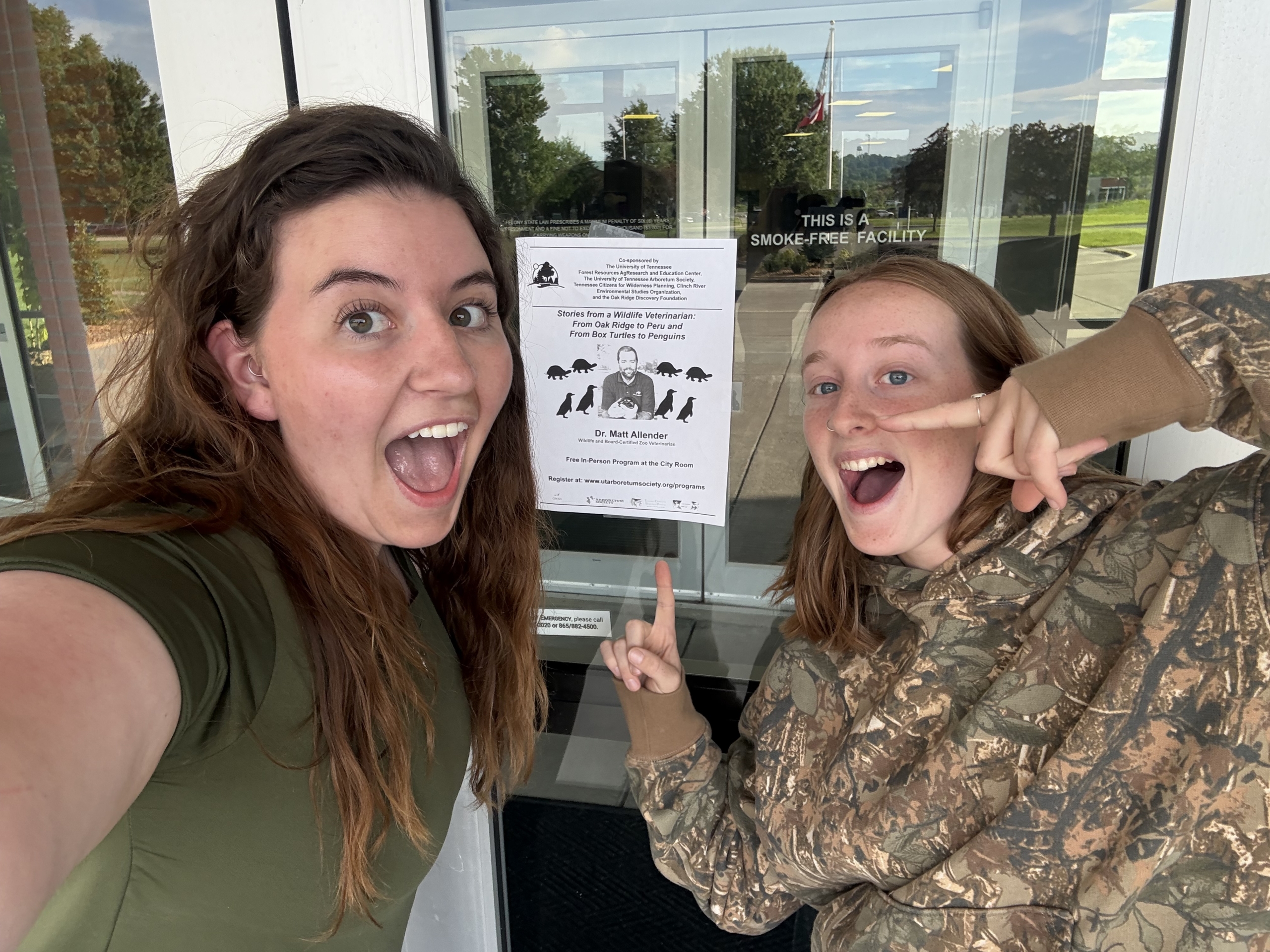
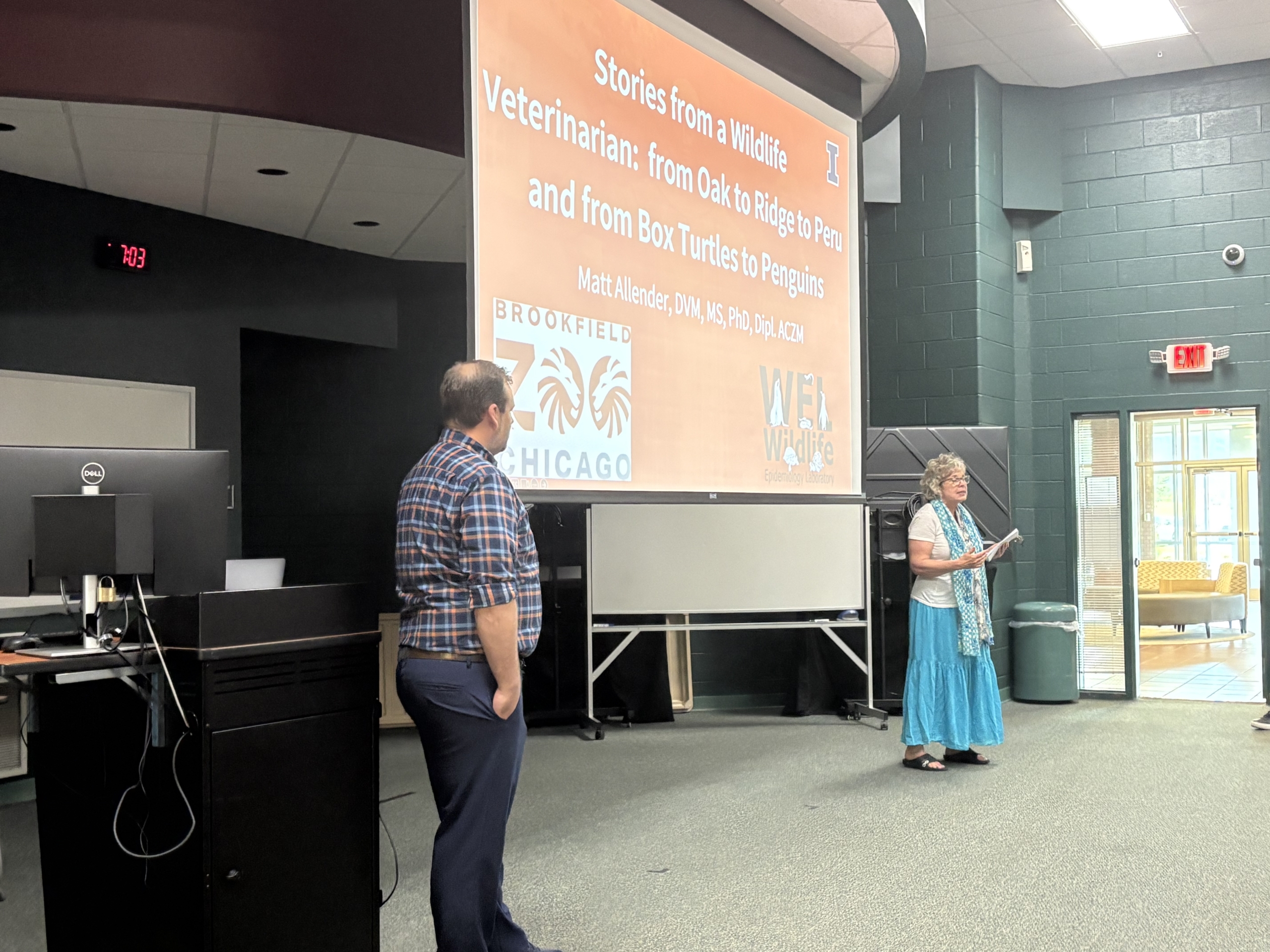
We also had the opportunity to attend a presentation by Dr. Allender, who discussed a wide variety of wildlife health projects, emerging diseases, conservation challenges, and the importance of long-term ecological monitoring. It was a great reminder of how interconnected wildlife health, ecosystem health, and conservation efforts truly are.
Why These Experiences Matter
This Tennessee project has been ongoing for many years, and we are incredibly grateful to have had the opportunity to contribute, even for a short time.
Beyond collecting samples and gathering data, experiences like these help build the next generation of wildlife professionals. Throughout the week, Grace and Becca were able to refine their own technical skills, strengthen our leadership abilities, practice teaching and mentorship, and learn from an incredible network of scientists and students.
Field biology is rarely glamorous. It involves long days, bug bites, muddy boots, and countless hours on the road.
But weeks like this remind us exactly why we do it.
Every turtle examined, every student inspired, every data point collected, and every partnership formed contributes to a larger effort to better understand and conserve wildlife.
A Special Thank You
Finally, a huge shoutout to Tatum for holding down the fort back in Urbana while we were off adventuring across state lines.
From caring for treatment animals to keeping laboratory work moving forward and making sure everything continued running smoothly at home, her support allowed us to make the most of this incredible opportunity.
We couldn’t have done it without you.
Here’s to another week of turtles, teamwork, and unforgettable adventures.
