
If there’s one phrase that perfectly describes our first official week out in the field, it’s this: muddy boots, full hearts, and LOTS of turtles!!
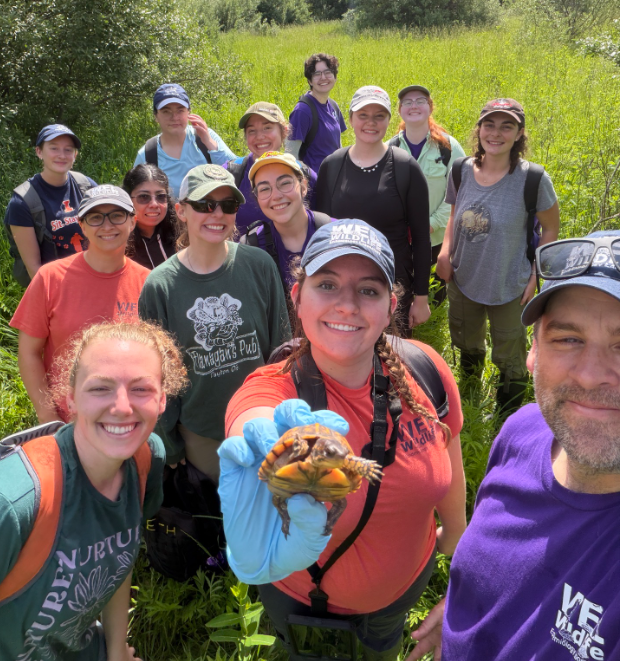
This week marked the beginning of our summer field season for the Box Turtle Team, and what an incredible start it was! Not only did we officially kick off our fieldwork, but we also had the opportunity to bring 15 amazing veterinary student volunteers out into the field and back into the lab with us for hands-on wildlife medicine experience. Watching everyone jump into every challenge with excitement, curiosity, and determination made this week one we will never forget.
From the very first morning, our volunteers showed up bright and early and ready to learn. And trust us…fieldwork is not always glamorous. Our days were filled with long hikes through humid forests, boots overflowing with water from recent rains, thick brambles, poison ivy, giant fallen logs, and steep ravines. But despite all of that, our vet students tackled every obstacle with enthusiasm, positivity, and a willingness to do whatever it took to help find and study turtles.
And find turtles we did! In total, this week we were able to find and sample 40 turtles!!
Our days in the field involved hiking through beautiful natural areas searching for Eastern Box Turtles using active hand capture techniques. Volunteers learned how to carefully search turtle habitat, spot turtles hidden among leaf litter, and safely capture and transport them back to base camp for processing. Along the way, students also helped put up flagging tape, navigate difficult terrain, and assist with transporting turtles and equipment through the woods and fields.
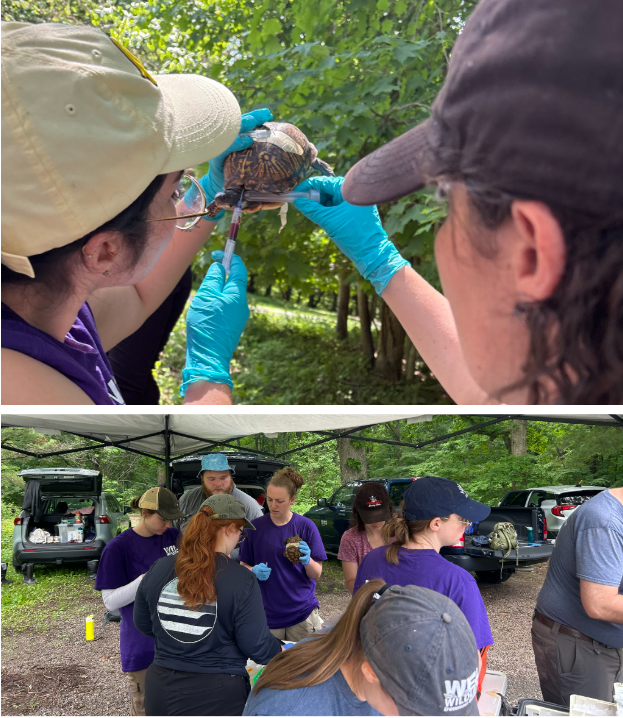
Once turtles arrived back at base camp, the real hands-on veterinary experience began!
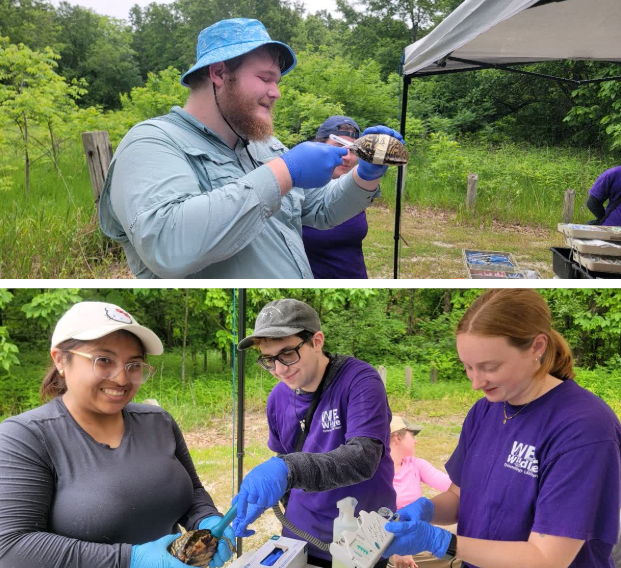
Students rotated through multiple stations and gained exposure to a huge variety of wildlife health techniques and diagnostics. They learned and assisted with:
- Venipuncture and blood collection
- Doppler use for heart rate monitoring
- Physical examinations
- Demographic data collection and experience
- Diagnostic swabbing
- Turtle shell photography for long term data collection
- General turtle handling and restraint techniques
- Recording and organizing research data
For many students, this was their first opportunity working directly with free-ranging wildlife in a field medicine setting, and it was incredible watching confidence grow throughout the week. Every single day students became more comfortable handling turtles, asking questions, practicing skills, and learning how wildlife research and conservation medicine work together.
But the learning didn’t stop in the field.
Back in the lab, volunteers continued processing samples and learning diagnostic techniques used in wildlife health research. Students gained hands-on experience performing:
- Plasma separation
- Packed Cell Volume (PCV)
- Total Solids (TS)
- Hemacytometer counts
- Blood smear preparation
- Data entry and organization
Seeing students connect field collection techniques with laboratory diagnostics helped demonstrate the full picture of wildlife disease investigation and conservation medicine. From the moment a turtle is found in the forest to the final hemacytometer in the lab, every step contributes valuable information to the health and conservation of these amazing animals.
One of the best parts of the week was watching how enthusiastic and hardworking our volunteers were. Despite the heat, the bugs, the soaked socks, the scratches from brambles, and the endless up-and-down hiking, everyone showed up every day ready to learn more. Whether carrying gear through the woods, carefully processing samples in the lab, or asking thoughtful questions during workups, the students continuously impressed us with their dedication and positivity.
The Box Turtle Team leaders (Becca, Grace, and Tatum) had an absolute blast teaching and working alongside such an incredible group of students. One of the most rewarding parts of wildlife medicine is helping others gain confidence and excitement in the field, and this week was full of those moments. From celebrating first successful blood draws to finding hidden turtles deep in the woods, there were countless moments of teamwork, encouragement, laughter, and learning.
And as if the week couldn’t get any better, we also had an extra special surprise: THREE amazing doctors joined us in the field! Usually we are lucky to have two veterinarians working with us, but this week Dr. Sage joined Dr. Allender and Dr. Laura, giving students even more opportunities to learn from experienced wildlife veterinarians and researchers. Having all three doctors there made the week even more exciting, educational, and memorable for everyone involved.
By the end of the week, we had muddy gear, tired legs, overflowing data sheets, and probably a little poison ivy exposure somewhere among the group…but more importantly, we had a team of passionate veterinary students who gained real-world wildlife medicine experience and threw themselves fully into every challenge.
Week 1 reminded us exactly why fieldwork is so special. It’s not just about the turtles. It’s about the people willing to hike through dense forests and wet prairies because they care deeply about wildlife conservation, research, and learning. It’s about teamwork, curiosity, resilience, and creating opportunities for future wildlife veterinarians and scientists.
We are so proud of every single volunteer who joined us this week and so excited for everything still to come this summer.
Field season is officially underway… and if Week 1 is any indication, it’s going to be an amazing summer!!
