Turtle Shell Repair

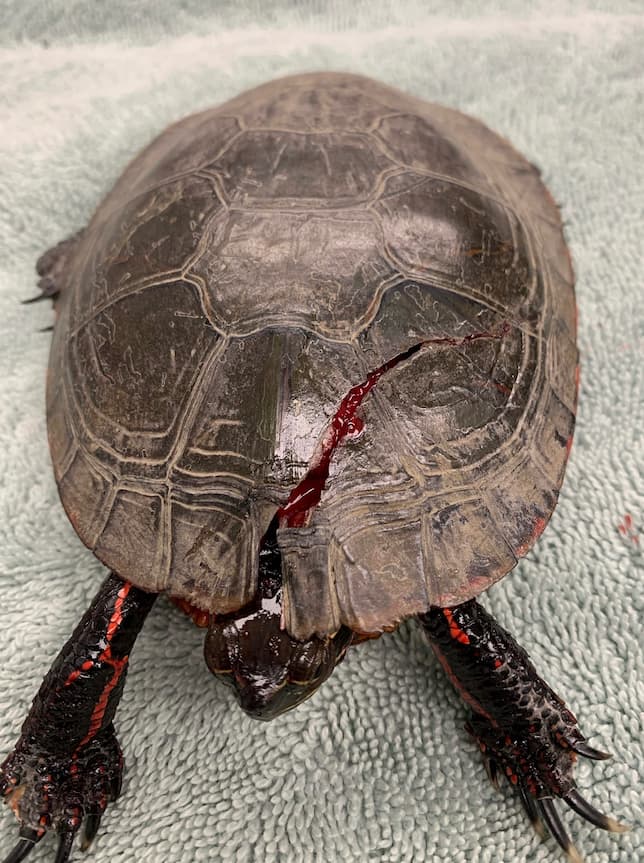
The Wildlife Medical Clinic commonly receives turtles in need of shell repairs. Recently, an injured adult Midland painted turtle (Chrysemys picta) was admitted to the clinic for “having a cracked shell.” Chrysemys picta are the most widespread native turtles of North America. They are normally found in slow moving freshwater. These turtles do not migrate and will stay in a single area their entire lives. Due to their unique markings and vibrant red and yellow coloring, these turtles are easily identifiable. These markings can be seen on the lower portion of the shell which is called the plastron and the upper jaw. This specific turtle was identified as a male based on the length of the nails, and the placement of the cloaca as these features differ between males and females, as well as overall size of the individual.  
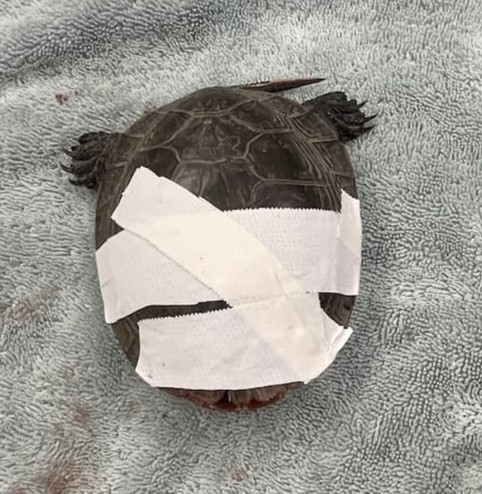
A turtle with its shell bandaged

During the initial exam, a large fracture was found on the carapace or the top portion of the shell. The fracture started from the cervical scute which is the middle of the shell near the turtles head and crossed over to the left bridge of the shell, which is basically the side of the turtle, but the middle where the carapace and plastron are connected. Thankfully, no crack was seen on the plastron, so this turtle had a better chance of recovering from its injuries with its shell completely intact. However, it was not evident on the examination whether the trauma extended into the body cavity affecting his lungs and other organs. Although the patient was actively trying to escape, the team noticed that his eyes were closed the entire time he was being handled. This indicated to the team that the animal was in pain, which was to be expected given the extent of his injuries. The exam was paused so the appropriate pain medication could be given to make the patient more comfortable during the exam. Once the team was sure the medication was working, they continued with the triage exam. No other injuries or ailments were noted during the exam, meaning the turtle seemed to be healthy minus the pressing issue of this large shell fracture. His wounds were gently and thoroughly cleaned before the triage team administered an injectable anti-inflammatory medication and an antibiotic, in addition to the pain medication he had already received. This course of treatment was given to help reduce swelling and prevent infection in the wounds. Tape was then placed on the shell to stabilize the fracture until radiographs could be performed. 

When it came time to do radiographs, pain medication was given prior to the turtle being handled to ensure he was comfortable during the procedure. The tape was carefully removed, no signs of infection were seen, and the carapace had already begun healing. The radiographs showed the fracture did not go into the body cavity, which meant no organs were damaged by the initial trauma. This was great news and meant our patient was a good candidate for continued shell repair! When doing a shell repair on any turtle, there are several approaches that can be done to have successful results. For this specific case, the shell was already starting to heal, so the team decided to go with the most common approach of placing cerclage wire into the shell. Cerclage is a type of flexible surgical stainless-steel wire used to stabilize bone fractures. Two small holes were drilled on each side of the cervical scute where the fracture initially started. Cerclage wire was then placed through the holes and tightened so the carapace fracture was closed and even on each side.  This concluded the procedure. 
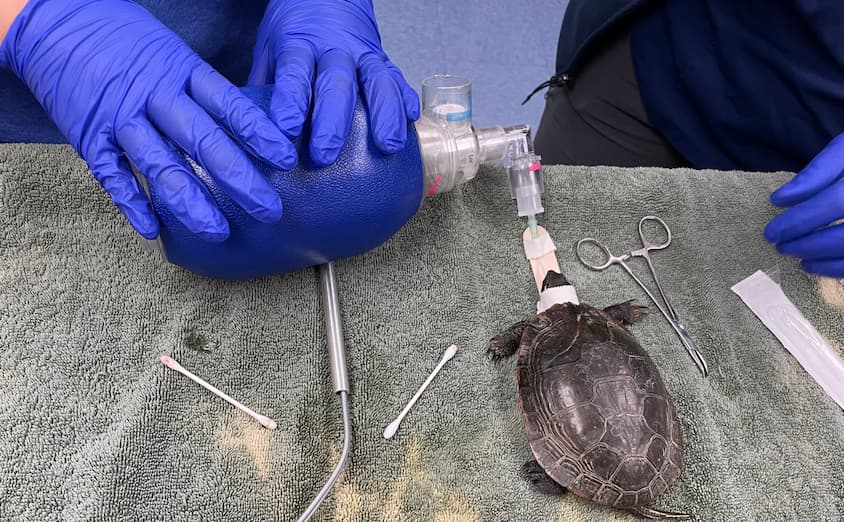
A turtle getting its shell repaired

Now we just watch and wait, giving the shell time to heal. Even with a successful procedure, complications can still arise. In this turtle’s case, he had been dry docked or not allowed to swim in water prior to the shell repair and this paired with the combination of drugs and limited amount of fluids given, made him slightly dehydrated. Thankfully, after the repair, the patient was able to be fully submerged in water once again and was given additional subcutaneous fluids which helped to rehydrate him and continue moving him forwards on his road to recovery. In the past, we have seen turtle patients refusing to eat after shell repairs. Inflammation and infection can cause patients to lose their appetite, so we will monitor him and his nutrient intake carefully to hopefully prevent this issue.

Due to the timing of this patient’s arrival, and the length of time a shell fracture takes to heal, he will be with us long term, staying over winter in the clinic. Thanks to our amazing staff and volunteers he is on the road to recovery and will hopefully be released in the Spring of 2024 after his wounds are fully healed. 

This article was written by Jacquelyn Merx, Class of 2026 
Snakes! Part 2  

What should you do if you come across a venomous snake? 

If you are out for a hike and come across a venomous snake, it is best to just leave it alone and give it space. As you have probably heard several times since childhood, the animal is more afraid of you than you are of it. This is true of snakes. Snakes do not chase people and will either stay in place to camouflage or move away from you when given the opportunity. According to Mississippi Wildlife, Fisheries, and Parks, “approximately 75 percent of all bites by venomous snakes occur when an individual is trying to kill or otherwise harass the snake.” The other 25% are likely from accidentally stepping on the snake or examining the fangs of a deceased animal, which can still envenomate you if handled incorrectly. Remember that venomous snakes play an important role in the ecosystem and getting close to them is not worth risking your life. The best thing to do when you see a venomous snake is to back up, move away, and leave them be. 

If there is a venomous snake near your home, especially if you have a pet or children, the safest action is to contact animal control to relocate the animal. Killing the snake negatively impacts the environment and puts you in danger as you go near the animal. Allowing a trained handler to move the animal will keep you safe and allow the snake to survive. 

What are the benefits of snakes? 

As mentioned above and before, snakes are beneficial to humans. How so, you ask? For one, snakes play a very important role in the ecosystem as both a predator and prey. As a predator, snakes keep rodent populations in check. In places that have removed snakes in the past, rat populations exploded and caused a lot of damage. Smaller species, such as green snakes, red-bellies, and young garter snakes also eat insects and can keep those populations in check as well. Snakes are a great method of pest control that is easy, harmless, and free. Please think twice about controlling pests with chemicals as that can damage the environment and harm other wildlife. 

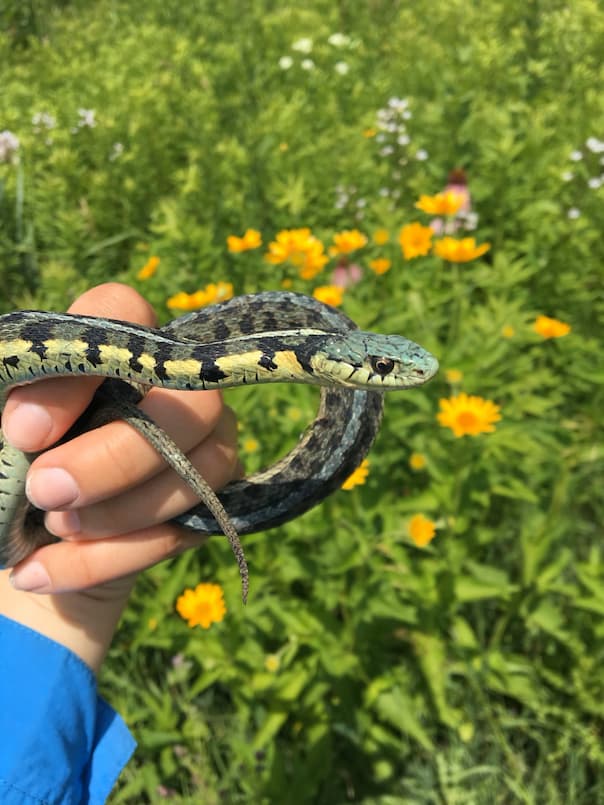
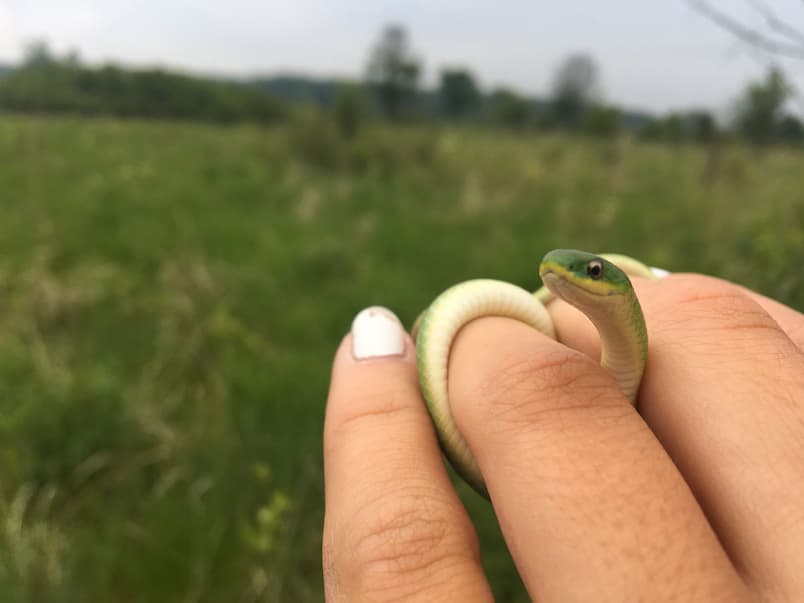
A hand holding a snake above flowers

Along with eating rodents, snakes help control diseases that can increase when rodent populations get too large. Rodents carry several diseases that can be transmitted to humans and are hosts to ticks and fleas that can carry diseases like Lyme Disease, Ehrlichiosis, Rocky Mountain Spotted Fever, Plague, and Murine Typhus. Without snakes helping keep rodent numbers down, we could see increased prevalence of these diseases that are harmful to animals and humans alike.  

As prey, snakes make a great meal for birds and larger mammals such as owls, hawks, fox, raccoon, and many other species. Believe it or not, some snakes, such as the Kingsnake and King Cobra, actually eat other snakes. These snakes are capable of eating venomous and non-venomous snakes. So not only do they help keep pest species populations from exploding, but they also serve as food for a number of other animals.  

Lastly, snake venom is used in medicine. It contains hemotoxins that are used to treat heart attacks and blood disorders. The venom also contains neurotoxins that are used to treat Alzheimer’s, Parkinson’s Disease, strokes, and brain injuries. As the use of venom in medicine continues to grow, who knows how else venomous snakes can benefit humans. 

What should I do if a snake bites me or my pet? 

Here are the CDC’s “do’s and do not’s” if you are bit by a venomous snake: https://www.cdc.gov/niosh/topics/snakes/symptoms.html. 

If a snake bites your pet, try to move your pet away from the animal if it is safe to do so. Make sure to avoid getting bitten yourself. If possible, try to take a picture of the species to show your veterinarian. Bring your pet to an emergency veterinary center as soon as possible, do not wait. It’s best if you can call the veterinarian on the way so they are prepared to treat your pet as soon as you get there. Try to keep the bite below heart level, remain calm, and keep your pet calm as well. 

If you suspect your pet was bitten by a snake but did not see it, here are some symptoms: 

  • Swollen muzzle (will happen within 30 minutes of the bite) 
  • Dual puncture wounds may be seen. They may or may not ooze red liquid. 
  • Your pet may go into shock, of which symptoms include pale gums, mental dullness, increased breathing effort, slow breathing, or tremors. 

How do I keep snakes out of my yard?  

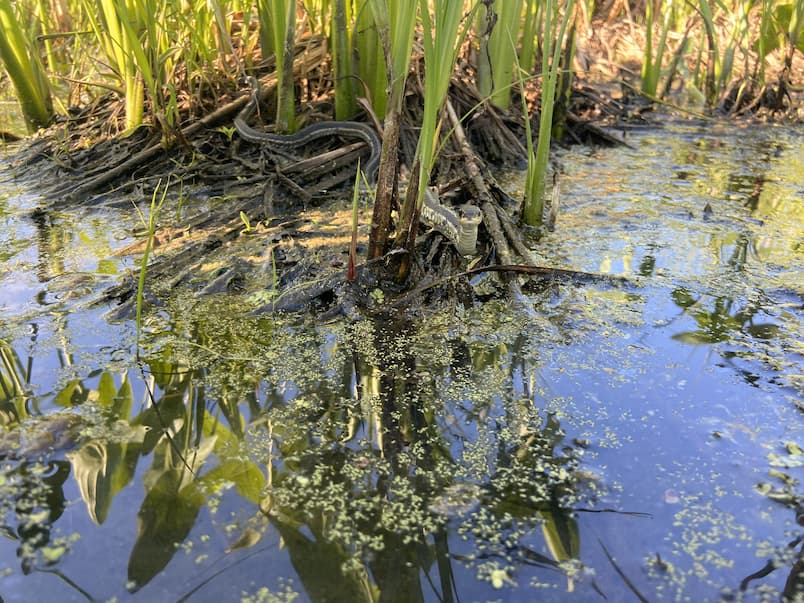
A snake in water

The two main resources that might attract a snake to your yard are food and shelter. Snakes eat rodents, fish, amphibians, and insects. By having snakes in your yard, they will keep populations of these animals low and help you avoid these animals. Snakes are great population control and are harmless, so having them in your yard is very beneficial. However, if you choose to make your yard unattractive to snakes, get rid of standing water, remove bird feeders, fill burrows around your house, and remove firewood, brush piles, tall grass, dense brush, and openings under sheds and concrete. Do NOT use chemical snake deterrents or traps, as these are either ineffective or pose a risk to other wildlife. The snake must also come into your yard for these products to be effective, which defeats the purpose of discouraging them from coming into your yard.    

What should I do with an injured snake?  

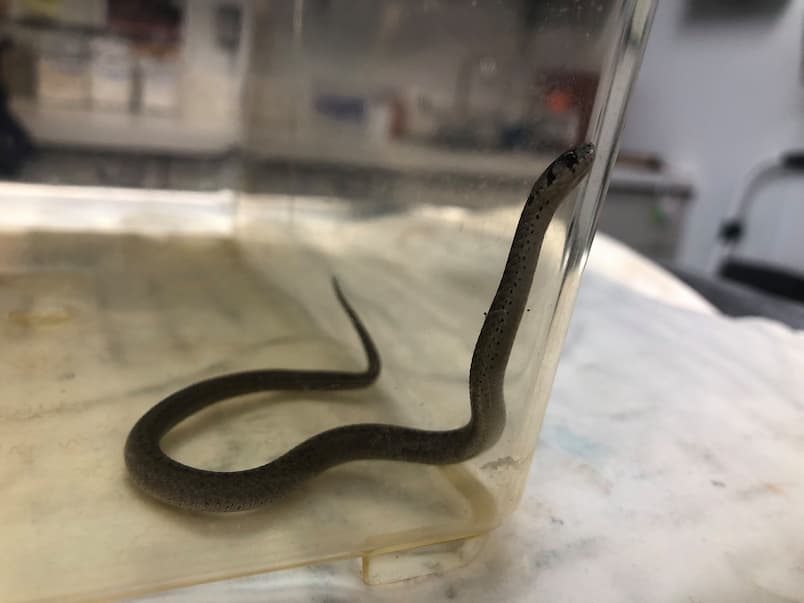
If you find an injured snake, it is likely from a predator attack, hit by a car, or from injury sustained during yard work. First, try to identify if the snake is venomous or non-venomous. If you are not sure, do not touch the snake. Also, before intervening, ensure the snake is sick or injured. Especially on sunny days, snakes find their way to gravel, pavement, or a warm flat space like a rock to bask. Usually, if you approach the healthy snake, it will move away into the grass. The snake is likely injured or sick if you see blood, scabbing, lesions on the skin, or it has a dull mentation, meaning it has lessened or no reaction to you or the environment. Once you have confirmed the snake needs assistance, you can use a stick or shovel to carefully move it out of harm’s way. If the snake is non-venomous, you can put it in a container with small air holes and a tight-fitting lid. If none are available, a pillowcase will also work.  If the snake is venomous, do not touch it and call animal control. Keep the non-venomous snake in a warm and dark place until transport to a rehabilitation center. If the snake is stuck in a glue trap or netting, do not try to remove it. It is easy to further injure snakes in this position. Bring the whole trap or net to a licensed wildlife rehabilitator for removal as soon as possible.  

How can I share my respect for snakes with others? 

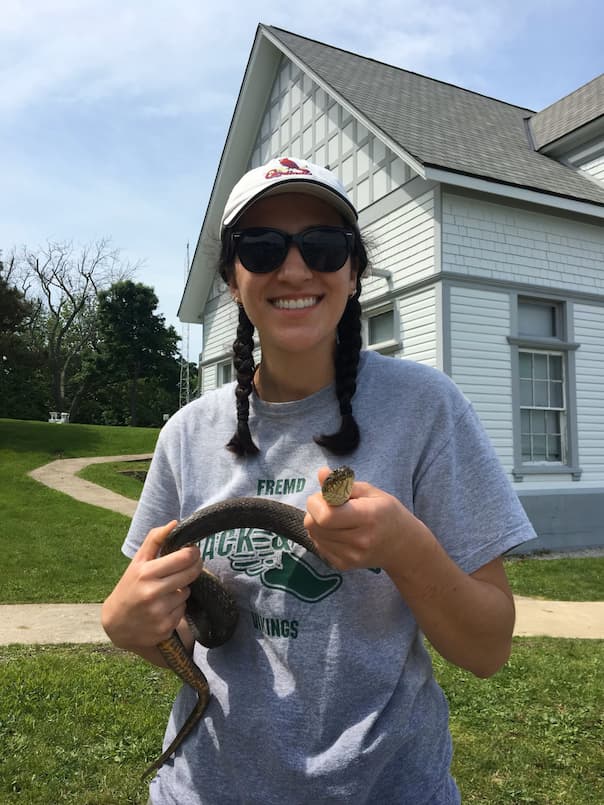
Marg holding a snake.

Through education and example. Tell others about why snakes are important, continue helping snakes in need, and let healthy ones go on their way when spotted in the environment! Knowing the benefit, they give to both humans and the environment may help convince people to at least leave a snake alone if they encounter one. Also, let people know that most snakes in our area are harmless and want to be as far away from humans as possible. Snakes only bite in self-defense and most venomous snake bites happen when someone is trying to handle or kill the animal. People don’t have to love snakes; we just ask that they respect them.  In most cases, respect is just leaving them alone to continue on their way.  

Written by Marg, Class of 2026

Emerging Turtle Disease, Emydomyces Testavorans 

Emydomyces testavorans is a recently discovered fungus associated with freshwater habitats that causes shell disease in a wide variety of turtles and terrapins (Woodburn et al 2019; Woodburn et al 2021). The fungus has been found in both wild and human cared for turtles and has been identified in individuals with active lesions and those with no evidence of disease.

E. testavorans was originally discovered in animals housed in captive care but recent studies found that it has the ability to infect and cause disease in wild populations as well (Lambert, MR, 2021).

Once established, lesions gradually eat away at the shell, progressing through the bone which also exposes turtles to infections. These lesions can have a wide variety of presentations from ulcerations of the shell, pitted depressions, discoloration and flaking of the shell, increased pliability of the shell, nodular masses within the shell or abdominal cavity, and cystic nodules. 

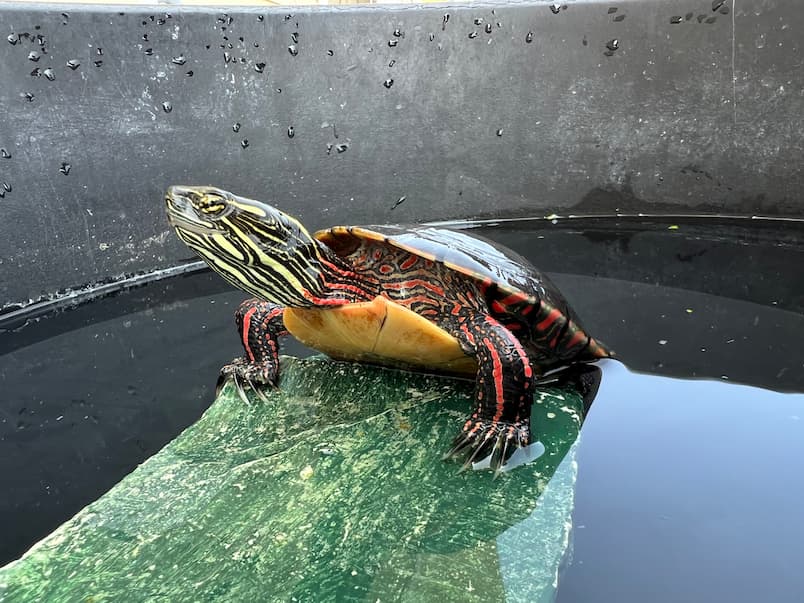
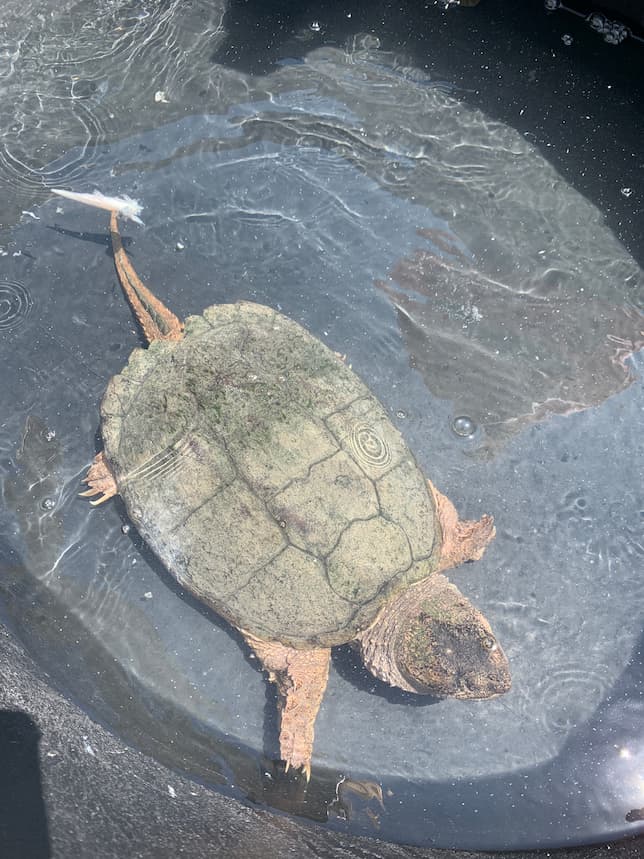
A turtle laying in water

The presence or absence of E. testavorans can be detected within shell tissues through polymerase chain reaction (PCR) run from swabs or scrapes of shell lesions and/or fresh or frozen tissue.  Histopathology and necropsy can also be helpful in identifying whether an infection is present through stained shell tissues in the lab. 

The recommended treatment for shell disease secondary to E. testavorans is still being investigated but nebulization of the anti-fungal terbinafine once daily for 28 days has been shown to be helpful, especially in addition to antifungal medication given over a set period of time and repeated in set intervals to help prevent reoccurrence. This is also known as pulse antifungal therapy. Other forms of treatment have included debridement of necrotic shell, packing lesions with terbinafine powder, and covering them with bone wax or cement. 

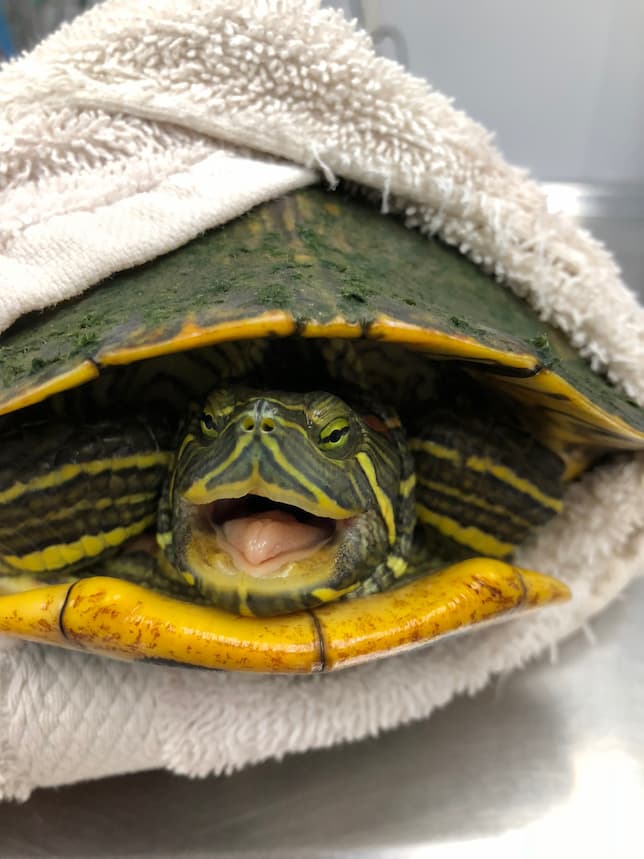
A turtle wrapped in a blanket

Unfortunately, shell disease is a common cause of illness and death in turtles and the underlying cause for why some turtles will develop more severe disease remains unknown. Turtles can either be asymptomatic carriers or show active evidence of infection; however, those that show evidence of infection are more likely to succumb to severe, chronic disease of the shell and a large number of those severely infected turtles will die. 

Identifying the fungus is an important first step which allows us to better understand how the fungus spreads which can help us to develop health management strategies for impacted turtles, and ways to combat potential emerging disease. Having this knowledge provides us with not only the means to quickly diagnose patients and implement possible treatment options, but is also essential in assisting to develop proper handling and biosecurity measures as well. 

*Turtle images featured in this article are for visual design. They do not have the disease mentioned.

Written by Tori McCarthy, Affiliate Clinical Year DVM Student   

Snakes!

Snakes, an animal group that frequently causes fear in people. Whether it be due to them having scales, their quick and unique locomotion, or maybe it’s the fact that some are deadly.
Unfortunately, due to this fear, most snakes get grouped as dangerous and sometimes are killed because of this misconception. I was encouraged to hear that studies have shown that learning more about snakes and the species in your area can help alleviate some of these fears and hopefully cut down on people harming these beneficial creatures. As an outspoken snake lover, I would like to address some common questions people may have.

Are snakes venomous or poisonous?

Snakes are not poisonous, but rather venomous. A poisonous animal is one that contains a toxin that can infect a predator through skin contact or consumption. For example, if I were to eat a Poison Dart Frog, I would consume something poisonous. Venomous animals are ones that inject a toxin into something through a bite. Since some species of snakes inject venom through their fangs, they are referred to as “venomous.”

How can I tell the difference between a venomous/nonvenomous snake?

It is incredibly important to know the difference between venomous and nonvenomous snakes. While this article talks a lot about venomous snakes, it is important to remember that most of the snake species in Illinois are non-venomous. Illinois has forty species of snakes and only four of those species are venomous. Of those four species, two are only found in southern Illinois.

One way that you may realize you have encountered a venomous snake is by the presence of a rattle on the end of the tail. While only two of the venomous snakes in Illinois have rattles, the other two behave as if they have a rattle and will shake their tail and create a buzzing noise if disturbed. These venomous snakes with rattles are called rattlesnakes and they have specialized hollow scales at the tip of their tails that make a buzzing noise when they vibrate against each other. If you hear this noise or see a snake that has this structure on their tail, it’s best to stay away.

Of course, there are exceptions to the tail rule for both venomous and non-venomous species. Rattlesnakes can lose their rattles due to injury, and they do not grow back. In these cases, the snakes will have a blunted tail, not extending to a fine tip like non-venomous species. There are several species of non-venomous snakes that have also developed mimicry as a defense mechanism. For example, Fox snakes are known to rattle their tail against leaves to imitate the sound of a rattle. This video demonstrates how well they can replicate the sound:
https://youtu.be/_G3db-dnZ8A.

Since there are exceptions to the tail rule, it is important to have other ways to identify venomous snakes. Non-venomous snakes generally have rounded snouts, heads, and pupils. Venomous snakes generally have pointed snouts, heat sensing pits, and elliptical-shaped pupils. There are also differences in the scales below their vent, but this would be difficult to see from a distance. A good rule of thumb is to just keep your distance from any snake if you are not sure.

What are some local species?

Though they are mostly elusive animals that are skilled in not being seen, here are several local species in the Urbana-Champaign area that you may come across. The most common species are Garter Snakes, Northern Water Snake, Fox snakes, Rat Snakes, Smooth Green snakes, Red-Bellied Snakes, and Dekay’s Brownsnake. Though rare, you may come across an Eastern Massasauga, which is a venomous species. While the population has greatly decreased since 1980, it may still be possible to find remaining individuals. A full list of Illinois species can be found here: https://www.wildlifeillinois.org/gallery/amphibians-and-reptiles/snakes/

Why are snakes important?

Snakes play an integral role in the ecosystem. They can be predators but also prey for some. They are very beneficial as they keep rodent and insect populations at bay. They are food for birds of prey, some mammals, and even other snakes. Some snakes specialize in eating other snakes and one of those species resides right here in Illinois, the Kingsnake. While I know not everyone likes snakes, I hope we can all respect them and see their importance in the environment.

Written by Marg, class of 2026

Wildlife Misconceptions

One of our goals at the Wildlife Medical Clinic is to educate the public about the animals that live around us, and that sometimes involves correcting long-believed ideas. Here are four of my favorite misconceptions to discuss with people: 

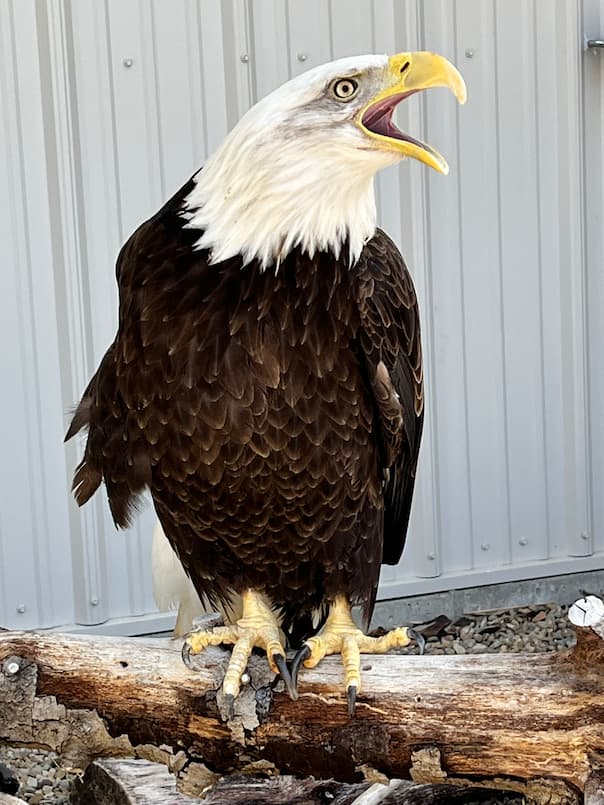
1) “Bald eagles sound fierce!”

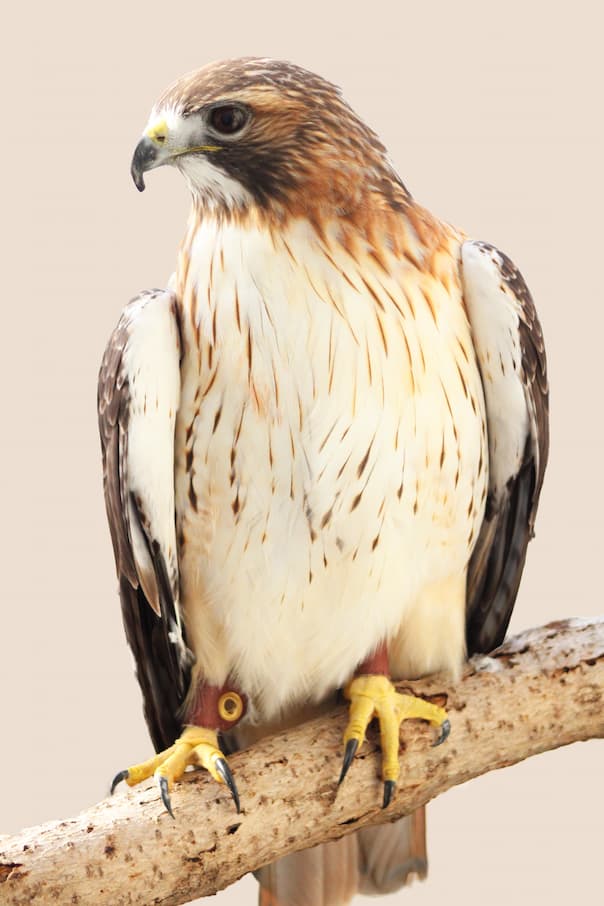
That majestic battle-cry you have heard in movies did NOT come from a bald eagle. At some point, film and TV editors in Hollywood decided that red-tailed hawks have a much more intimidating sound and would dub over eagle vocalizations with audio from hawks to present a stronger American symbol. Bald eagles actually make a series of short, high-pitched notes that can be described as whistling or piping. We have both species as Ambassador animals – if you visit, Odin (red-tailed hawk) and River (bald eagle) may give you the chance to hear the difference! 

For those that can’t visit the clinic, here is a video from the Alaska Raptor Center “Red-tailed Hawk and Bald Eagle Vocalizations”: https://www.youtube.com/watch?v=CEmYEQ78zS0 

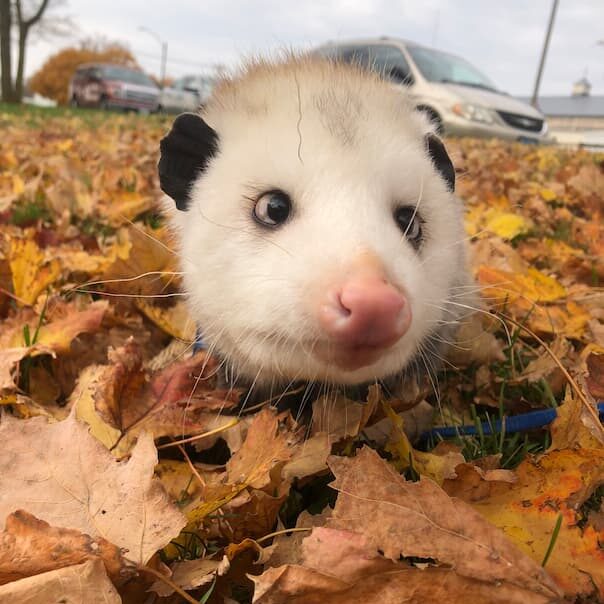
2) “Possums carry rabies!”

Rabies is a concern for human health and in our domestic pets, however, Virginia opossums very rarely carry rabies. As marsupials, they have a lower body temperature than most other wild mammals and this is thought to be the main reason opossums are not typically affected by this virus. The mammals in Illinois that are considered common carries of rabies are bats and skunks, which is why the Wildlife Medical Clinic cannot accept these species as patients. For your pets at home, the best way to protect them from rabies is by staying up to date with vaccinations from your veterinarian! 

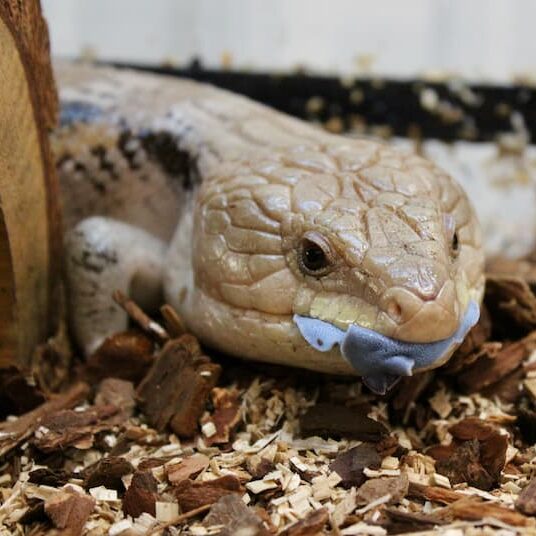
3) “The difference between snakes and lizards is that snakes don’t have legs and lizards do.” 

This may sound silly, but there are a few hundred species of legless lizards that can be found around the world! While they are rarely found in Illinois, they are commonly seen in other states such as California and Florida. If you happen to travel outside of the United States, you may come across them in areas of Europe, Asia, Africa, and Australia. So, if you cannot tell the difference between a snake and lizard based on legs, what can you look for to tell the difference? One of the easiest things to try to observe from a distance is whether they have holes just behind their eyes. These are ear holes – lizards have them, snakes do not! You can also look at whether they have eyelids – legless lizards can close their eyes whereas snakes do not have eyelids. 

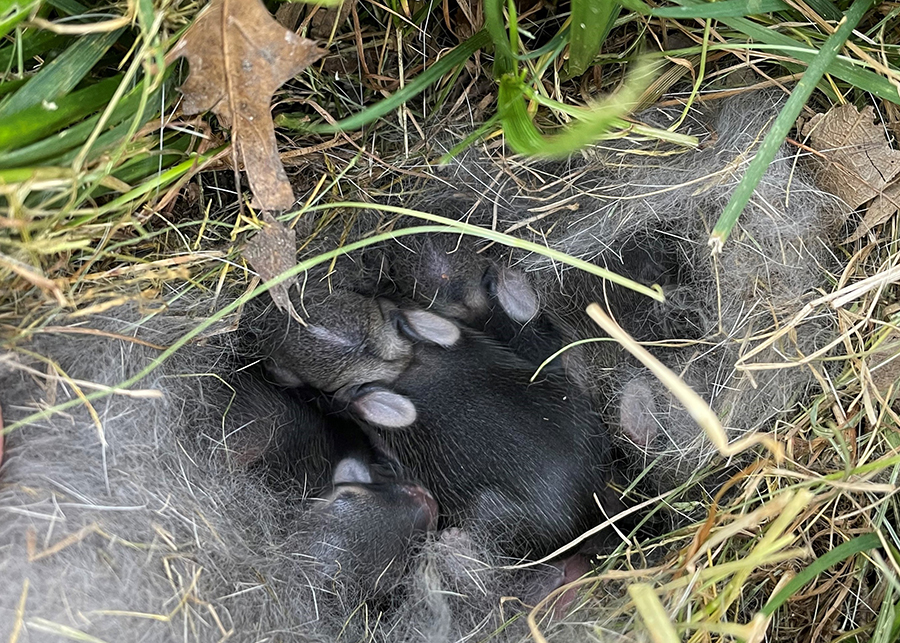
4) “You can’t move a baby bunny or baby bird because the mother will smell you on them and won’t take care of them.” 

Baby bunnies in a grassy nest

This is a common concern we hear from people, especially around this time of the year. Luckily, this is a misconception! If you find a young animal that does not appear to be injured or sick, our first recommendation will be to return it to the nest and its parents if you are able. Your touch will not cause the mother to abandon the baby. The best option for wildlife is to remain in the wild and be raised by their parents. Of course, we know this is not always possible and if the young animal is truly orphaned or injured, please contact the WMC or your nearest licensed wildlife rehabilitator. 

Written by First Year Sarah

Introducing Caduceus!

The Wildlife Medical Clinic gives a warm welcome to our newest Wildlife Ambassador animal,
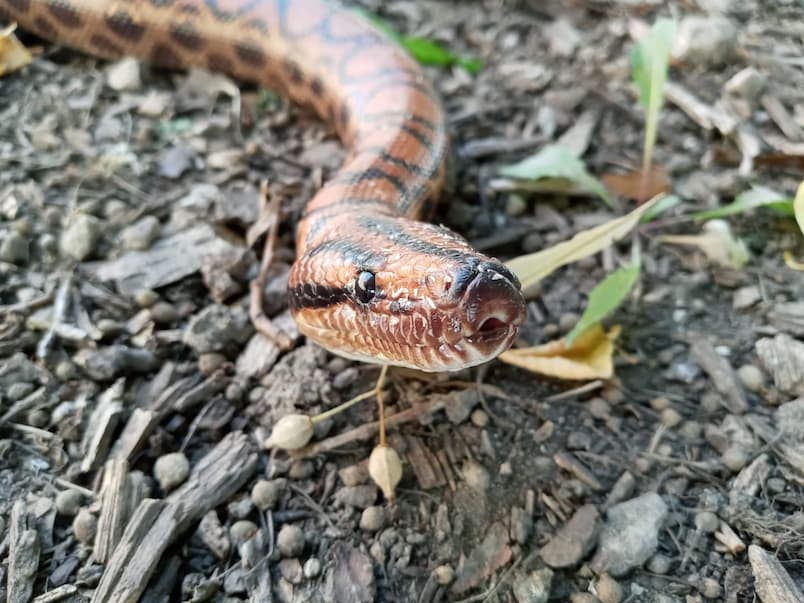
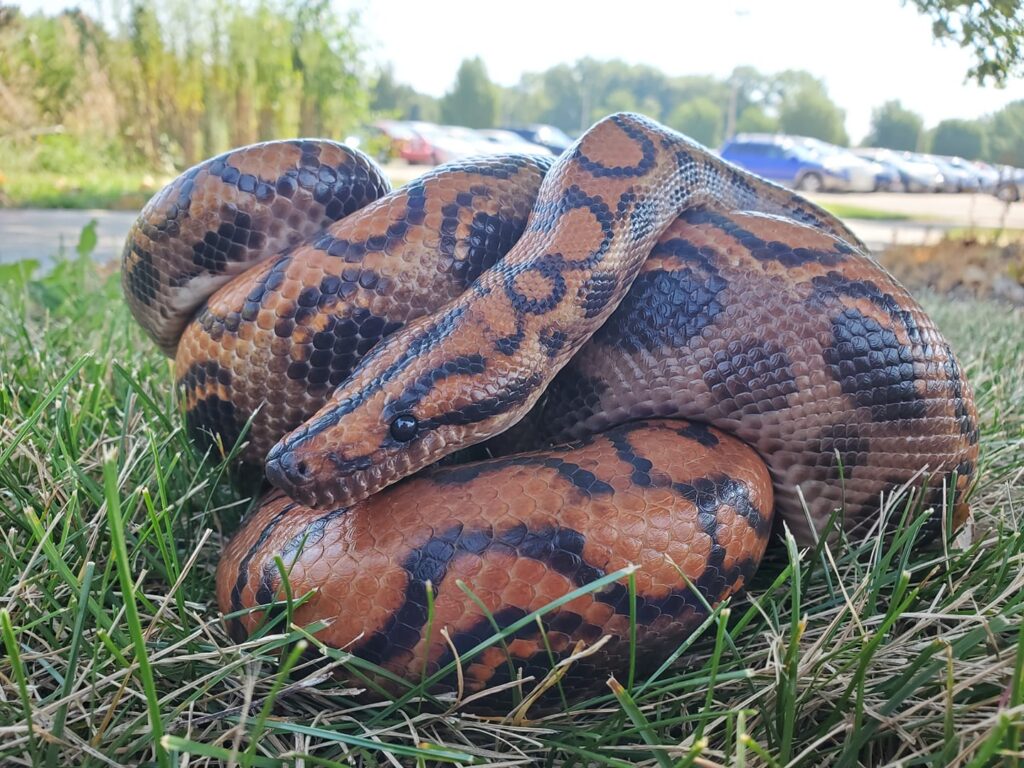
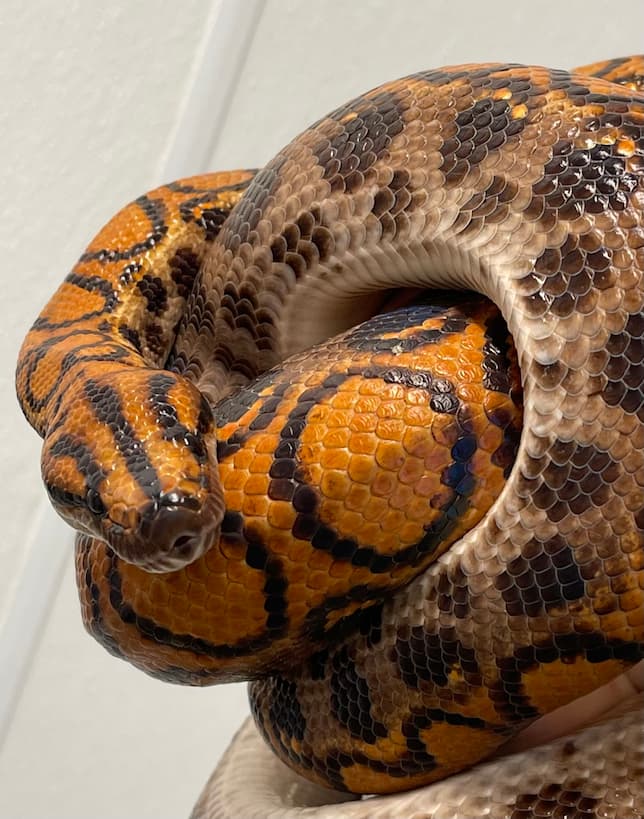
Caduceus the Brazilian rainbow boa!

Caduceus has prior experience as a professional program animal, having spent the last 11 years of her life in the excellent care of the College of Veterinary Medicine’s Non-Traditional Species Club. Because of her extremely mild temperament, she has become rather famous for being an excellent “beginner snake” for students who have never handled a snake before. Over the past few months, she has moved into the WMC Ambassador Building and the Ambassador Team has taken over her daily care. We are currently giving her time to adjust to her new location and lifestyle, but we hope to have Caduceus attending public events soon!

As a part of the WMC Ambassador Program, she will attend educational events with our other ambassadors. By improving education and removing fear surrounding snakes, Caduceus will help improve the relationship between humans and her Illinois counterparts. Through caring for her, student volunteers on the Ambassador Team will also have the opportunity to learn about snake husbandry and medical care.

Caduceus Fun Facts:
● Brazilian rainbow boas are native to the forest floors of South America, not Illinois. However, Caduceus was born in captivity and has spent her entire life as a pet and more recently program animal.
● Caduceus is named after the symbol for medicine, which depicts a snake encircling a staff. While some call her by her formal name, others prefer to call her Cadu, which is just a shortened version of her name.
● This species gets its name from its iridescent or rainbow-hued skin, which is caused by tiny ridges on the scale surface that refract light.
● Unlike most other snake species, boas and a few other species do not lay eggs. Instead, they incubate their eggs internally and then give birth to live young! The term for this is ovoviviparous and is slightly different than viviparous mammals. Other ovoviviparous snakes are garter snakes, vipers, anacondas, and most sea kraits.
● Boas are not venomous and subdue their prey through constriction. Caduceus eats mice that we purchase frozen from a company and then thaw to feed her. Her wild counterparts not only eat mice but various rodents, birds, lizards, and even fish.
● In captivity, boa species can live well into their twenties. Caduceus is currently sixteen years old.
● Contrary to popular belief, snakes are not slimy! Their scales are smooth to the touch.
● In most snake species, females are bigger than males. Brazilian rainbow boas can grow to be 4-6 feet in length. As an older female, Caduceus is over five feet long and weighs around five pounds.
● Snakes do not have ears! While lizards and turtles have eardrums, snakes lack the structure altogether. However, their jaws are adapted to function as a sort of “internal ear” to sense vibrations. Snakes are not deaf, but they don’t process sound the way mammals do.

Wildlife Medical Clinic
John A. Coyne South Clinic
2100 South Goodwin Avenue
Urbana, IL 61801
217-244-1195