Ringing in the New Year at the Wildlife Medical Clinic

The veterinary students at the University of Illinois College of Veterinary Medicine are some of the most driven and goal-oriented people I have ever met. Knowing this, I wanted to ask my fellow Wildlife Medical Clinic volunteers what their resolutions were for the new year. More specifically what their goals were related to the WMC, so I posed the following question, “What are your New Year’s Resolutions for your time in the WMC?” Here are some answers from our dedicated volunteers:  
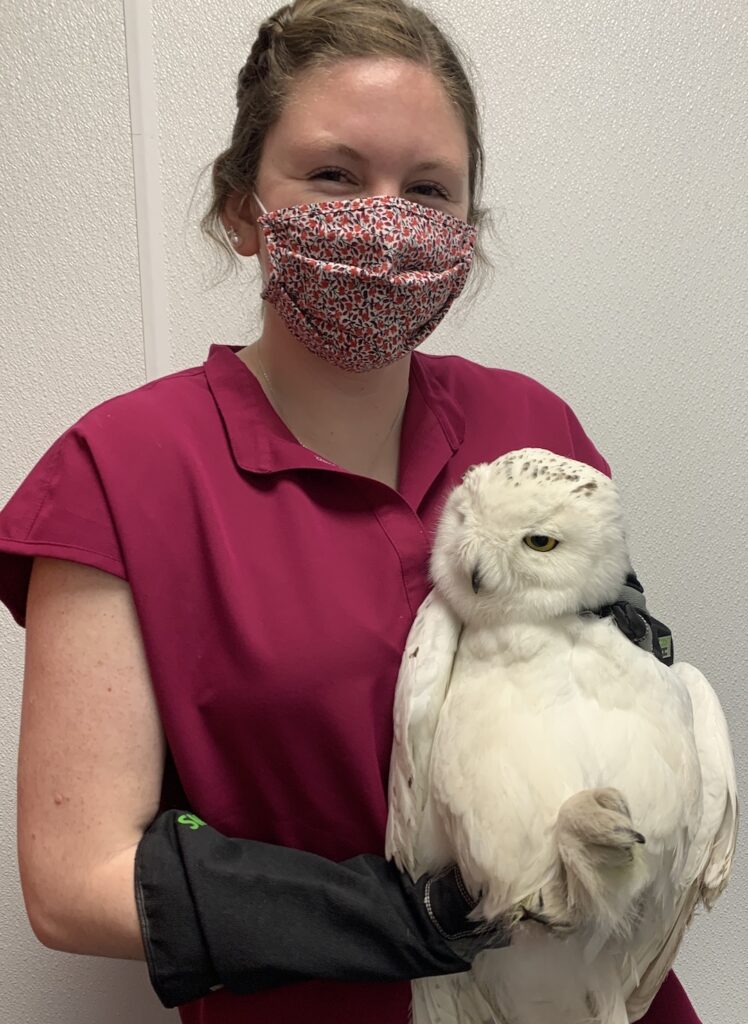
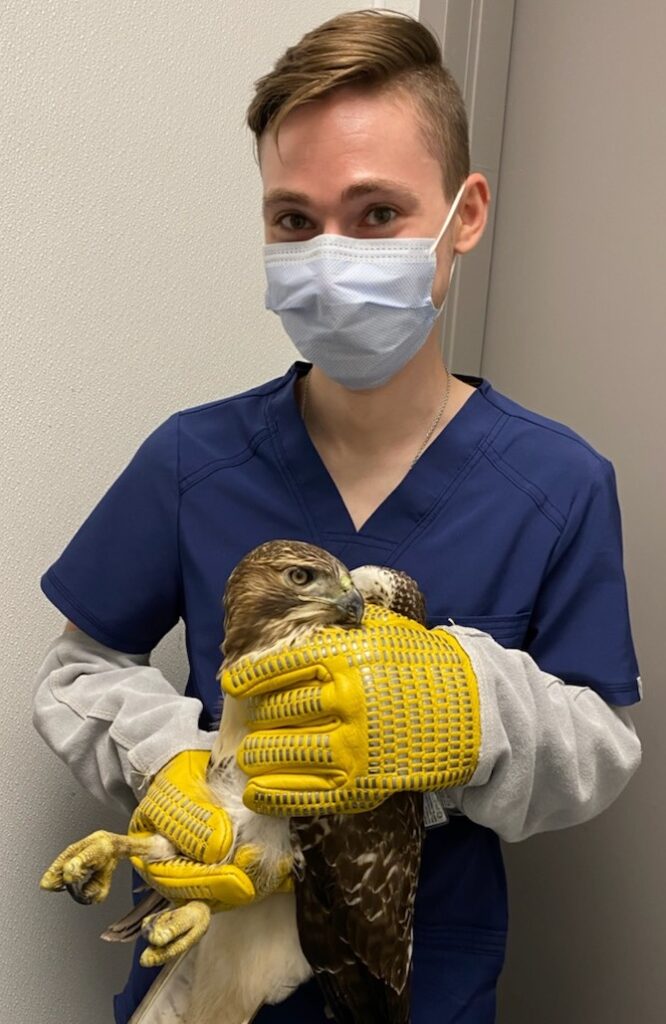
Allison Wallace, VM 24:  

My New Year’s Resolution for my time with the WMC is to have an owl as a patient and to participate in its successful rehabilitation and release. I would also like to participate in a surgical procedure.  

Danielle Money, VM 24:  

I want to make the best of my last two months in the clinic. I have enjoyed my time as a volunteer so much and I am sincerely going to miss it. (Third year students will be moving on from the program in March of 2023 as they start clinical rotations).  

Billy Wright, VM 24:  

I want to help a first-year student confidently triage an incoming patient on their own.  

Brianna Huff, VM 25, soon to be senior WMC student manager:  

My goal is to make sure the incoming manager feels welcomed and has the resources necessary to start the year off right!  
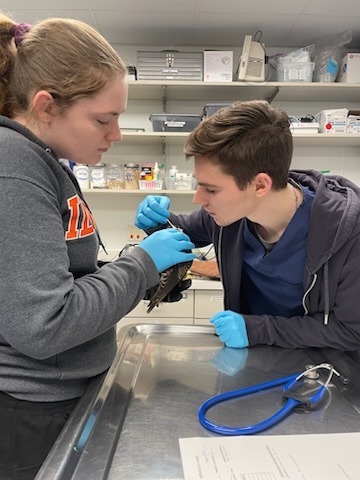
Tyson Jenkins, VM 26, soon to be junior WMC student manager:  

I would like to improve my ability to formulate a treatment and diagnostic plan based off the findings of the triage exam. I also want to sharpen my blood drawing skills on smaller patients.  

Christina Parsnick, VM 25:  

I want to work on my ophthalmic exam skills!  

Jacquelyn Merx, VM 26:  

I want to keep sharing knowledge about wildlife through social media and conversations with friends, family, and others. This will help increase knowledge and awareness on issues animals face and help people learn when to help and how to help.  

I also want to learn more about reptiles and amphibians this year. Besides turtles, I really don’t know much about these animals. We recently had a salamander come through the clinic and it made me realize that I need to become more familiar with our local reptiles and amphibians and their care. This will allow me to give them the best care possible and to help educate others in the future. 

Haley Kenyon, VM 25:  

Unfortunately, I have had a string of cases where the animals are so severely injured or ill that the most appropriate and compassionate measure to take was humane euthanasia. Due to this, I am hopeful that I will receive a case where the animal is able to be successfully rehabilitated and then released back into the wild.   
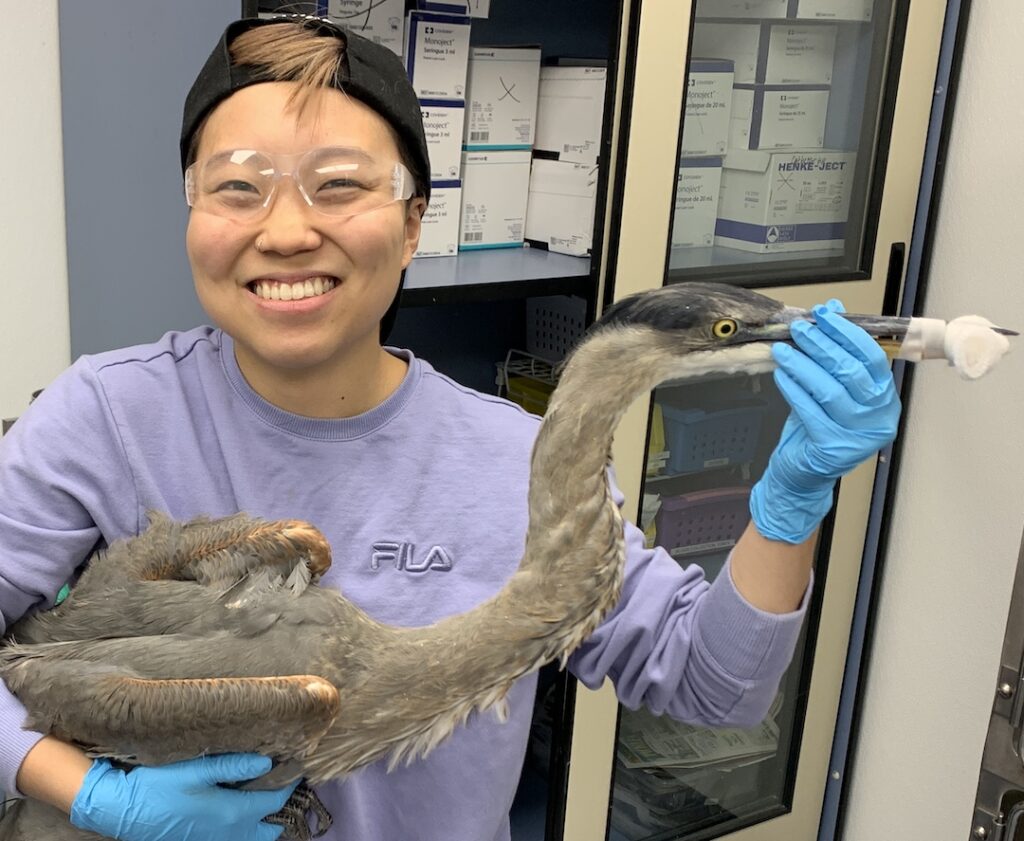
Fayth Kim, VM 24:  

As a team leader, I want to make the best out of the year and help the students on my team feel more comfortable making treatment plans for their patients.  
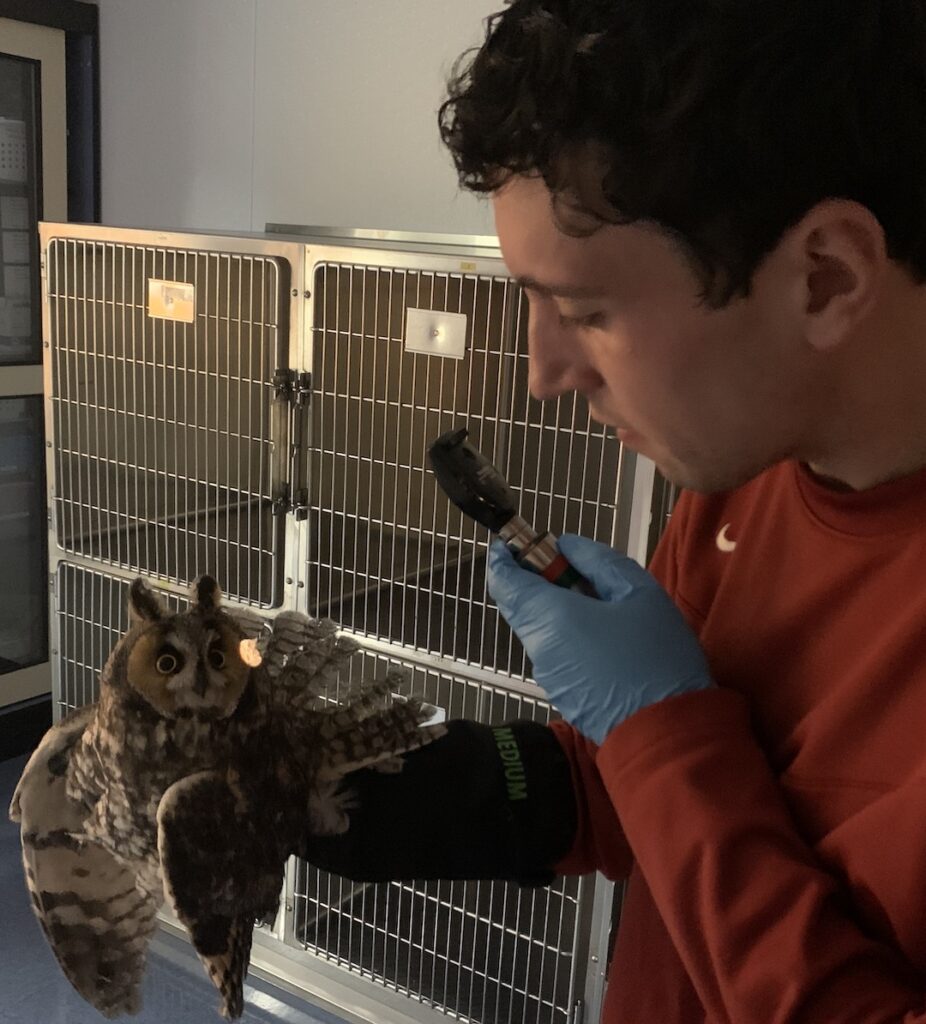
Hassan Hanna, VM 25:  

My top three resolutions are to be a primary case manager caring for a North American River Otter, to be well rounded and knowledgeable about wildlife and to be able to rattle off random bird facts at dinner. I would also like to strengthen some of my clinical skills including blood draws, diagnostic methods, and sample collection.  

Amanda Wong, DVM, ZCA Resident II:  

I would like to participate in more surgical procedures with students to help them feel more comfortable with potentially complex treatment options for wildlife.  

As for myself, my WMC New Year’s Resolution is to continue to improve the program as the current senior student manager. I hope those that follow in my footsteps feel comfortable taking on the role of the manager and enjoy being in the position they hold. We are all excited to see what the new year has in store for us at the Wildlife Medical Clinic!  

Written by Chloe Dupleix, current senior WMC student manager.
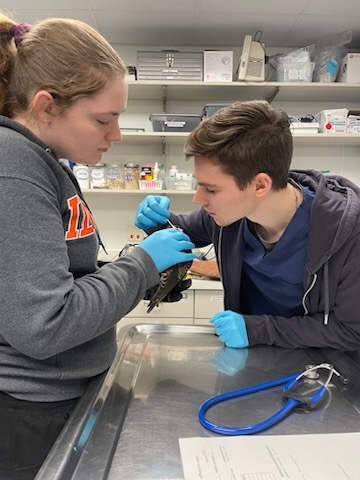
Hello to our new Manager!

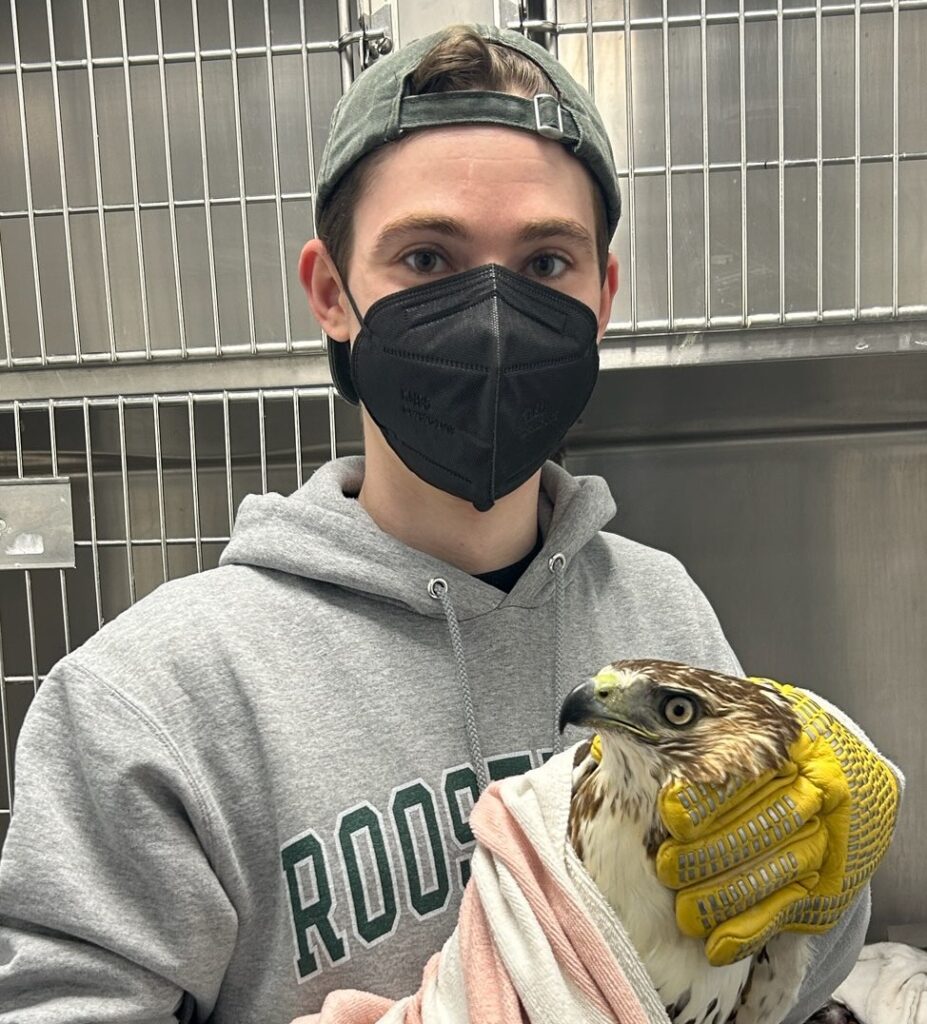
We are excited to announce our new incoming junior manager: Tyson Jenkins, class of 2026. Over the next 8 weeks, he will be training alongside our current managers so that he is ready to fill his manager role in March, when our current senior manager, Chloe Dupleix, heads off to clinics. 

We wanted to learn a little more about Tyson, so we asked him a few questions that you can see below! 

Where are you from? What college did you attend for your undergraduate degree? What degree did you earn and what year did you graduate? 

I grew up in South Elgin, IL, and then lived in Oak Park, IL for two years. I attended Roosevelt University in Chicago, where I received my Bachelor of Science in Biology, with a concentration in conservation biology and a chemistry minor in August 2021. 

Tell us about your veterinary career journey so far. 

My entire life, I’ve been surrounded by animals. From dogs to fish to a cockatiel that’s older than I am (and still going strong), my family has always had a wide variety of pets. I started working with animals in an official capacity when I was 16 years old, as a caretaker for a park district ambassador program mainly focused on rescued reptiles and amphibians. I stayed there until the program was closed indefinitely to prevent the spread of COVID-19. Knowing I wanted to work with animals in some capacity, I applied for a kennel technician position at a veterinary clinic. It was there that I fell in love with the profession and decided that veterinary medicine was the path for me. I ended up taking a gap year to strengthen my vet school application, working in various roles at multiple clinics in the Chicagoland area. 

What field of veterinary medicine are you interested in? 

I am interested in zoological and wildlife medicine with a focus on conservation. I absolutely love all the weird, wild, and wonderful animals that aren’t often in the spotlight, and the unique challenges their care poses. Now, more than ever, these animals need conscientious human intervention to circumvent extinction, and my goal is to be at the forefront of this process. 

What made you want to join the WMC? 

There are very few opportunities for vet students to practice hands-on clinical medicine in their first two-three years of school, and even fewer opportunities to practice on non-traditional species. The WMC offers those exceptional opportunities in an environment dedicated to safe learning. I’ll never forget catching a raptor on my very first day in the clinic, or the joy I felt the first time one of my patients was released. Even if you don’t want to focus on wildlife in your future career, the WMC teaches you the skills you need to manage any case. 

Why did you want to become a manager at the WMC? 

Every single time I walk into the WMC I learn something new. I’ve only spent one semester there, but the skills and knowledge I have gained have been invaluable, and I know I’ve only just started to scratch the surface. The community of students and faculty working behind the scenes at the clinic inspires me every day to do more, learn more, and teach more. The manager position is an opportunity not only to do those things, but also to lend a hand in making the clinic, the local community, and the world a better place. 

What has been a favorite memory/patient in the WMC? 

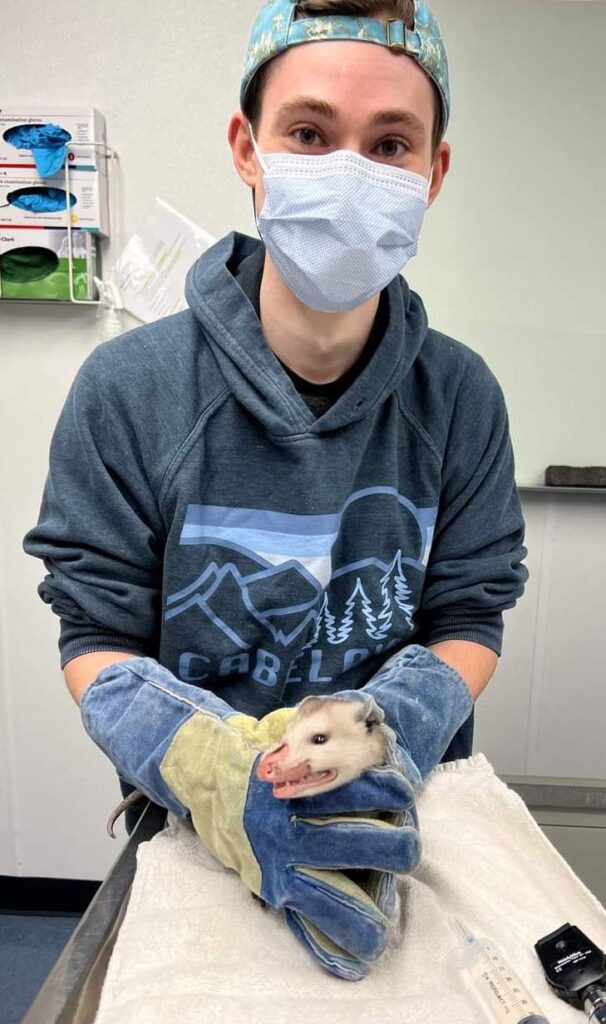
One of my favorite patients was a juvenile Virginia opossum that was found in a local home improvement store with symmetrical abrasions and lacerations along his face, gums, and front feet. We suspected he had gotten his face stuck in some sort of trap and had hurt himself escaping, because he was otherwise very healthy and quite feisty. He was started on antibiotics and pain meds as well as cold laser therapy, a treatment that stimulates wound healing. After two weeks of care his wounds had healed and he was released back into the wild! 

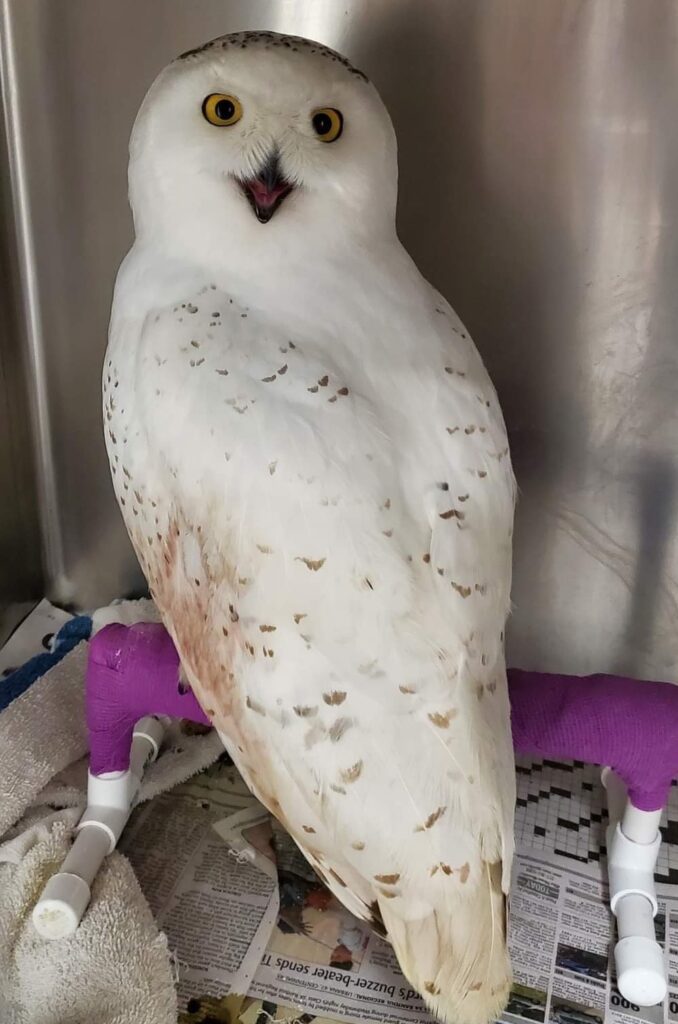
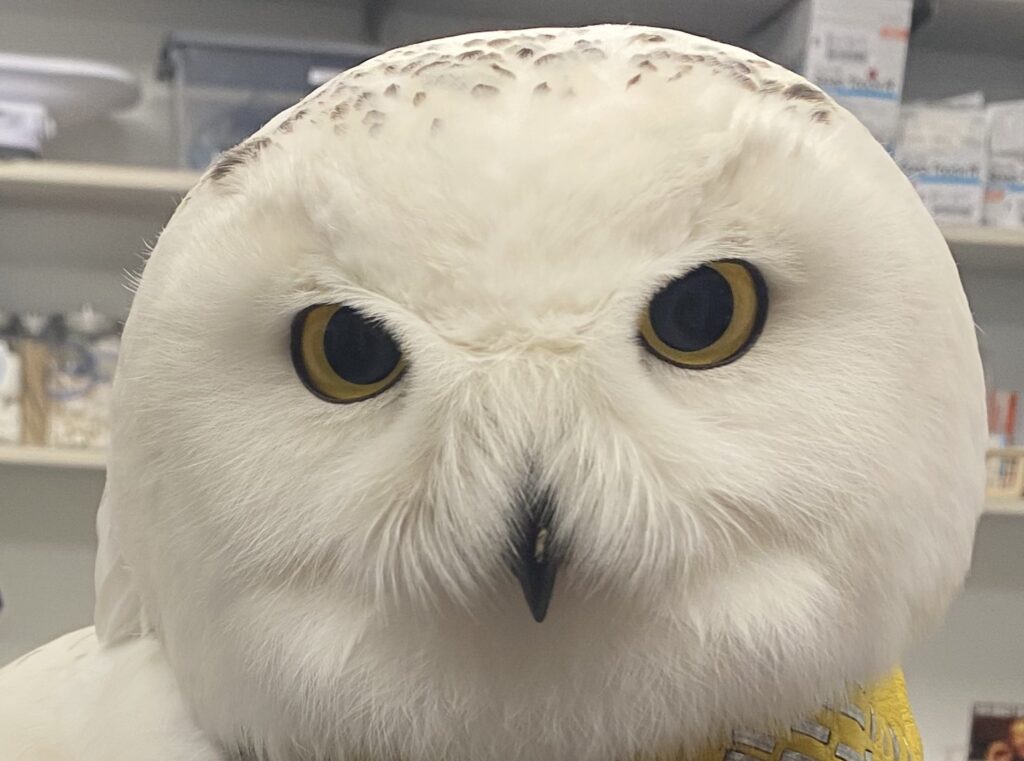
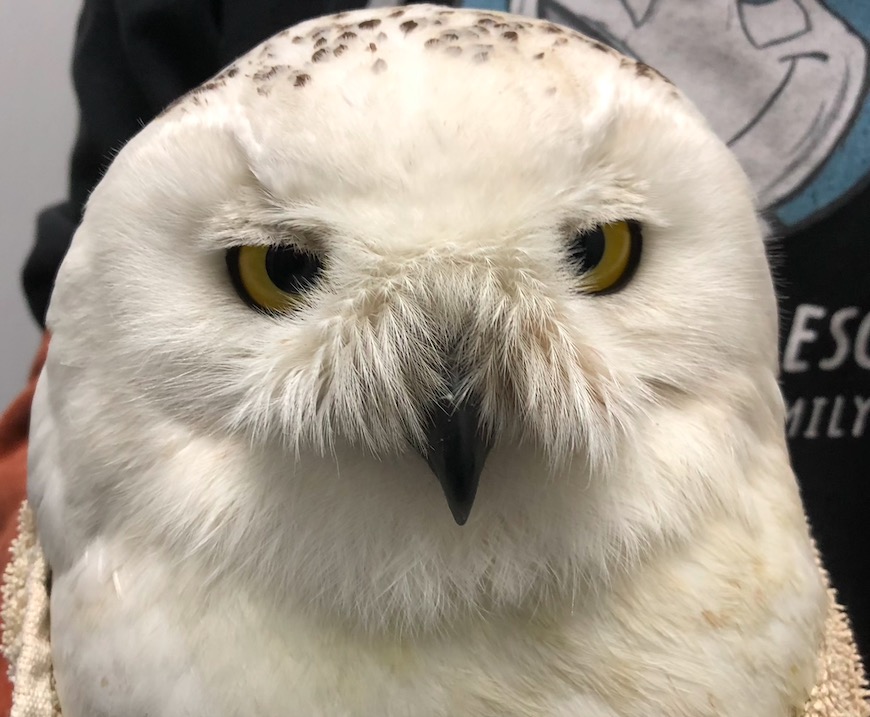
The Snowy Owl

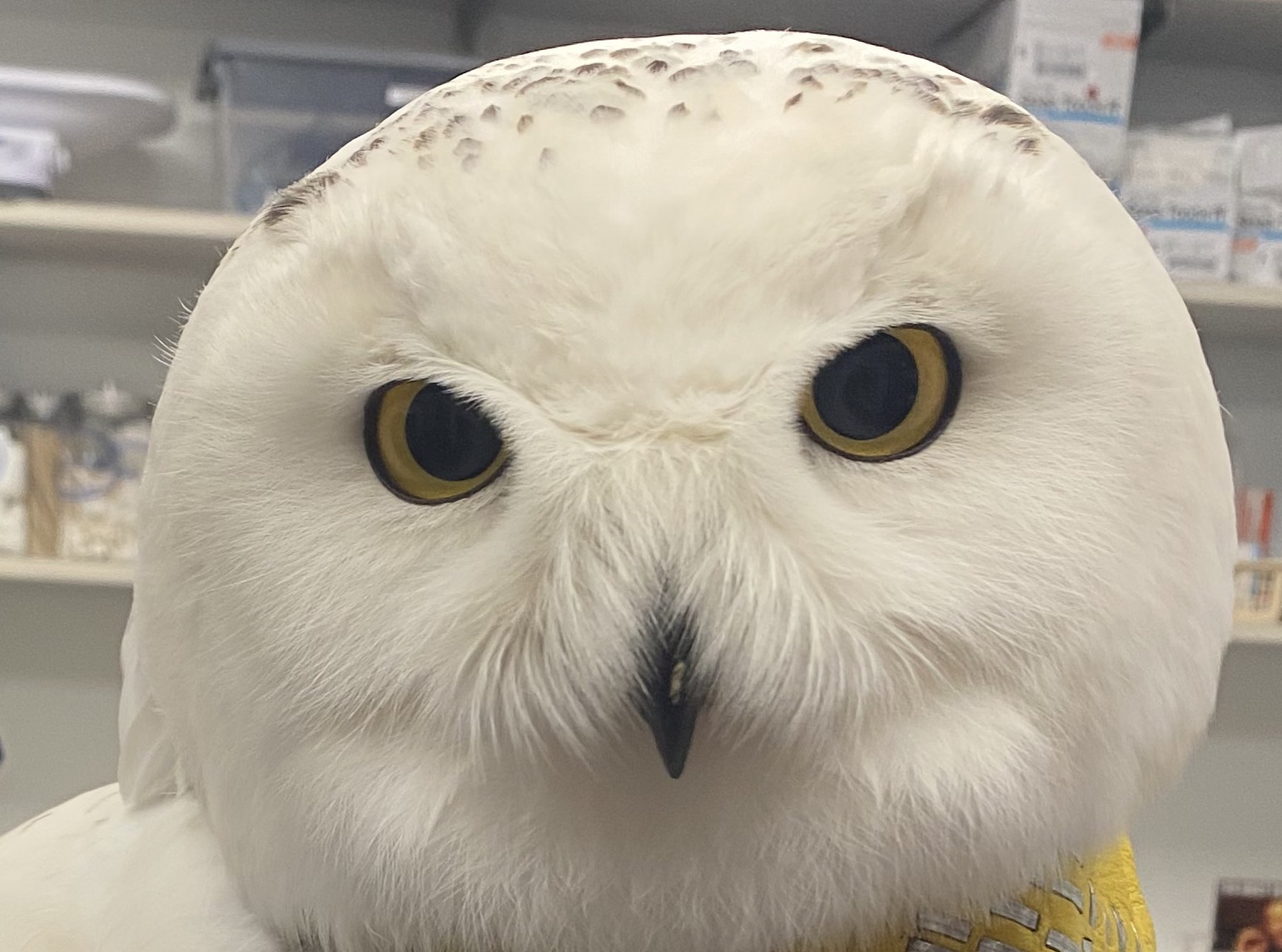
As winter creeps in, bringing its brisk winds and snowy skies, this feature is about one animal who does not mind these chills! The snowy owl (Bubo scandiacus) which is an Arctic species that periodically may be seen in Illinois during the winter months. Their characteristic white feathers and dark flecks are perfect in camouflaging this bird in the white winter snow. With a close eye or maybe some binoculars to help, you might be lucky enough to spot a snowy owl this winter. This species migrates south from the Arctic, coming as far as central Illinois in search of food. While they do not have consistent migration patterns like many other species of bird in Illinois, the snowy owl movements can be described as irruptions. This occurs after an increase in food availability causes an increase in breeding, and thus population growth. As their population increases, owls must fly longer distances in search of available food in less crowded hunting grounds.  

Now you might be wondering how you can best increase your chances of spotting one of these mysterious winter owls! They are often found in prairies, fields, or lake edges where they can easily spot their prey running across the snow-covered ground. While they typically feed on small prey such as lemmings and voles, they will not turn down larger prey such as ducks and artic hare. Snowy owls are a diurnal species, meaning they are active during daylight hours, which will help increase your chances of seeing one. In Illinois, we get an occasional visitor near the Champaign-Urbana area, but they are more common closer to Lake Michigan by Montrose Harbor.  

The Wildlife Medical Clinic has had the privilege of aiding in the care and rehabilitation of these mighty owls the past two winters! While they are a magnificent sight to see, we are grateful for all the unique Illinois wildlife that makes their way into our areas seasonally. Keep your eyes peeled! The snowy owl does not stay long before making its way back to the Arctic to nest before spring comes.  

Written by Ellie Petree, class of 2024.

Wildlife Medical Clinic
John A. Coyne South Clinic
2100 South Goodwin Avenue
Urbana, IL 61801
217-244-1195