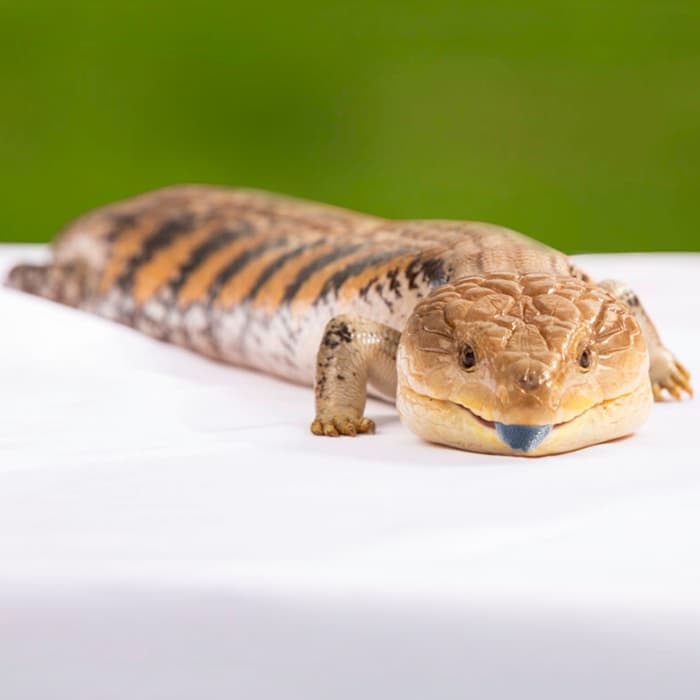
Sydney Oliveira, WMC Program Coordinator, brought Onslo (Blue Tongued Skink), a Wildlife Medical Clinic animal ambassador along on her visit to CiLiving. He is one of eleven ambassador animals that individuals may have the pleasure of meeting and learning about at the upcoming Vet Med Open House. The open house will take place Sunday, October 5, from 10am-4pm.
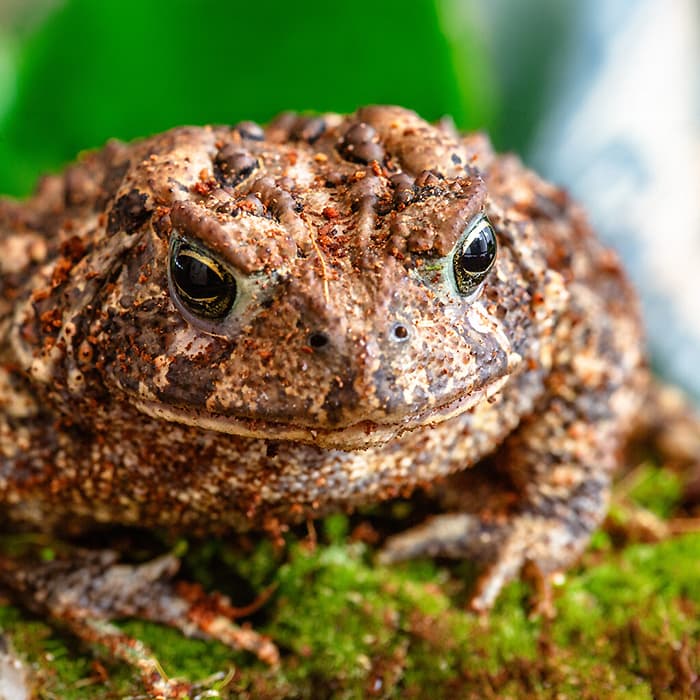
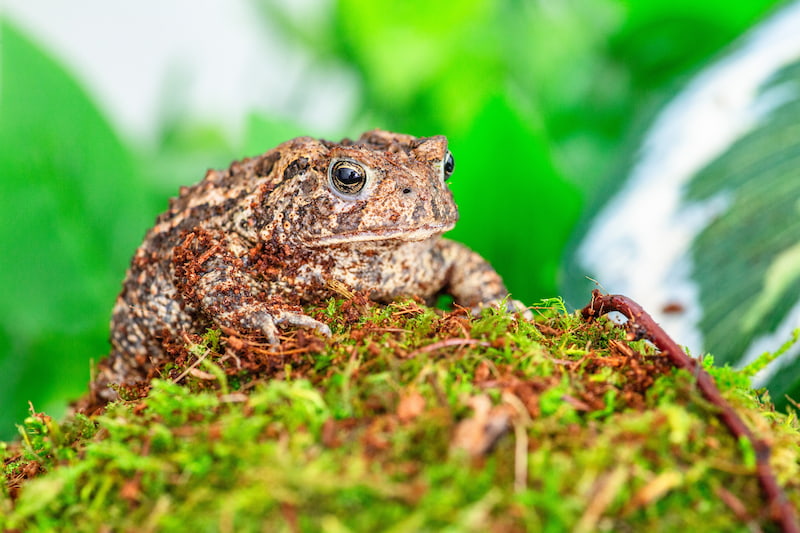
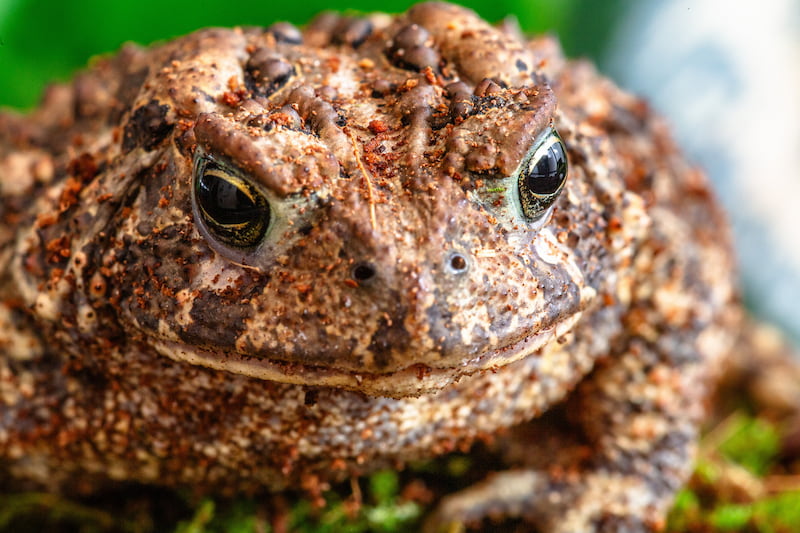
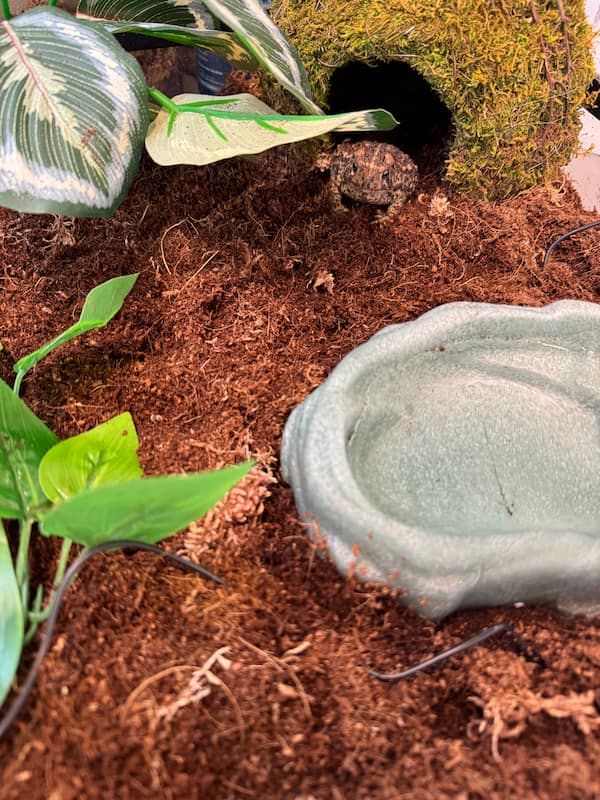
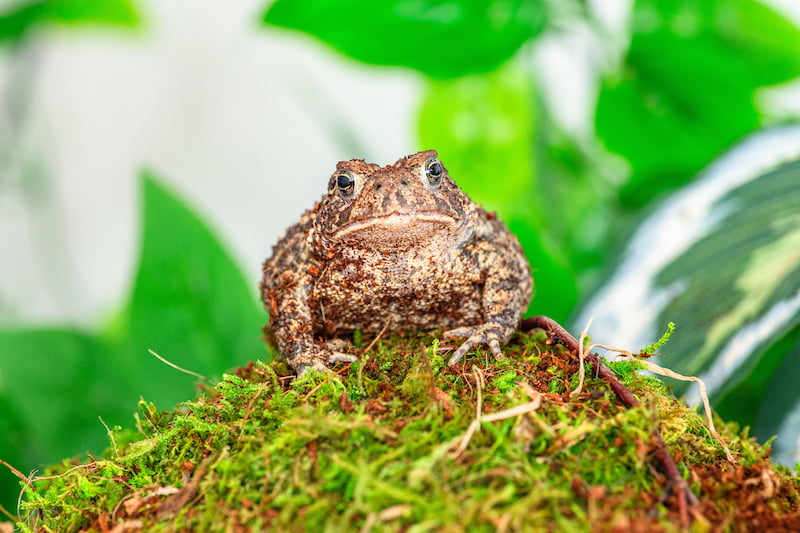
Sydney Oliveira, WMC Program Coordinator went on CiLiving with our American Toad ambassador, “Basil”. Follow along to learn about Basil and American Toads.
The Wildlife Medical Clinic’s Ambassador Program is absolutely thrilled to introduce our newest member – Basil the American toad!
Basil was found injured in Meadowbrook Park in Urbana, IL in late October 2024. They were then brought to the Wildlife Medical Clinic by a community member for treatment. On our initial exam, it was suspected that there was an open fracture of their right hind limb. An additional fracture of one of their toes was found on that same leg. The treatment team administered pain medications, started a course of antibiotics, and arranged for them to be quickly and fully assessed by one of the WMC veterinarians.
The next day, these injuries were confirmed by taking radiographs. Since surgical repair was likely to be unsuccessful, amputation of the hindlimb was determined to be the best course of action. However, the WMC would not be able to release them into the wild with only three legs. This is because they would be at a disadvantage for getting around their environment, hunting, and escaping from predators. Conversations quickly turned to our ambassador program, and whether we would be willing to take on another resident. We eagerly agreed, and the veterinary team proceeded with the leg amputation on Halloween – October 31, 2024. The toad was kept in the WMC for a healing and recovery period of about six weeks.
Becoming an ambassatoad
Once we moved our newest education animal into the Ambassador building, we asked the WMC clinic and ambassador volunteers to submit name ideas. We received dozens of suggestions and narrowed it down to a handful for the clinic to vote on. The winner was Basil, with the British pronunciation, so it rhymes with “dazzle.”
Basil has adjusted well to living in the ambassador building. They enjoy burying themselves in the substrate, hunting for crickets and Dubia roaches, and getting daily soaks. In our care, having only three legs does not appear to be having any negative effects. We do not know if Basil is a male or female, but suspect we will find out soon. Toads start displaying sex-specific behaviors during breeding season in spring and early summer. If Basil is a male, we would expect their throat to darken. We would also hear them start singing to attract a mate, which would sound like a prolonged, high-pitched trill.
Croaking forward
As far as we can tell, this toad is our first amphibian ambassador in the WMC. We are excited that our ambassador team volunteers have the opportunity to learn the unique aspects of amphibian care. For instance, it is important to use gloves covered in dechlorinated water when handling. We are especially excited to bring Basil to our educational programs to teach the community about American toads. They have an important role in the ecosystem and we would love to teach you what to do if you come across an injured amphibian in nature!
Sydney Oliveira, WMC Program Coordinator and Sarah Hollander, vet student and Wildlife Ambassador Care Coordinator, introduce us to one of the WMC ambassadors, Maize, the corn snake. Learn about Maize and why snakes are so important in the environment.
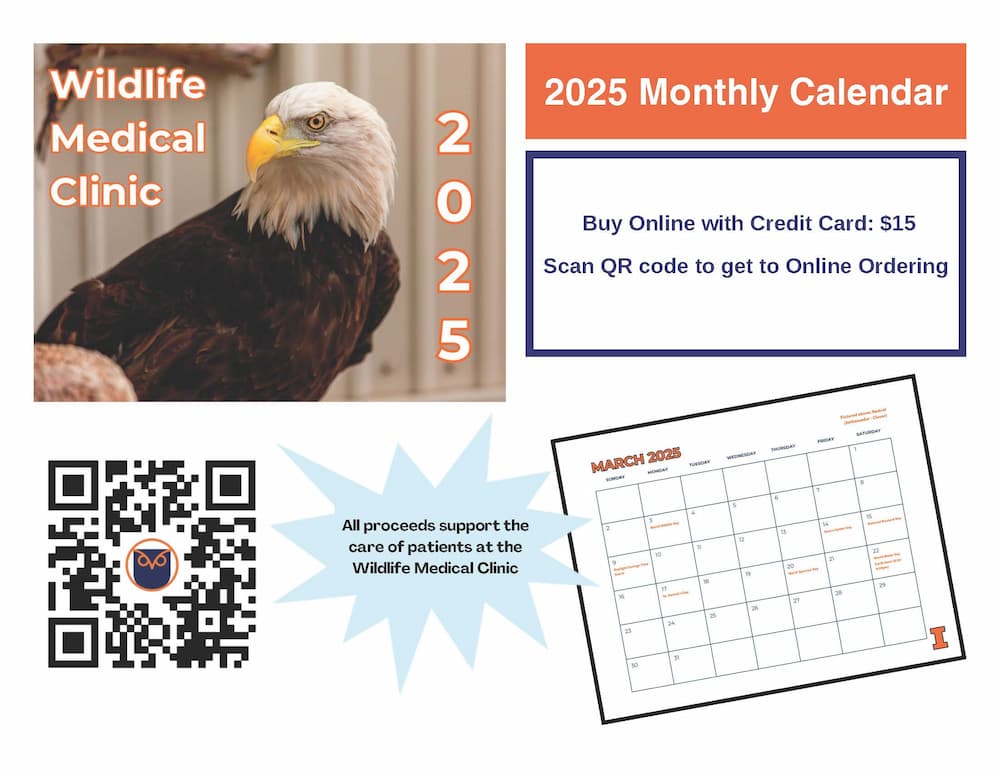
It’s that time of year where we are getting into the Holiday season. As you are shopping and looking for gifts for loved ones, keep in mind, the Wildlife Medical Clinic has some unique giving opportunities such as our adopt an ambassador program, our sponsor a day program, and currently our 2025 calendar is available for purchase. What’s best about giving to the clinic is the recipient not only gets some very unique items but the money donated to the clinic goes directly towards food, supplies, and medical treatment of our resident ambassador animals and wildlife patients.
Adopt an Ambassador Program
There are four levels or tiers you can choose from for your adoption. Each level adds to the items you receive.
Tier 1: 5×7 color photo of the adopted ambassador, certificate of adoption, ambassador story, $50.
Tier 2: All of Tier 1, plus Wildlife Medical Clinic magnet, $100.
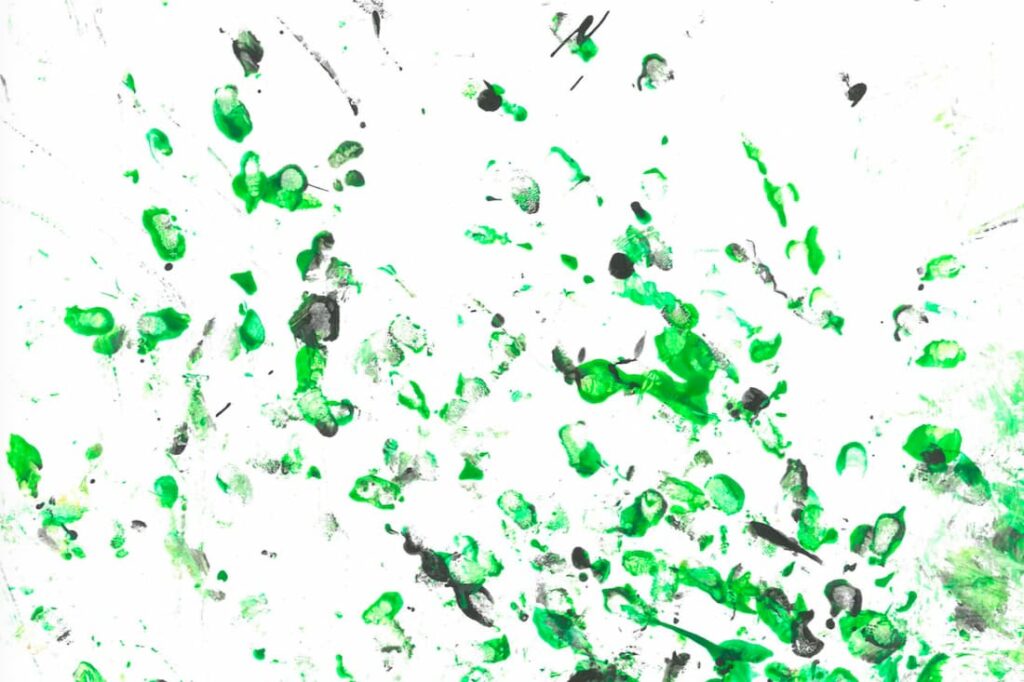
Tier 3: All of Tier 2, plus 5×7 painting made by the ambassador animal, $150.
Tier 4: All of Tier 3, plus personalized video of the ambassador animal, $250.
Sponsor a Day
For as little as $350 you can select a day to cover the cost of care and medical treatment for the wildlife patients in the clinic. This also indirectly helps to provide hands on experience for our current veterinary student volunteers.
You can select a random day or one that has meaning to you. This also makes for a great gift for birthdays, anniversaries, or other holidays. The donor or person being gifted this will receive a certificate and recognition on our Facebook page for their gift.
2025 Wildlife Medical Clinic Calendar
Each year we create a calendar that highlights some of our wildlife patients and ambassador animals. This year we have some great images of 2024 wildlife patients and ambassadors, as well as some interesting animal days noted throughout the year. If interested in purchasing a calendar, you can pick one up at the Small Animal Clinic front desk and Vet Med South Clinic front desk when you bring your pet in for an appointment or these are also available online at go.illinois.edu/WMCCalendar, and they will be shipped directly to the address provided on the order form.
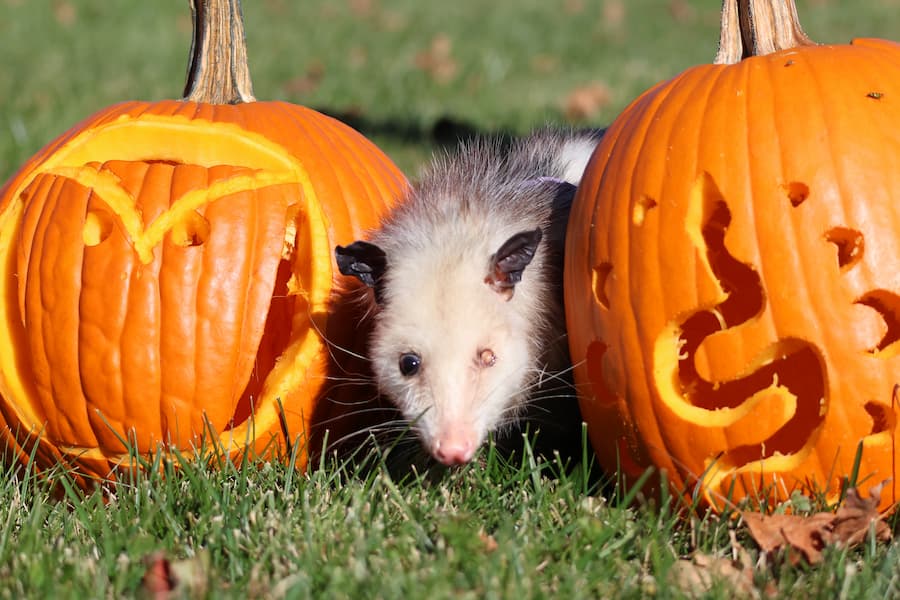
The Ambassador Team held their second annual pumpkin carving event last month. Since the ambassador volunteers primarily do their shifts individually or in pairs, social events are a great way to bond as a team and have fun outside of studying.
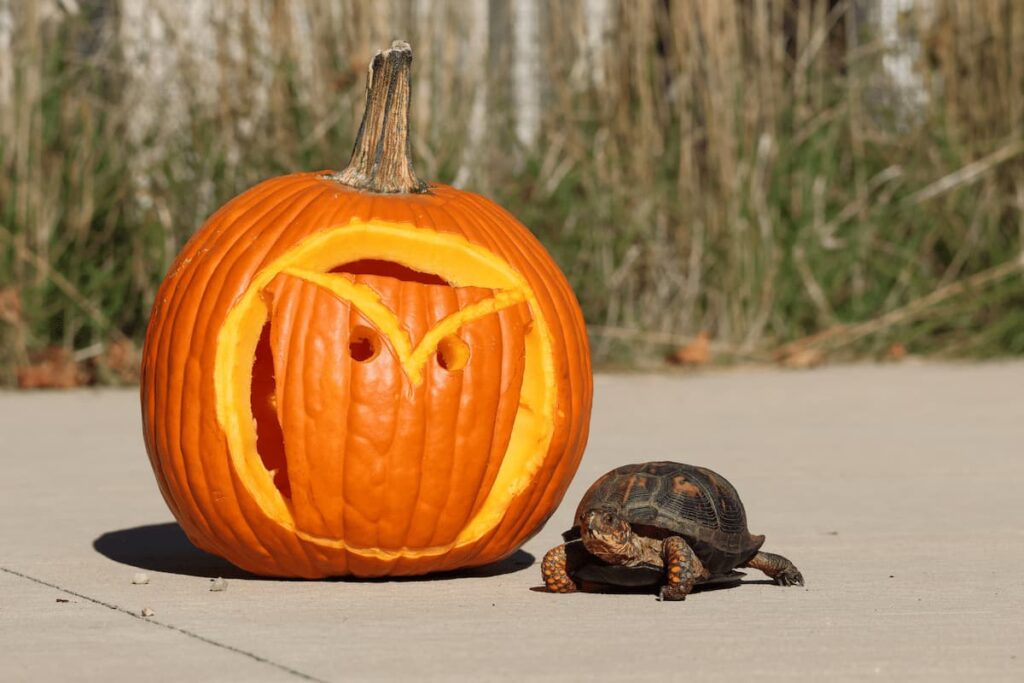
Our volunteers listened to a Halloween playlist, talked about our favorite Halloween movies, and carved 6 pumpkins. Patterns included an opossum sitting on a branch, a slithering snake, a classic jack-o-lantern, and the WMC logo! We also cut out bat silhouettes to hang up around the animal enclosures.
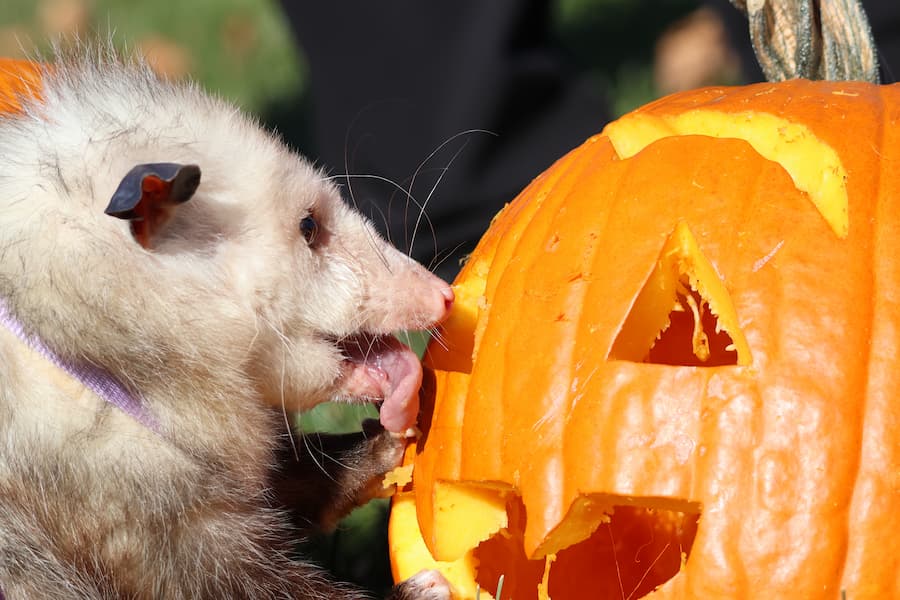
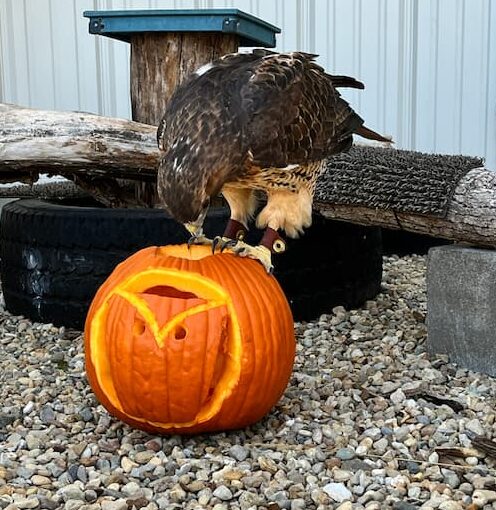
The fun really began when the pumpkins were completed – we introduced Hazel (Eastern box turtle), Onslo (blue-tongued skink), Petunia (Virginia opossum), and Odin (red-tailed hawk) to our creations. Petunia and Hazel both dove right in to tasting the pumpkins. Don’t worry – pumpkin is a safe food item for both of them! Onslo and Odin were not quite sure what to make of the pumpkins, but seemed to enjoy the outside time regardless.
Once everyone had their fill of pumpkin, we moved the pumpkins into our raptor enclosures. Ruby (red-tailed hawk) got right to exploring her pumpkin but lost interest after she realized there were no snacks hidden in the pumpkin.
We hope you enjoy the pictures from this event and that you all had a safe and spooky Halloween!
In addition to the daily husbandry of our resident ambassador animals, we also provide training and enrichment. The goal of enrichment is to provide mental (and sometimes physically involved) stimulation while encouraging species specific behaviors. With our program, just like in all other managed care settings, we provide enrichment to our animals. We have an enrichment calendar where we have a rotation of different types and categories of enrichment that volunteers use to guide their enrichment activities. Every facility will have their own enrichment protocols/calendars to fit the needs of their animals. Collaboration often occurs between centers and other programs and this is a good resource for us to find new ideas for enrichment for our animals. Enrichment can make a big impact on the lives of our animals, and we strive to make it as new, exciting, and interactive as possible. Enrichment will vary depending on the species of the animal, their involvement in past enrichment activities, their comfort with volunteers and other interactions, and the ambassador’s own personalities.
Favorite Enrichment
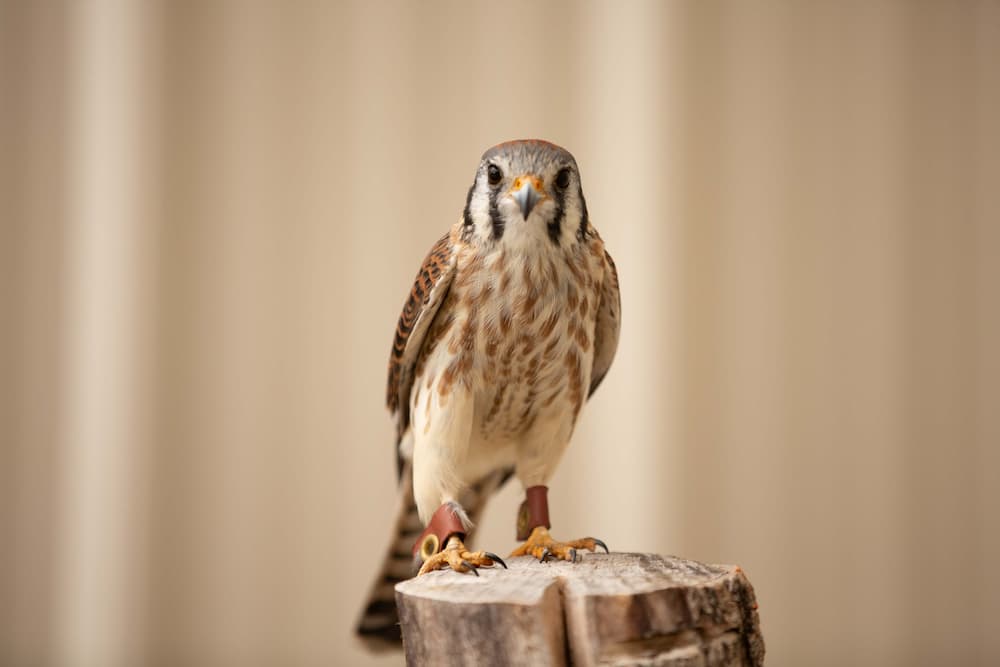
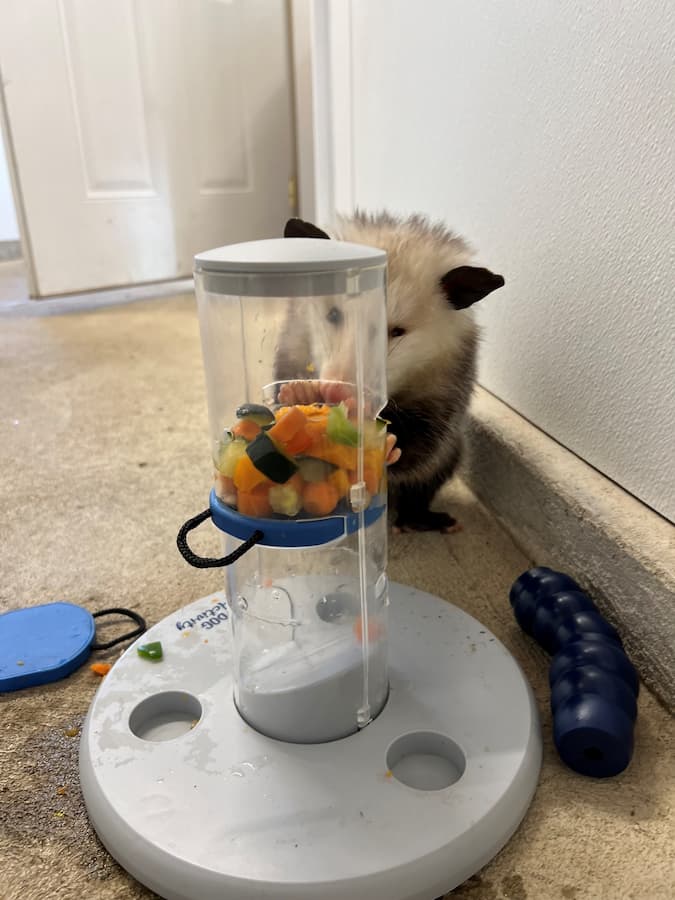
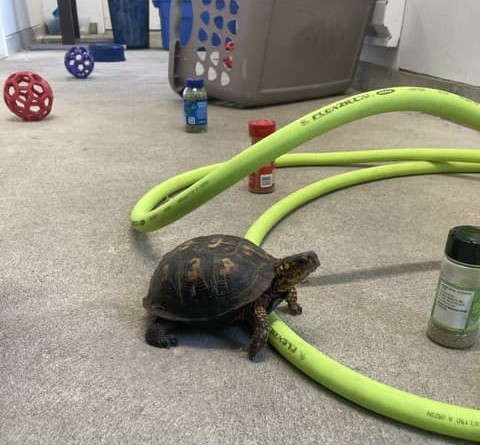
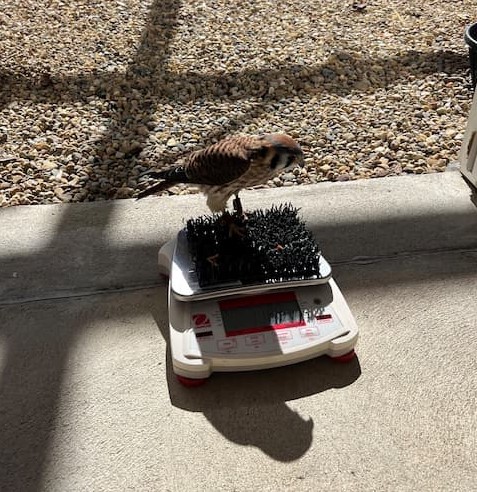
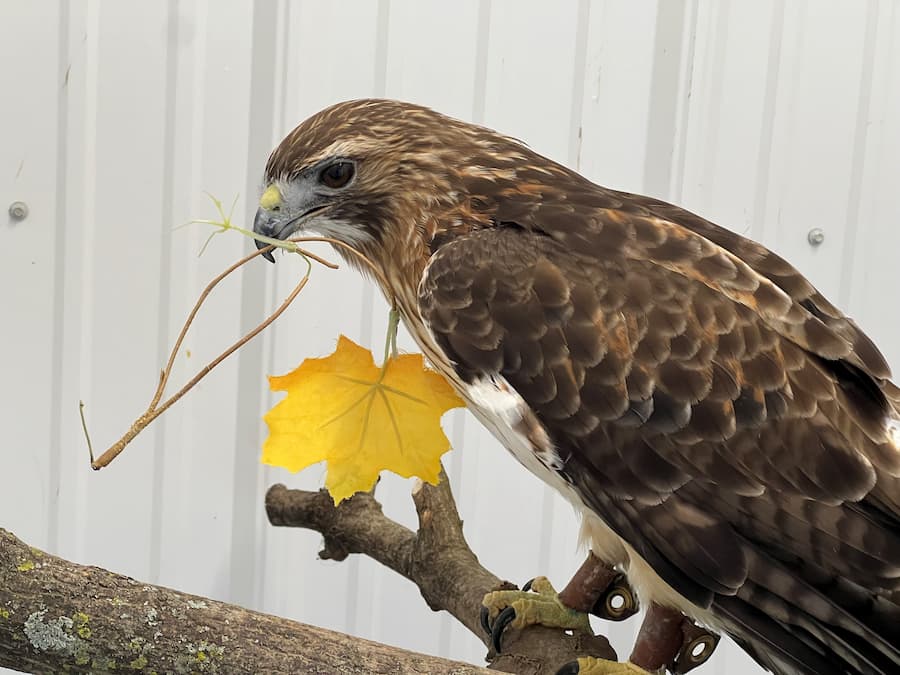
Not only do we account for species specific natural behaviors, but we look at the individual personality of each animal in our care to determine appropriate enrichment for them. Over the years, we have kept track of what enrichment was favorable and what enrichment was not, allowing us to personalize their enrichment to ensure they are benefiting from what we are adding to their environment. Petunia, our Virginia opossum, loves food puzzles, foraging, new scents, and exploring. Ruby, one of our red-tailed hawks, loves to shred things and this encourages her species-specific behaviors. Hazel, our eastern box turtle, along with Onslo our blue-tongued skink, have been working on their obstacle course skills and have been maneuvering them well. River and Vara prefer more auditory enrichment over physical enrichment items. Odin, our other red-tailed hawk, enjoys a wide variety of enrichment from seasonal decorations to foraging to music. Maize and Caduceus, our snakes, explore and climb to new places. Clover, our American Kestrel, is extremely inquisitive and loves finding new items and decorations in her enclosure. While I’ve listed each ambassadors most interacted with type of enrichment, they all get a rotating variety of enrichment. This ensures that we are not just giving one type of enrichment so they are getting variety in their daily life as they would experience in the wild.
Training
Training can also be enriching to our animals and we do train on glove with some of our raptor residents, while others have different kinds of training, such as target, crate, and scale training. For our training, we only use positive reinforcement techniques. We train for behaviors to help with educational program use or for husbandry and medical procedures which helps to decrease stress.
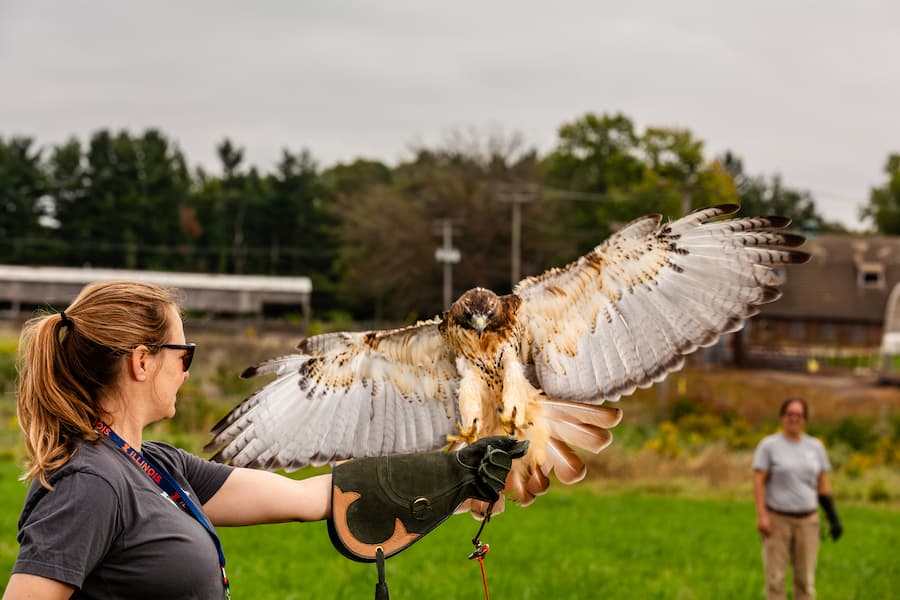
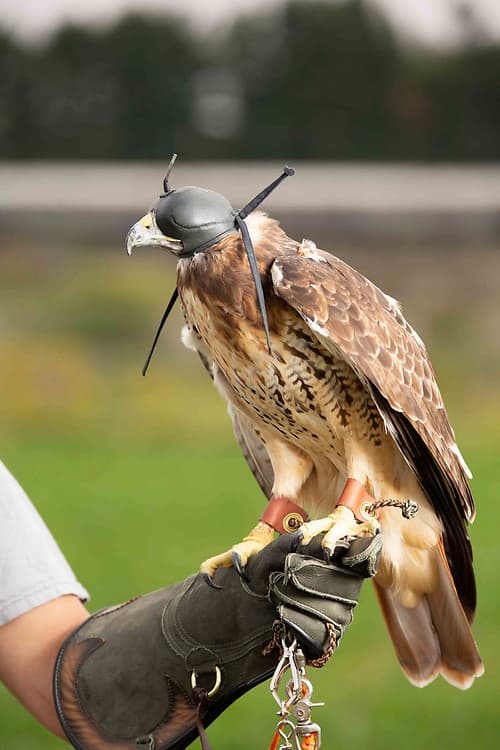
Training is very complex and has many facets, it can also be very rewarding and enriching for the animals. For example, Ruby and Odin enjoy walks outside because they are glove trained. Sydney, along with some of our volunteers, are able to train with them throughout the week to ensure they remain comfortable and solid with the behaviors they are trained on and work to train new behaviors as needed. With the new addition of Sarah Spang to our team, a falconer, we have been able to add new techniques to our training with the raptors, particularly Ruby. We have seen that Ruby very much enjoys the extra training and has greatly benefited from it.
Enrichment, Rewarding for all!
Enrichment is my favorite part about working in a managed care setting, I love letting my creativity lead the way. Whether I am thinking of new ways to make food puzzles, working on paper mache for the animals, finding new configurations and decorations in the enclosure, it is a wonderful creative outlet. It is also very rewarding seeing how the animals interact with the enrichment I created, especially when it brings out a targeted species-specific behavior and was mentally stimulating for the animal. We are always evaluating and adjusting the enrichment that is given to our resident animals to try to maximize the benefits of enrichment. So, next time you visit us or a different managed care setting, see if you can figure out what enrichment is being utilized!
Written By: Roxanne, Wildlife Ambassador Care Coordinator and Class of 2027
Join Sydney Oliveira, WMC Program Coordinator and Jacob Dalen, Wildlife Ambassador Care Coordinator and vet student, Class of 2026 as they talk about not so scary Halloween creatures. Ambassador Virginia Opossum, Petunia, joined them on this segment.
Join Sydney Oliveira, WMC Program Coordinator and Sarah Hollander, Wildlife Ambassador Care Coordinator and vet student, class of 2026 as they talk about the upcoming Vet Med open house.