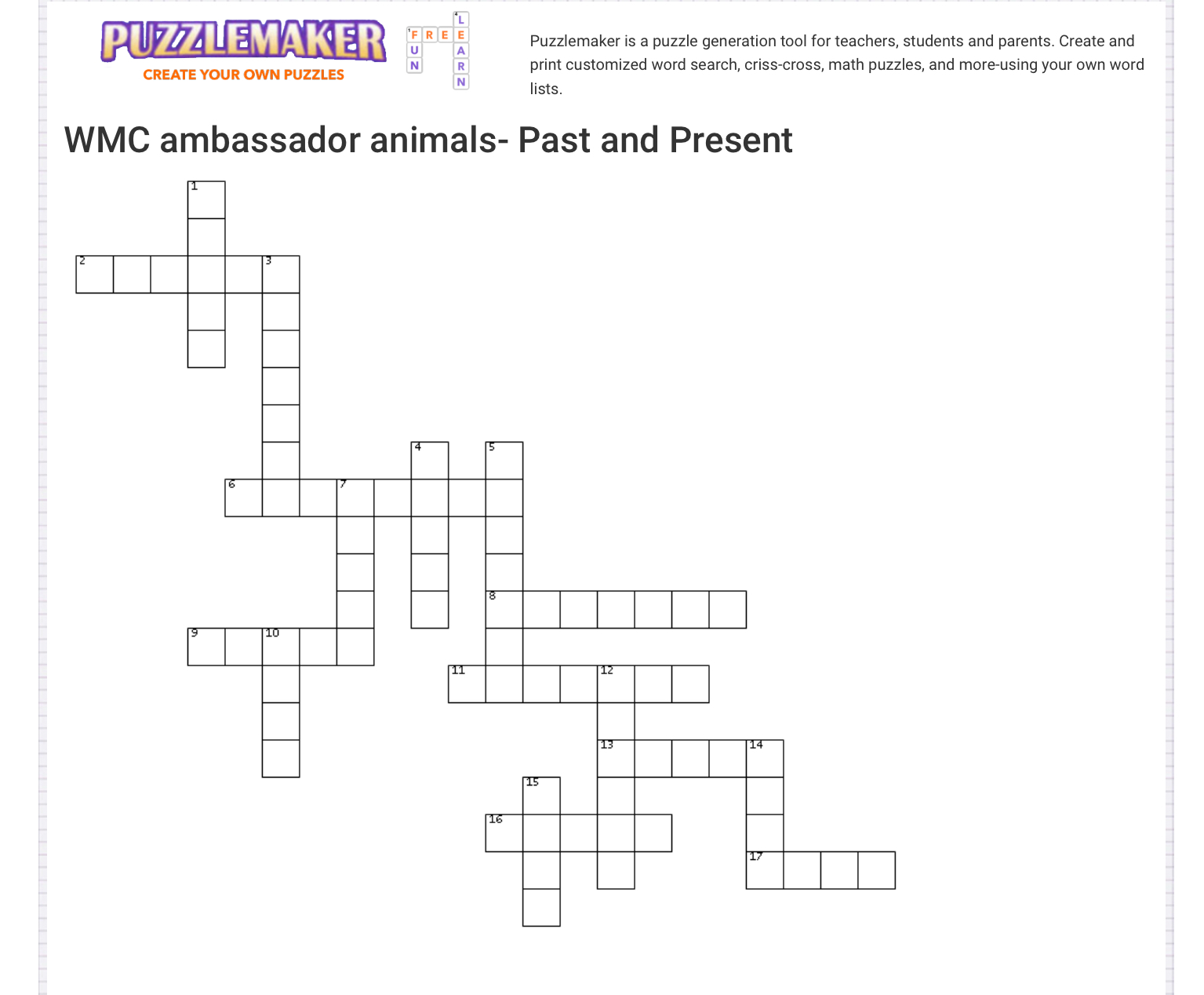
Want to test your skills and see how much you know about our ambassador animals? Try out this cool crosswords puzzle and put your knowledge to the test! Feel free to go on our Facebook page and tell us which question was your favorite!
Answer Key:
Want to test your skills and see how much you know about our ambassador animals? Try out this cool crosswords puzzle and put your knowledge to the test! Feel free to go on our Facebook page and tell us which question was your favorite!
Answer Key:

What do wild animals do during the winter? Some migrate to other parts of the world and some stay right here year round. Join CiLiving, Dr. Stephany Lewis, and student, Tyson Jenkins to learn what happens when things get colder.
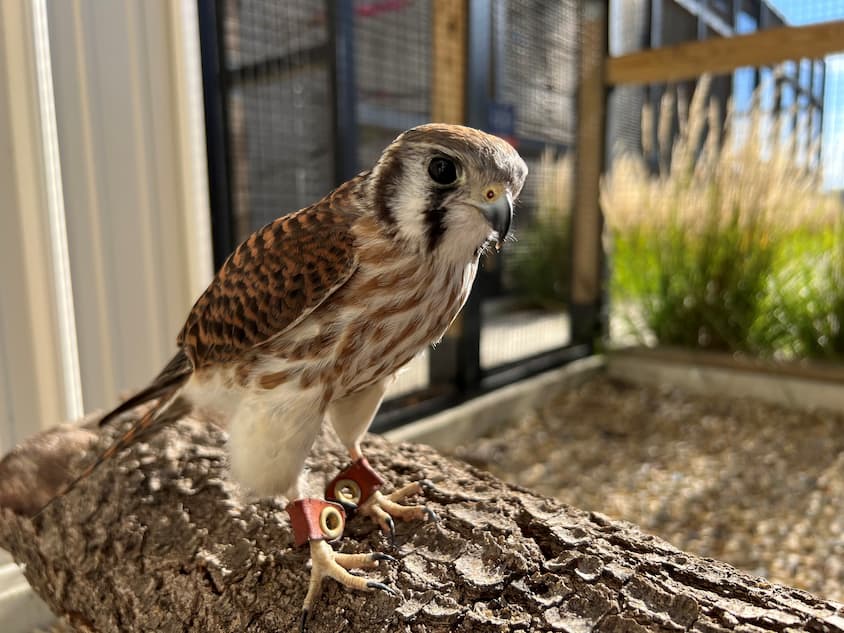
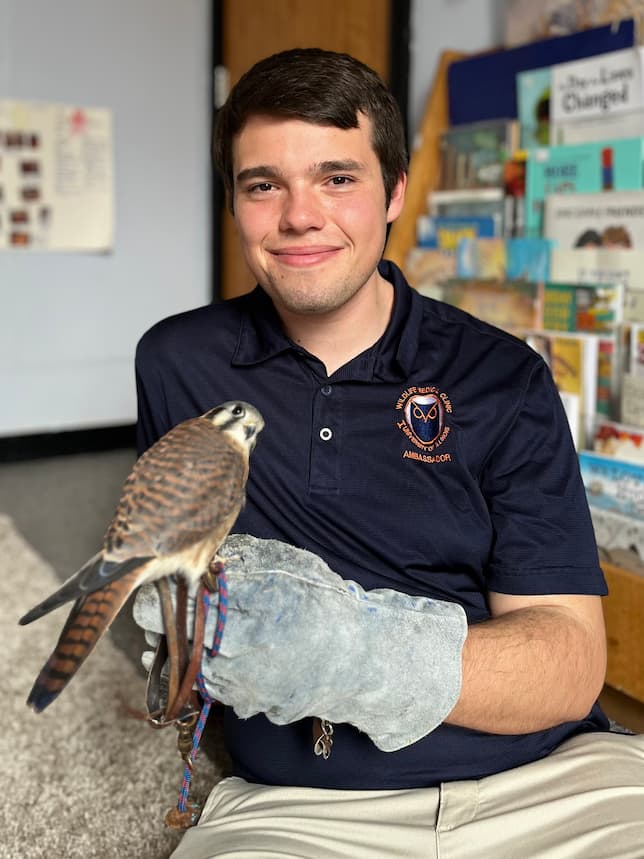
The Wildlife Medical Clinic’s Ambassador Program is delighted to introduce you to our newest member – Clover the American kestrel!
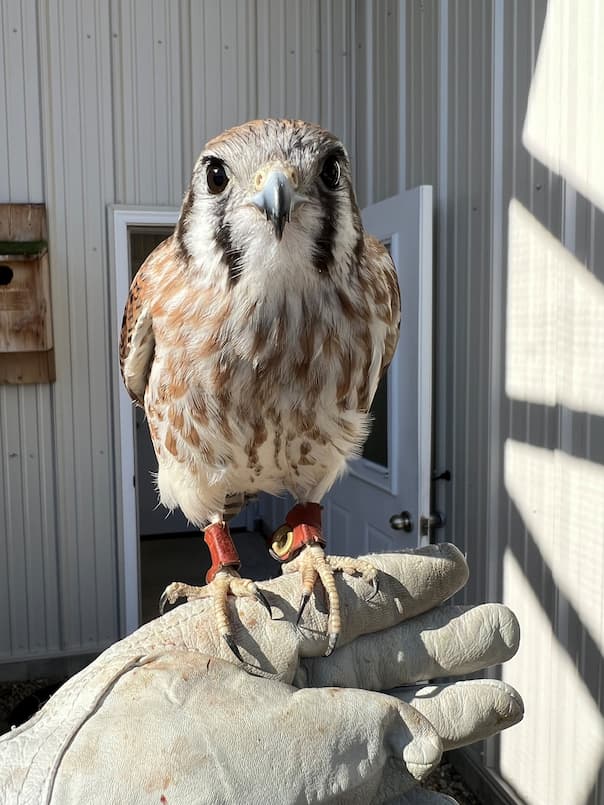
Why Clover, you ask? Well, we are very fortunate to have support from the University and surrounding area and are thrilled that a generous community member, Rich Sivicek, helped us to name her. Our previous American kestrels have had rhyming names (Pistol before Thistle). To continue with related names, since Thistle is a type of plant, another plant-themed name was selected, being Clover!
Clover was initially found in Springfield, Illinois, and brought to the Illinois Raptor Center in Decatur, Illinois, in the middle of June. She had only minor injuries but also presented with neurological symptoms. It was thought that she may have flown into a wall or window but with no improvement of her neurological symptoms after a couple weeks, IRC transferred her to the Wildlife Medical Clinic on the first of July.
At the Wildlife Medical Clinic, we assessed the same mild injuries but did not find anything out of the ordinary on radiographs, so nothing was broken or required surgical intervention. After a few days of keeping her and managing potential pain, we started to see that she did not act like a normal kestrel should. She was eager to see people and would try to run towards us when her cage was opened instead of trying to get away from us, and she was not eager to fly. This habituation to humans meant that, even when healed, she would likely not be successful in the wild.
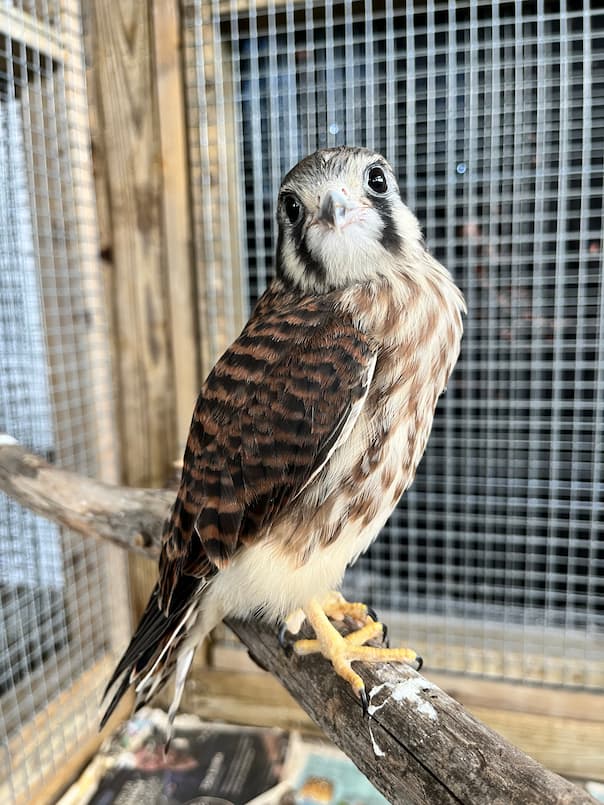
Due to her non-releasable status, we started looking around for a permanent placement for this little kestrel. While being kept at the WMC, we started reinforcing her comfort around people so that she would be comfortable wherever she ended up. She turned out to be very food motivated – she very quickly learned to perch on a small scale for stress-free weight checks as long as there was a bite of mouse for her afterwards. We admittedly became fond of her and, after many conversations with the WMC faculty and student volunteers, it was decided that we had a place for her in our Ambassador program. Our ambassador American kestrel Thistle was getting older, and we were hoping a new kestrel would put less strain on Thistle, so she could travel to fewer off-site programs and mainly be used for on-site programs. Unfortunately, Thistle passed away before we had Clover ready for programs so we will have a few programs without a kestrel, until Clover is fully trained.
Clover has been in training for a few months now and has made great strides. She flies to select perches when we ask, steps up onto the glove, and still stands on a scale for weight checks. She also flies to the glove on command, which is not something our other Ambassador raptors do. She is beginning to become comfortable with jesses in her anklets. These cords will allow us to eventually secure her to the glove so that she will be safe and contained during programs and while on walks outside.
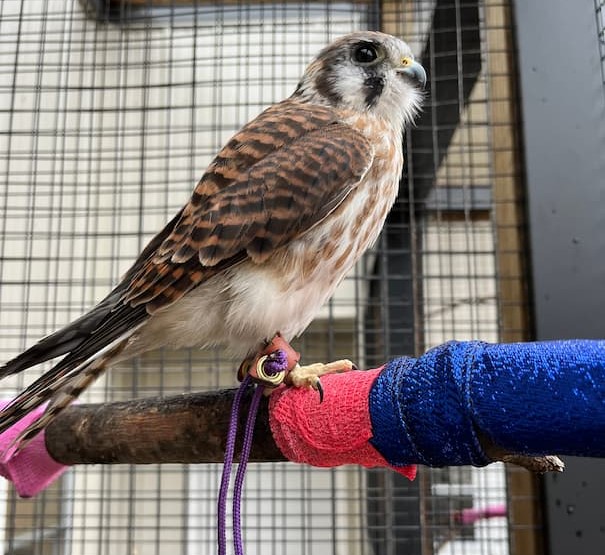
Training can be a slow process, and every bird is different, but she’s doing well so far and once we are sure she is comfortable and ready, we will start bringing her with to some of our outreach events! In the meantime, she can be seen during on-site programs or at any time by visiting the Ambassador Building, which is located behind the South Clinic. Clover loves to sit on the high beams of her outdoor enclosure, so if you don’t see her, try looking up!
Written by Sarah and Jacob, Class of 2026
Wildlife Medical Clinic Program Coordinator, Sydnee Oliveira, and Ambassador Care Coordinator, Jacob Dalen, are joined on CiLiving by our Ambassador, Ruby the Red-Tailed Hawk. Learn more about Ruby’s care, training, and the role she plays in educating the community as an Ambassador!
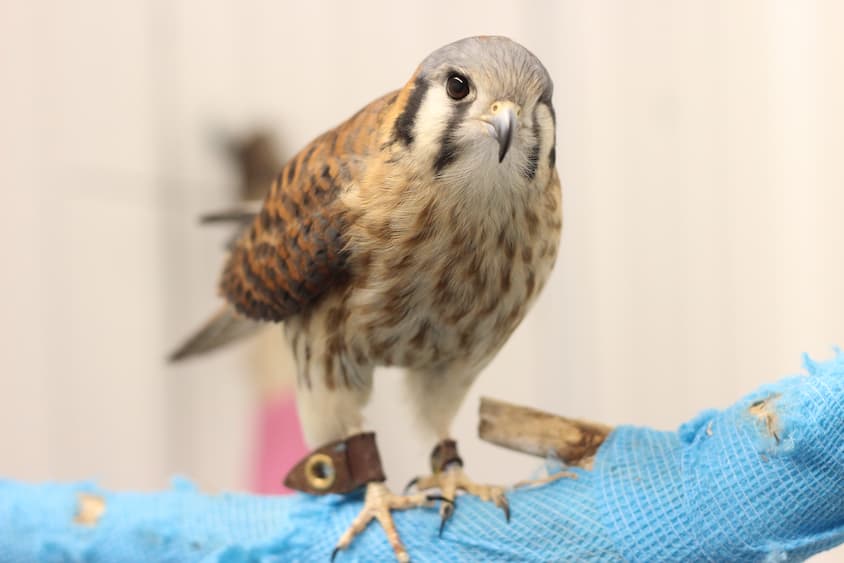
We are saddened to announce the recent passing of Thistle, an ambassador American kestrel in the Wildlife Medical Clinic’s Ambassador Program. She passed away on Tuesday, October 17, 2023. Thistle was a well-known animal to the community and was enjoyed by all when she attended various outreach events throughout her time in our program. As a cornerstone of the Ambassador program, the loss of Thistle was difficult for the program’s many volunteers and faculty members. We are glad, however, to have cared for Thistle for the last eleven years.
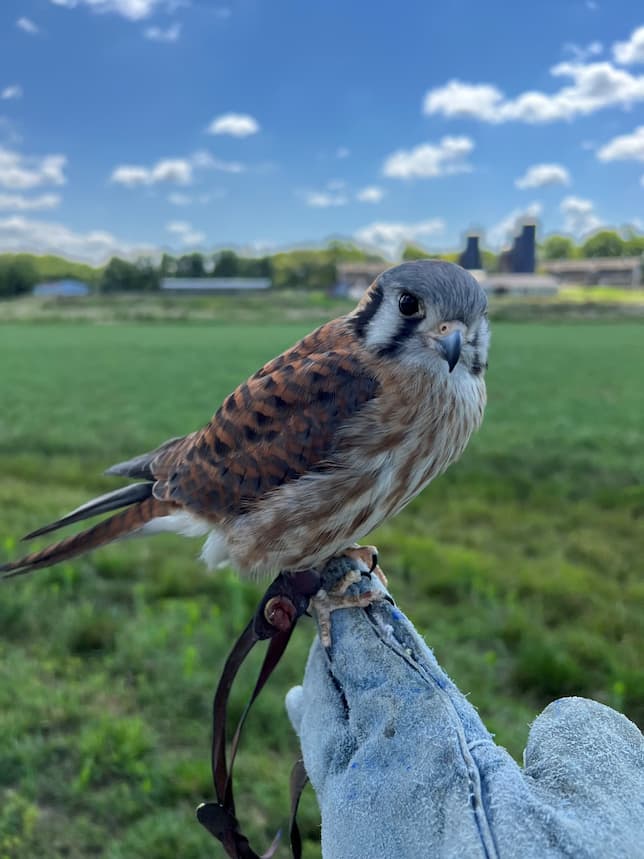
In 2012, Thistle was admitted to the Wildlife Medical Clinic with an injury to her left eye. Unfortunately, there was not much that could be done to save the eye, so Thistle was given supportive care until the infection subsided and she recovered from the injury. Without this eye, Thistle’s future in the wild would not be successful as she would not have the proper depth perception to hunt and find prey. Luckily, Thistle was quite friendly and was not showing signs of aggression towards humans. This personality and amiability prompted clinic faculty at the time to keep Thistle at our facility as an ambassador animal. As she began to train with volunteers, it became clear that Thistle was very eager to participate in training and learn how to step onto a glove for educational purposes. Over the next year, Thistle began to feel comfortable in front of the community and grew to be a curious, attentive, well-versed ambassador.
During Thistle’s time in the program, she was able to lighten many lecture halls, birthday parties, conferences, and student activities around the University of Illinois campus and surrounding community. Many people knew her from across the room and were eager to learn about her and her species. Thistle happily participated in our educational events. She would show off characteristic behaviors of American kestrels, such as head and tail bobbing that can help us differentiate wild kestrels sitting on telephone lines from similarly sized pigeons. Thistle also allowed us to point out certain anatomy specific to falcons, like the tomial “tooth” notch on her upper beak. Thistle helped us to talk to people about our goals with rehabilitation – returning wildlife to the wild – and the strict requirements for those goals to be met.
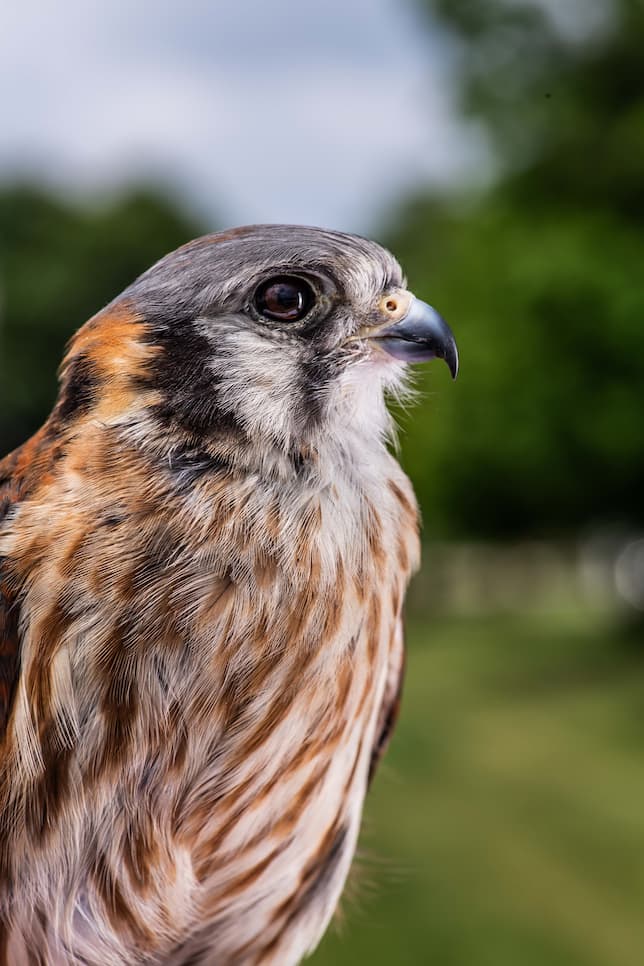
American kestrels are not long-lived in the wild as most live less than 5 years, with a few individuals reported to have lived 10-14 years. In managed settings, these little falcons can live slightly longer. Our estimate is that Thistle was 12-13 years old. During the fall of 2022, she started showing signs of older age with some arthritis developing in her feet. She received frequent medical checks from the Wildlife Medical Clinic veterinarians and was put on a long-term, low-dose medication to manage her pain. Once her pain symptoms subsided, Thistle remained an active, curious ambassador. We were hoping to have a few more years with her but are so grateful for the time that we did have.
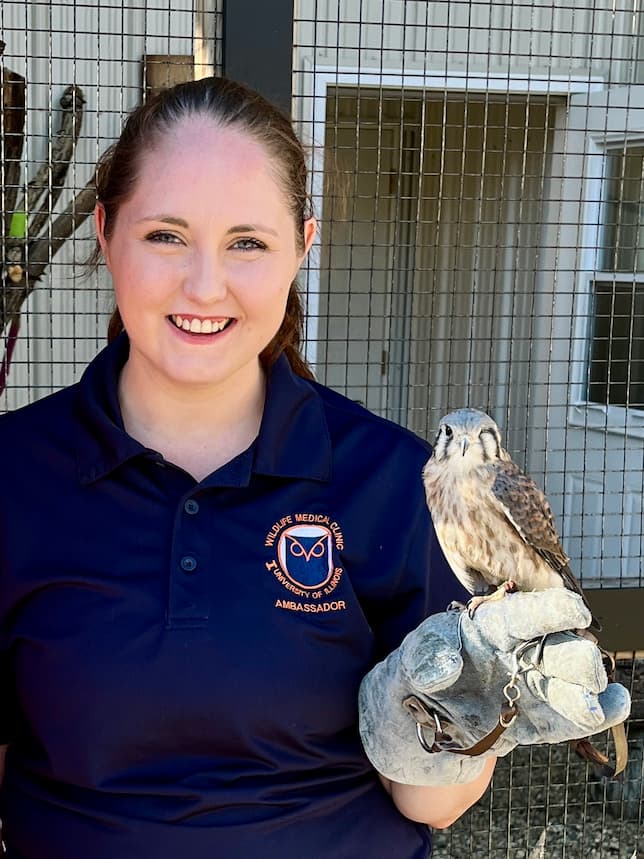
Thistle was infamous among volunteers for her piercing screams. These vocalizations came when she was excited, like when one of her favorite people entered her enclosure, but Thistle would also scream when she felt she was not getting the amount of attention she thought she deserved. Thistle sought out time with people – she would follow volunteers around as they cleaned, step on their shoes, and rarely had to be asked twice to step up on a glove for training sessions. She loved to go for walks outside with her trainers, especially if it was just slightly windy so her feathers would ruffle up. Some of our ambassador birds prefer to hang out near their trainers on perches during training sessions and educational programs, but Thistle invariably chose to stay on glove.
Thistle was an incredibly special bird. She changed the lives of many who worked with her and educated thousands of people over the years. Though she was small, she has left a huge hole in our hearts. We sincerely appreciate the community’s support as we take the time to grieve this loss.
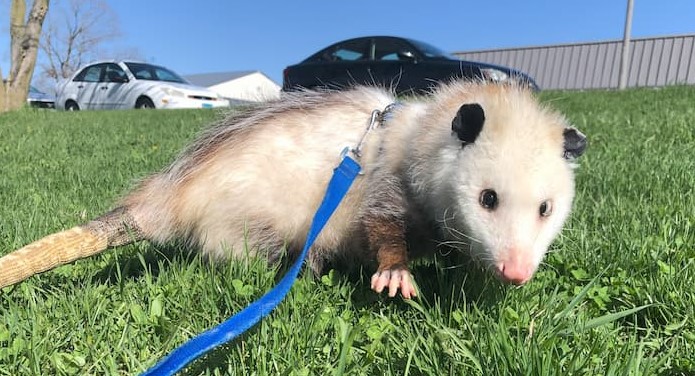
Several weeks ago, we made the difficult decision to humanely euthanize our resident opossum, Patty. This decision came about due to her increasing age and declining health. Patty was a huge part of our ambassador program at the Wildlife Medical Clinic, and she will be missed greatly. She was loved by many and will continue to make an impact through education even though her life has come to an end. She had many personal fans, from students and faculty to members of the public and even social media followers!
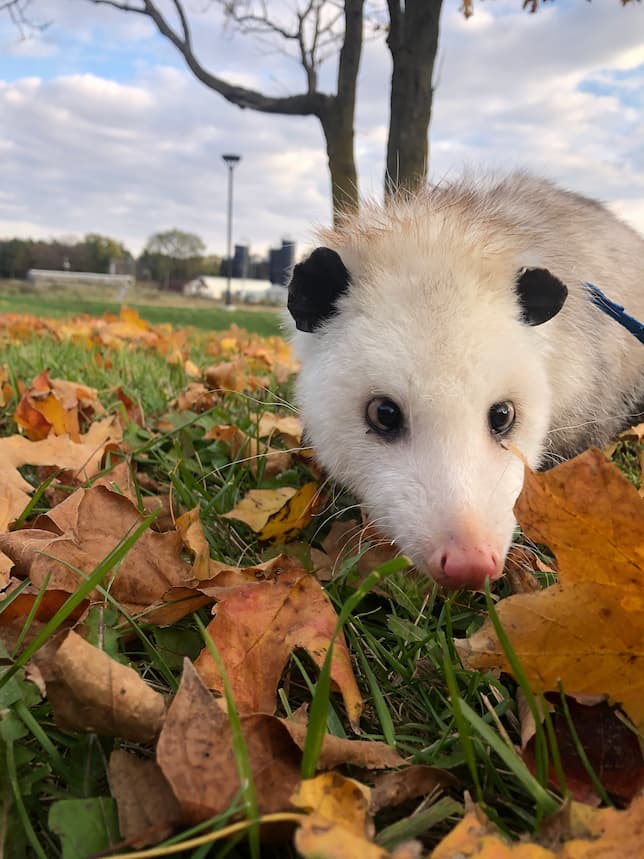
Patty’s story began as a joey when she was discovered by a concerned community member. They took her in and raised her as a pet, unaware of the legal requirements surrounding ownership of wildlife. In 2021, they responsibly handed her over to the wildlife clinic when she needed veterinary attention after realizing their mistake. Upon her arrival, it was discovered that she had a life-threatening reproductive tract infection. Our team was able to perform a complex and dangerous, but life-saving surgery. She was then placed on an intense treatment plan and her recovery was rough, but she was a fighter!
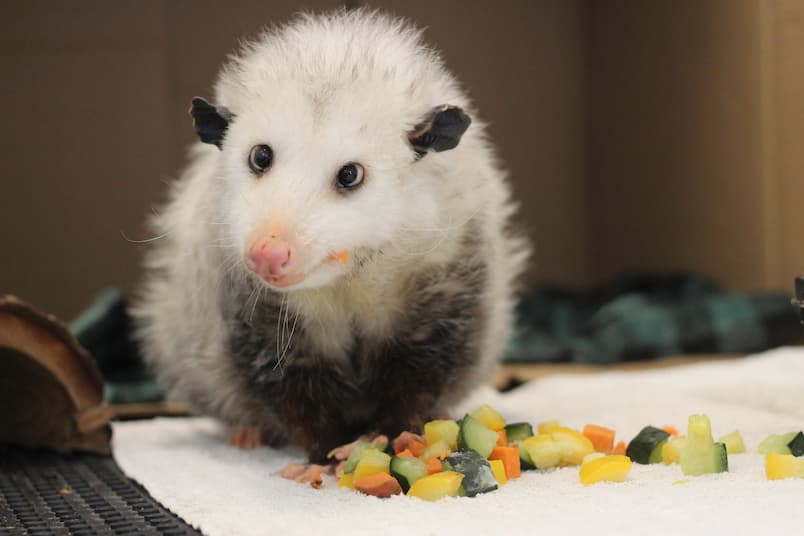
After her successful surgery and recovery, Patty’s next goal was to lose some serious weight since she came in at about double her ideal body weight. She did not enjoy transitioning to a “healthy” diet, but she once again proved that she was a fighter! After months of work, Patty lost an appropriate amount of weight and was much healthier overall. Patty is a great reminder as to why wild animals should be left in the wild! Wild animals require very specialized care, housing, and diets that are challenging to replicate in human care. Despite the well-meaning intentions of the community member, Patty’s needs were not fully met and because of this she had many health issues that she had to overcome. Patty also showed no fear of humans and due to her life saving surgery, was not able to reproduce, which made her ineligible for release back into the wild.
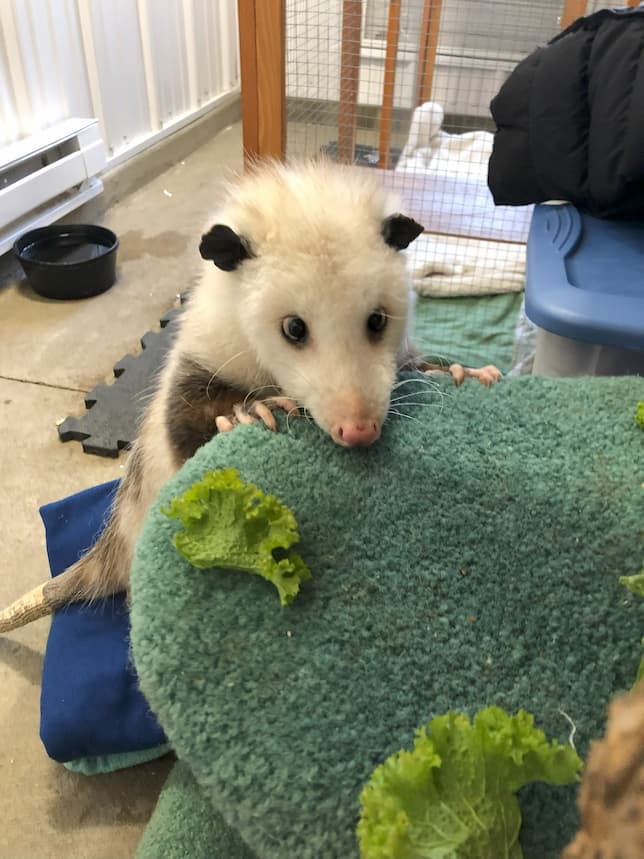
Patty’s health and well-being were continually assessed during her time at the Wildlife Medical Clinic. Patty lived to be over 3 years old which is far more than what her life expectancy would have been in the wild. During Patty’s time in our care, she had numerous visits to our rehabilitation service for weight loss and strength training. She was evaluated by our neurology service when she was losing mobility in her hind limbs and appropriate adjustments were made to her care. She had an individualized diet, enrichment, and wellness plan created specifically for her. She had an entire team caring for her each day and monitoring her health. Over the last month, Patty’s mobility in her back legs declined drastically and she was unable to move around comfortably. It was also determined that Patty had lost a significant amount of her vision. These declines in her health are what led us to the decision of humane euthanasia.
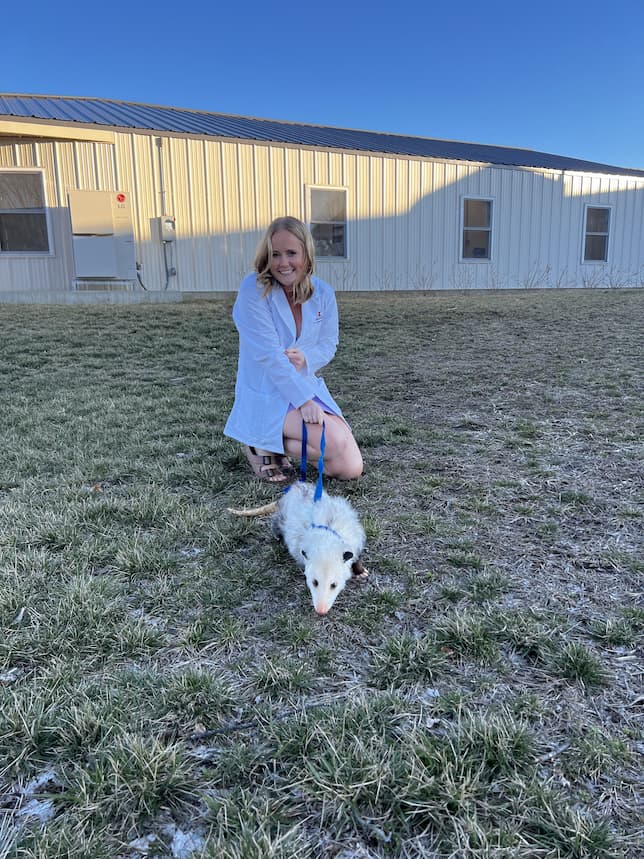
During her time with us, Patty made quite an impact on the students and faculty of the WMC and many other members of our community. Patty attended many community events and presentations as an ambassador of her species. She educated both children and adults on the importance of Virginia opossums in our ecosystem. Patty surprised many with her fearless yet very stubborn personality. She was happy to show off her intense love of kale and could be found munching away during most presentations. She walked nicely on her harness for her daily exercises but made it very clear when she thought it was time to return indoors for her snacks. Patty showed the public how opossums are vitally important to our wildlife ecosystem and are not the aggressive and disease-ridden animals they are often portrayed to be.
Each member of her care team has gained invaluable knowledge from her life with us, which we will forever be grateful for. She connected with so many people and showed us that opossums can be sweet, playful, and stubborn. Patty always reminded her caretakers to laugh with her funny and unique personality! She tested the limits with her persistence for treats and was always there to brighten the students’ day. Our sweet Patty, we hope you are resting easy now, you will be missed tremendously.
Hazel, our beloved Eastern Box turtle ambassador, helps the Wildlife Medical Clinic teach our community about wildlife stewardship.
Reptiles have very specific care and husbandry needs and it’s important to leave the care of wild animals to clinics and rehabilitators who can properly care for them. Learn more about Eastern Box turtles from Dr. Lewis and Dr. Wong!
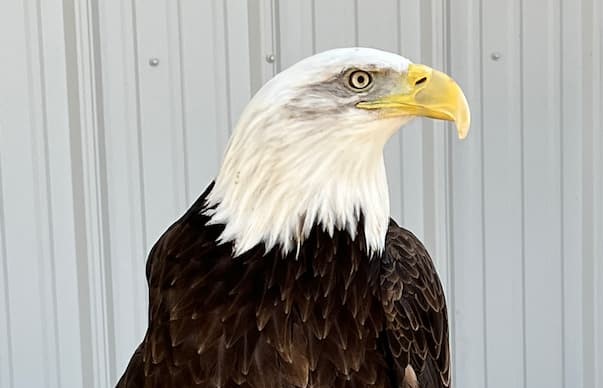
Happy Independence Day! Our favorite American symbol at the Wildlife Medical Clinic is our bald eagle ambassador, River. Today’s Hawk Talk is all about bald eagles as a species and a little bit about River and her story.
Bald eagles are mostly brown with bright yellow feet, beak, and irises. As young birds, their heads are covered in brown feathers; the white feathers do not come in until the eagle is about 4-5 years old. These birds can live more than 30-35 years in the wild and often return to the same nesting ground every year with their lifelong mate. Females are typically larger than males, with respective average weights around 5.6 kg (12 lb.) and 4.1 kg (9 lb.).
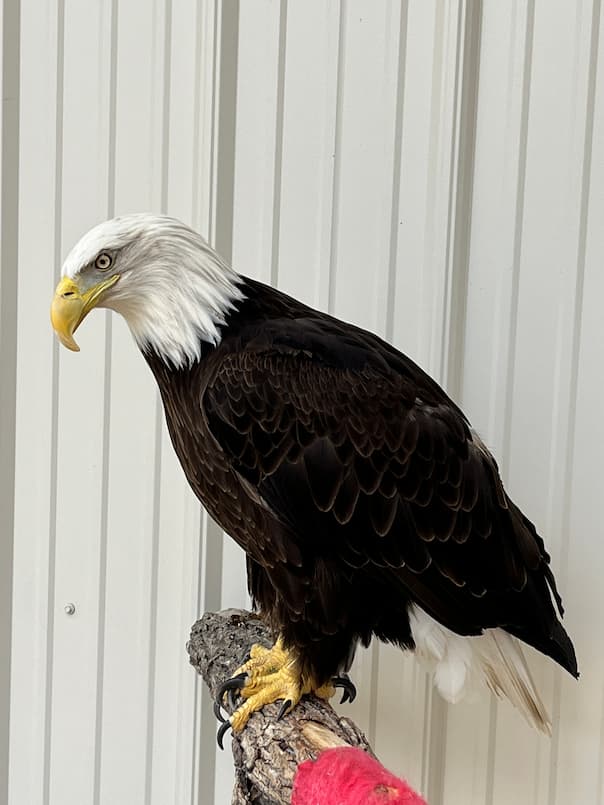
The bald eagle was selected as a national symbol in 1782, but did you know that the Founding Fathers argued for six years over what bird to pick? They ultimately chose the bald eagle because bald eagles are only found in North America and were seen to represent strength and freedom. However, Benjamin Franklin thought they should have selected the wild turkey instead, thinking turkeys to be a more “respectable” bird than the bald eagle.
Bald eagles were struggling in the wild in the mid-1900s. Humans were using a chemical called DDT to kill insects around their homes which, while super effective against pests, had severe, unforeseen impacts on bald eagles and many other bird species. DDT did not directly kill the eagles, but instead caused weak eggshells during nesting season. These eggs were not strong enough for the chicks to make it to hatching, and so the population of bald eagles (and many other birds of prey) plummeted. Bald eagles also suffered from hunting and habitat loss, and were put on the Endangered Species List in 1987.
With the U.S. and Canada banning the use of DDT and focusing efforts on conservation, Bald Eagle populations began to grow. As of 2007 Bald Eagles are no longer listed as an endangered species. However, they are still a protected species under the Migratory Bird Treaty Act and the Bald and Golden Eagle Protection Act. It is illegal to take any part of an eagle, its eggs, or nesting material without a permit.
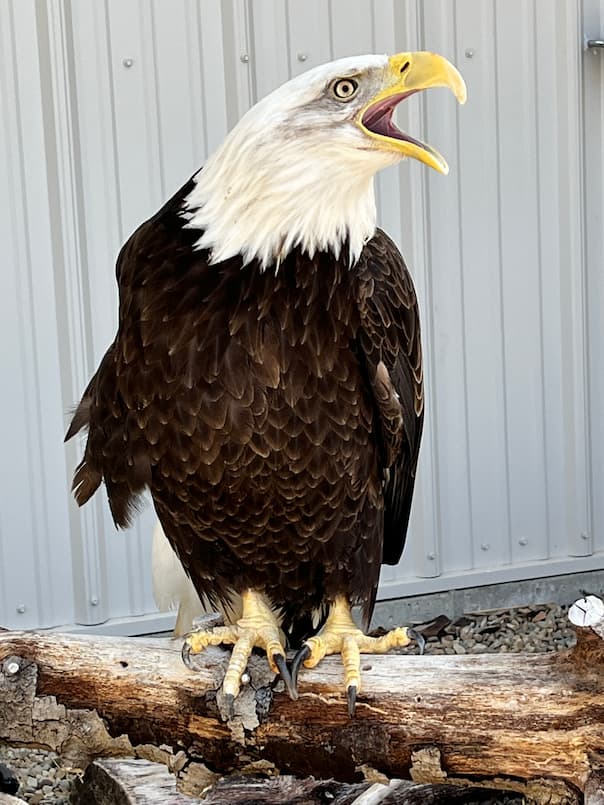
Our ambassador bald eagle was found in the Illinois River near Peoria in March of 2015 with a severely injured wing. Her right ulna and radius bones were both broken beyond what we were able to repair. With a partial wing amputation, we were able to remove the dying and damaged tissues which allowed her to survive this traumatic injury. However, bald eagles need to be able to fly to be successful in the wild, so she was considered non-releasable and needed a forever home such as a zoo or other similar institution.
We searched for a home for her but were unable to find the right fit. This led us to apply for a permit to keep her at the WMC and once it was official, we held a fundraiser to select her name. River was chosen as her name due to where she was found. We know based on her head feathers that she was about 4 years old when she came to the WMC, so she is currently about 12 years old. We recently had new flight cages and enclosures constructed for all our ambassador animals.
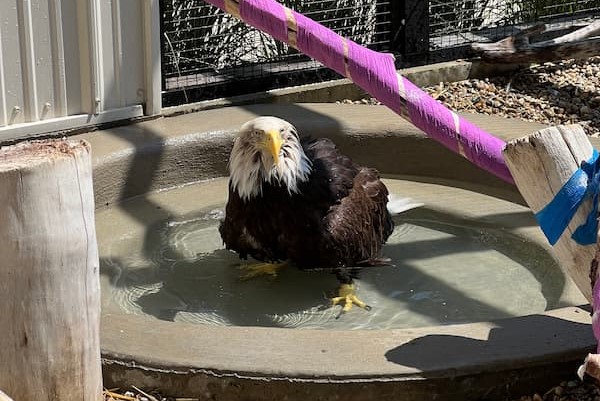
We made sure to include a permanent pool in River’s enclosure since bald eagles are typically found near rivers and large bodies of water as they like to hunt for fish and cool off in the shallows. While River is comfortable around our animal care staff, she is still not completely comfortable around new people, so she doesn’t travel off-site. However, you may see her in her outdoor enclosure and can learn more about her in our educational programs if you visit our facility.
Written by Sarah, Class of 2026
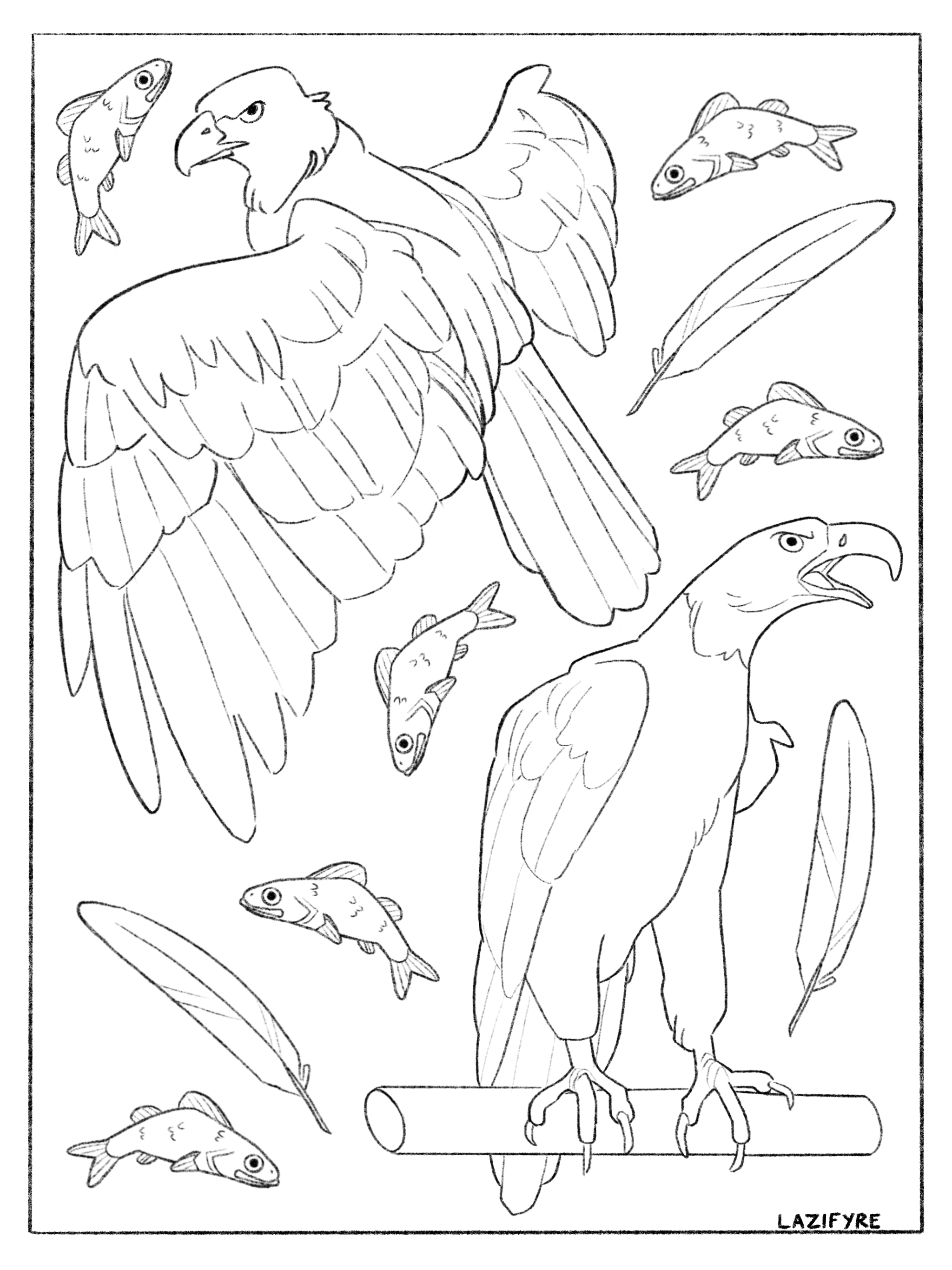
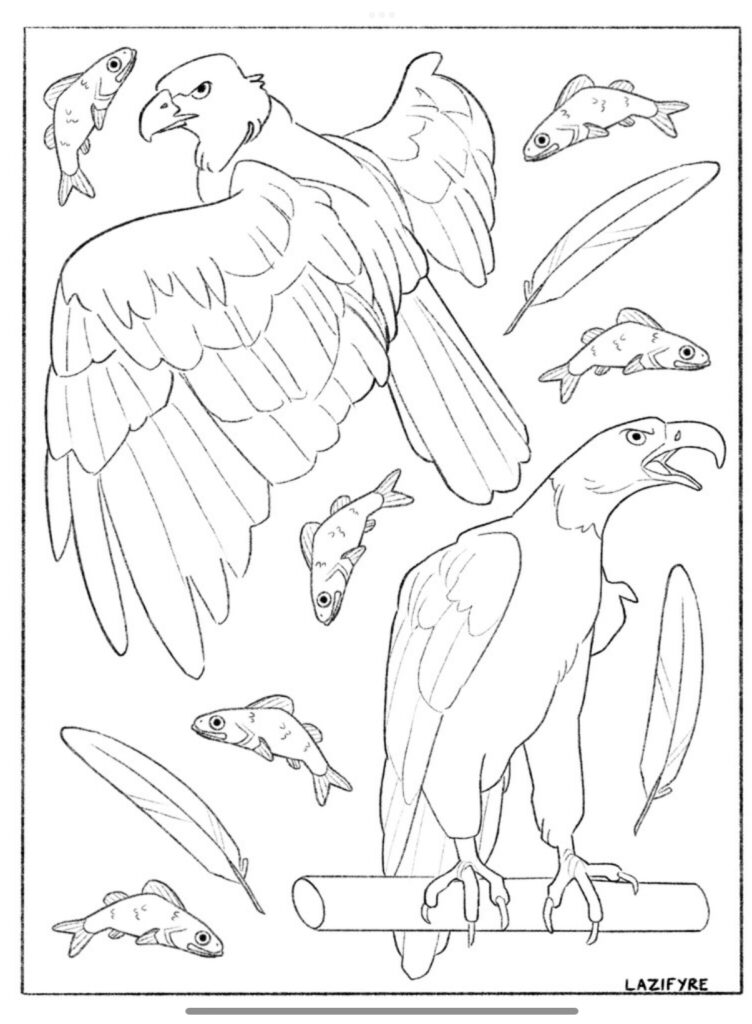
The Wildlife Medical Clinic is celebrating July by showcasing our special bald eagle ambassadors River! Feel free to share your fully colored version of River with us on Facebook by tagging us at ‘Wildlife Medical Clinic at Illinois’.
One of our goals at the Wildlife Medical Clinic is to educate the public about the animals that live around us, and that sometimes involves correcting long-believed ideas. Here are four of my favorite misconceptions to discuss with people:
1) “Bald eagles sound fierce!”
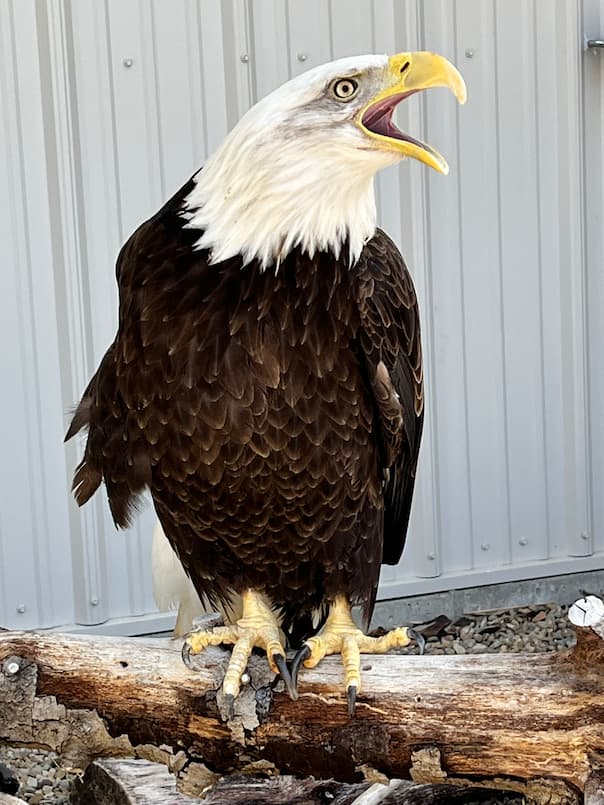
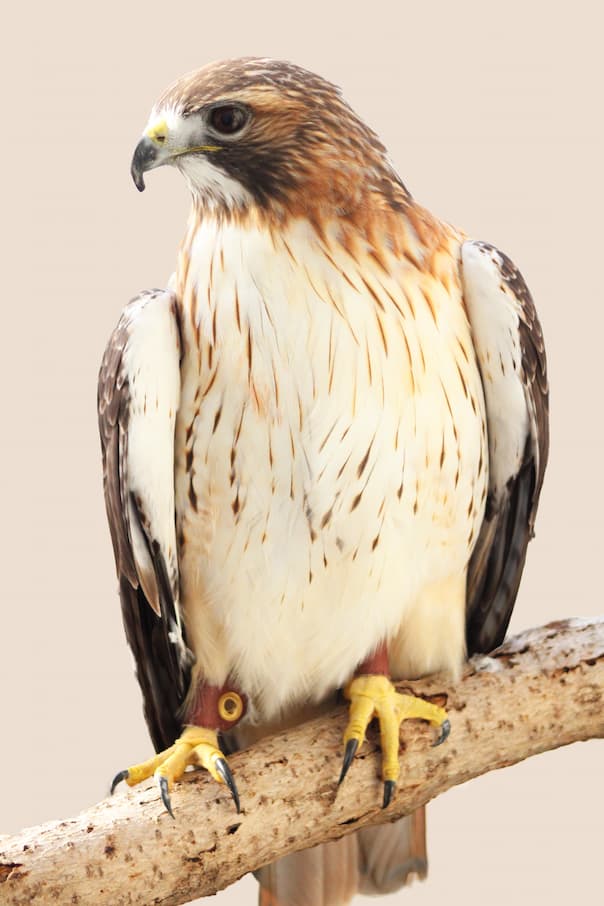
That majestic battle-cry you have heard in movies did NOT come from a bald eagle. At some point, film and TV editors in Hollywood decided that red-tailed hawks have a much more intimidating sound and would dub over eagle vocalizations with audio from hawks to present a stronger American symbol. Bald eagles actually make a series of short, high-pitched notes that can be described as whistling or piping. We have both species as Ambassador animals – if you visit, Odin (red-tailed hawk) and River (bald eagle) may give you the chance to hear the difference!
For those that can’t visit the clinic, here is a video from the Alaska Raptor Center “Red-tailed Hawk and Bald Eagle Vocalizations”: https://www.youtube.com/watch?v=CEmYEQ78zS0
2) “Possums carry rabies!”
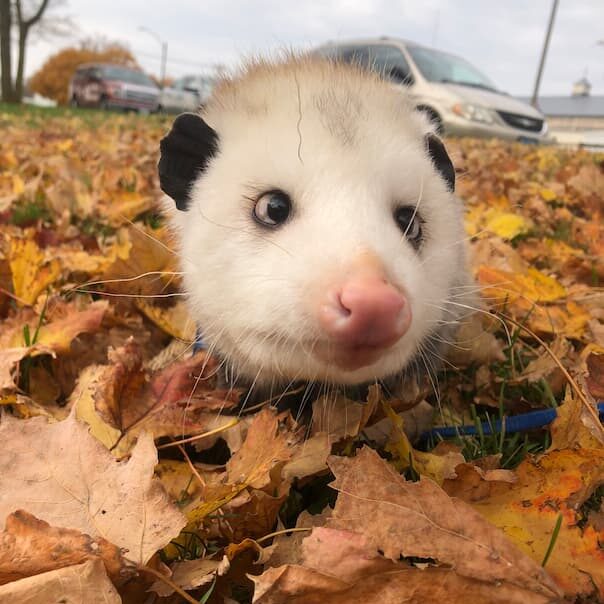
Rabies is a concern for human health and in our domestic pets, however, Virginia opossums very rarely carry rabies. As marsupials, they have a lower body temperature than most other wild mammals and this is thought to be the main reason opossums are not typically affected by this virus. The mammals in Illinois that are considered common carries of rabies are bats and skunks, which is why the Wildlife Medical Clinic cannot accept these species as patients. For your pets at home, the best way to protect them from rabies is by staying up to date with vaccinations from your veterinarian!
3) “The difference between snakes and lizards is that snakes don’t have legs and lizards do.”
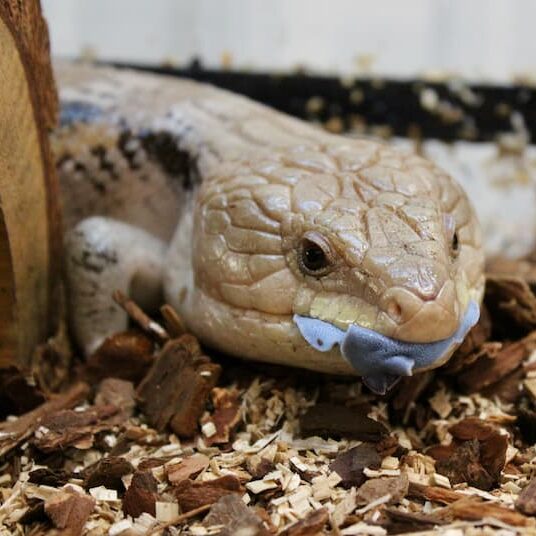
This may sound silly, but there are a few hundred species of legless lizards that can be found around the world! While they are rarely found in Illinois, they are commonly seen in other states such as California and Florida. If you happen to travel outside of the United States, you may come across them in areas of Europe, Asia, Africa, and Australia. So, if you cannot tell the difference between a snake and lizard based on legs, what can you look for to tell the difference? One of the easiest things to try to observe from a distance is whether they have holes just behind their eyes. These are ear holes – lizards have them, snakes do not! You can also look at whether they have eyelids – legless lizards can close their eyes whereas snakes do not have eyelids.
4) “You can’t move a baby bunny or baby bird because the mother will smell you on them and won’t take care of them.”
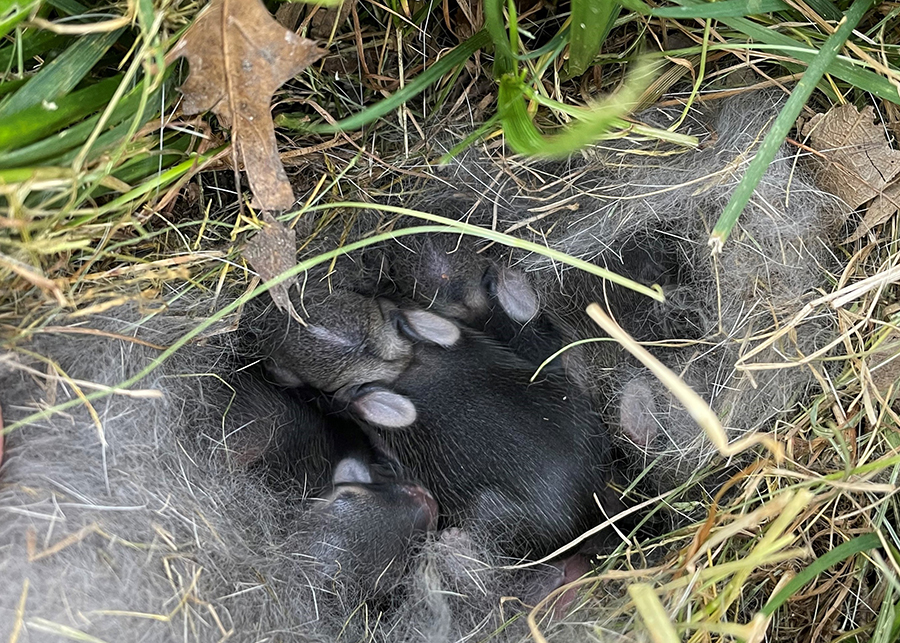
This is a common concern we hear from people, especially around this time of the year. Luckily, this is a misconception! If you find a young animal that does not appear to be injured or sick, our first recommendation will be to return it to the nest and its parents if you are able. Your touch will not cause the mother to abandon the baby. The best option for wildlife is to remain in the wild and be raised by their parents. Of course, we know this is not always possible and if the young animal is truly orphaned or injured, please contact the WMC or your nearest licensed wildlife rehabilitator.
Written by First Year Sarah