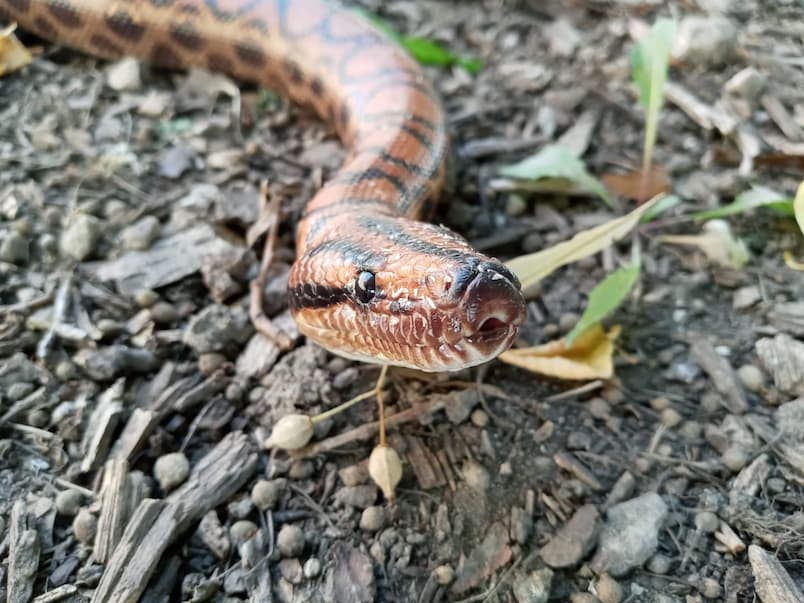
Introducing Caduceus!

The Wildlife Medical Clinic gives a warm welcome to our newest Wildlife Ambassador animal,
Caduceus the Brazilian rainbow boa!

Caduceus has prior experience as a professional program animal, having spent the last 11 years of her life in the excellent care of the College of Veterinary Medicine’s Non-Traditional Species Club. Because of her extremely mild temperament, she has become rather famous for being an excellent “beginner snake” for students who have never handled a snake before. Over the past few months, she has moved into the WMC Ambassador Building and the Ambassador Team has taken over her daily care. We are currently giving her time to adjust to her new location and lifestyle, but we hope to have Caduceus attending public events soon!
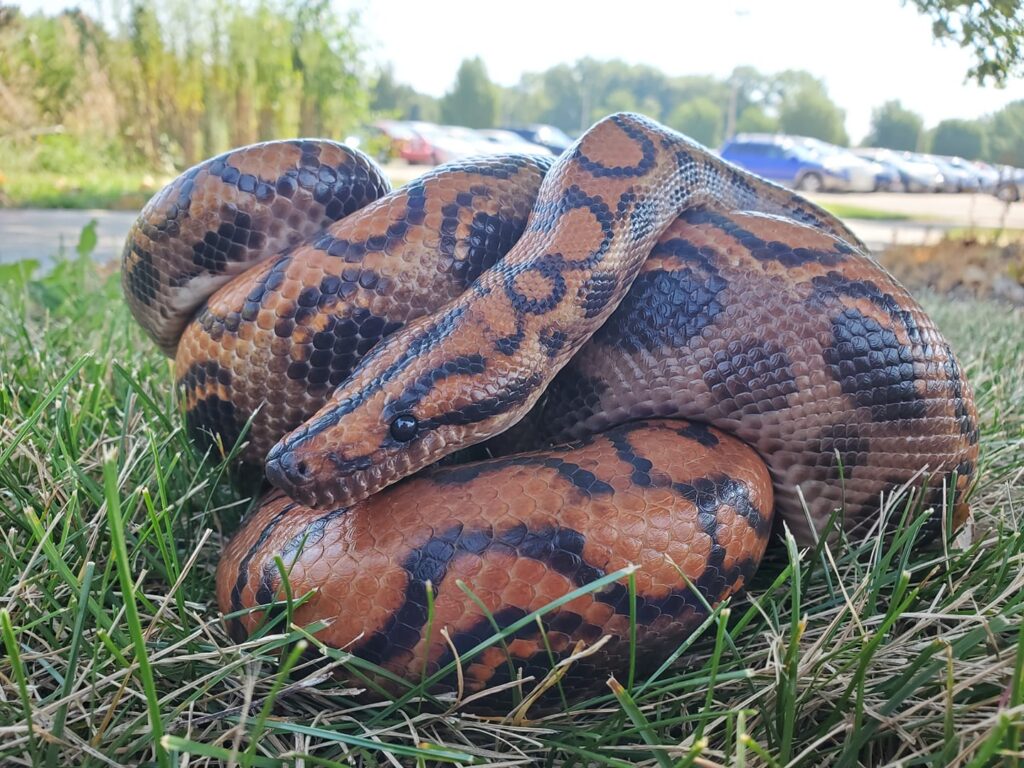
As a part of the WMC Ambassador Program, she will attend educational events with our other ambassadors. By improving education and removing fear surrounding snakes, Caduceus will help improve the relationship between humans and her Illinois counterparts. Through caring for her, student volunteers on the Ambassador Team will also have the opportunity to learn about snake husbandry and medical care.
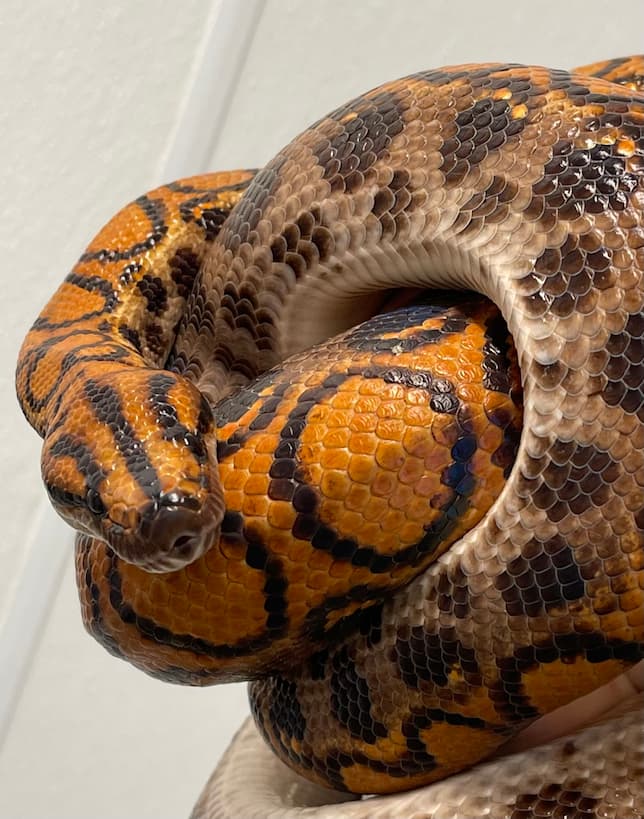
Caduceus Fun Facts:
● Brazilian rainbow boas are native to the forest floors of South America, not Illinois. However, Caduceus was born in captivity and has spent her entire life as a pet and more recently program animal.
● Caduceus is named after the symbol for medicine, which depicts a snake encircling a staff. While some call her by her formal name, others prefer to call her Cadu, which is just a shortened version of her name.
● This species gets its name from its iridescent or rainbow-hued skin, which is caused by tiny ridges on the scale surface that refract light.
● Unlike most other snake species, boas and a few other species do not lay eggs. Instead, they incubate their eggs internally and then give birth to live young! The term for this is ovoviviparous and is slightly different than viviparous mammals. Other ovoviviparous snakes are garter snakes, vipers, anacondas, and most sea kraits.
● Boas are not venomous and subdue their prey through constriction. Caduceus eats mice that we purchase frozen from a company and then thaw to feed her. Her wild counterparts not only eat mice but various rodents, birds, lizards, and even fish.
● In captivity, boa species can live well into their twenties. Caduceus is currently sixteen years old.
● Contrary to popular belief, snakes are not slimy! Their scales are smooth to the touch.
● In most snake species, females are bigger than males. Brazilian rainbow boas can grow to be 4-6 feet in length. As an older female, Caduceus is over five feet long and weighs around five pounds.
● Snakes do not have ears! While lizards and turtles have eardrums, snakes lack the structure altogether. However, their jaws are adapted to function as a sort of “internal ear” to sense vibrations. Snakes are not deaf, but they don’t process sound the way mammals do.
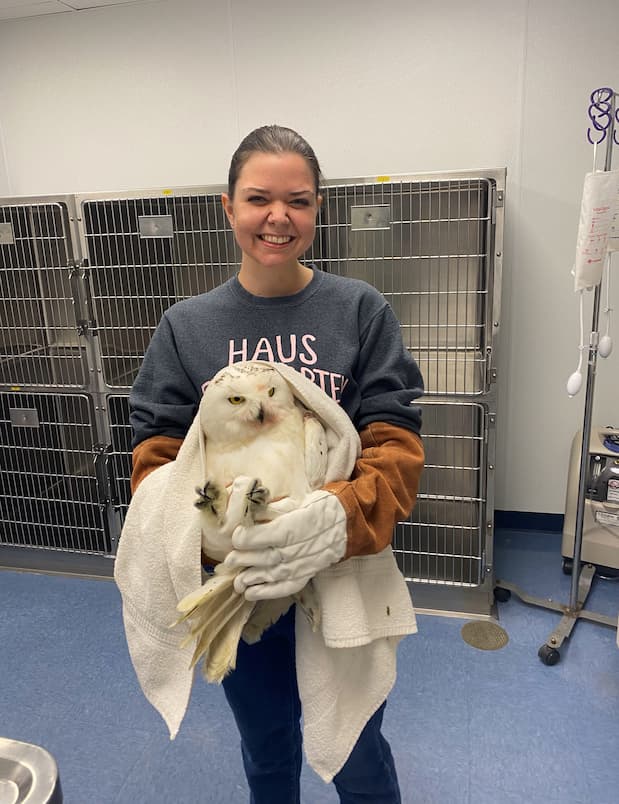
Class of 2024 Wildlife Clinic Memories

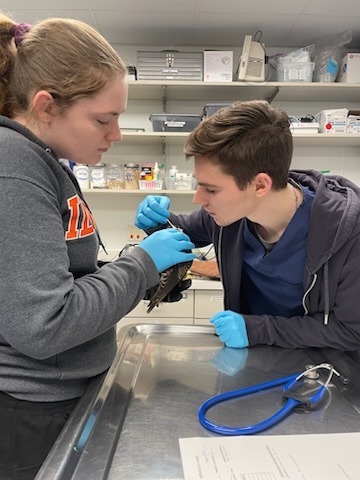
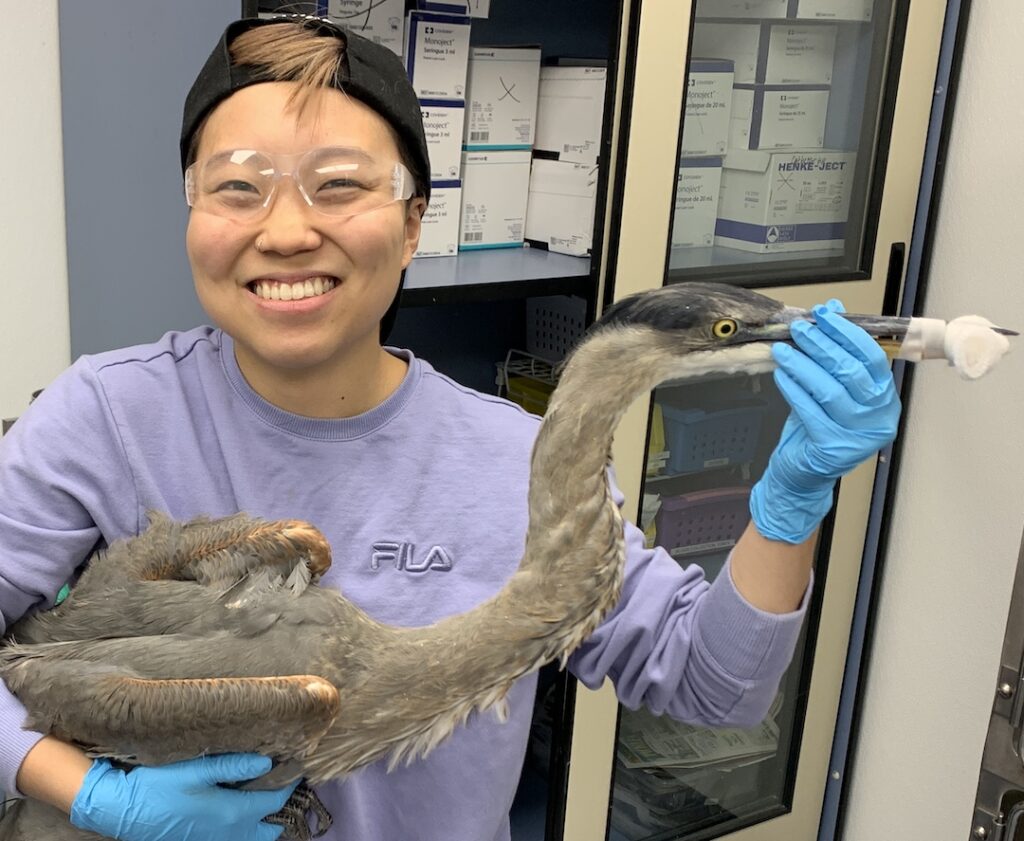
The time has come for our third-year veterinary students (class of 2024) to move onto their year of clinical rotations, which means it is time to bid them farewell. We have asked several of our students to share their favorite memories from volunteering here at the Wildlife Medical Clinic.

Amber Shoberg
“I have loved getting to see a wide variety of species, as well as getting to know classmates and students from other classes better.”

Allison Wallace
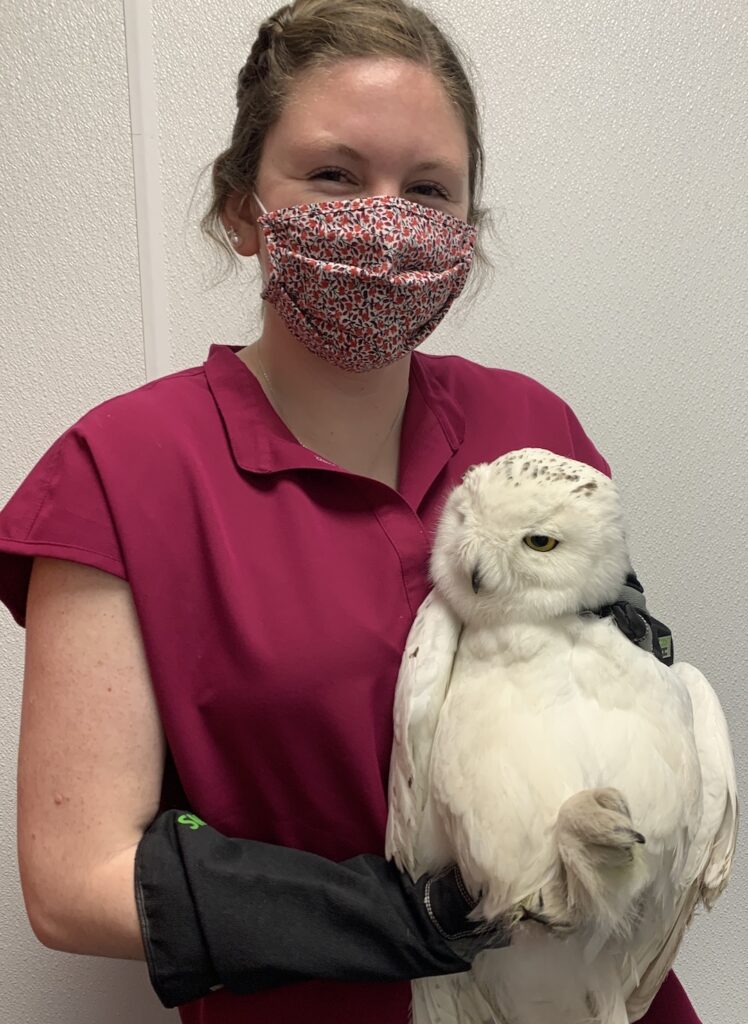
“My favorite memory of being a part of the wildlife medical clinic was the past two years as a team leader. I loved seeing how excited my team members would get when they caught up an owl for the first time or administered medications. It would make me feel like I was making a difference for both my patients and the newer team members.”

Fayth Kim
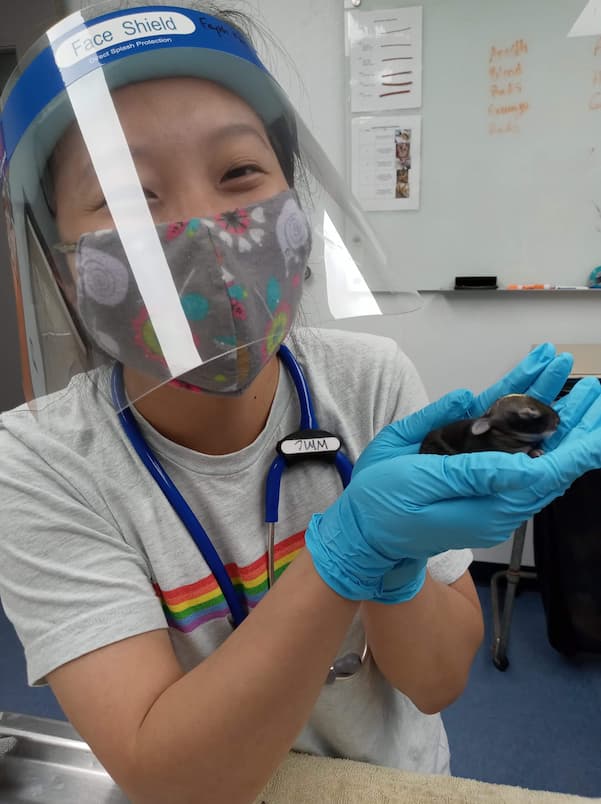
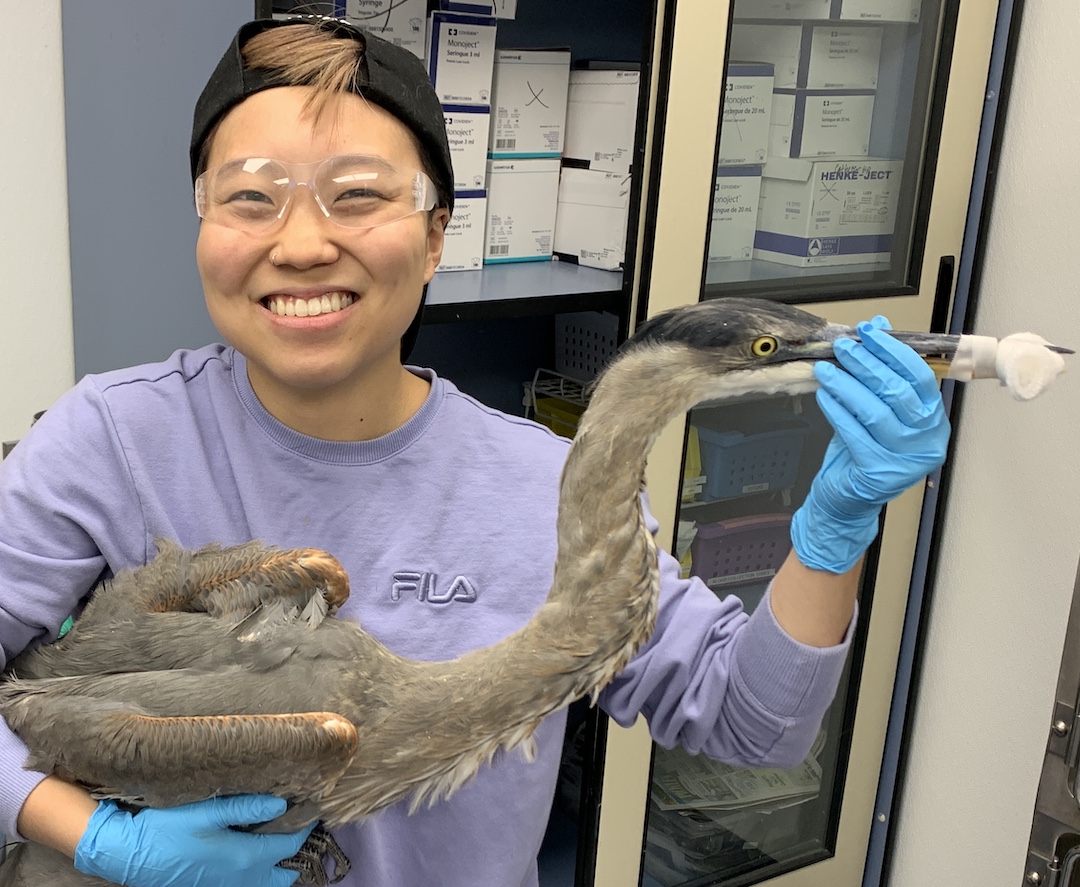
“How nervous I was my first day. Never had I placed a SQ needle (Injection given just under the skin, in the subcutaneous area). Never had I touched a rabbit so little. On top of that, I was overheating under my mask(s) and face shield (covid protocols at the time). It is a good reminder of just how much I’ve learned and grown during my time at the WMC.”

Basia Reed
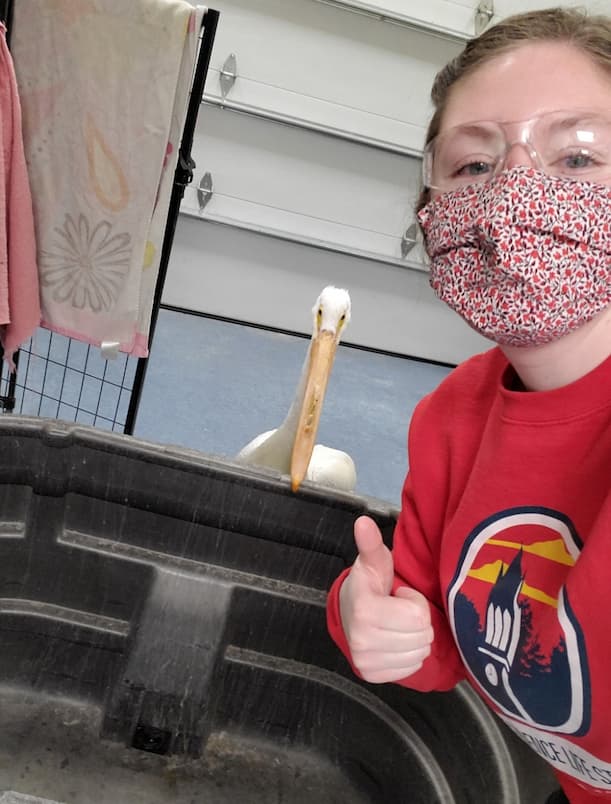
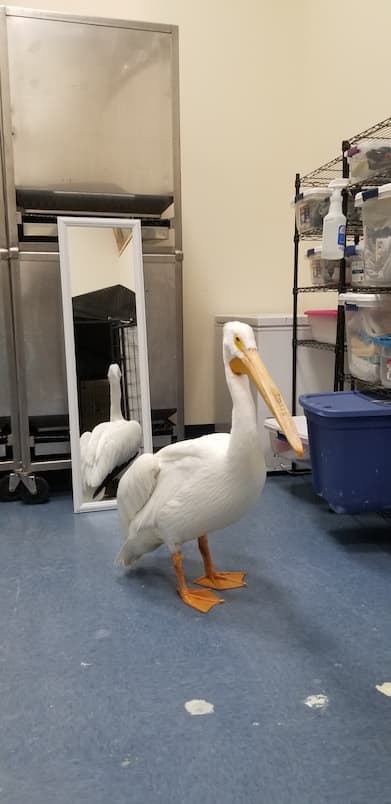
“Tossing fish to the pelican for him to catch and eat on his own. This was extremely rewarding after initially having to assist feed him to get him eating.”

Danielle Money
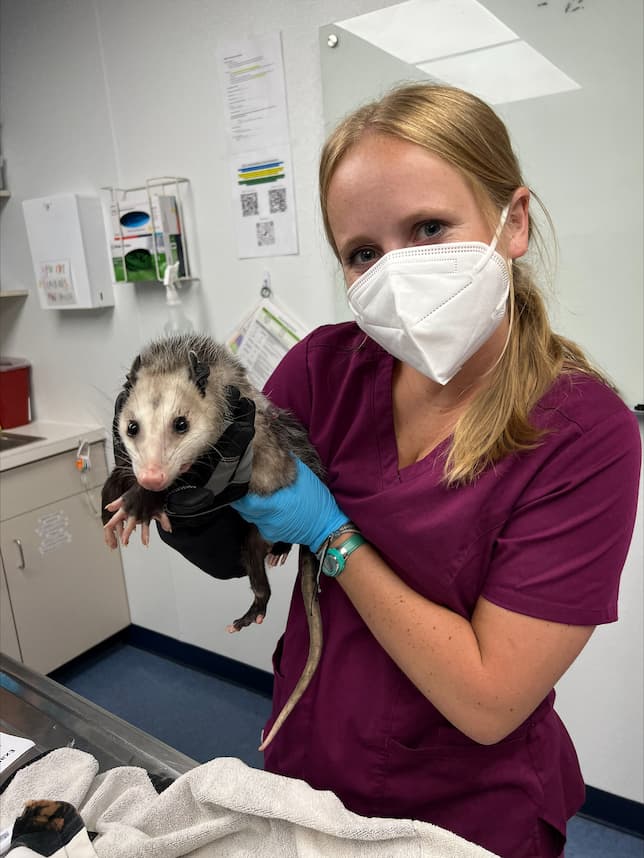
“My favorite memory from WMC was working as the summer clinic intern this past summer. The days were long, but it was so much fun getting to work up so many fun cases with some of my best vet school friends! In particular, we had a Virginia opossum that came in after getting attacked by another animal. We were able to place some drains and get him healed up and released! As these critters are my FAVORITE, I was so excited to be a part of this case!”

Mackenzie Wells
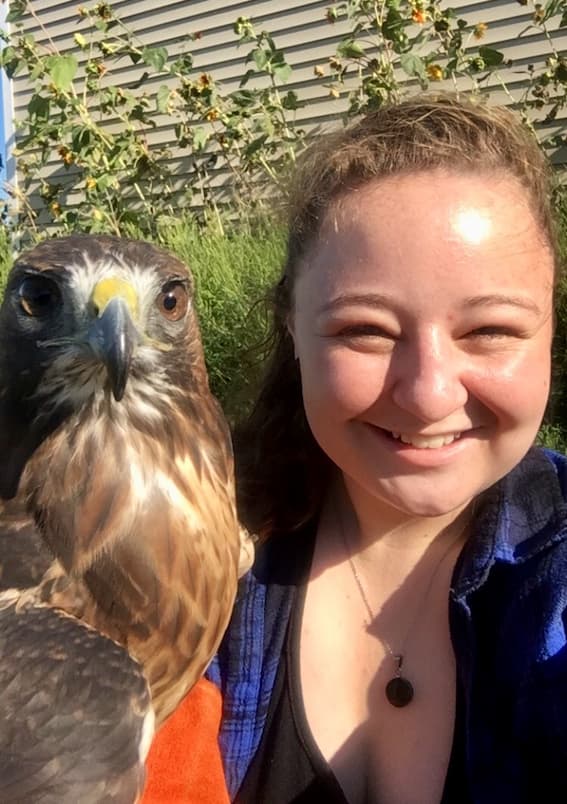
“While it is hard to pin down a specific moment that’s my favorite memory, I fondly remember all the unique situations and the people that were in them with me. But I think my favorite thing to do at the WMC is take one of our ambassador birds on an on-glove walk and just enjoy a half hour with them. It forces me to slow down, appreciate the sunshine, and reflect on how lucky I am to be able to work with such incredible creatures.”

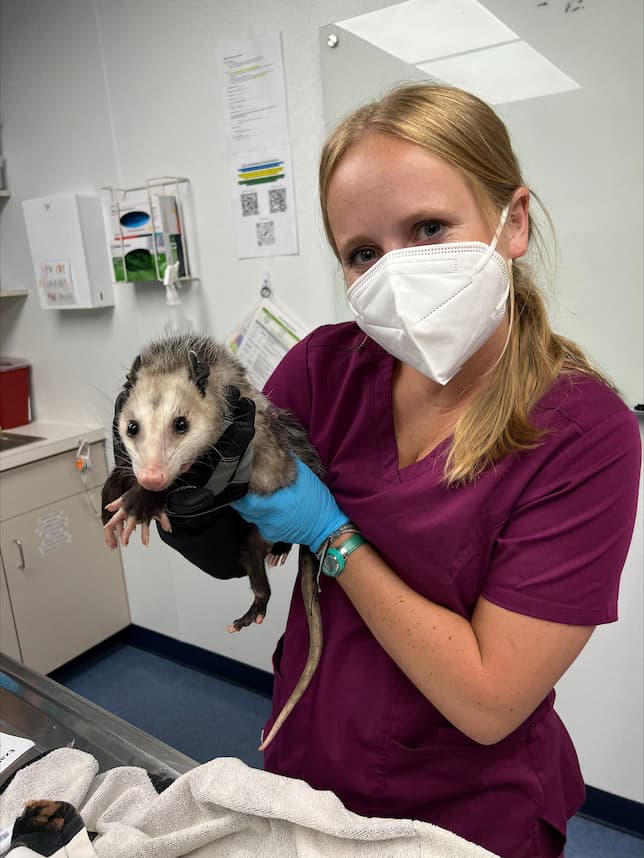
Introducing Petunia!

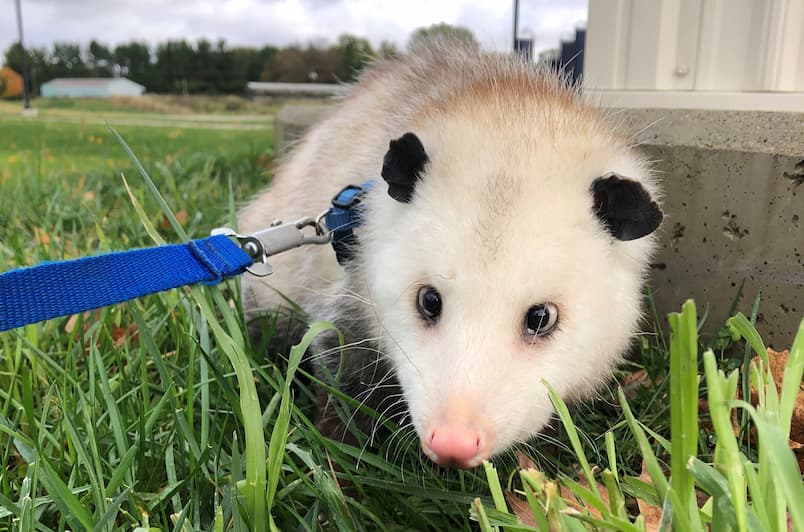
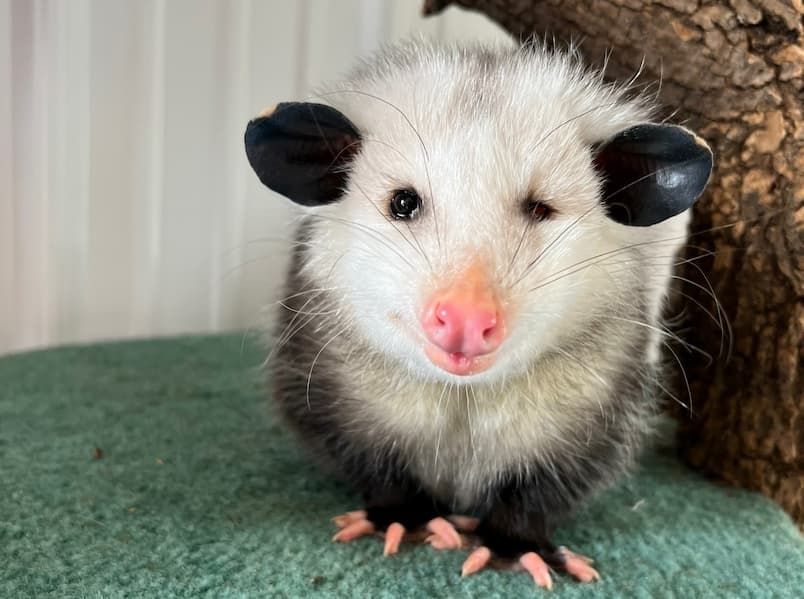
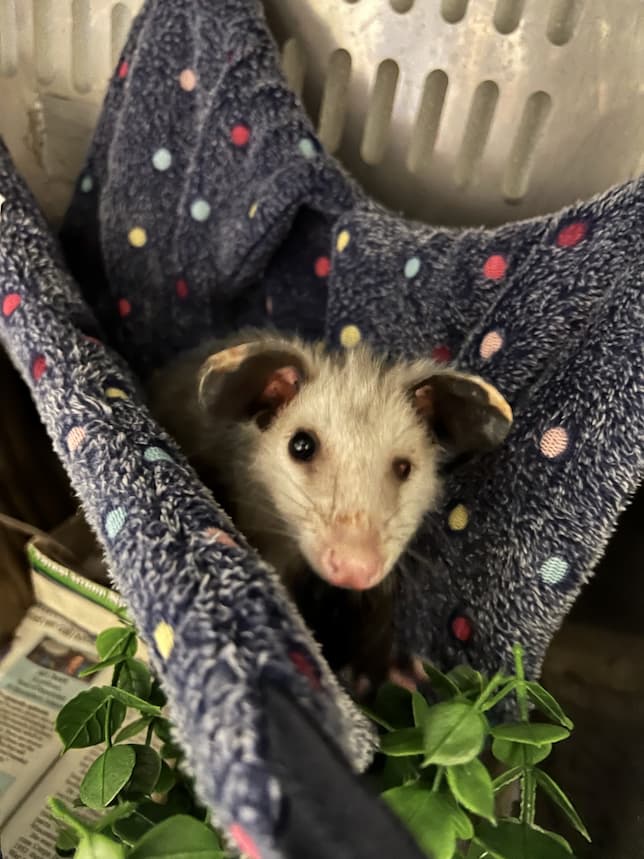
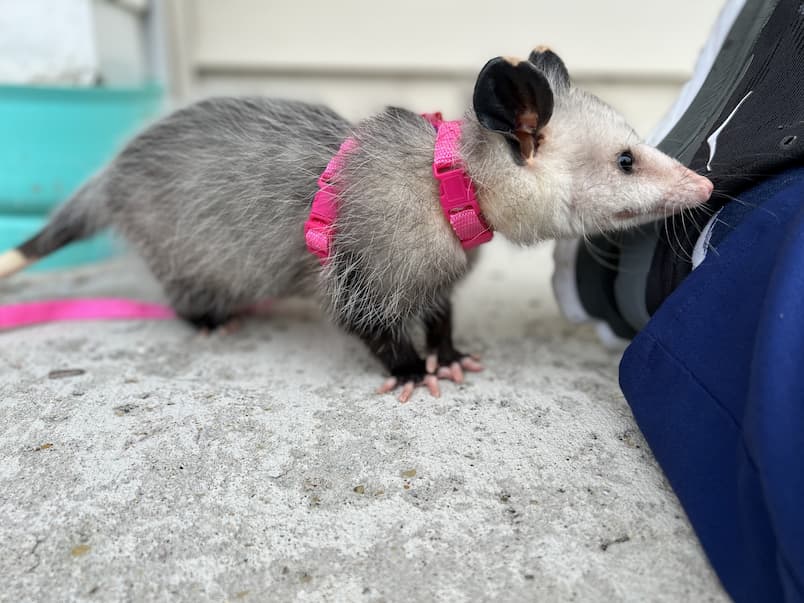
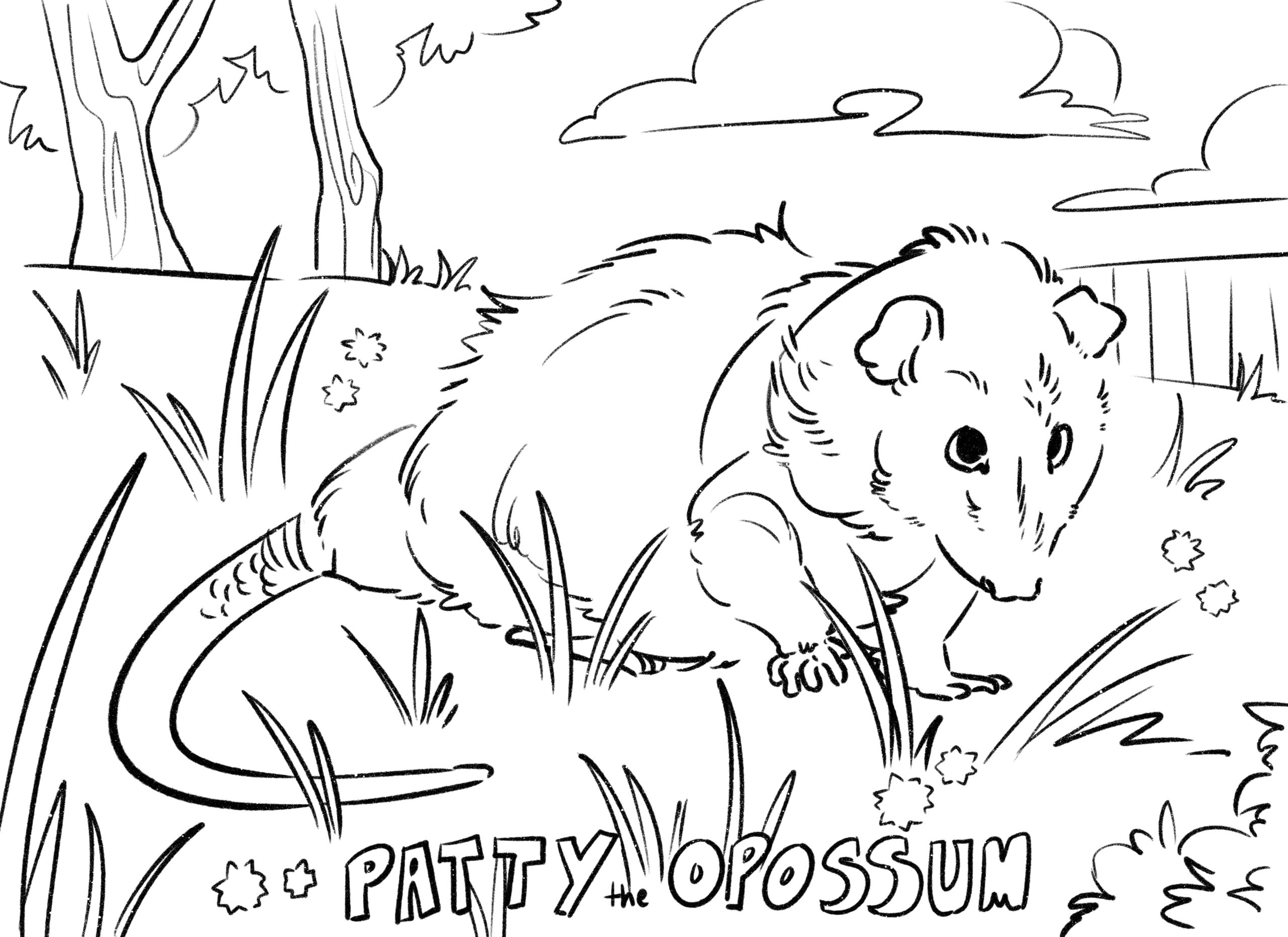
Petunia, a Virginia Opossum, was brought to the Wildlife Medical Clinic in May of 2022 as a joey, which is the term used to describe a baby opossum. A Good Samaritan rescued her and her siblings after their mother was hit by a car. While her siblings were eventually transferred to a Licensed Wildlife Rehabilitator to be released when they were old enough, Petunia was kept at the Wildlife Medical Clinic.

Petunia stayed behind because she was missing her left eye. Based on her age, we determined this was more than likely a birth defect and not an injury, but this unfortunately would make her less likely to survive in the wild and not a good candidate for release. Having one eye affects her depth perception, which leaves her more vulnerable to predation and could increase her chances of being struck by a vehicle while trying to cross a road. Because of this, her young age, good health, and calm demeanor, we made the decision to have her join our Wildlife Ambassador program.

At the Wildlife Medical Clinic, she was initially fed several times a day with formula and then transitioned onto solid food when she was old enough. Once it was determined that she was non-releasable and her siblings were transferred out, we were able to start working more with Petunia to get her acclimated to humans. Petunia is now scale and harness trained and is becoming more and more comfortable around her animal care staff as they work with her daily.

Fun Facts:
• Virginia Opossums are the only marsupial in North America.
• Virginia Opossums have the most teeth (50) of any North American mammal!
• Virginia Opossum are nocturnal, which means they are active at night and sleep during the day.
• While it is common in movies and other depictions to see opossums hanging by their tails, this isn’t very common in real life. Especially not in adult opossums, who primarily use their tail for balance and collecting nesting materials.
• They use the nesting material to pad their sleeping areas and help conceal themselves while they are sleeping.
• While most animals will leave their young unattended periodically throughout the day while they feed, that is not the case with opossum. Opossum moms always stay with their offspring, but unfortunately if one falls off their back or out of their pouch, they don’t always realize and will keep moving. Therefore, if you find an opossum joey less than 7 inches in size, separated from mom, the best thing to do is take it to a licensed wildlife rehabilitator as mom is not coming back for it.

Ringing in the New Year at the Wildlife Medical Clinic

The veterinary students at the University of Illinois College of Veterinary Medicine are some of the most driven and goal-oriented people I have ever met. Knowing this, I wanted to ask my fellow Wildlife Medical Clinic volunteers what their resolutions were for the new year. More specifically what their goals were related to the WMC, so I posed the following question, “What are your New Year’s Resolutions for your time in the WMC?” Here are some answers from our dedicated volunteers:  

Allison Wallace, VM 24:  

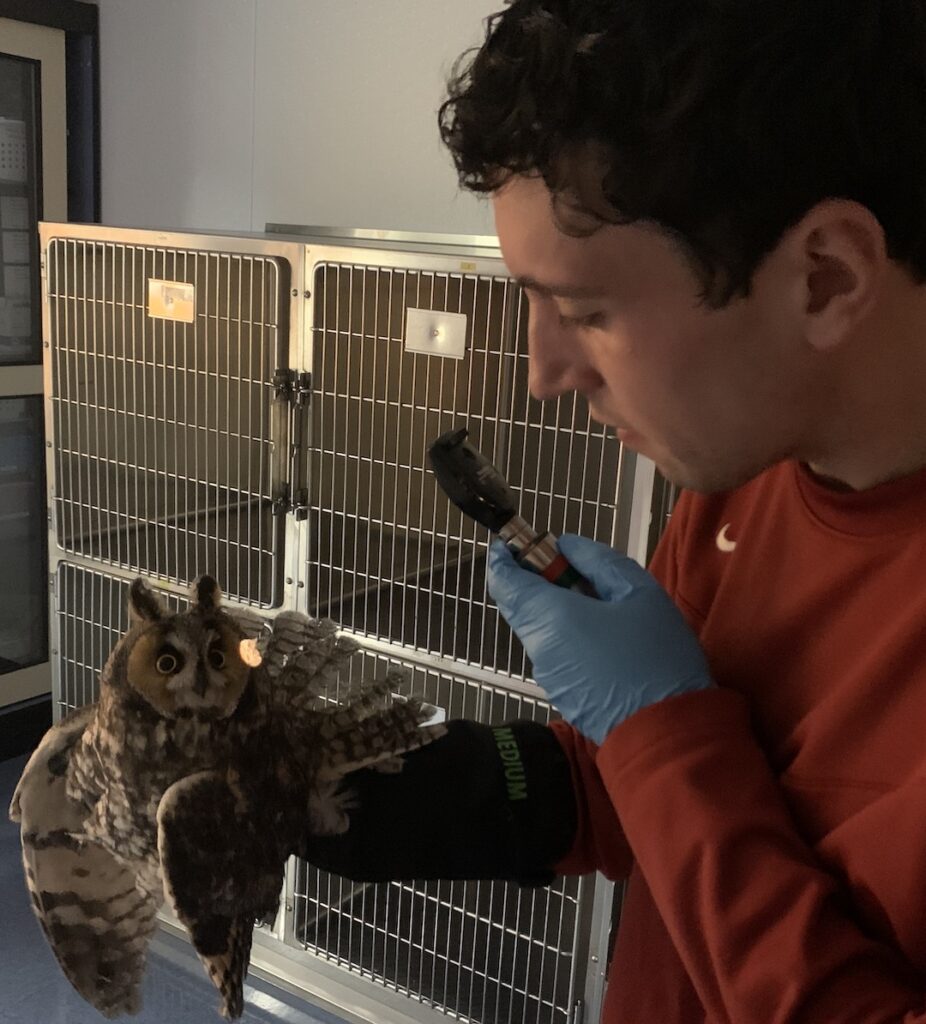
My New Year’s Resolution for my time with the WMC is to have an owl as a patient and to participate in its successful rehabilitation and release. I would also like to participate in a surgical procedure.  

Danielle Money, VM 24:  

I want to make the best of my last two months in the clinic. I have enjoyed my time as a volunteer so much and I am sincerely going to miss it. (Third year students will be moving on from the program in March of 2023 as they start clinical rotations).  

Billy Wright, VM 24:  

I want to help a first-year student confidently triage an incoming patient on their own.  

Brianna Huff, VM 25, soon to be senior WMC student manager:  

My goal is to make sure the incoming manager feels welcomed and has the resources necessary to start the year off right!  

Tyson Jenkins, VM 26, soon to be junior WMC student manager:  

I would like to improve my ability to formulate a treatment and diagnostic plan based off the findings of the triage exam. I also want to sharpen my blood drawing skills on smaller patients.  

Christina Parsnick, VM 25:  

I want to work on my ophthalmic exam skills!  

Jacquelyn Merx, VM 26:  

I want to keep sharing knowledge about wildlife through social media and conversations with friends, family, and others. This will help increase knowledge and awareness on issues animals face and help people learn when to help and how to help.  

I also want to learn more about reptiles and amphibians this year. Besides turtles, I really don’t know much about these animals. We recently had a salamander come through the clinic and it made me realize that I need to become more familiar with our local reptiles and amphibians and their care. This will allow me to give them the best care possible and to help educate others in the future. 

Haley Kenyon, VM 25:  

Unfortunately, I have had a string of cases where the animals are so severely injured or ill that the most appropriate and compassionate measure to take was humane euthanasia. Due to this, I am hopeful that I will receive a case where the animal is able to be successfully rehabilitated and then released back into the wild.   

Fayth Kim, VM 24:  

As a team leader, I want to make the best out of the year and help the students on my team feel more comfortable making treatment plans for their patients.  

Hassan Hanna, VM 25:  

My top three resolutions are to be a primary case manager caring for a North American River Otter, to be well rounded and knowledgeable about wildlife and to be able to rattle off random bird facts at dinner. I would also like to strengthen some of my clinical skills including blood draws, diagnostic methods, and sample collection.  

Amanda Wong, DVM, ZCA Resident II:  

I would like to participate in more surgical procedures with students to help them feel more comfortable with potentially complex treatment options for wildlife.  

As for myself, my WMC New Year’s Resolution is to continue to improve the program as the current senior student manager. I hope those that follow in my footsteps feel comfortable taking on the role of the manager and enjoy being in the position they hold. We are all excited to see what the new year has in store for us at the Wildlife Medical Clinic!  

Written by Chloe Dupleix, current senior WMC student manager.

Wildlife Medical Clinic
John A. Coyne South Clinic
2100 South Goodwin Avenue
Urbana, IL 61801
217-244-1195