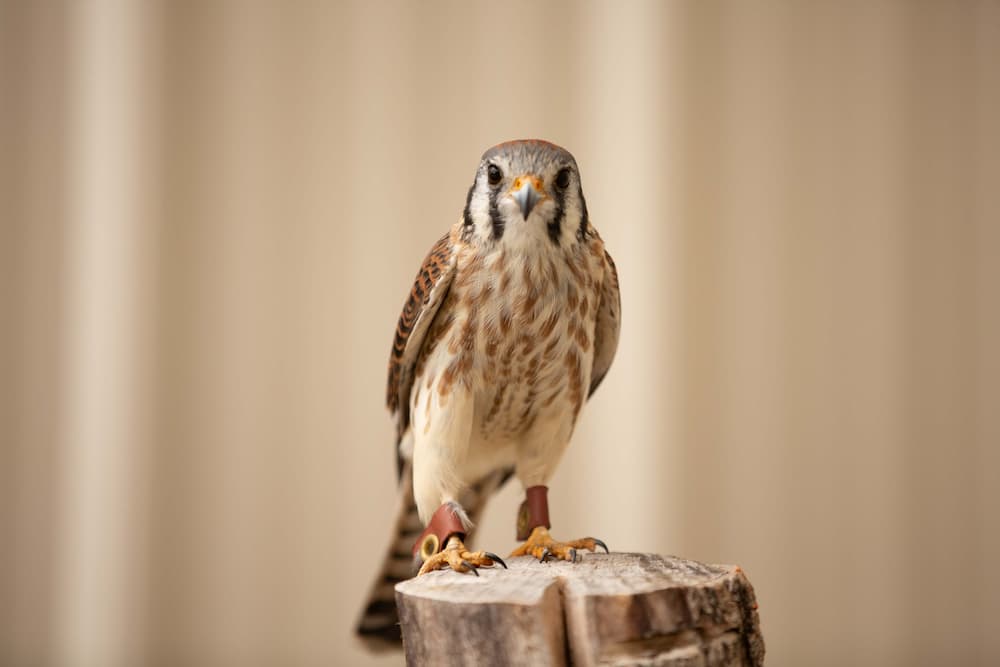
Wildlife Medical Clinic Giving Opportunities

It’s that time of year where we are getting into the Holiday season. As you are shopping and looking for gifts for loved ones, keep in mind, the Wildlife Medical Clinic has some unique giving opportunities such as our adopt an ambassador program, our sponsor a day program, and currently our 2025 calendar is available for purchase. What’s best about giving to the clinic is the recipient not only gets some very unique items but the money donated to the clinic goes directly towards food, supplies, and medical treatment of our resident ambassador animals and wildlife patients.

Adopt an Ambassador Program

There are four levels or tiers you can choose from for your adoption. Each level adds to the items you receive.
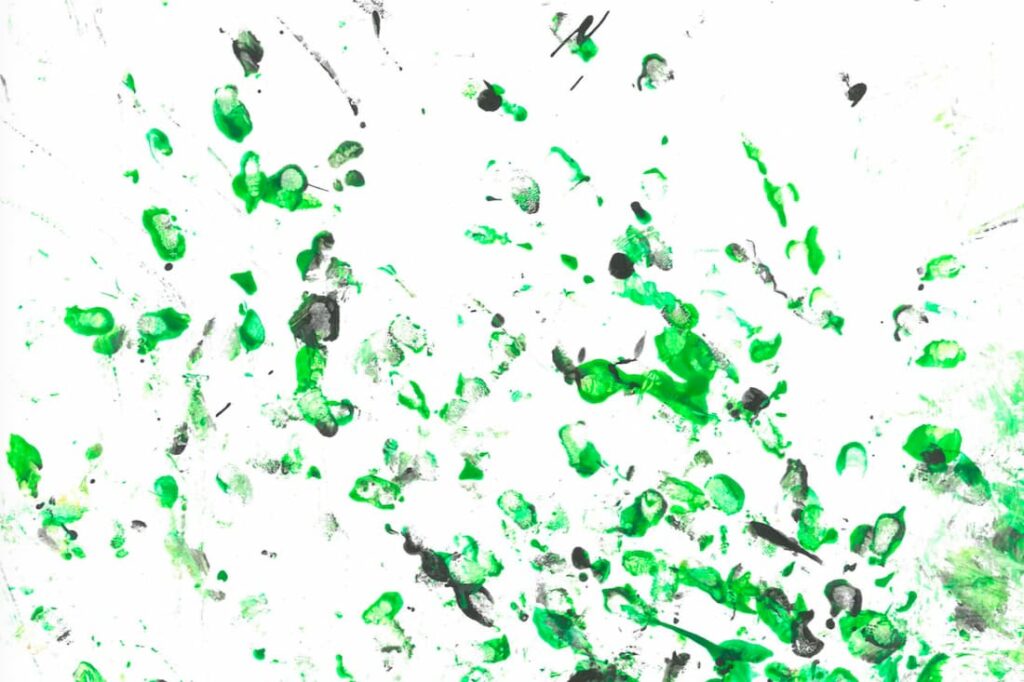
Animal Artwork created by Ruby the Red-tailed Hawk. Green foot prints.
  • Tier 1: 5×7 color photo of the adopted ambassador, certificate of adoption, ambassador story, $50.
  • Tier 2: All of Tier 1, plus Wildlife Medical Clinic magnet, $100.
  • Tier 3: All of Tier 2, plus 5×7 painting made by the ambassador animal, $150.
  • Tier 4: All of Tier 3, plus personalized video of the ambassador animal, $250.

Sponsor a Day

For as little as $350 you can select a day to cover the cost of care and medical treatment for the wildlife patients in the clinic. This also indirectly helps to provide hands on experience for our current veterinary student volunteers.

You can select a random day or one that has meaning to you. This also makes for a great gift for birthdays, anniversaries, or other holidays. The donor or person being gifted this will receive a certificate and recognition on our Facebook page for their gift.

2025 Wildlife Medical Clinic Calendar
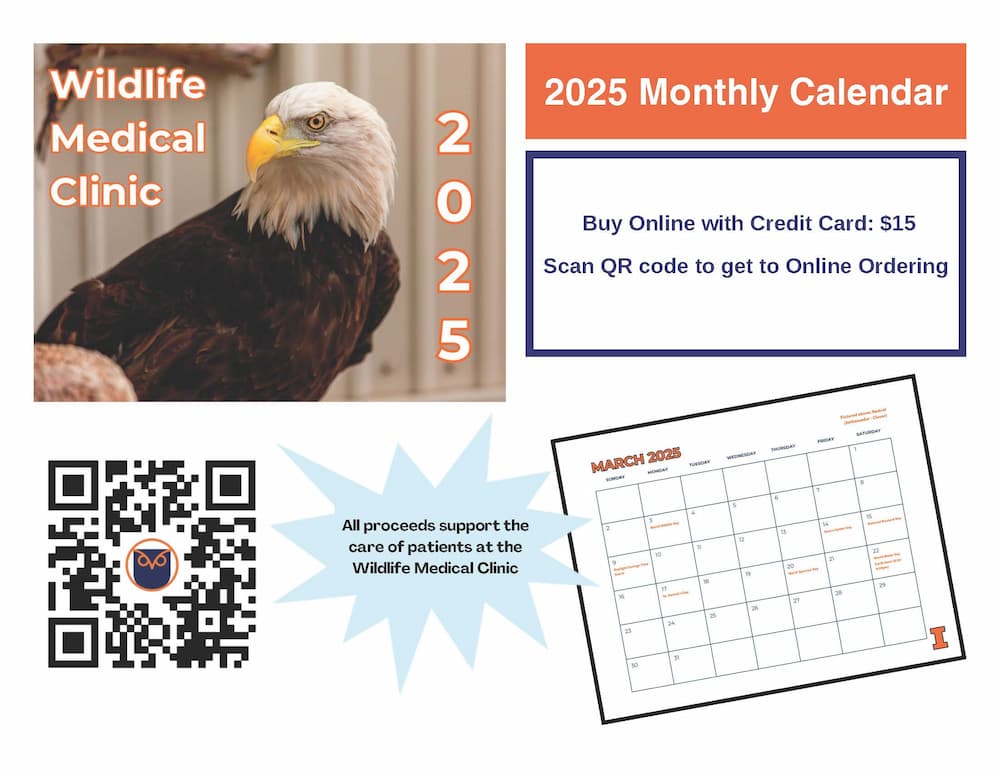
Flyer for the 2025 WMC Calendar.

Each year we create a calendar that highlights some of our wildlife patients and ambassador animals. This year we have some great images of 2024 wildlife patients and ambassadors, as well as some interesting animal days noted throughout the year. If interested in purchasing a calendar, you can pick one up at the Small Animal Clinic front desk and Vet Med South Clinic front desk when you bring your pet in for an appointment or these are also available online at go.illinois.edu/WMCCalendar, and they will be shipped directly to the address provided on the order form.  

Additional Information

In addition to these unique gifts, we also accept monetary donations and have periodic fundraisers throughout the year. For more information, check out our website at https://vetmed.illinois.edu/wildlife/hospital/wildlife-medical-clinic/wildlife-giving/ or follow us on Facebook at facebook.com/UIWMC.
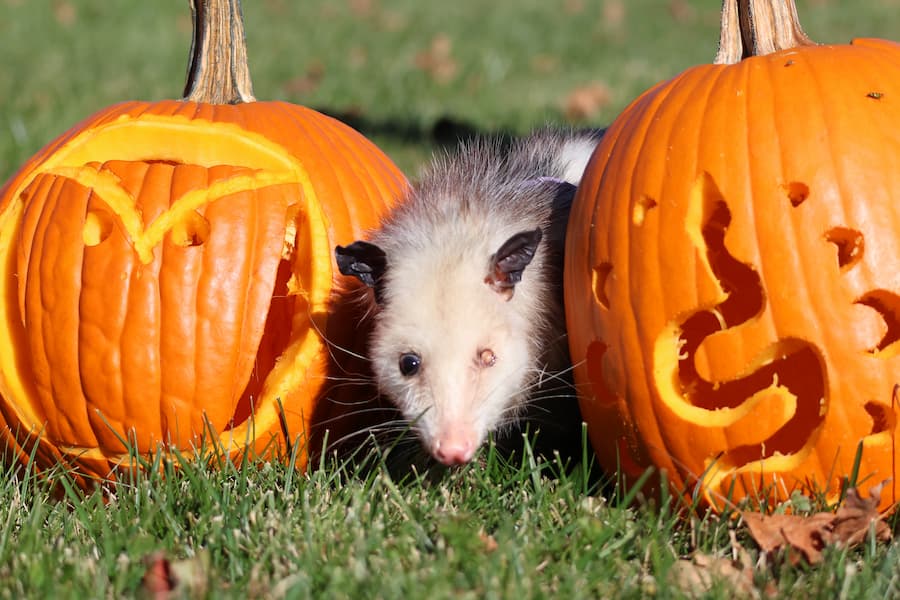
Carving Pumpkins with Ambassadors

The Ambassador Team held their second annual pumpkin carving event last month. Since the ambassador volunteers primarily do their shifts individually or in pairs, social events are a great way to bond as a team and have fun outside of studying.

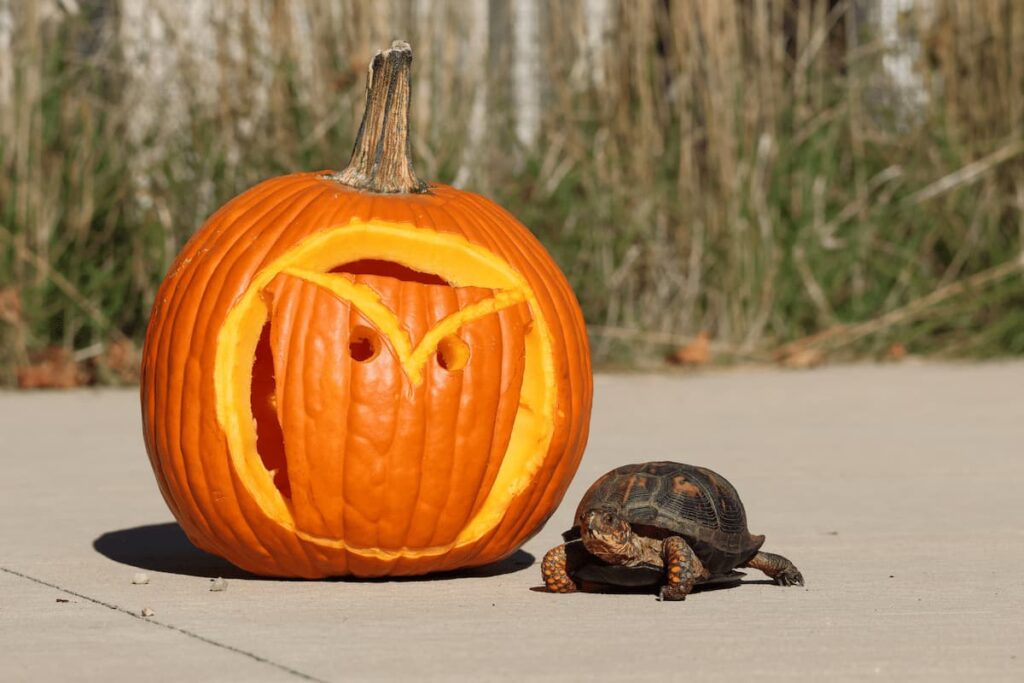
Eastern Box Turtle, Hazel, resting in the sun in front of a pumpkin carved with the Wildlife Medical Clinic Owl logo.

Our volunteers listened to a Halloween playlist, talked about our favorite Halloween movies, and carved 6 pumpkins. Patterns included an opossum sitting on a branch, a slithering snake, a classic jack-o-lantern, and the WMC logo! We also cut out bat silhouettes to hang up around the animal enclosures.

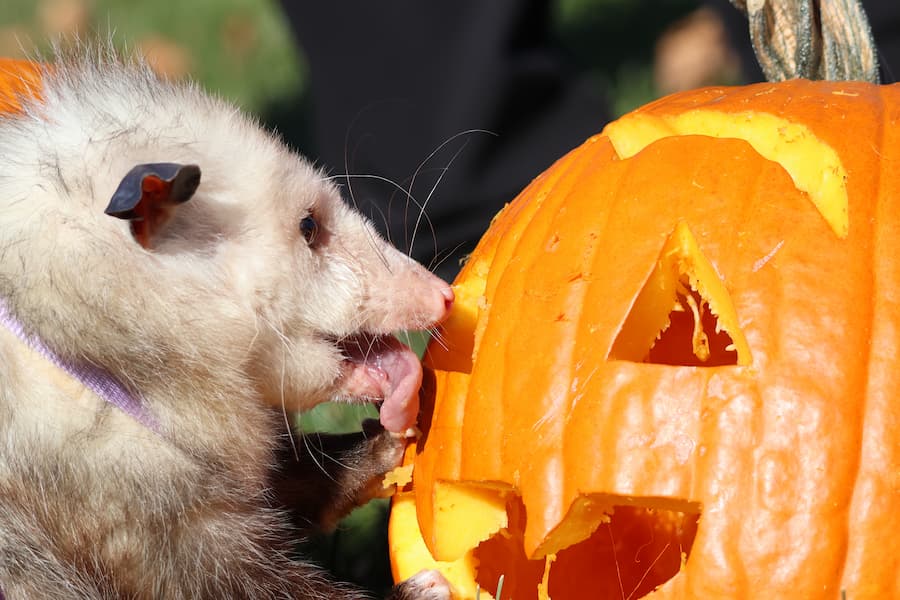
Virginia Opossum, Petunia, licking a carved pumpkin.

The fun really began when the pumpkins were completed – we introduced Hazel (Eastern box turtle), Onslo (blue-tongued skink), Petunia (Virginia opossum), and Odin (red-tailed hawk) to our creations. Petunia and Hazel both dove right in to tasting the pumpkins. Don’t worry – pumpkin is a safe food item for both of them! Onslo and Odin were not quite sure what to make of the pumpkins, but seemed to enjoy the outside time regardless.

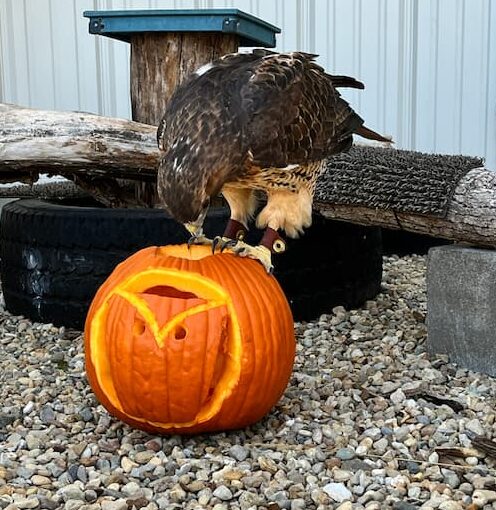
Red-tailed Hawk Ruby standing on top of a carved pumpkin in her outdoor enclosure.

Once everyone had their fill of pumpkin, we moved the pumpkins into our raptor enclosures. Ruby (red-tailed hawk) got right to exploring her pumpkin but lost interest after she realized there were no snacks hidden in the pumpkin.

We hope you enjoy the pictures from this event and that you all had a safe and spooky Halloween!

If you want to see some additional images and video from this event, check out our new social media account (on TikTok @wmc.ambassadors, https://www.tiktok.com/@wmc.ambassadors?_t=8rLBS03qvbq&_r=1).

Written By: Sarah, Wildlife Ambassador Care Coordinator and Class of 2026

Ambassador Enrichment

Enrichment, What is it?

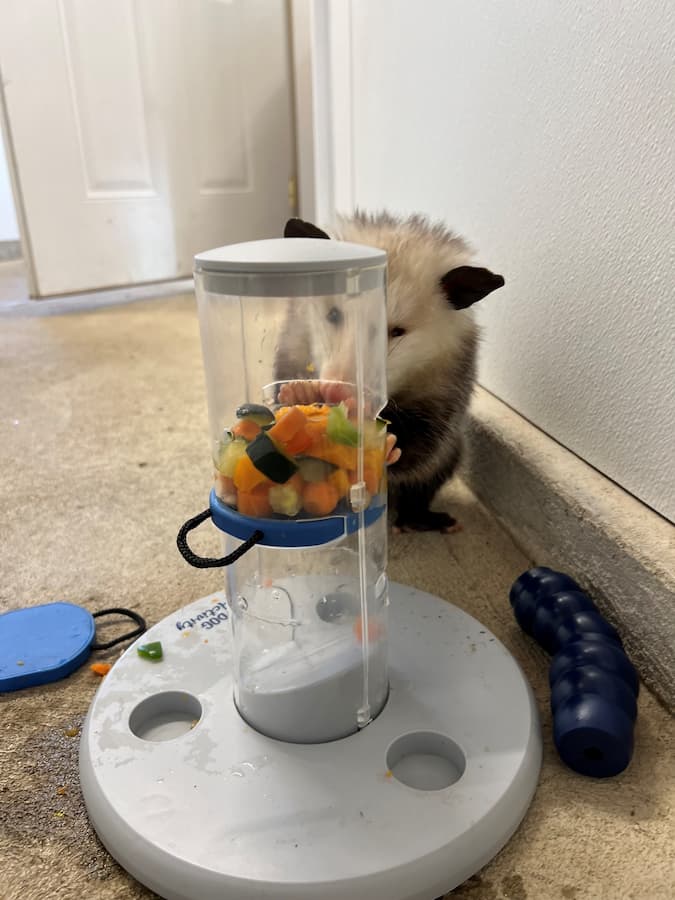
Virginia Opossum, "Petunia", figuring out how to get food out of a puzzle feeder.

In addition to the daily husbandry of our resident ambassador animals, we also provide training and enrichment. The goal of enrichment is to provide mental (and sometimes physically involved) stimulation while encouraging species specific behaviors. With our program, just like in all other managed care settings, we provide enrichment to our animals. We have an enrichment calendar where we have a rotation of different types and categories of enrichment that volunteers use to guide their enrichment activities. Every facility will have their own enrichment protocols/calendars to fit the needs of their animals. Collaboration often occurs between centers and other programs and this is a good resource for us to find new ideas for enrichment for our animals. Enrichment can make a big impact on the lives of our animals, and we strive to make it as new, exciting, and interactive as possible. Enrichment will vary depending on the species of the animal, their involvement in past enrichment activities, their comfort with volunteers and other interactions, and the ambassador’s own personalities.

Favorite Enrichment

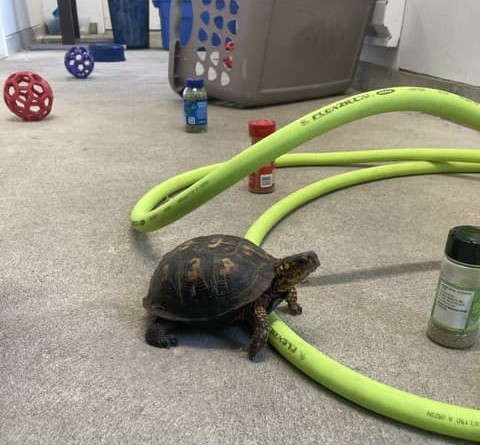
Eastern box turtle "Hazel" maneuvering an obstacle course with lots of enrichment items.

Not only do we account for species specific natural behaviors, but we look at the individual personality of each animal in our care to determine appropriate enrichment for them. Over the years, we have kept track of what enrichment was favorable and what enrichment was not, allowing us to personalize their enrichment to ensure they are benefiting from what we are adding to their environment. Petunia, our Virginia opossum, loves food puzzles, foraging, new scents, and exploring. Ruby, one of our red-tailed hawks, loves to shred things and this encourages her species-specific behaviors. Hazel, our eastern box turtle, along with Onslo our blue-tongued skink, have been working on their obstacle course skills and have been maneuvering them well. River and Vara prefer more auditory enrichment over physical enrichment items. Odin, our other red-tailed hawk, enjoys a wide variety of enrichment from seasonal decorations to foraging to music. Maize and Caduceus, our snakes, explore and climb to new places. Clover, our American Kestrel, is extremely inquisitive and loves finding new items and decorations in her enclosure. While I’ve listed each ambassadors most interacted with type of enrichment, they all get a rotating variety of enrichment. This ensures that we are not just giving one type of enrichment so they are getting variety in their daily life as they would experience in the wild.

Training

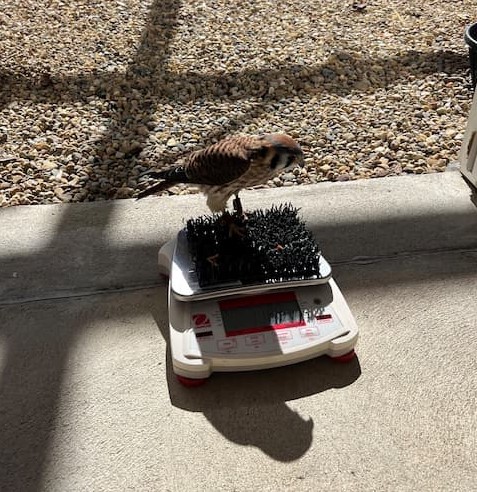
American Kestrel "Clover" participating in training and standing on a scale to be weighed.

Training can also be enriching to our animals and we do train on glove with some of our raptor residents, while others have different kinds of training, such as target, crate, and scale training. For our training, we only use positive reinforcement techniques. We train for behaviors to help with educational program use or for husbandry and medical procedures which helps to decrease stress.

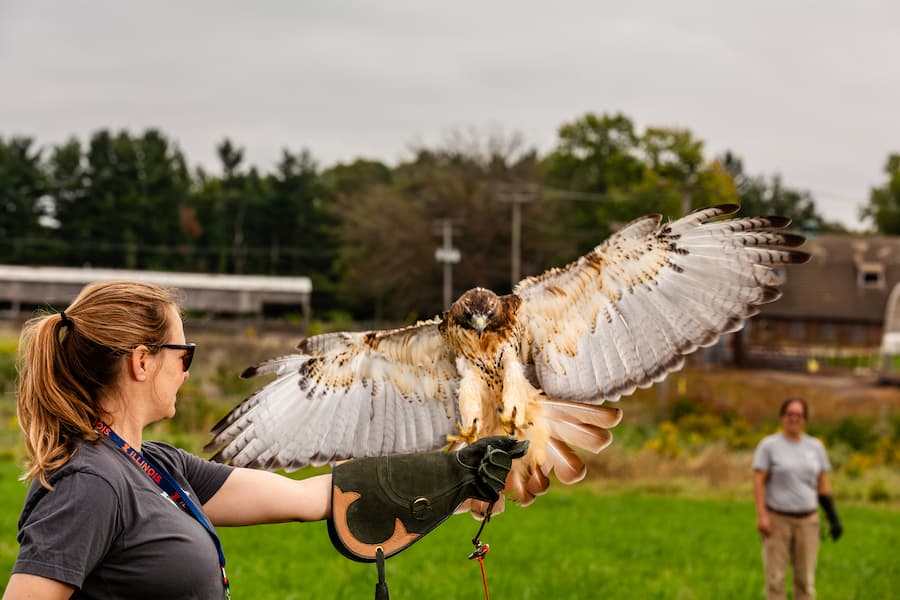
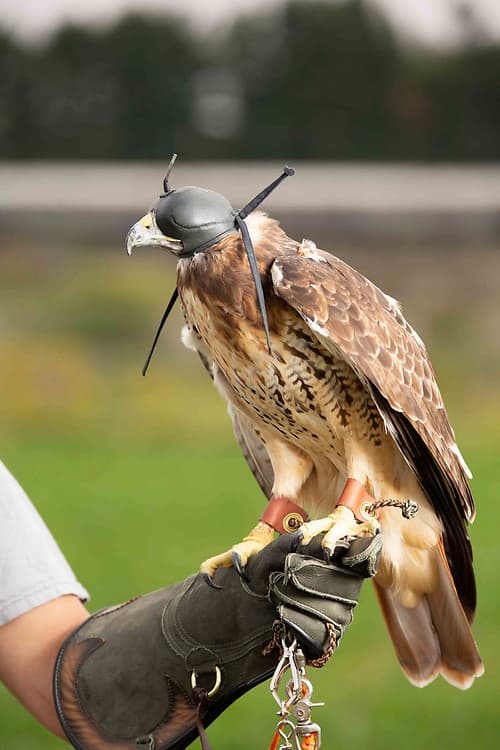
Red-tailed Hawk "Ruby" wearing a hood and sitting calmly on the glove while outside her enclosure.

Training is very complex and has many facets, it can also be very rewarding and enriching for the animals. For example, Ruby and Odin enjoy walks outside because they are glove trained. Sydney, along with some of our volunteers, are able to train with them throughout the week to ensure they remain comfortable and solid with the behaviors they are trained on and work to train new behaviors as needed. With the new addition of Sarah Spang to our team, a falconer, we have been able to add new techniques to our training with the raptors, particularly Ruby. We have seen that Ruby very much enjoys the extra training and has greatly benefited from it.

Enrichment, Rewarding for all!

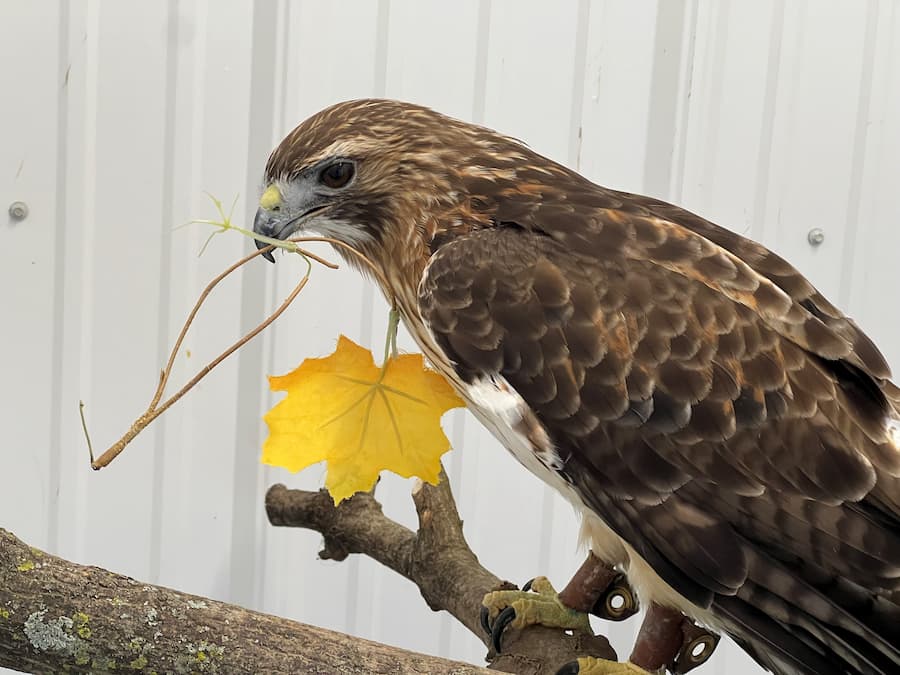
Red-tailed Hawk, "Odin", carrying nesting material in his beak.

Enrichment is my favorite part about working in a managed care setting, I love letting my creativity lead the way. Whether I am thinking of new ways to make food puzzles, working on paper mache for the animals, finding new configurations and decorations in the enclosure, it is a wonderful creative outlet. It is also very rewarding seeing how the animals interact with the enrichment I created, especially when it brings out a targeted species-specific behavior and was mentally stimulating for the animal. We are always evaluating and adjusting the enrichment that is given to our resident animals to try to maximize the benefits of enrichment. So, next time you visit us or a different managed care setting, see if you can figure out what enrichment is being utilized!

Written By: Roxanne, Wildlife Ambassador Care Coordinator and Class of 2027

Farewell and Thanks, Dr. Wong

House Officer- Dr. Wong

Dr. Amanda Wong our wonderful Zoological Companion Animal Resident recently completed her residency at the University of Illinois Urbana-Champaign. She spent countless hours at the University of Illinois Zoological Service and the Wildlife Medical Clinic for the last three years. And many of our volunteer students had the honor of working with and learning from her. She always put her students first and motivated them to take on the challenge of practicing new skills. This July, Dr. Wong left the University and moved on to the next chapter of her career. Although we were sad to see her go, we wish her the best in the next chapter of her career. However, before she left we conducted a mini-interview with her and are excited to share!

Dr. Wong graduated with a Doctor of Veterinary Medicine degree with a background in small animal medicine with an interest in internal medicine and emergency care. Over time, she developed a career interest in zoological companion animals (ZCA), pets that are not small or farm animals. She especially enjoys human and pet ownership in the ZCA world and the potential of medicine, which has a lot of room to explore.

Favorite Memories

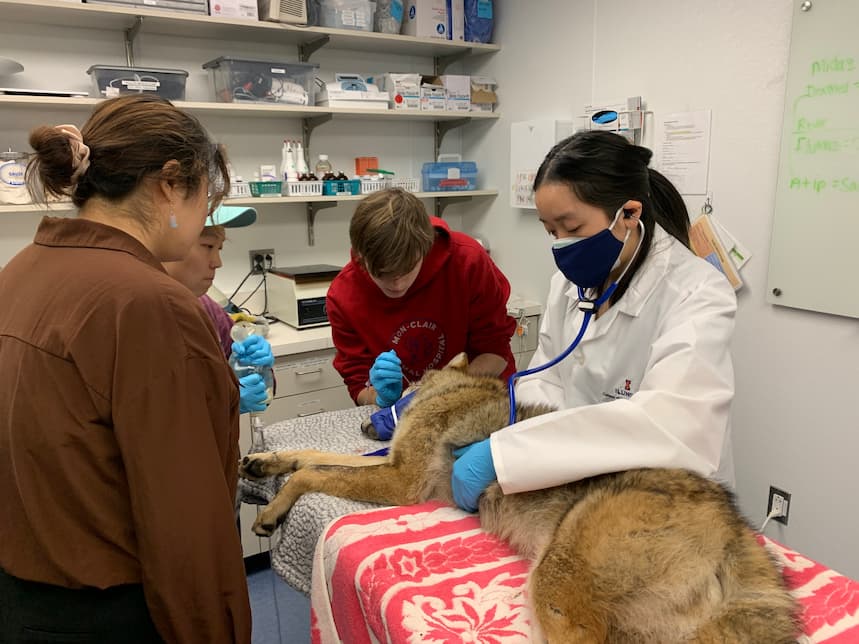
Dr. Wong conducting a physical exam on a coyote in the Wildlife Medical Clinic treatment room, with student volunteers observing.

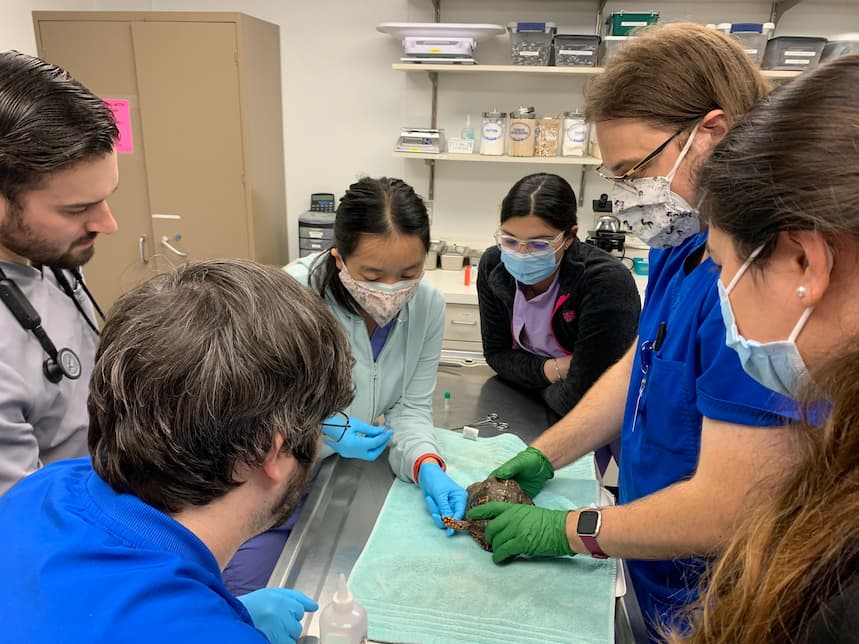
She highlighted her interaction with our students when asked about her favorite memories at the Wildlife Medical Clinic. “… working with students, especially during the summer months, were some of my best memories.” Dr. Wong said she was impressed with the student’s potential and ability. “I remember working with Becky (DVM candidate, class of 2026) on her turtle patient. She took the initiative to learn to place the feeding tube. And she successfully performed the procedure on the patient by herself with only verbal instruction!” Another case that left a deep impression for Dr. Wong was a coyote patient that she worked with student volunteers, “… we don’t get adult coyote often. It was a unique opportunity for students and us (house officers) to think about patient and student safety.”

Virginia Opossums are the best!

Dr. Wong has worked with hundreds of wildlife patients at the WMC, and opossum is her top wildlife patient to work with. They not only are incredibly charismatic (think baby opossum here), but they are also great for the environment with their fantastic pest control ability.

Future Career Plans

After leaving the University, Dr. Wong plans to return to California’s Bay area. She will be joining a private practice focusing on the zoo companion animal. Her long-term goal is to become a board-certified specialist working in private practice and emergency care and one day open her own practice!

Words of Wisdom

Dr. Wong walks through a box turtle exam with a group of veterinary student volunteers.

Before we close the interview, she would like to share a word of encouragement with all the readers and our current and prospective students. “WMC, in general, is a fantastic opportunity; learning from the WMC and the cases will serve you very well. I Highly encourage getting involved in the clinic.”

THANK YOU, Dr. Wong, for all of your hard work and the guidance you provided to our students; we will miss you so much! We are sending all the best wishes for your future endeavors.

Written By: YiYing, co-chair and class or 2026 and Rachel, co-chair and class of 2027.

Goodbye, House Officers

Dr. Aubrey Engel

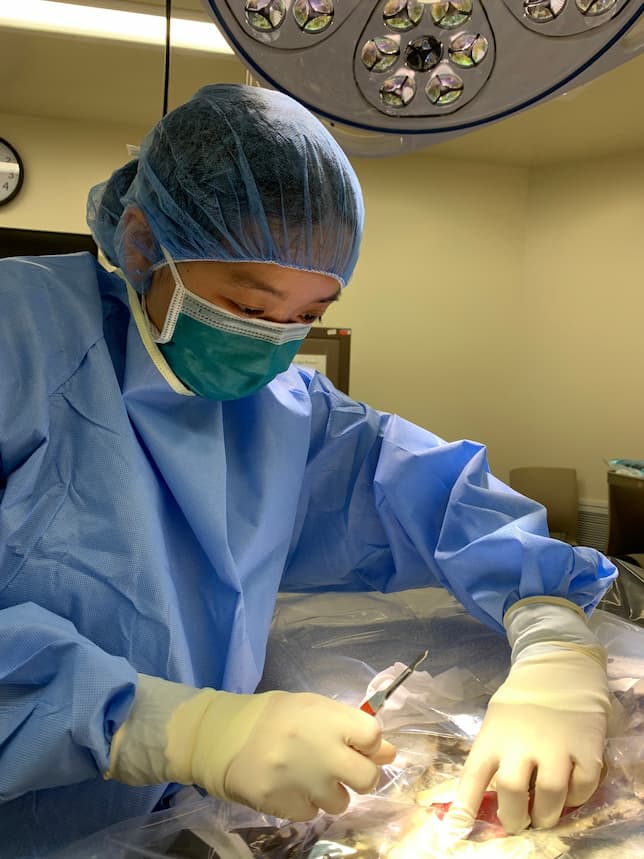
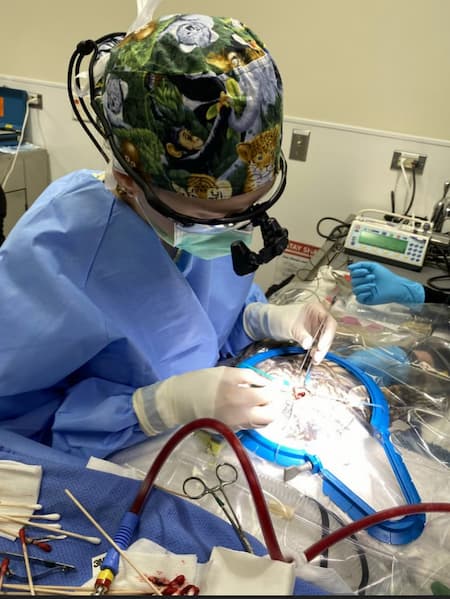
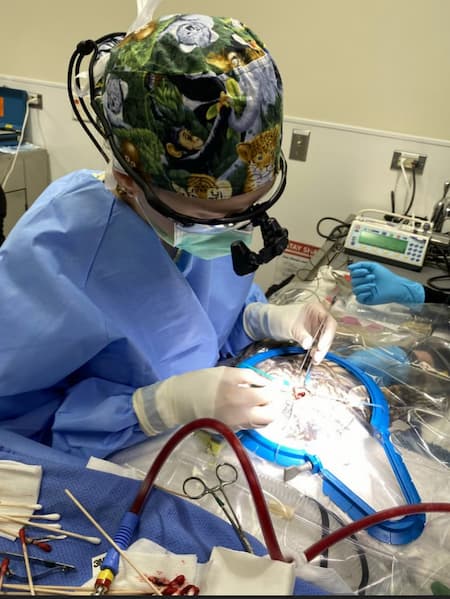
Dr. Engel has been our Zoological Medicine Specialty Intern since August of 2022, and she will be moving on to our anesthesia service at the University of Illinois Veterinary Teaching Hospital to complete a one-year specialty internship. When she talked about her favorite memories of the Wildlife Medical Clinic (WMC), she said, “Working in the WMC for the last six years as an undergraduate, then vet student and team leader, and now a house officer, I have made SO many favorite memories! I love teaching, so many of those memories are associated with teaching students new skills or about new species. I have really enjoyed surgeries like wing fracture repair and turtle shell repair procedures!!”

She is also deeply passionate about zoo and conservation medicine, as well as anesthesia and pain management. She shared with us her passion and plan, “My overarching career goal is to make an impact in the conservation of endangered and vulnerable species. I look forward to finding ways to do this by combining those passions in clinical practice.” Dr. Engel also emphasized that she believes “anesthesia plays a vital role in our ability to care for zoo and exotic patients, and I am eager to become more proficient in this area of specialty.”


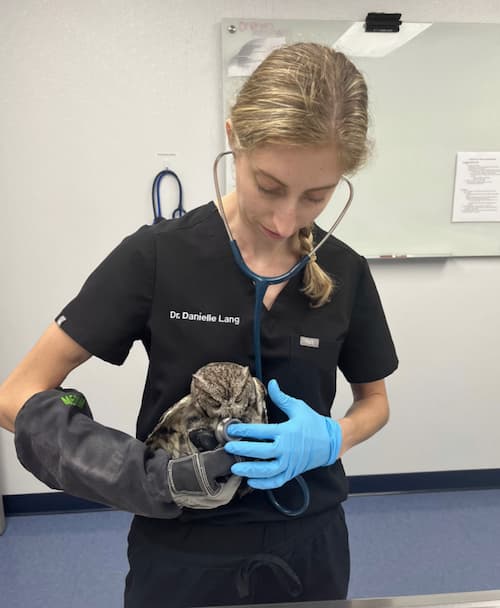
Dr. Danielle Lang

Dr. Lang is our first-year Zoo and Aquatic Animal Resident since August 2022, who will be moving on to Shed Aquarium and Brookfield Zoo to continue her next two years of residency. When asked about her favorite memories at the Wildlife Medical Clinic, she shared some of her favorite surgical cases: removing a lead BB in a goose and suturing lacerated arteries on a goose. She said, “I enjoy working with and teaching students the skills. It is very rewarding to see them grow.” And when asked about her favorite species, she said, “I love working with raptors, especially on the fracture repair on birds.”

Dr. Lang’s love for wildlife started at a young age. “… I was inspired going to the zoo as a kid and learning about their importance in the world. I wanted to contribute to public education and inspire them to care more about the wilderness and the planet,” said Dr. Lang. She hopes to positively impact the conservation and preservation of the planet while sharpening her problem-solving skills through creativity and collaboration.

To our WMC volunteers (past, current, and prospective), she would like to say, “Thank you for making this an incredible year; not only do I get to teach, you all teach me a lot. And if you ever have questions about the career, feel free to reach out.”

And to all our wildlife lovers interested in the field, “Know what you love and make a difference, have great passion and perseverance. It can be a long and challenging journey; finding those who will support you makes a huge difference. Support you and your classmates; collaboration is the key. Because one person can’t anesthetize the elephant alone, it takes the whole village.”

Dr. Lang and Dr. Engel have played an integral part in the operation of the Wildlife Medical Clinic in the last year. Their passion, knowledge, and great patience positively impacted every student they worked with. As they move on to the next step of their journey, we wish them the best and a flourishing career ahead!

This article was interviewed and summarized by second year student YiYing

Wildlife Medical Clinic
John A. Coyne South Clinic
2100 South Goodwin Avenue
Urbana, IL 61801
217-244-1195