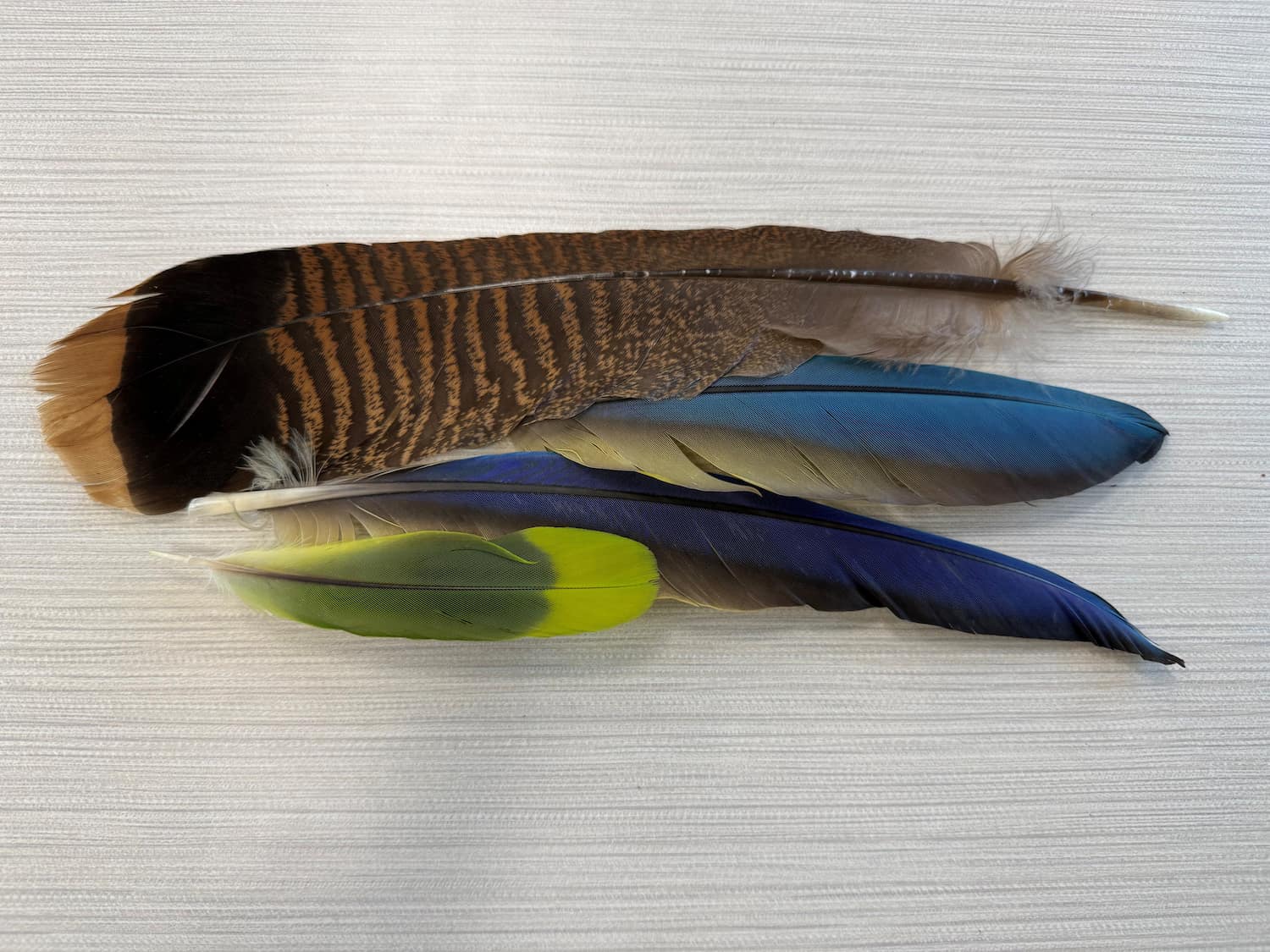
A few weeks ago, I was sitting at the Avian Club booth at the Vet Med Open House. Spread out in front of me was an array of colorful feathers in a variety of shapes and sizes. Visitors were attempting to guess what bird species each feather came from. I had one long blue feather and one long brown feather featured prominently at the front of my table. The blue was from a Blue-and-Gold Macaw (Ara ararauna) while the brown was from an Indian Peafowl (Pavo cristatus). The most common guess for the blue feather was peacock, and owl for the brown feather. Questions about owls became a common theme. Weren’t owls cool? Was I sure the brown feather wasn’t from an owl? Where were my owl feathers? All great questions, and a great teaching opportunity.
Migratory Bird Treaty Act
The reason I had no owl feathers, no hawk feathers, no eagle feathers was simple – the Migratory Bird Treaty Act (MBTA). During the 19th century, hats decorated with feathers or even whole taxidermy birds became stylish accessories. The demand for feathered adornments was so great that entire bird species were hunted to or past the brink of extinction. The sheer scale and devastation of overhunting led to the passage of several laws. The MBTA was passed in 1918 to stop poaching of migratory birds. It protects over 1,000 bird species by making it illegal to kill, capture, sell, or possess any parts of these birds, including feathers, bones, nests, and eggs. Bald Eagles (Haliaeetus leucocephalus) are further protected by the Bald and Golden Eagle Protection Act. Eagle remains and parts are sent to the National Eagle Repository, where they are stored and distributed to registered members of Native American Tribes.
A century after its enactment, the MBTA is still protecting our native birds. Though feathered hats have fallen out of fashion, our modern world still poses many threats. Window collisions, habitat loss, and illegal trade still endanger avian species. Even naturally molted feathers from protected native birds cannot be kept without authorization. The U.S. Fish and Wildlife Service (USFWS), who enforces the MBTA, would not know if a feather was found after being naturally shed or illegally obtained. A blanket restriction on the ownership of protected species prevents poachers from claiming they found illegally collected feathers on the ground.
The Wildlife Medical Clinic Holds Permits to Possess Protected Birds and Feathers
Educational groups, like our ambassadors at the Wildlife Medical Clinic, can obtain permits that allow them to possess protected birds or feathers. Whittington, Ruby, Odin, Loki, Clover, and River are all protected under the MBTA, but are allowed to be kept under human care as part of the clinic’s public outreach efforts. Through educational presentations, these birds help people learn about different native bird species and the threats they face. Their stories can also illustrate the challenges of habituated wildlife, environmental pressures, and human infrastructure. Ambassadors provide a valuable opportunity for people to learn about and appreciate birds while making sure that wildlife is being managed responsibly. By connecting on an individual level, these ambassador birds can encourage people to take a more active role in bird conservation.
Non-native Species are not Protected Under the Migratory Bird Treaty Act
The MBTA does not protect non-native species like macaws and peafowl, which is why we displayed those species at the Avian Club booth. What began as a guessing game became an opportunity to educate visitors about bird conservation. It can be tempting to bring home a feather you find outdoors, but leaving a feather where you found it is an effortless way to respect wildlife. Small choices reflect a larger responsibility to protect wild bird populations and prevent further decline of vulnerable species.
Written by: Molly F., Class of 2029
**The feathers pictured above are not protected under the Migratory Bird Treaty Act and are not the feathers described in this article.**