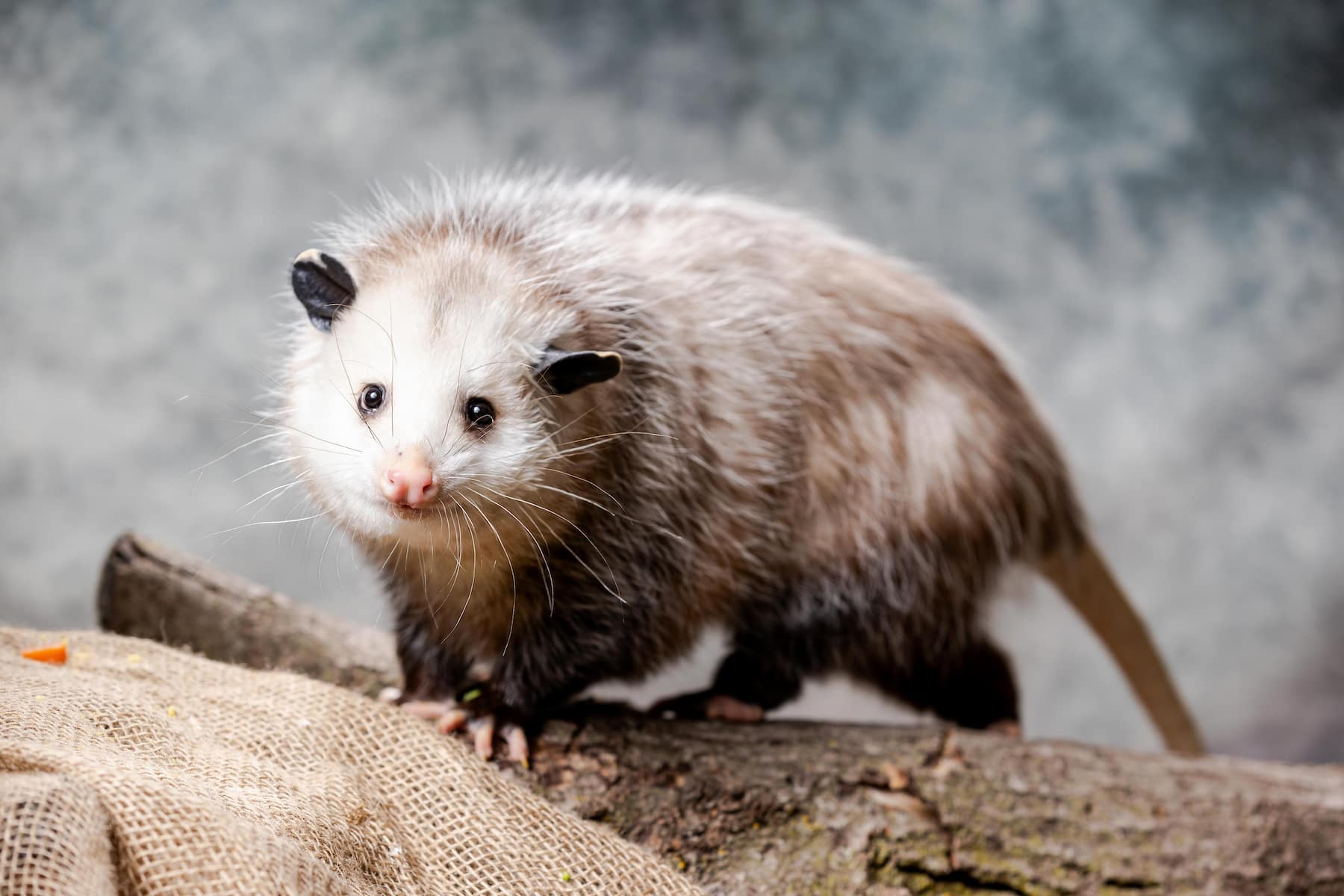
What’s better than one Virginia opossum…TWO Virginia opossums!
Everyone, Meet Petal!
Petal officially joined our ambassador program in late October 2026, although her story with the Wildlife Medical Clinic (WMC) began a few months earlier. Petal was first admitted to the WMC on July 4, 2026, after being transferred from another wildlife rehabilitator for injuries to her left hind foot.
On examination, our team discovered that Petal had traumatically lost digits 2-5 on her left hind foot, leaving only digit 1 intact. The injury was complicated by a severe infection and an open wound that required intensive management. Petal underwent frequent sedated wound treatments and bandage changes, but she handled it all like a champ! Thanks to the dedicated care of our summer team, her wound healed beautifully and without complications.
Virginia Opossum and Their Unique Feet
Virginia opossums have some pretty remarkable feet! Although their hind feet, like their front feet, have five digits, their hind feet have a unique adaptation called a hallux. The hallux is the innermost digit and is clawless and opposable, functioning much like a human thumb. It can rotate inward to grip against the other four clawed toes, creating a grasping foot.
This specialized foot structure is particularly important for climbing and foraging. The hind foot allows opossums to securely grasp branches and vertical surfaces with a lot of stability. This grasping ability also allows them to manipulate food items and nesting material.
Petal Joins the Ambassador Team
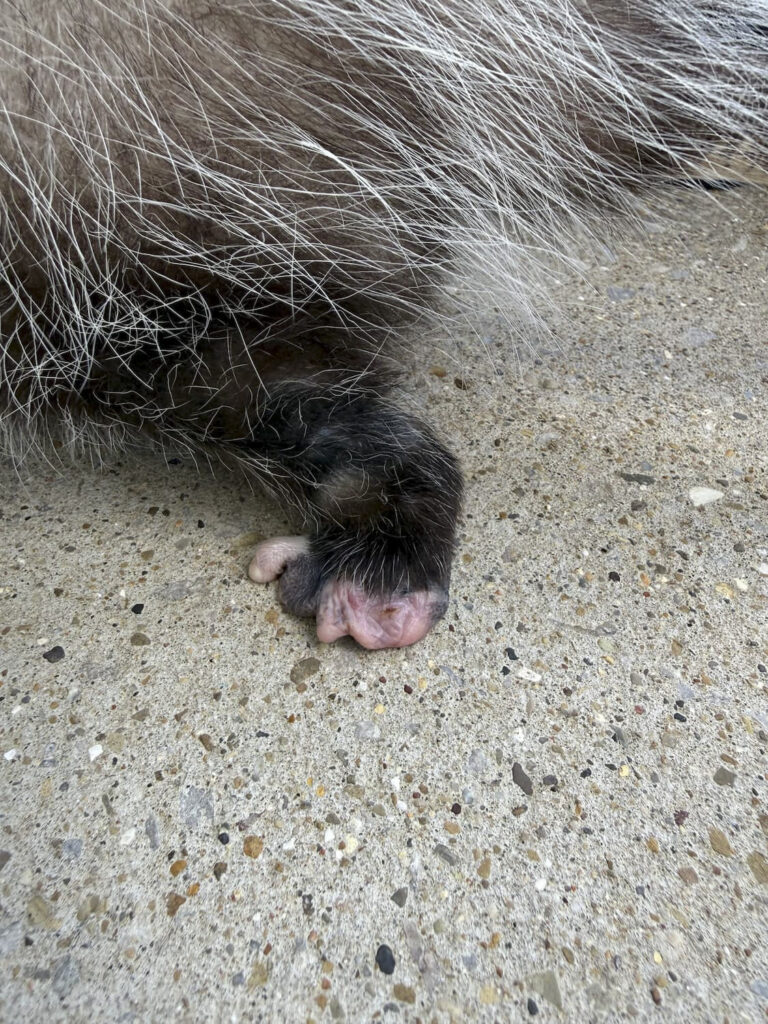
Unfortunately, because Petal lost all four clawed digits on her left hind foot, she is no longer a candidate for release. Instead, Petal has found new purpose as a member of our ambassador program, where she will serve as a great representation of her species.
Petal and Pesto, our other Virginia opossum ambassador, are great representatives for their species and can help dispel some of the negative stigma surrounding these amazing creatures. Opossums do a lot more good than most people expect! They are omnivores with quite a diverse and opportunistic diet, which makes them excellent members of nature’s cleanup crew. For example, they help control populations of what people often consider to be pests. They will eat cockroaches, snails, slugs, snakes, rats and mice, as well as scavenge on roadkill. Opossums are also remarkable for their resistance to certain snake venom. This resistance is attributed to a special protein found in their blood.
Contrary to what many people think, opossums are also quite clean animals. They spend a considerable amount of time grooming and keeping themselves clean. You can always find Petal grooming herself after a meal! Keep an eye out at our programs and you might just get to see Petal out stretching her legs!
Written by: Megan M., Class of 2029