This week, I got to help out with the Wildlife Disease Association conference in Chicago, IL. Hosted in a new city each year, WDA was hosted in Chicago this year with the help of Dr. Karen Terio, the WEL lab, Shedd Aquarium, Peggy Notebart Nature Museum, and more!
Though the conference was from Monday through Friday, there were some additional workshops hosted over the preceding weekend for those interested in attending. These included wildlife capture, necropsy, communication and wildlife rehab workshops. Though I wish I could have attended all of them, I helped out with the wildlife rehab workshop. Hosted by Dr. Heather Barron and Dr. Sherri Cox of the Loggerhead Marine Life Center and National Wildlife Centre respectively, this workshop focused on the science and art of wildlife rehabilitation.
Wildlife rehabilitation is defined by the NWRA (National Wildlife Rehabilitators Association) as the treatment and temporary care of injured, diseased and displaced indigenous wildlife and the subsequent return of healthy animals to appropriate habitats in the wild. I had some prior experience in wildlife rehab clinics, including UIUC’s wildlife clinic, so I was excited to learn more. It was especially interesting to learn about species that I don’t typically encounter in the midwest such as sea turtles, moose, or wolves. In addition, both of the speakers came from centers with large funding and available resources which made it really interesting to see what the gold standard for rehabilitation was. For instance, Dr. Barron mentioned placing IV catheters in all intake patients. Though I had seen this in typical vet clinics, this was new for me in a wildlife setting since my past experience had been in clinics without the staff or resources for this. Hearing about the applications for equipment like wound vacuums in wildlife rehab just made me excited to get back to the UIUC wildlife clinic and keep learning more!
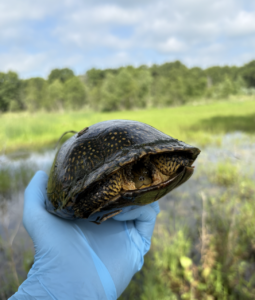
Success!
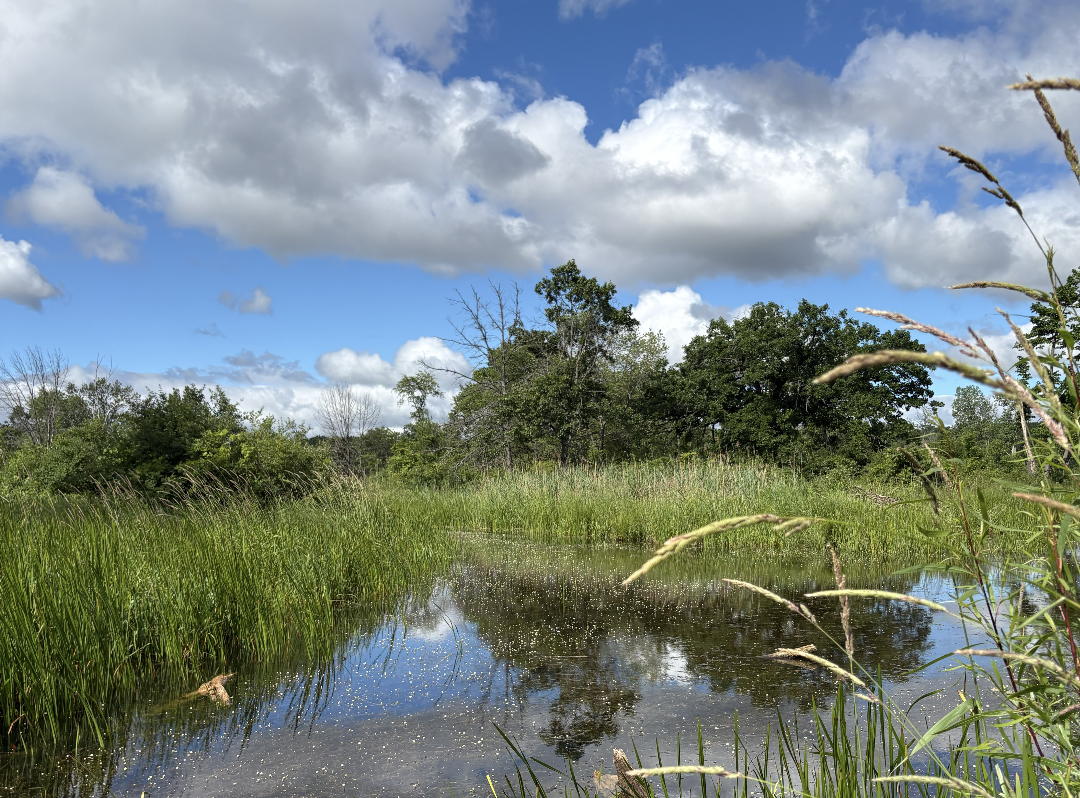
On Monday, we set traps up in Lake County as per usual! Unfortunately, water levels had been pretty low throughout the site so it was a little difficult trapping some of the shallower marshy areas. We ended up setting approximately 40 traps throughout the site, though our initial plans definitely changed due to the water levels.
On Tuesday, I was back at the WDA conference for Student Day. Student Day at WDA focuses on the work of students around the world who have contributed to the study of wildlife and ecosystem health. There were presentations on trichinellosis in species of the North American arctic, responses of fur seal milk to environmental change, and ocular worms in grouse of Montana. It was especially exciting since there were so many members of WEL presenting as well on topics like CWD modeling, TINC in Illinois aquatic turtles, and spotted turtle health assessments. There was also a poster session featuring more WEL students presenting on topics like snapping turtle health amongst students from around the world.
On Tuesday evening, WDA hosted a live auction at the local brewery. We got spend time together as a lab, eat free food (courtesy of WDA!), and watch as conference attendees competitively bid for auction items (an unusually large percentage of which were textbooks).
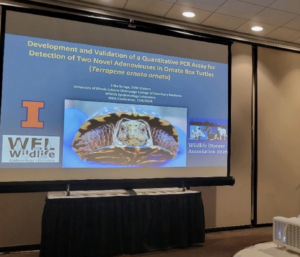
WEL speaks at WDA
On Wednesday, I was back in the field tracking our telemetry turtles! Each month, we take swabs on our telemetry turtles to get a better picture of their health throughout the season. This includes a COS (cloacal/oral), COSS (cloacal/oral/shell), and now OcS (Ocular/Conjunctival) swab. The COS and COSS swab are part of our typical turtle work-up, but the OcS is a new addition to look for possible nidoviruses like Bellinger River Virus. When taking our swabs, we also take the opportunity to check-up on our turtles and ensure they are doing ok! For the most part, they are typically doing just fine, but occasionally we find something odd. This was the case with Lee this month who had an odd lesion beginning to form. We made sure to note it down, so we could monitor it in the future if it continues to become an issue. We also took a swab specifically of the lesion to test for possible pathogens.
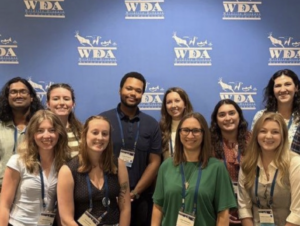
WEL at WDA!
On Thursday, I was back at WDA for the last full day of the conference. The day was filled with talks on wildlife health and medicine. Though some of it certainly went over my head, I got to hear about new tranquilizer formulations for large game species, conservation of flamingos in the Andes, and avian influenza’s effect on the tropics. The day also featured some WEL and UIUC speakers like Dr. Laura Adamovicz and Dr. Maya Iyer who talked about Ornate box turtle plasma and snake fungal disease.
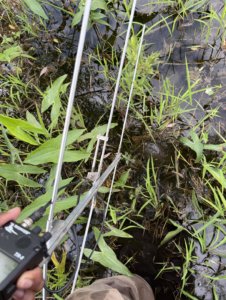
Tracking turtles POV
On Friday, I was back to tracking the rest of our telemetry turtles. Since it would be one of my last times tracking them, it was a slightly bittersweet moment. It has been especially fascinating to track them each week, learning how they moved and used the landscape. I felt like I started to know them well, understanding the places they frequented and their behavior. Unfortunately, my tracking time was cut short by rain because our radio receivers aren’t waterproof.
Though the week was fairly exhausting, it was an interesting experience to do fieldwork and see the possible results of that fieldwork the next day at WDA. While I was there, I learned both more about wildlife health and new ways to approach research. There was even a talk regarding the reptile nidoviruses that I was interested in. It was really exciting getting to see what my future could possible be, whether at WDA or elsewhere. Hopefully one day, I will get to come back to WDA, this time with research of my own!
