Enrichment, What is it?
Wildlife patients seen at the Wildlife Medical Clinic are very different from other patients typically seen in veterinary medicine. While most patients enjoy interacting with vet staff, our wildlife patients would prefer to be as far from us as possible. And we prefer that as well, as too much interaction with humans can make them too friendly or habituated causing us not to be able to release them. However, many patients in the clinic have long stays while they heal broken bones, damaged shells, or are orphaned animals waiting to grow and be large enough for release. While they are in our care it is important to make sure they are mentally and physically stimulated. We do this through enrichment, in the animal care setting enrichment is anything you provide for a patient that lets them use their natural instincts. Enrichment improves our patient’s quality of life during their stay by keeping their mind and body active.
Why Offer Enrichment?
Ensuring our patients have plenty of enrichment also benefits patients medically and prevents unwanted injuries. For example, an injured patient will be less likely to pick at its injury or bandaging if they have other items, they can interact with instead. Enrichment will be different from animal to animal, and species to species. For this reason, it is important for us to know the natural behaviors of the species we see.
Enrichment Examples
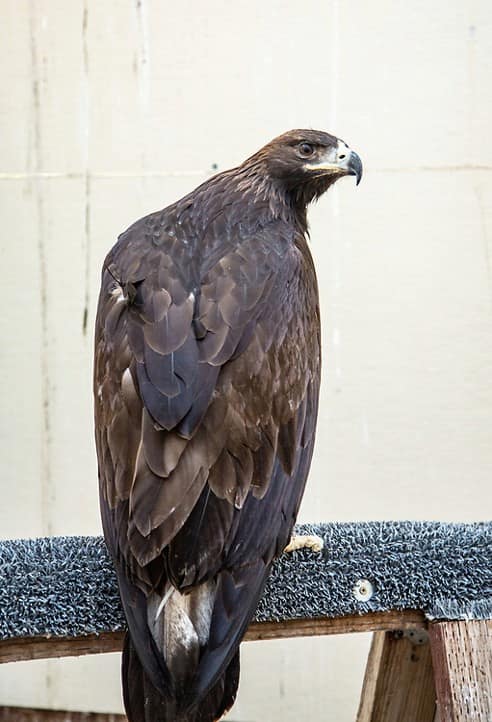
In our clinic we make sure that each patient is properly enriched. Some examples are that each patient room has a sound machine that plays audio that they would hear in the wild. Some of these clip recordings sound like a rainstorm, a babbling brook, or even the sounds of insects and frogs calling. This helps keep our patients’ stress levels low and decreases the amount of human noise they are hearing. Another example would be that our bird patients, like Red-tailed hawks, are provided with perches of varying degrees of thickness. This is important for their foot health, but also provides them with multiple options for perching, which is a natural behavior for this species. If you were to look at our turtle enclosures, you would see that many of them have foliage, hides, substrate suitable for digging, humidifiers and swimming areas. This helps simulate a natural environment for them to heal in.
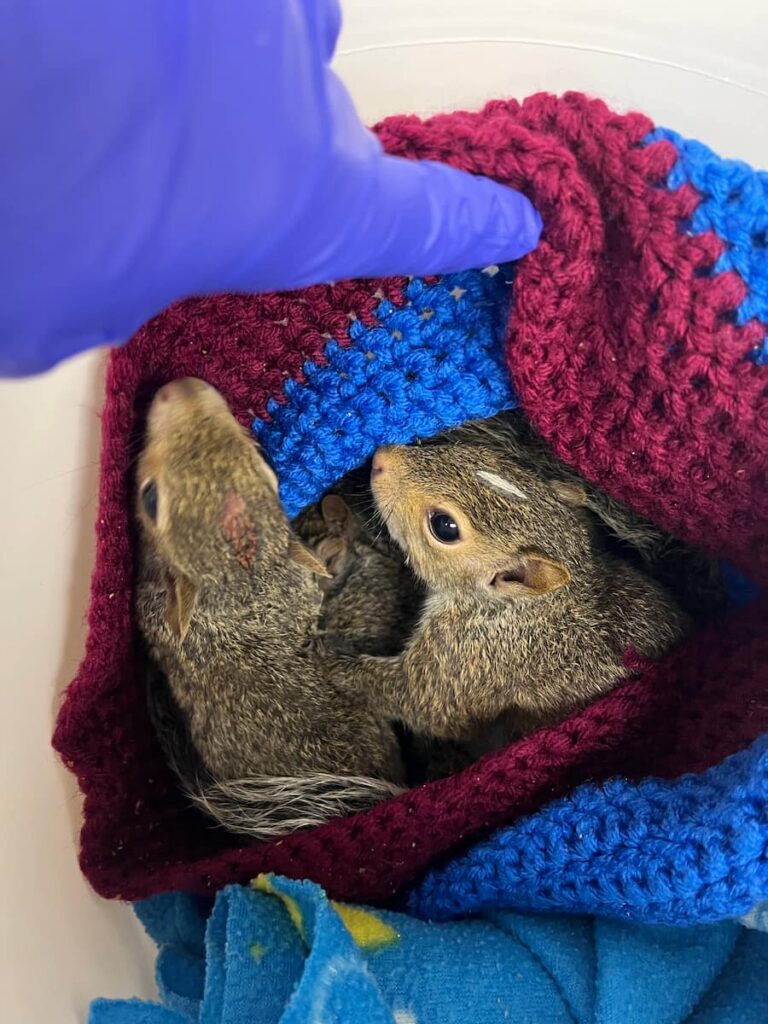
Enrichment is more than creating a natural environment for patients to heal in. For many patients, especially crows, enrichment looks like getting puzzle feeders. Crows are highly intelligent animals and stimulating them mentally helps keep them active. They enjoy figuring out how to get food out of puzzle feeders, or out of dog toys like kongs. Raccoons enjoy similar enrichment items, and can enjoy hammocks, and shallow pools of water. Some patients, like goslings and ducklings that live in groups, enjoy mirrors. This gives them the illusion that there is a group of them or that they have a buddy if we only have one of that species currently in the clinic, making them more comfortable in a rehabilitation setting. Other orphaned animals benefit from enrichment too, rabbit kits and squirrel kits are provided with multiple hides, stuffed animals, and blankets or bedding to burrow in. No matter the species, we want to ensure that they are properly enriched during their stay at the wildlife clinic.
In Conclusion
No matter the species, we want to ensure that they are properly enriched during their stay at the wildlife clinic. This article outlines a few examples of enrichment that we provide for wildlife species. It is important to remember that in a wildlife clinic, we want to provide them with opportunities to exhibit their natural behaviors but also minimize human interaction with the patient as this decreases stress and their likelihood of habituation. This is important as it ensures they stay wild and allows them to heal faster so we can get them back out where they belong, in the wild.
Written By: Maya Y., Class of 2026.