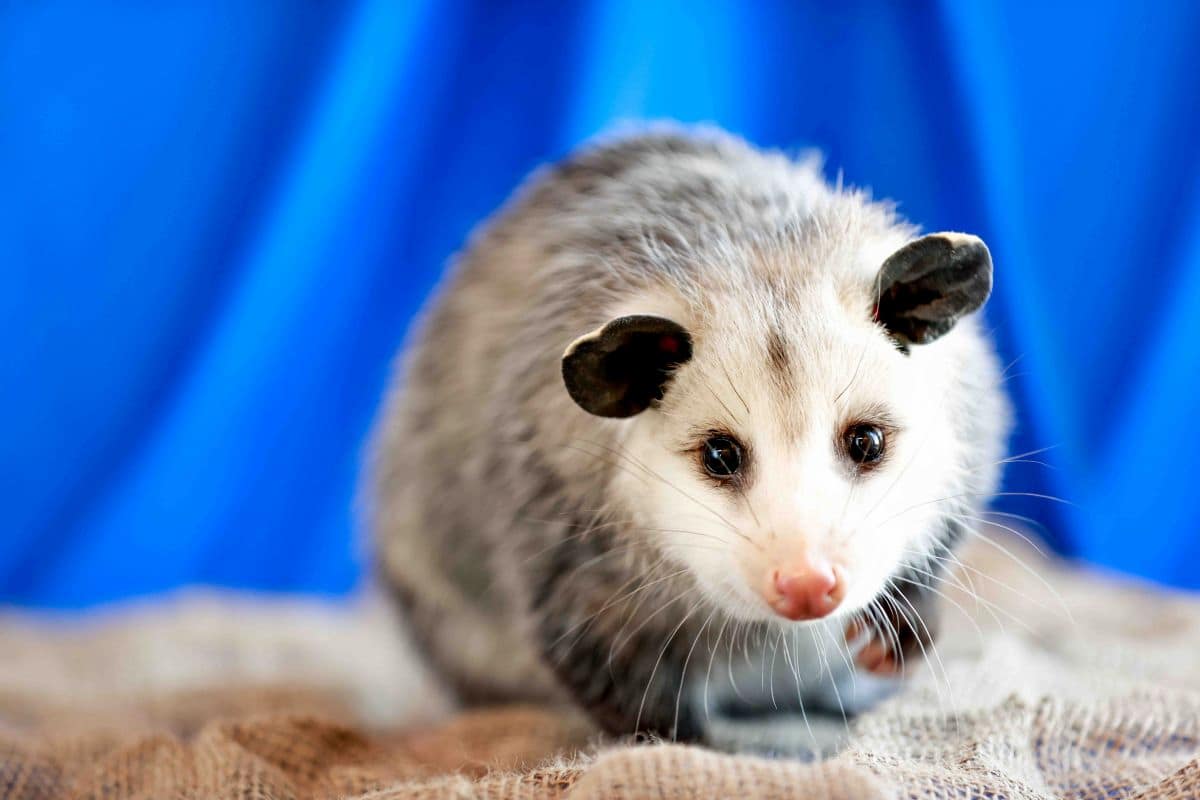
The Virginia opossum (Didelphis virginiana) has 50 teeth, a prehensile tail, opposable thumbs, can play dead to escape predation, is resistant to most native venomous snake venom, but is incredible for so many more reasons than the ones just listed. Virginia opossum, out of the 126 species found in the Americas is the only marsupial animal known to inhabit the United States. The word marsupial is used to describe an infraclass of mammals whose members are born incompletely developed and are typically carried and suckled in a pouch on the mother’s belly until they are developed/mature enough to exit the pouch.
Nocturnal and Omnivorous
The breeding season for Virginia opossums in Illinois tends to be from late January to February, with many adults breeding a second time in May. Opossums are nocturnal omnivores, both used to describe their behavior meaning they are mostly active at night and are known to eat both plant and animal matter. These critters can be found in woodlands, near streams, brush or urban areas and are known for their climbing skills.
Nature’s Clean Up Crew
Not only is this marsupial incredible for adding diversity to the United States wildlife landscape as the only ambassador for its kind, but these animals are known for the roles they play in their ecosystem. As discussed previously, opossums are omnivores and a part of their diet includes such things as ticks. As an opossum walks through the woodlands where they live, ticks most likely begin to accumulate along the opossum’s body to take a blood meal, little do they know the opossum will soon begin to groom itself, and the ticks just made themselves an easily accessible snack to their host. Not only are these opossums ridding their environment of these pests, but also the infectious diseases these pests may carry, most endemic in this area would be lyme disease, but anaplasmosis and babesiosis can be considered as well.
The opossum is a poor quality host to these infectious diseases, meaning although the ticks who feed on them may be carrying these infectious diseases, the opossum has not been found to have contracted these diseases. Rabies is an important infectious disease that is also unlikely to be found in the opossum, due to its low core body temperature.
Importance in the Environment
In conclusion, the Virginia opossum is an incredible nocturnal animal, so their evening activities should not bother any outdoor day time activities, but they can also help to rid your yard of infectious disease carrying pests (that can transmit disease to your pets). If you happen to cross paths with one of these creatures, consider yourself lucky that they are in the area you are in, and let them go on their way as they have important business to attend to.
Wildlife patients seen at the Wildlife Medical Clinic are very different from other patients typically seen in veterinary medicine. While most patients enjoy interacting with vet staff, our wildlife patients would prefer to be as far from us as possible. And we prefer that as well, as too much interaction with humans can make them too friendly or habituated causing us not to be able to release them. However, many patients in the clinic have long stays while they heal broken bones, damaged shells, or are orphaned animals waiting to grow and be large enough for release. While they are in our care it is important to make sure they are mentally and physically stimulated. We do this through enrichment, in the animal care setting enrichment is anything you provide for a patient that lets them use their natural instincts. Enrichment improves our patient’s quality of life during their stay by keeping their mind and body active.
Why Offer Enrichment?
Ensuring our patients have plenty of enrichment also benefits patients medically and prevents unwanted injuries. For example, an injured patient will be less likely to pick at its injury or bandaging if they have other items, they can interact with instead. Enrichment will be different from animal to animal, and species to species. For this reason, it is important for us to know the natural behaviors of the species we see.
Enrichment Examples
In our clinic we make sure that each patient is properly enriched. Some examples are that each patient room has a sound machine that plays audio that they would hear in the wild. Some of these clip recordings sound like a rainstorm, a babbling brook, or even the sounds of insects and frogs calling. This helps keep our patients’ stress levels low and decreases the amount of human noise they are hearing. Another example would be that our bird patients, like Red-tailed hawks, are provided with perches of varying degrees of thickness. This is important for their foot health, but also provides them with multiple options for perching, which is a natural behavior for this species. If you were to look at our turtle enclosures, you would see that many of them have foliage, hides, substrate suitable for digging, humidifiers and swimming areas. This helps simulate a natural environment for them to heal in.
Enrichment is more than creating a natural environment for patients to heal in. For many patients, especially crows, enrichment looks like getting puzzle feeders. Crows are highly intelligent animals and stimulating them mentally helps keep them active. They enjoy figuring out how to get food out of puzzle feeders, or out of dog toys like kongs. Raccoons enjoy similar enrichment items, and can enjoy hammocks, and shallow pools of water. Some patients, like goslings and ducklings that live in groups, enjoy mirrors. This gives them the illusion that there is a group of them or that they have a buddy if we only have one of that species currently in the clinic, making them more comfortable in a rehabilitation setting. Other orphaned animals benefit from enrichment too, rabbit kits and squirrel kits are provided with multiple hides, stuffed animals, and blankets or bedding to burrow in. No matter the species, we want to ensure that they are properly enriched during their stay at the wildlife clinic.
In Conclusion
No matter the species, we want to ensure that they are properly enriched during their stay at the wildlife clinic. This article outlines a few examples of enrichment that we provide for wildlife species. It is important to remember that in a wildlife clinic, we want to provide them with opportunities to exhibit their natural behaviors but also minimize human interaction with the patient as this decreases stress and their likelihood of habituation. This is important as it ensures they stay wild and allows them to heal faster so we can get them back out where they belong, in the wild.
Why do birds fly into windows? Learn about this and what you can do to help by joining CiLiving, Wildlife Medical Clinic Program Coordinator, Sydney, and clinic intern, Caroline.
I was a pretty clumsy kid growing up, often ending up in the emergency room for a variety of reasons. Broken bones, ruptured tendons, and I was even bitten by a cookie cutter shark at one point. Early on in my life, I had no desire to be a veterinarian. However, I have always had a deep love and fascination with animals. During my many times in the emergency room waiting area, I pondered, what is the emergency room like for animals?
Fast forward about fifteen years, I am now entering my 4th year of vet school and plan to practice emergency medicine. Perhaps all these trips to the ER drove me down this career path, maybe I have just always loved the rush of emergency medicine. Although I am not practicing emergency medicine yet, I have gotten a taste of it through my time at the Wildlife Medical Clinic (WMC). Approximately once a week I am on call for any cases that may present to the clinic, and let me tell you, these are my favorite days! I love the rush of never knowing what will come through the door, the fast-paced environment, and getting to think on my feet. We see a wide variety of cases at WMC. In one shift, I may see an orphaned bunny, a hit by car owl, a squirrel presenting with neurological signs, and so much more. Today, I will take you along as we work through these three cases together!
First Part of ER Visit: Triage
Wildlife emergencies, like humans, all begin with triage. Triage is where we determine which case is the most urgent and who can wait a little longer. Once our patients receive their initial triage, we will begin working through each case, one at a time. So how do we work through and treat different cases? Let us go through it!
Great Horned Owl Case
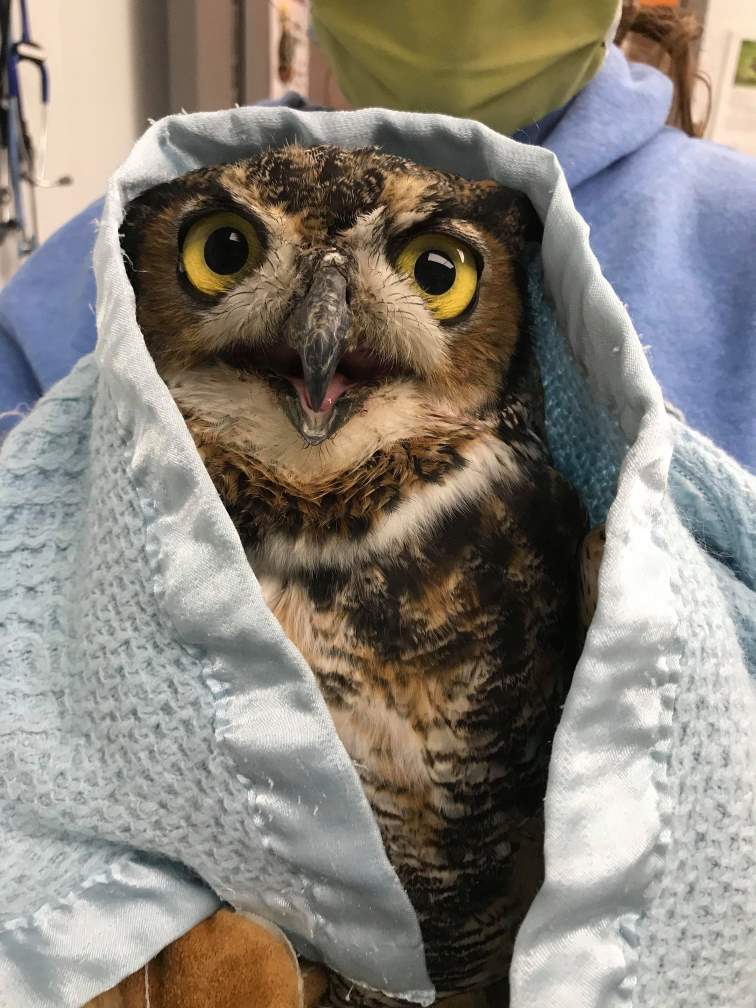
We begin our shift with our hit by car owl. This Great Horned Owl or GHOW for short, presented with a brief history of being found unable to fly, on the side of the road. Our first step is to perform what is known as a hands off exam. Our wildlife patients are much different than domesticated cats and dogs. Typically, wildlife will hide their pain around humans out of fear or protection. Many can “mask” signs as we handle them. This is why observing them before we begin our physical exam is so important. During our hands off exam, we can appreciate a right-wing droop, as well as an obtunded mentation. In layman’s terms, our owl is dull and not very reactive. Our next step is to perform a thorough physical exam. During our physical exam, we are looking for any abnormalities present. Although it may be tempting to jump to the obvious injury first, it is important to assess every part of the patient to look for any more subtle injuries. Once we have completed our physical exam, the animal will briefly be returned to its enclosure to discuss our findings. We create what’s known as a differential diagnosis list of potential problems. For this patient, we have diagnosed a closed fracture of the right radius. Now, it’s time to discuss treatments. Our primary goal of triage is stabilization. One of the first treatments I will provide is analgesia, or pain medication. We have a variety of pain medications available at the Wildlife Medical Clinic. Typically for fracture patients, we provide an opioid, NSAID, and occasionally Gabapentin as well. All these medications act on different receptors and enzymes in the body, thus minimizing pain in a multitude of ways. Following this, we will apply a figure eight bandage to help stabilize the wing. This method is fairly similar to a human splint. The goal is to immobilize the joints above and below the fracture to allow the bone to heal. Our patient is looking better already! Our team agrees that this patient is stable. We plan to schedule radiographs, or X-Rays, at a later time to better assess the fracture.
Squirrel Case
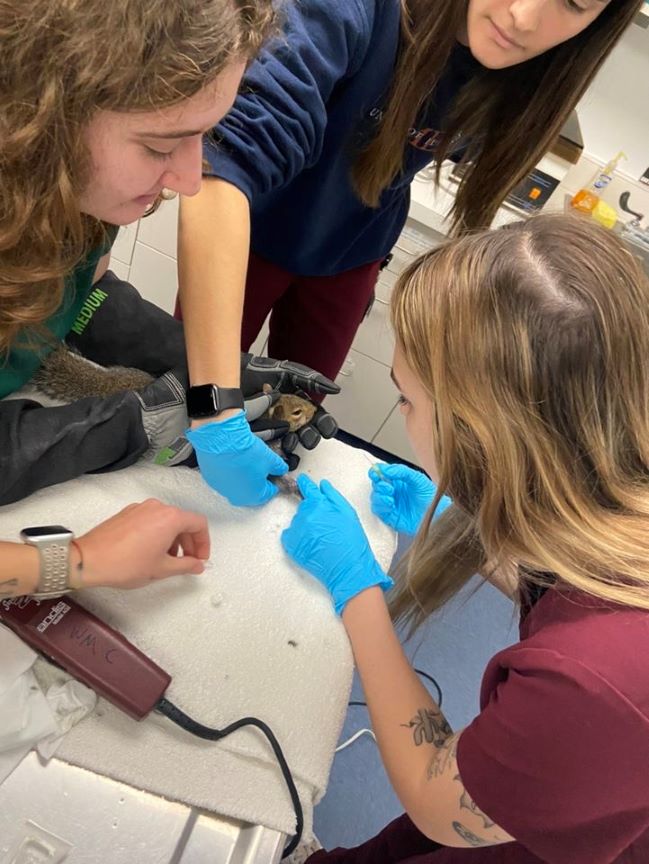
Next on our triage list is our neurological squirrel. This Eastern Gray Squirrel, or SCCA, appears to be a juvenile male approximately 8 weeks old. During our hands off exam, we can see that this squirrel is ataxic, or uncoordinated. Additionally, he appears dull and unaware of his surroundings. During our physical exam, we recognize that he is dehydrated and has a body condition score of 1/5, meaning that he is very underweight. Besides the low body condition score, dehydration, ataxia, and dull mentation, we do not appreciate any other abnormalities. Due to this squirrel being 8 weeks old, ataxic, and with a low body condition score, hypoglycemia jumps to the top of our differential diagnosis list. Hypoglycemia, also known as low blood sugar, can cause incoordination in our young animals. Luckily, it is a very easy fix! We place a small amount of Karo syrup on the squirrel’s gums and he instantly perks up! Although he is looking better, we are not done yet. Our patient is dehydrated and obviously very hungry. We will begin by administering subcutaneous (just under the skin) or intravenous (into a vein) fluids. Since juvenile squirrels have very tiny veins, it is typically easier to administer these subcutaneously. Our patient will receive maintenance fluids, or what is needed in a day to maintain hydration, as well as deficit fluids, which is the estimated amount of fluids lost. Once these are administered, we can see that our squirrel is already looking better. We will provide this squirrel with food and keep him for observation until he appears to be back to normal.
Orphaned Bunny Case
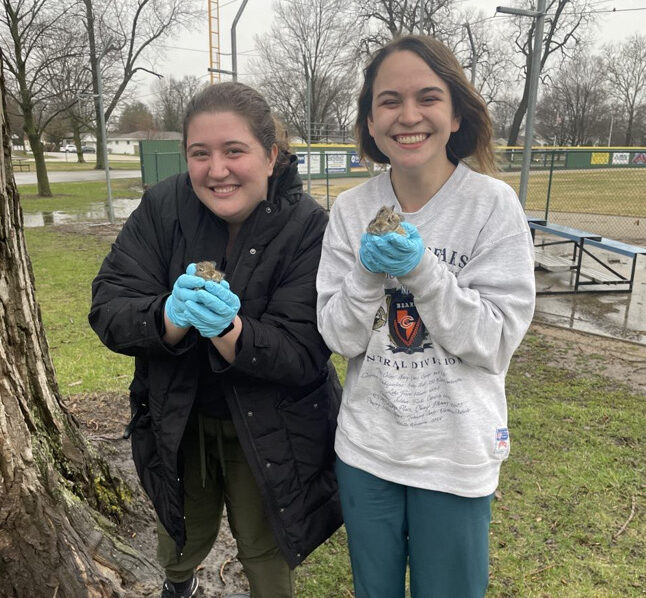
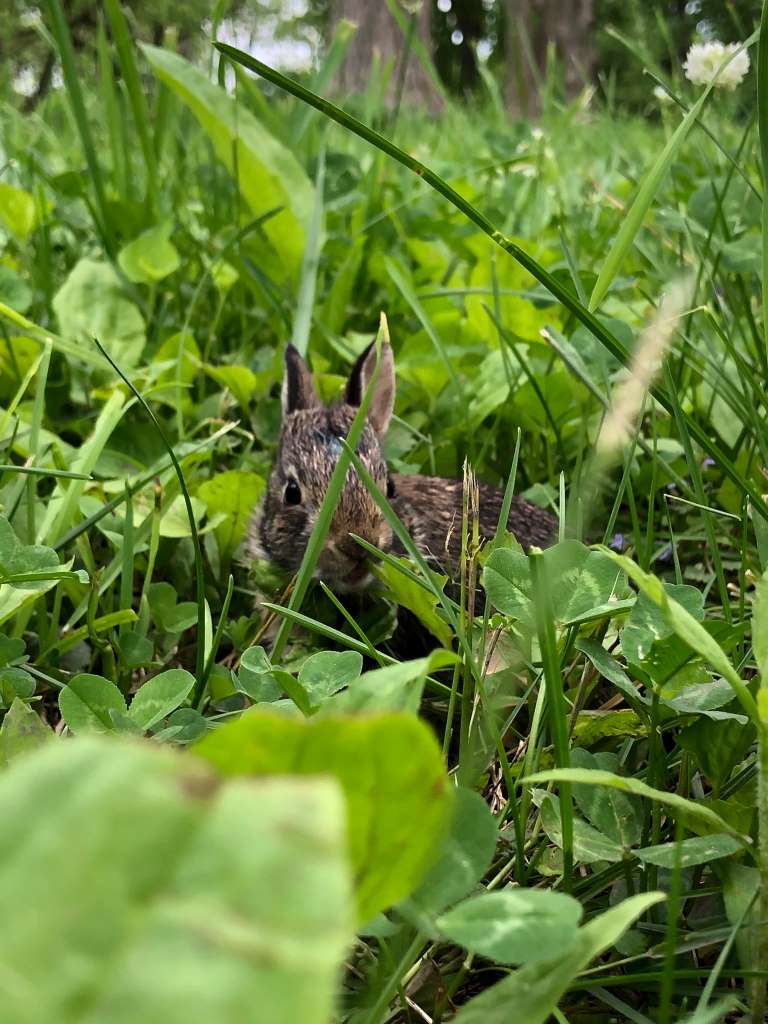
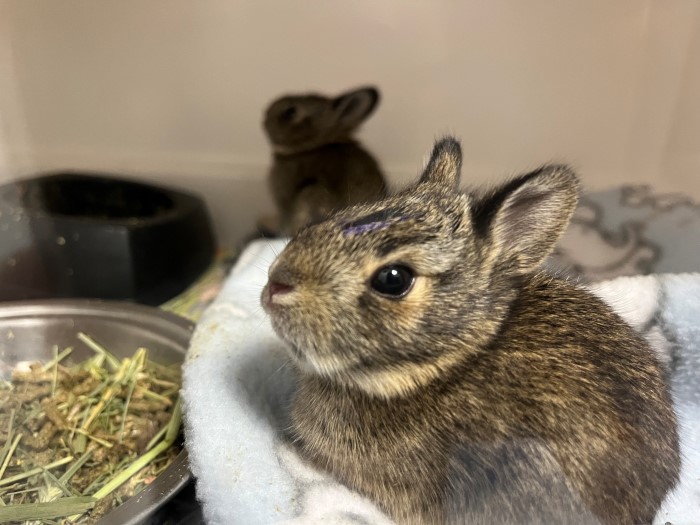
Finally, we have reached our orphaned bunny. Our bunny was found at 1 p.m. The finder noted that he did not see the mom nearby and believed it to be orphaned. He did not notice any obvious injuries. During our hands off exam, we see that this bunny is very bright, alert, and responsive, or BAR. She is attempting to jump off the table and get away from the triage team. Although this may sound scary, it is a great sign in our wildlife patients. We love to see patients who are exhibiting normal wildlife behaviors, especially when they appear healthy. However, our bunny will still need a physical exam. We are quick and efficient with our physical exam to minimize stress to the animal. Luckily in this case, there are no abnormal findings! Our bunny appears hydrated, has an ideal body condition score of 3/5, and did not have any noticeable injuries. We place our patient back in her enclosure and begin discussing our case. Since we did not find any abnormalities, what do we do? Well, we begin by looking back at the history. Our bunny was found at 1 p.m. today. We know that mother rabbits typically return to the nest at dawn and dusk. During the day, the mother will avoid the nest to deter any predators from the nest. People will commonly believe that a rabbit is orphaned when its mother is not nearby; however, this is intentional to protect its young. Truthfully, I was unaware of this before working at the Wildlife Medical Clinic, so no need to be ashamed if you did not know. Since this bunny is healthy, we decide to call our manager and the doctor on call to receive permission to release this patient. Thankfully, permission is granted, and our patient can go back to the wild! We return the bunny back to the exact location she was found. Following this, we call the finder to provide an update and ask him to notify us if he does not see the mother later in the evening. Later that night, we receive a call that the mother has returned to her nest! Hooray! What a fantastic end to the day.
Debrief from a Busy Day
Wow! What a busy day for triage! By the time our bunny is returned to the wild, my team is off call and can return to “normal” vet school life. Our first-years gear up to study for their upcoming anatomy exam. The second-years go home to get ready for their next day of rotations. And us third-years finish up studying for our last exam ever before we head into clinical rotations in a few weeks. Well, this may sound like a lot on top of vet school, but I wouldn’t want to spend my weekend any other way. I hope you all enjoyed working through your first triage shift and if you ever wondered what happens at the Wildlife Medical Clinic ER, now you know!
This article was written by Raegan, one of Wildlife Medical Clinic’s third year student volunteers.
The Wildlife Medical Clinic’s Ambassador Program is growing once again! Help us give a warm welcome to our newest reptile – “Maize,” the corn snake!
Introduction to Maize
One of the goals of our ambassador educational events is to get community members of all ages up close to species they may not be as familiar with. This can help people gain more respect for the animals, and, commonly in the case of our reptile species, might reduce feelings of fear. We currently have an ambassador Brazilian rainbow boa named Caduceus, but we have been interested in adding another snake ambassador from a species more similar to those found in Illinois. Since snakes rarely present to the Wildlife Medical Clinic as patients, we started keeping an eye on Illinois reptile rescues, looking for a snake that would be a good fit for our program.
A Bit About Corn Snakes
Corn snakes (Pantherophis guttatus, also known as red rat snakes) are typically found in the southeastern United States and are part of the snake family Colubridae. Colubrids, generally, are slender and non-venomous, subduing small rodent prey with constriction before eating them whole. Illinois is home to many colubrid species, like rat snakes and fox snakes, so Maize will allow us to talk about the importance of these snakes in our ecosystems, as well as how to distinguish non-venomous colubrids from venomous species like Copperheads or Eastern Massasauga Rattlesnake.
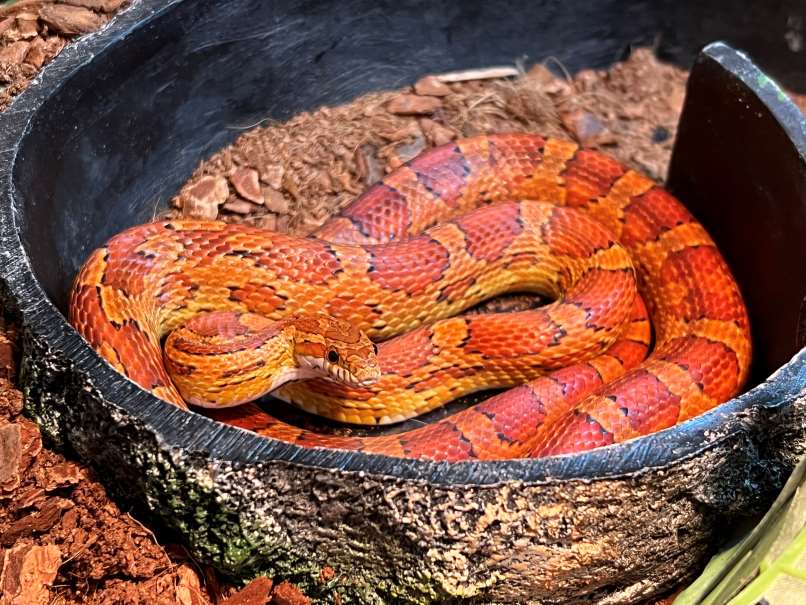
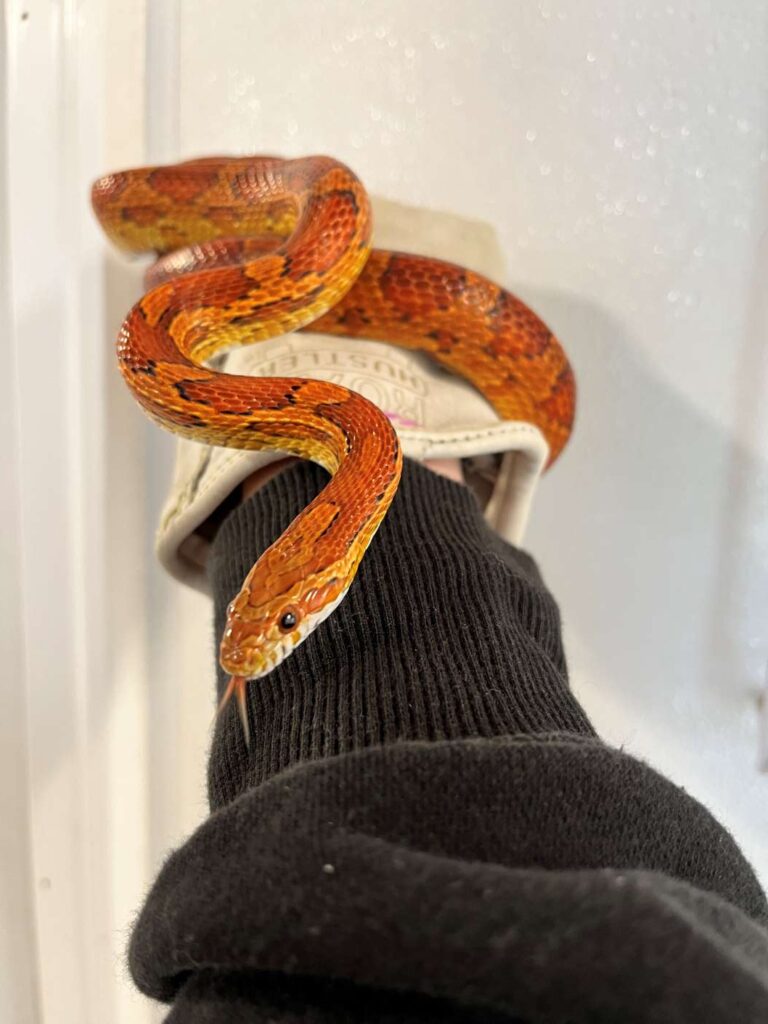
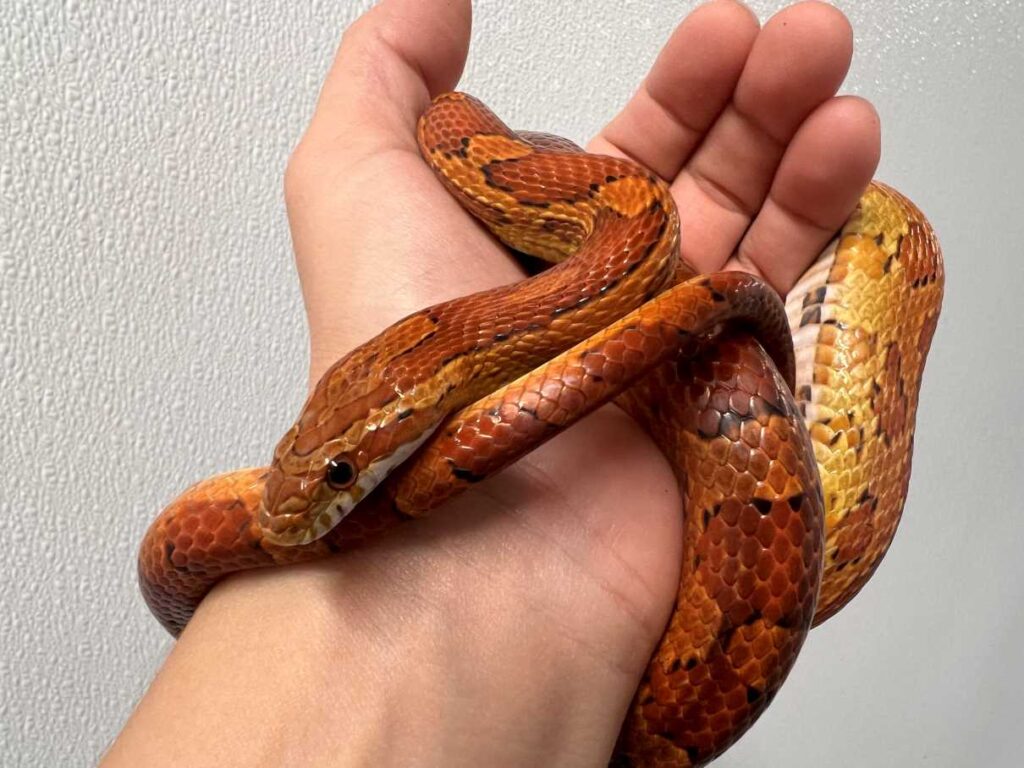
Corn snakes are very common as pet snakes due to their manageable size and typically docile manner. They have also been selectively bred in a variety of colors and patterns. The “wild-type” coloring of a corn snake, which Maize displays, is a deep orange with red blotches, called saddles, outlined in black along the top of their back and along the sides. Their belly scales are a striking alternating black and white, which somewhat resembles Indian or flint corn, which may have given them the name “corn” snakes. In turn, this is how we decided on the name Maize!
How Maize Came to Us
Maize comes from the Lost Woods Animal Sanctuary in Crystal Lake, Illinois, and joined us in early April. When getting a new reptile, whether as a pet or in a zoological collection, it’s recommended that the animal be housed in a room separate from other reptiles for the first few months to reduce the risk of spreading disease. We make sure to use separate equipment where possible and sanitize our hands before switching between Maize and our other reptile ambassadors and always try to clean and handle our resident reptiles first before we clean and handle Maize. So far, Maize appears healthy and should be wrapping up her quarantine period at the end of June. We are excited to be able to introduce her in programs soon!
Maize’s First Exam
In our first exam, we determined that Maize is approximately two years old, and confirmed she is a female through a sexing method called probing. We ran routine blood work, and everything was within normal limits. She is a sweet snake and loves to interact with our volunteers. She is curious and is eating and growing well. She is not full-grown yet, but we expect her to reach adult size in the next year. While corn snakes only live 6-8 years in the wild, they can live more than 20 years in human care, so we hope Maize is able to teach our community about snakes for many years to come!
This article was written by Sarah, one of Wildlife Medical Clinic’s Ambassador Coordinators.
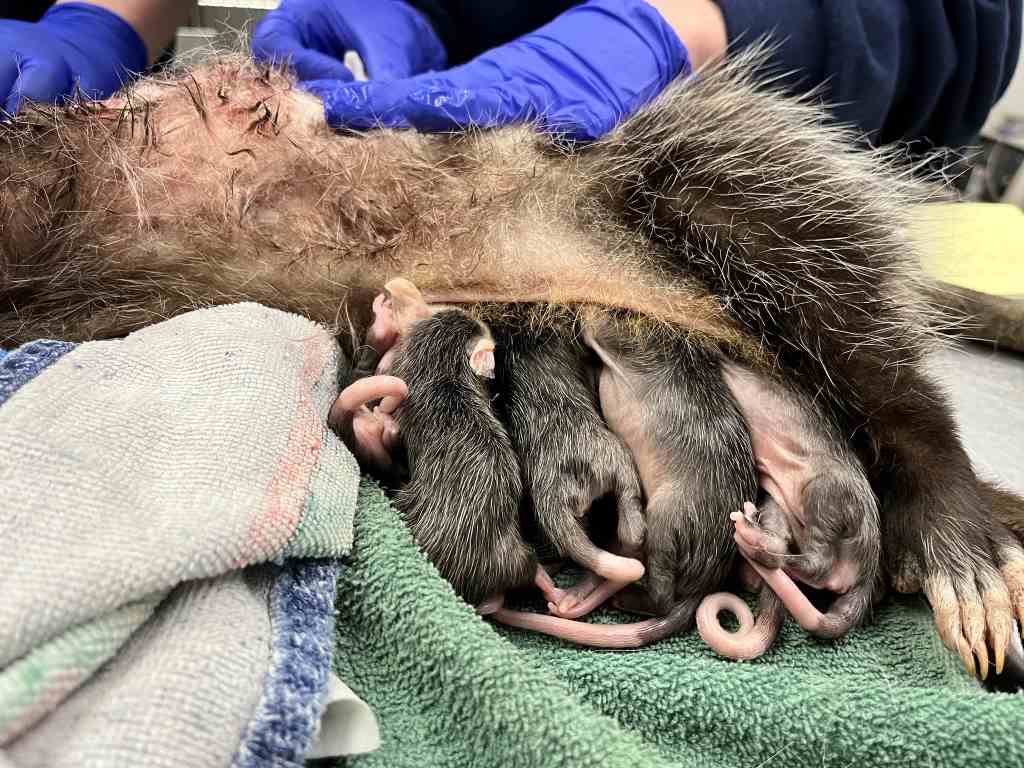
We recently received an adult Virginia Opossum at the Wildlife Medical Clinic. When she arrived at the clinic, none of us knew what to expect. We slowly opened the cardboard box that the finder had carefully transported her in and immediately noticed her injuries, but also were surprised to see she had a pouch full of joey’s (baby opossum). Despite her injuries, she was fiercely protective of her young. Due to her injuries and her defensive nature, we thought it best to sedate her for the initial exam so that it was less stressful for her and safer for us to examine her. While she was sedated, our triage team was able to complete a thorough exam and see the full extent of her injuries. It was determined that our patient was a healthy, but thin, close to one year old female that was more than likely nursing her first litter of joeys. The finder that brought her in believed she had been attacked by a dog, and they were certainly correct.
Assessment of her Wounds
In total, we counted twelve puncture wounds. Eight on the left side of her chest that aligned, almost perfectly, into the shape of her attacker’s jaw, with half of these wounds exhibiting edema (swelling) and deep pocketing (tunneling) of the tissue. Four additional puncture wounds on the right side of her chest, two of which also exhibited edema and deep pocketing. Her chest had extensive bruising, making it deep purple in coloration. Once her wounds were all examined and cleaned, it was time for each joey to be examined to make sure they were not injured during the attack. To our great surprise, none of them had a single scratch on them. They were all perfectly healthy and undisturbed, comfortably nursing in their mother’s pouch.
Mama Fiercely Protecting her Babies
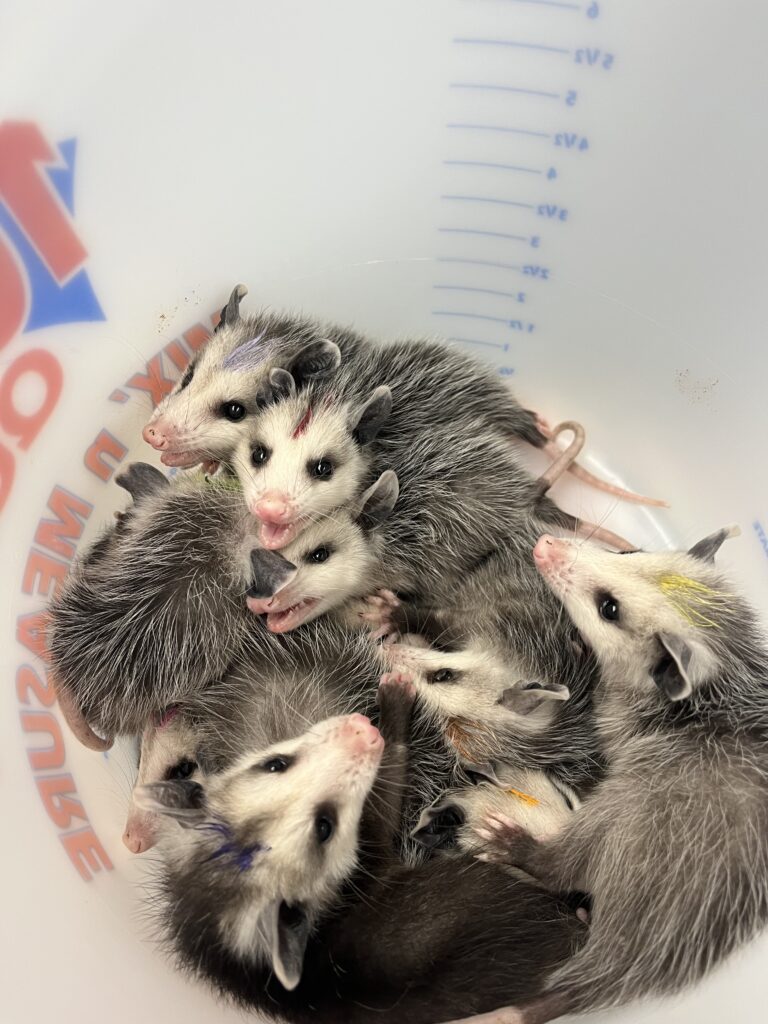
Bucket full of baby opossums (not the joeys described in this story)!
Before we reversed the sedation and began waking our patient up, we administered medications that would help to control her pain and inflammation. While the sedation wore off, our patient was placed in a softly padded enclosure with fresh food and water. Once fully awake, she immediately returned to her defensive posture, warning anyone nearby to stay away from her and her babies. Despite her injuries and young age, she was already demonstrating the typical protective, maternal behavior expected of her species (and many others). Her joeys were likely approaching two months of age as two months is the typical age at which young opossums release their relentless latch on their mother’s teats. In just a couple more weeks, they will start venturing outside of her pouch and even may be seen riding on her back. The average litter size of a Virginia Opossum is 8-9 joeys, and they have a particularly high mortality rate with only 10% surviving to reproductive age (6 months to a year old). In contrast, this patient had a litter of 10 joeys, all of which were in perfect health.
Successful Transfer for Mama and her Babies
The patient and her joeys were examined again after two days of settling in. To my utter amazement, 48 hours was all she needed for nearly all signs of bruising to disappear and for her puncture wounds to close over and scabs to form. The edema and pocketing were gone, and the young opossum looked better than ever. We held her for about ten more days to make sure she was completely healed and then transferred her and her joeys to a licensed rehabilitator for continued care and to give her hair time to grow back before her and her young are released back into the wild.
Happy Mother’s Day to you and to our Mama Opossum!
This was written by Sophia, one of our Wildlife Medical Clinic volunteers (Class of 2026).
Spring is fully upon us, and the mornings are now full of intricate songs from a variety of native bird species. These melodies are a great reminder of how diverse the bird species around us can be. If you’ve ever been interested in learning more about the birds in your backyard or those you see on a walk in the park, birding is an activity that you should consider trying out! The term “birding” is often used interchangeably with “birdwatching”. The main difference is that birding is typically more active and involves more targeted searching for birds and more in-depth studying of their behaviors. It’s a great way to spend time in nature and learn more about your community’s native species and the ways that they interact with their environment. I was first introduced to birding when I took an ornithology class in college, and it’s been a fun hobby that I have enjoyed since then!
What You Need
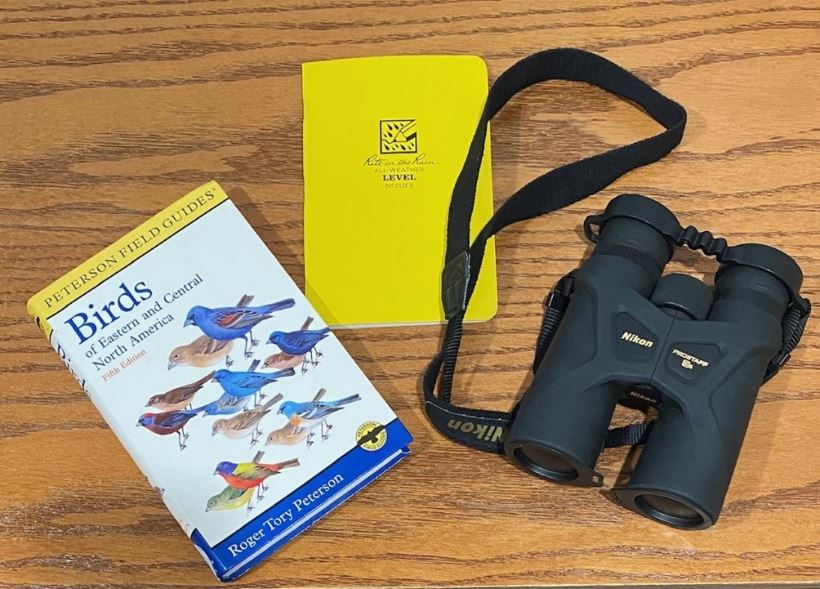
Example of birding equipment – a field guide, binoculars, and a waterproof notebook.
Birding is a very low commitment and beginner friendly activity. It can be done essentially anywhere and with anyone. It doesn’t require a lot of equipment, especially if you only go out occasionally. A good set of binoculars is highly recommended to help you see birds more clearly, but they are not required, especially for a one-time outing! Another recommendation is to have a field guide, with descriptions and diagrams of your local bird species, to help you with identification. This can be a physical book with photos or illustrations if preferred, or there are some great mobile apps, such as Merlin Bird ID, which is essentially an online field guide. I prefer using an identification app when I’m birding, as they can be tailored to your specific location and you can even submit photos, descriptions, or sounds of a bird to obtain potential species identifications. Over time and with practice, you’ll become more comfortable with identifying native bird species and their calls, while also becoming familiar with some of the distinctive behaviors of those species.
It can also be worthwhile to start tracking the species you’re observing if that is something you are interested in. A lot of birders have life lists, which are compiled lists of every bird species they have seen. I have a running list of bird species I have seen with the date listed, and it’s cool to look back and see how many species I’ve been able to see in a short period of time. One great option for tracking the birds you see on your outings is with eBird, a bird observation database. With this app, you can record your sightings at the exact location they occurred at. This information is then collected and shared with other eBird users and with scientists. This data is not only helpful for allowing users to locate hotspots where certain bird species have been seen recently, but it can also be used for research purposes.
Diversity of Birding
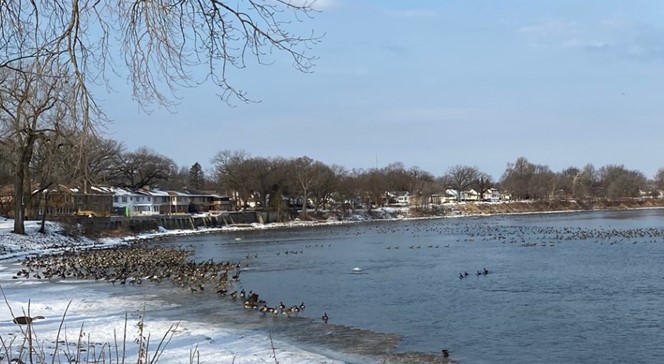
One of Sarah’s early birding trips with her ornithology class where they saw over 2,000 Canada geese and a single greater white-fronted goose.
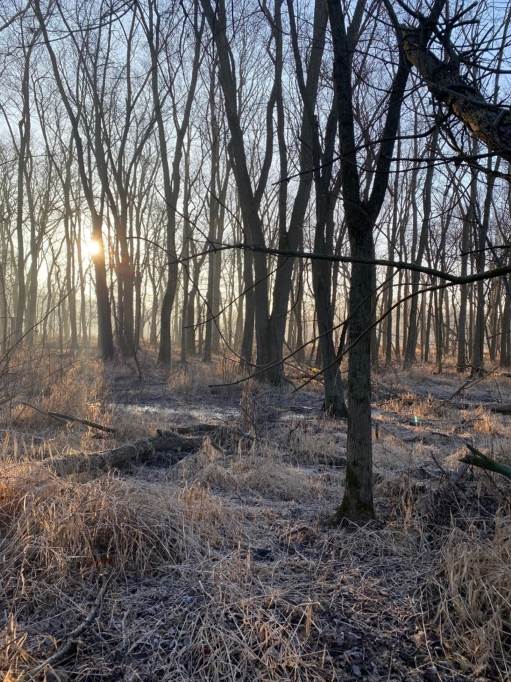
One of the most exciting things about birding is that every experience will be different and the diversity of birds that you see will vary each time. Try visiting a variety of habitats at different times of day, weather conditions, and seasons to get a better idea of how your local bird diversity changes due to environmental factors. Birding will likely be the most rewarding in the early morning when most birds are active, just as the sun is rising. This is due to a phenomenon known as the dawn chorus, which is quite noticeable in the spring. The still morning air serves as a great medium for songs and calls to travel through the environment, allowing birds to better attract mates or defend their territories. As the seasons change and birds migrate into or out of your community, you will get to see new traveling species that you may otherwise have never noticed before.
Birding is What You Make of It
Another great thing about birding is that it is what you want to make of it. There is no pressure involved and you can put as much energy into it as you see fit. Some people get very involved and competitive, wanting to beat their personal species list records, while others simply want to observe birds and take down notes about their behaviors. It’s up to you and what you enjoy about birding! I personally enjoy going out with a group of friends and simply observing as many species as possible.
The next time you hear a bird singing this spring, consider taking a walk through your neighborhood or a local park and trying out birding! You never know what you’ll discover about the birds that inhabit your community.
A birding trip during the early morning, right after sunrise.
This was written by Sarah, one of our Wildlife Medical Clinic volunteers (Class of 2027).
Baby season has begun at the Wildlife Medical Clinic! Spring has sprung! But wait – isn’t it a bit early for springtime babies?
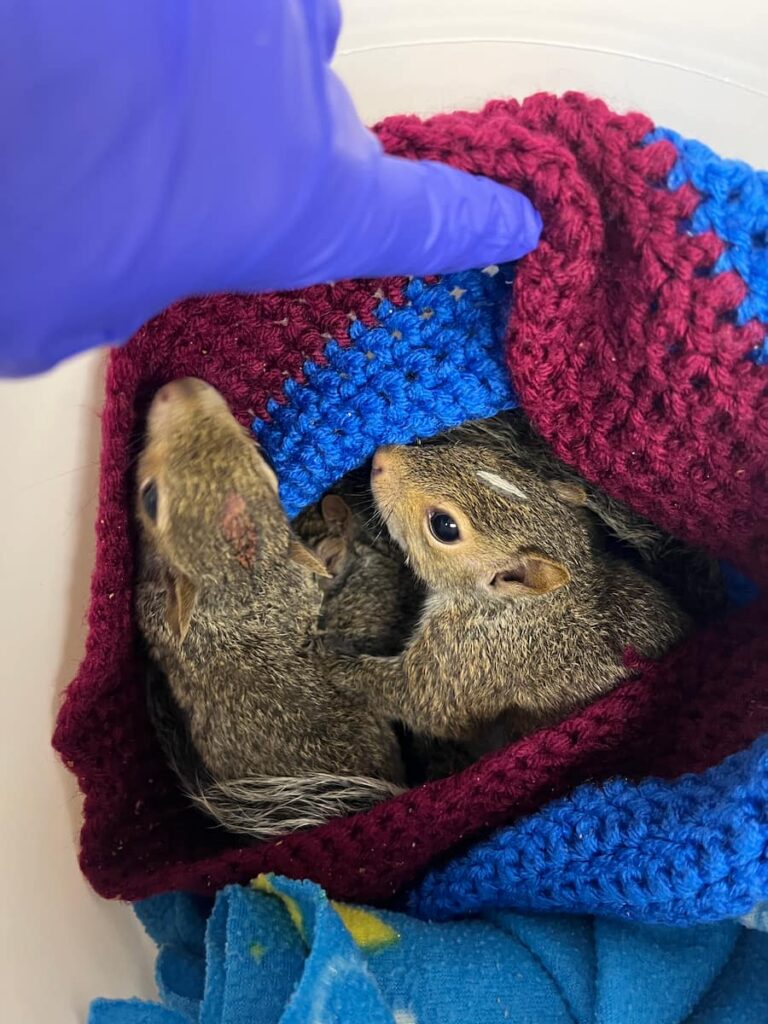
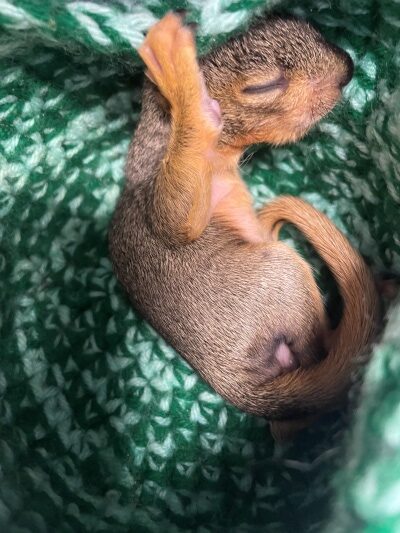
This is a photo of a baby squirrel patient from the Wildlife Medical Clinic.
If you’ve lived in the Midwest for a while, you may have noticed that winter this year didn’t seem to fit with the snow-covered hills and icy roads many people associate with northern Midwest states. This winter has been a warm one with the National Weather Service noting that Chicago has experienced its warmest February on record with below normal precipitation and snowfall. As the entire globe experiences changes associated with global climate change, what does that mean for midwestern wildlife?
Temperatures in the Midwest have progressively gotten warmer over the last several decades with the average annual temperatures rising. While daytime temperatures are what humans tend to notice most, this change is seen most notably in nighttime and winter temperatures. The Environmental Protection Agency predicts that the Midwest will likely experience warmer wetter winters, heavy rain in the spring, and hotter summers with longer dry periods. Increases in temperature are causing ecosystem-wide impacts including increases in wind speeds. Climate change is expected to intensify storms as well. Baby squirrels and birds are often found on the ground after storms or high winds have knocked nests out of trees.
Seasonal Changes in Temperature
In many species and ecosystems, seasonal changes in temperature are cues for transition to seasonal cyclic behaviors. A phenology study performed in western New York found that frog calling dates, indicating timing of breeding, were occurring 10 to 13 days earlier in the season. A 2018 study of wolves in east-central Alaska found that wolves may be denning earlier in response to warmer weather and food availability. Another study found that tree swallows have been laying eggs progressively earlier over a period of 32 years. Some caribou populations are calving earlier. Other species, like moose, who rely on cold weather, are struggling to adapt and populations are in decline. A study at the University of Edinburgh has been collecting data on birth dates for red deer since 1972. They found that deer have been giving birth earlier since the 1980s at a rate of about 3 days per decade. They attribute this in part to warming temperatures and in part to genetics. Female red deer have one calf per year and those that reproduce earlier in the season have more offspring over their lifetime. Due to this, genes for breeding earlier have become more common over time.
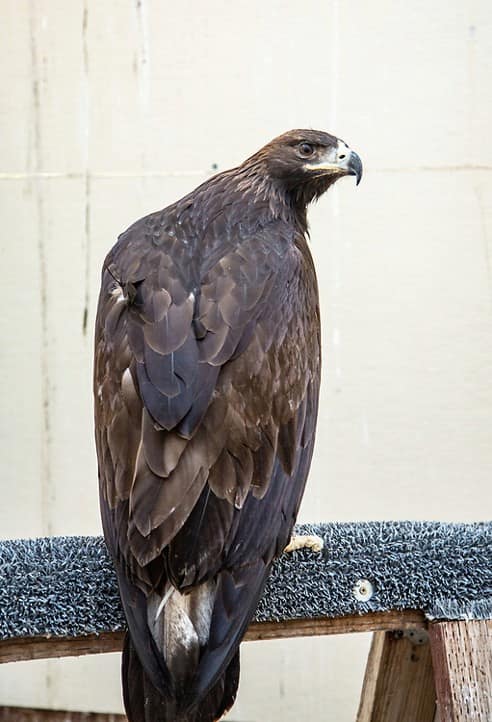
Shifts in food sources due to climate change have an impact too. If the date insects hatch shifts, it affects what birds can feed their young. Changes in plant cycles impact herbivore diets. Insects and wood frogs are expected to respond quickly, and some shorebirds have already shown adaptation to earlier spring insect emergence. Bald eagles produce more young when salmon run earlier. A study in Alaska in 2018 found that there was increased nestling production associated with warmer April temperatures and another study found success to be related to early salmon season runs.
Climate Change Affects Species Differently
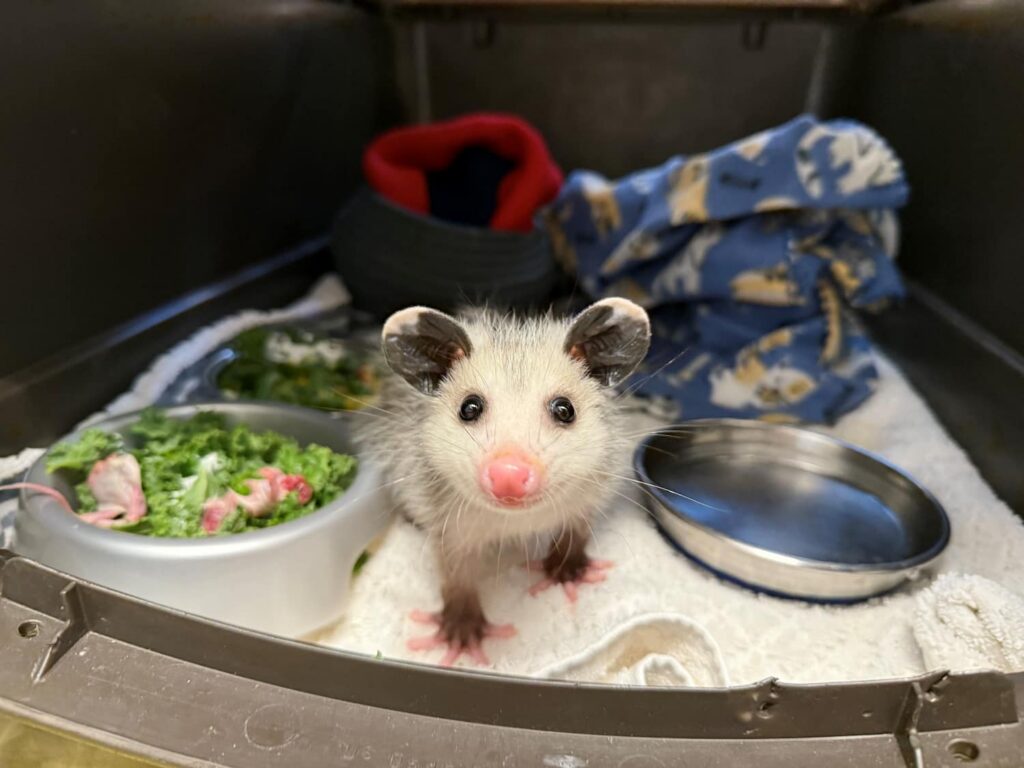
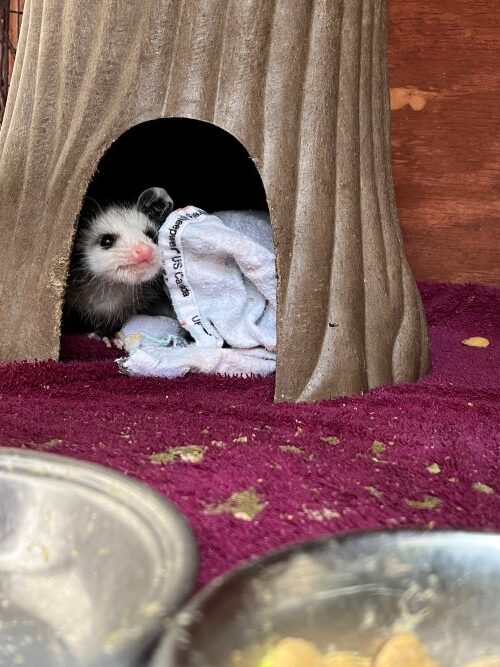
This is a photo of a baby opossum patient from the Wildlife Medical Clinic.
The needs of different species are all very different and so while these changes may be seen in some species, it is not a hard rule for every animal. Changes in climate conditions do not mean a uniform change in an animal’s ability to survive. For many wildlife species, warmer weather may mean a higher survival rate, growth rate, and/or reproductive rate. However, in areas where the temperatures are at the top of a species’ livable temperature range, there may be reduction of these rates in other locations. Species with short generation times, simple habitat requirements, and ability to move easily are more likely to succeed than those with more specific needs and limited ability to disperse to new areas. For example, we will likely see more baby squirrels this spring while species like turtles are more likely to be negatively impacted. Large migratory birds seem to be more impacted while small birds are generally adapting more effectively. While this may be a positive for some animals in the short-term, it will lead to reduced ecosystem diversity and greater susceptibility to failure overall.
What can you do?
So, with babies earlier in the season, what can the community do to be good wildlife stewards? In an ideal situation, if a baby is healthy, the best chance of survival it has is out in the wild with its parent(s). A notable percentage of baby animals brought to wildlife centers each year are from well-meaning community members who took them out of a nest and away from mom. Just because mom isn’t visible doesn’t mean she is not around: fledgling birds often have a parent watching from nearby, fawns are left alone by their mothers for hours at a time, and baby bunnies aren’t taken care of by mom until dusk or dawn. Check out the Resources tab (https://vetmed.illinois.edu/wildlife/hospital/wildlife-medical-clinic/resources-wildlife-fun-facts/)of the Wildlife Medical Clinic website for species specific information about how to assess whether a baby animal truly needs help and what to do if you find an orphaned animal.
This was written by Theo, one of our Wildlife Medical Clinic volunteers (Class of 2025).