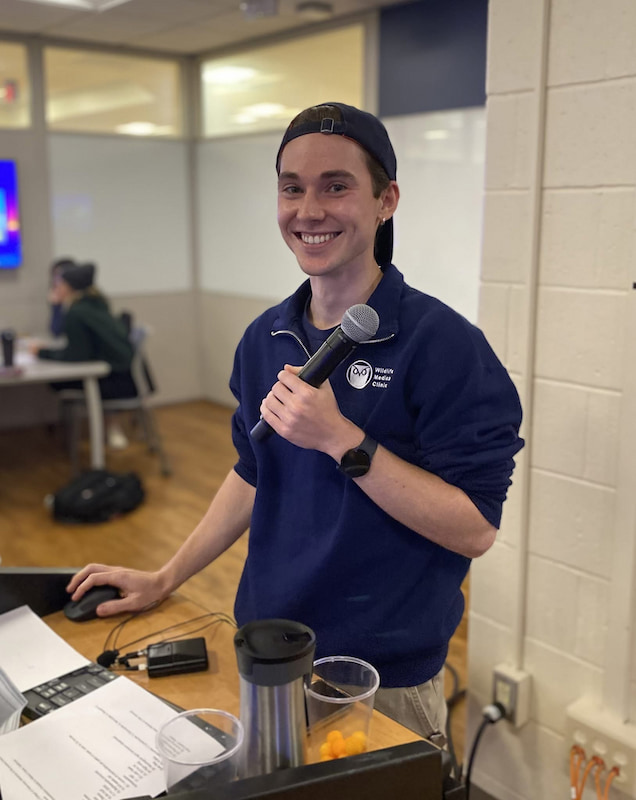
Changing of the Guard
Spring is the season of changes, and at the Wildlife Medical Clinic, we are experiencing our bittersweet moment. Every year around springtime, we prepare for the big transition of the manager position where our senior student manager leaves the wildlife clinic as they enter their clinical year. The Wildlife Medical Clinic is a fully student-run organization with the supervision and support of the faculty and house officers. It is a one-of-a-kind environment that provides unique experiences to our students for their growth in leadership, medical knowledge, and hands-on skills. Everyone is an intricate part of ensuring top-notch care to our patients. However, the unsung hero who works tirelessly in the background and polishes every screw and plate in this process are our student managers. They have dedicated an enormous amount of time, brain power, and labor to provide the best patient care and a high-quality learning environment for our students.
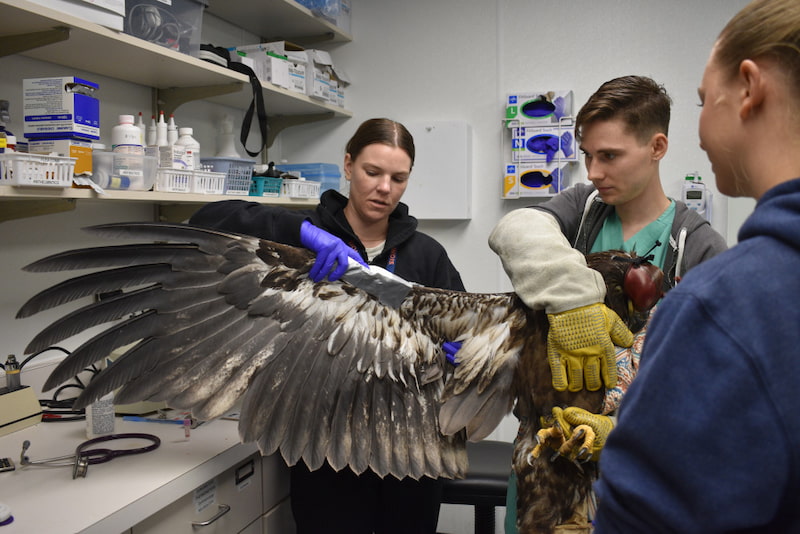
Tyson Jenkins (VM26) is our current senior student manager who will be transitioning out of his position over Spring break as he prepares to enter his clinical year as a veterinary student. We are honored to have the chance to chat with him and excited to share the interview with you. His commitment to this position and all the hard work that he devoted to advocating for the volunteers, patient care, and his fellow classmates is something that we will be forever grateful for. We cannot wait to see his amazing accomplishments and the extraordinary clinician he will become. Thank you, Tyson! The clinic will surely miss you a lot!
Q & A with the Man Himself
Q: What is the next step for you after clinical rotations?
A: “My goal is to apply for a wildlife specific internship. I’m currently looking at the Partners 4 Wildlife internship in Washington, Virginia Wildlife Center internship, and the Nebraska Wildlife Rehab internship. My main goal is to work in Wildlife Rehabilitation Medicine, they are currently working on having it established as an actual official specialty, so eventually I would like to be boarded in it if I can. My ultimate goal is to do wildlife full time.”
Q: What is one or a few of your best memories from the Wildlife Medical Clinic?
A: “I think it was really funny when we moved the bear”. [a brief pause with laughter]
A: “I don’t really have a specific memory, but just the summer period in general where we have a smaller team, more targeted mentorship, and a much higher caseload. That was always my favorite part of the job, especially because I could focus on doing wildlife all day every day instead of having to balance schoolwork and other responsibilities. I very distinctly remember my very first treatment shift as a volunteer. One of the team leaders asked for volunteers to help with the hawk and I had zero training going in and she was basically like “If you don’t do it now, you’re never going to do it”, so she had me catch up the hawk my very first day in wildlife. I will never forget that because that set the expectation that hands on learning is the requirement in the clinic”.
Q: Do you have a favorite patient?
A: “I really like the resident snapping turtle even though he is so grumpy all the time. He is just fun to work with especially because he is a small snapping turtle, so he is good to learn on.”
A: “We had a neurologic goose my first summer that we basically built a wheelchair sling kind of thing for, and we would give it pool time, that was really fun.”
Q: What is something you’ve learned during your time as the clinic manager and also being a volunteer?
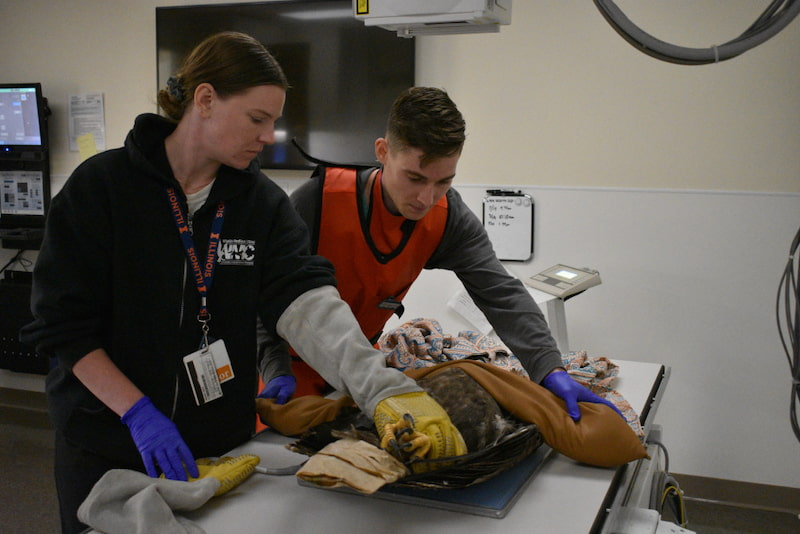
A: “I think I have grown the most in my people skills. I kind of expected the clinical skills and the veterinary knowledge that comes with the position, but I didn’t fully expect how much being a manager and even being a volunteer is dependent on the people that you work with. Especially team building and conflict resolution and management and even just how to encourage people to do things successfully, that has been the biggest takeaway for me”.
Q: Out of all the species you got to work with during your time, which one would be your favorite?
A: “I really love Cooper’s Hawks; I’ve said that all 3 years. Mostly because they are a nightmare and I think that’s really fun. We also had a Bull Frog that I loved very much”.
A: “The otters were very cool. I never really expected to get otters. The experience of working with a carnivore like that was really cool.”
A: “I also just really love Canada Geese as patients, I think they are really rewarding to work with as much as people don’t like them.”
Q: What is your biggest piece of advice for current and future volunteers?
A: “Take every learning opportunity that’s given to you. I think the Wildlife Clinic is much better suited for the hands-on learning that students are looking for. I remember going on clinical rotations my 1st and 2nd year and being really disappointed because it felt like my learning as a 1st and 2nd year wasn’t a priority. Whereas when you’re in the wildlife clinic, you are there because we want you to practice those clinical skills and soak up all the knowledge from everyone around you. Remember that you are there to learn and take all those opportunities that you can, especially being a primary because that is huge that you can have primary case management as a 1st or 2nd year because you don’t get that anywhere else in the hospital”.
Q: What are you going to miss the most about WMC?
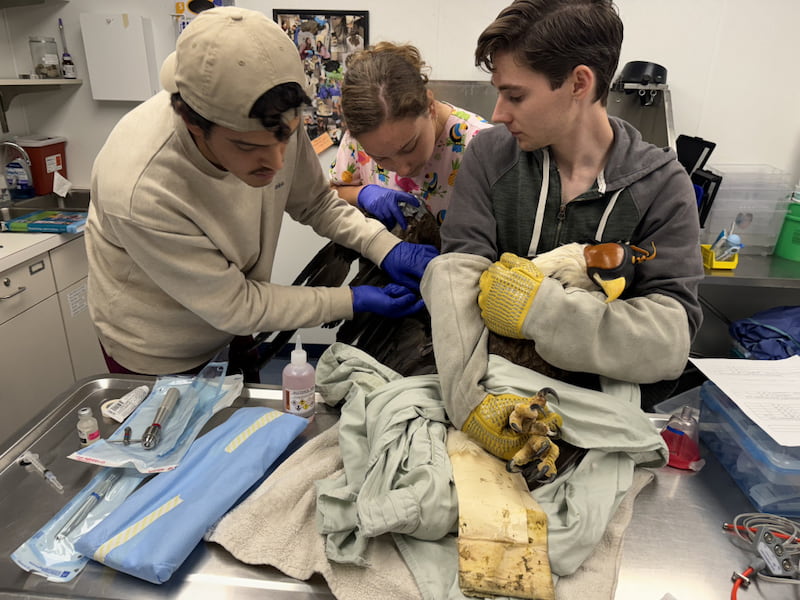
A: “Number one are the people. I think going into clinical rotations, I’m really going to miss the creative aspect of working in the Wildlife Medical Clinic, like the directly creative aspect where I was always putting together posters and learning materials and presentations. But also, there is something about Wildlife Medicine where you are kind of always making it up as you go. That sounds bad, but there are a lot of patients that we either don’t have the husbandry resources for or they have really specific requirements for care that you have to figure out how to create and that’s one of the things that I enjoy the most about wildlife medicine and I think I’m going to really miss that in a more standard hospital setting”.
Q: Lastly, is there anything else you would like to share with the readers?
A: “Peace!”
A: “I’m going to miss everyone and I know the clinic is going to continue to grow and do amazing things and I’m very happy and extremely lucky to have been a part of that for the past 3 years”.
Praise for Tyson
We would also like to share a few quotes from our clinic directors and student volunteers that highlight Tyson’s dedication and achievement as a student manager!
-Interview conducted by Rachel Eggleston (VM27), article organized by YiYing Tung (VM26)