Bats of Illinois
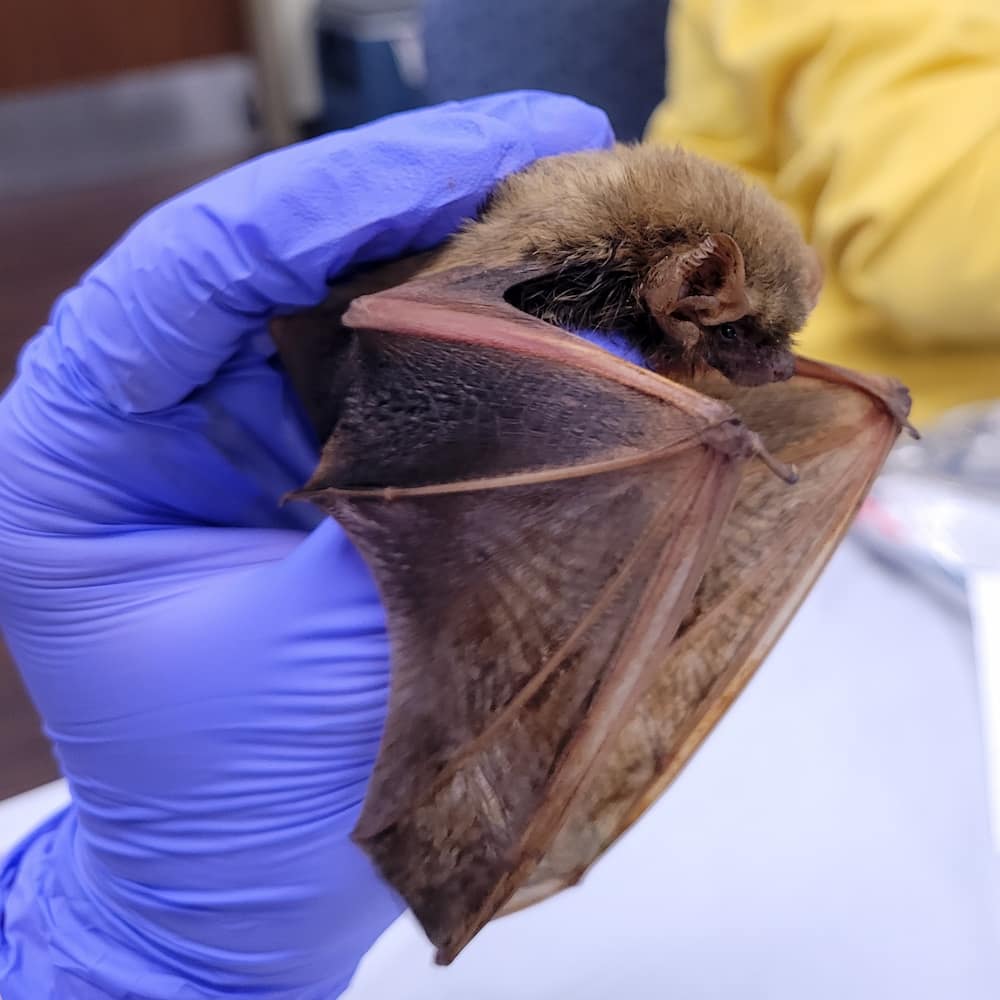
Illinois is home to a confirmed 13 different bat species who are all insectivores. Despite their feared reputation for carrying diseases such as rabies and feeding on blood, these bats are crucial ecologically and economically as they provide natural pest control, reducing insect pests for crops and saving farmers billions in pesticide costs. With insects in Illinois not being available year-round, different bat species must either hibernate or migrate to survive the winter. Bats that tend to hibernate in cooler areas, such as caves or abandoned mines, over the past decade have had their populations across North America decimated. Some common species in Illinois that are cool-cave hibernators are tri-colored bats, little brown bat, Indiana bat, and the northern long-eared bat which are now all endangered. The primary culprit of this phenomenon being White-Nose Syndrome. Other species that hibernate in warmer areas or have migratory patterns have been more resilient to white-nose syndrome.
White-Nose Syndrome
In February 2006, a cave explorer in upstate New York discovered numerous bats coated with a white fungus. Researchers then launched an extensive investigation from Vermont to Virginia in the Winter of 2006-07 while they were hibernating to determine the extent of this previously unknown phenomenon. What they discovered was a fungus that was decimating entire bat populations, with mortality rates above 90%. Now close to two decades later it has spread to over 40 states and killing millions of bats. First spotted in Illinois in 2013, Pseudogymnoascus destructans is a fungus that thrives in cold and damp places that some bat species like to hibernate/congregate. It prefers to grow in temperature ranges of 39-59 Fahrenheit and will not grow above 68 Fahrenheit. As the fungus is not an airborne pathogen, the fungus is primarily spread from bat-to-bat contact. Due to this, bat colonies become rapidly infected during hibernation when they shut off their metabolism to save energy and are in close contact with each other.
Symptoms of White-Nose Syndrome
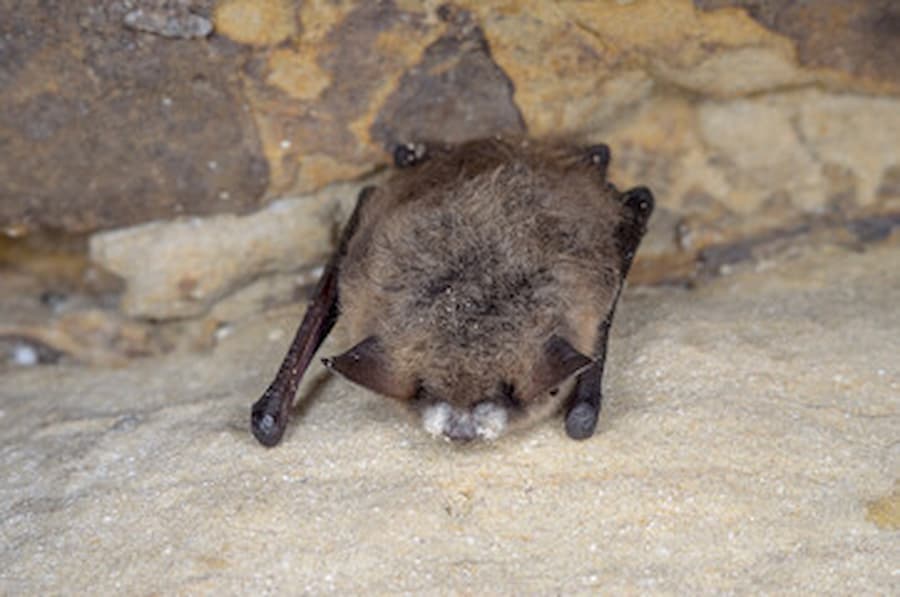
Once infected, researchers have noted that the fungal infection causes hibernating bats to rouse, or awake from a state of torpor. Each time they rouse it causes them to use up their saved winter stores. Overtime, if the fungus causes the bat to rouse too often, it causes abnormal behavioral changes such as flying during the winter to try and feed instead of hibernating. Finding dead or dying bats on the ground in the winter is a strong indicator of white-nose syndrome. Other characteristic symptoms are the white growth of the fungus on the bats’ wings and muzzles.
Bats of all ages are susceptible to White-Nose syndrome and once infected there is currently no known effective treatment or cure. Researchers are currently developing an effective vaccine to protect colonies, UV-C light treated caves, probiotics to improve natural skin microbiome to slow fungal growth, use of volatile organic compounds (B-23), and temperature regulation are some preventative therapies being researched.
How to stop the spread of White-Nose Syndrome
Although the exact known cause of the spread of white-nose syndrome to North America is unknown, it is well hypothesized that human activity contributed to its spread from Europe. The fungus is naturally present in Europe and many of the bat species are well adapted as the mortality rates in Eurasian bat species are significantly lower. Additionally, bats are the only species known to date that can contract an infection from P. destructans and humans are unable to be infected. Due to this, researchers believe humans carry the fungus from cave to cave allowing a more rapid spread. Research has shown that the fungus can survive on clothing and surfaces for many years depending on conditions and advise anyone visiting a cave or mine to decontaminate afterwards. It is also recommended we do not wear similar equipment or clothing when visiting a different location with bats. Although bats that typically hibernate to survive the winter are mostly affected, it is important to remember that bats that migrate or hibernate in warmer conditions can also get infected or become carriers to spread the disease.
Written By: David K.
Works Cited
“Fighting White-Nose Syndrome in BATS Benefits Agriculture, Study Shows.” ACES Research News, CSU Press Release, 13 May 2022, https://aces.illinois.edu/news/fighting-white-nose-syndrome-bats-benefits-agriculture-study-shows.
Matteson, Mollie. “Devastating Bat-Killing Disease Reaches Illinois.” Center for Biological Diversity , 28 Feb. 2013, www.biologicaldiversity.org/news/press_releases/2013/white-nose-syndrome-02-28-2013.html.
“Nature Curiosity: What Is White-Nose Syndrome? | Forest Preserve District of Will County.” Forest Preserve District Will County , Reconnect with Nature , 4 Nov. 2024, www.reconnectwithnature.org/news-events/the-buzz/nature-curiosity-what-is-white-nose-syndrome/.
Vachula, Laura. “Preventing and Treating White-Nose Syndrome: U.S. Fish & Wildlife Service.” FWS.Gov, Wildlife Management, 28 Mar. 2023, www.fws.gov/story/preventing-and-treating-white-nose-syndrome.
“White-Nose Syndrome Faqs (U.S. National Park Service).” National Parks Service, U.S. Department of the Interior, 5 Nov. 2024, www.nps.gov/articles/white-nose-syndrome-faqs.htm.
“Wild about Illinois Bats!” Illinois Department of Natural Resources, Aug. 2019, https://dnr.illinois.gov/education/wildaboutpages/wildaboutwildmammals/wildaboutmammalsbats.html.