Arrival and Initial Concerns
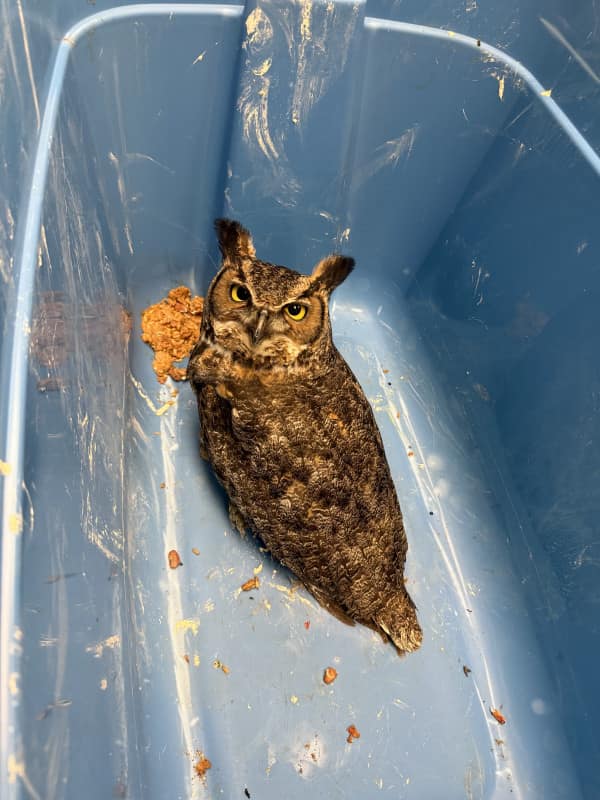
On August 31, 2025, the Wildlife Medical Clinic received an adult Great Horned Owl (Bubo virginianus) that had been found grounded and unable to fly. Upon intake, the owl was in thin body condition and demonstrated ocular abnormalities–most notably, aqueous flare in both eyes. This clinical sign indicates there is inflammation in the anterior chamber of the eye, raising concerns about systemic or infectious disease, or trauma to the eyes.
Despite its compromised condition, the owl was bright, alert, and responsive, but demonstrated an uncoordinated gait or ataxia. The combination of neurological signs, ocular inflammation, and poor body condition led the veterinary team to suspect West Nile Virus (WNV), a mosquito-borne disease well-documented in raptors such as Great Horned Owls.
Treatment Plan
The owl’s treatment plan was designed to address both the suspected viral infection and supportive care needs. It was started on:
- Meloxicam: for pain relief and inflammation control.
- Itraconazole: an antifungal agent, given prophylactically due to concern for secondary opportunistic fungal infections, as WNV is known to cause severe immunocompromise.
- Excede: a long-acting antibiotic to treat opportunistic bacterial infections.
- Ketorolac ophthalmic drops: to treat the inflammation within the eye.
Nutritional support was equally important. The owl was transitioned onto a diet of mice, often prepared as medicated feed items, which allowed medications to be delivered orally with minimal stress.
Progress in Care
Over the following weeks, the owl demonstrated steady improvements. The aqueous flare observed at intake resolved with treatment, and its body condition score increased as it began eating reliably. However, neurologic deficits–particularly ataxia–remained a significant concern. Veterinary student volunteers frequently documented episodes where the owl was able to perch normally but showed uncoordinated movements during flight attempts. On occasion, the owl even collided with enclosure structures when startled, reinforcing suspicions of WNV-induced neurologic impairment.
Despite these challenges, the owl displayed normal raptor behaviors: defensive posturing, hissing, and clacking at volunteers entering the flight cage. These responses indicated appropriate wariness of humans and reduced concern about imprinting.
Rehabilitation Transfer
By late September, the owl’s ocular inflammation had resolved, and it was maintaining weight well on a consistent diet. Its mentation improved, but residual neurologic deficits persisted. The Wildlife Medical Clinic does not have large enough enclosures to fully assess flight strength and coordination in recovering raptors, so plans were made to transfer the owl to the Illinois Raptor Center (IRC).
At the IRC, the owl would have access to larger flight enclosures, allowing for more thorough evaluation of its ability to hunt and fly effectively before considering release back into the wild. The transfer would also minimize unnecessary stress from prolonged handling in the hospital setting.
Conclusion
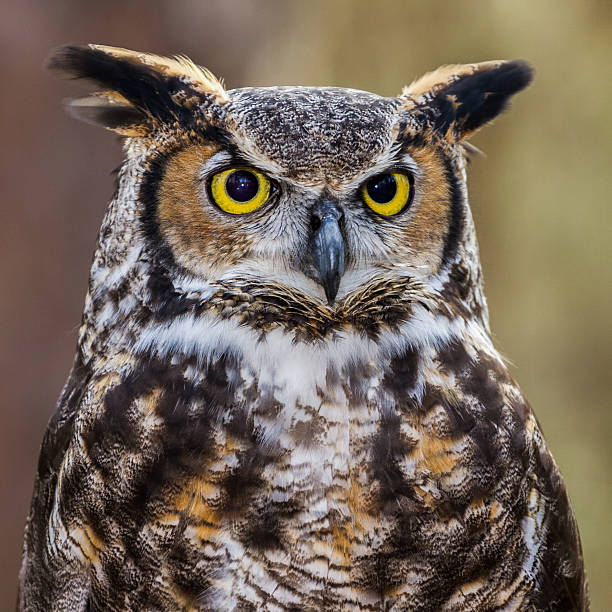
This case highlights the complexities of managing West Nile Virus in raptors. While supportive care and anti-inflammatory treatment can help stabilize patients, neurologic deficits often linger and may impact long-term survival in the wild. For this Great Horned Owl, the combination of diligent medical care, nutritional support, and eventual transfer to a specialized rehabilitation facility offered the best chance of recovery and, hopefully, release.
West Nile Virus continues to pose challenges in wildlife medicine, reminding us of the interconnectedness between human, animal, and environmental health. By monitoring and treating these cases, clinics like the Wildlife Medical Clinic contribute not only to individual patient outcomes but also to broader understanding of wildlife disease dynamics.
Written by: Becca C., Class of 2028
References:
- Nemeth, N. M., Beckett, S., Edwards, E., Klenk, K., & Komar, N. (2007). Avian mortality surveillance for West Nile virus in Colorado. The American journal of tropical medicine and hygiene, 76(3), 431–437.
- DeCarlo, C., Omar, A. H., Haroun, M. I., Bigler, L., Bin Rais, M. N., Abu, J., Omar, A. R., & Mohammed, H. O. (2017). Potential Reservoir and Associated Factors for West Nile Virus in Three Distinct Climatological Zones. Vector borne and zoonotic diseases (Larchmont, N.Y.), 17(10), 709–713.
- Wünschmann, A., Shivers, J., Bender, J., Carroll, L., Fuller, S., Saggese, M., van Wettere, A., & Redig, P. (2004). Pathologic findings in red-tailed hawks (Buteo jamaicensis) and Cooper’s hawks (Accipiter cooper) naturally infected with West Nile virus. Avian diseases, 48(3), 570–580