Every day, the Wildlife Medical Clinic receives numerous calls from concerned community members about animals that appear sick or injured outside. Many of those people attempt to capture the injured wildlife, so they can be seen and treated at the Wildlife Medical Clinic. However, did you know that there are certain species you should use caution around and avoid, even if they appear to need help?
Bats and Skunks
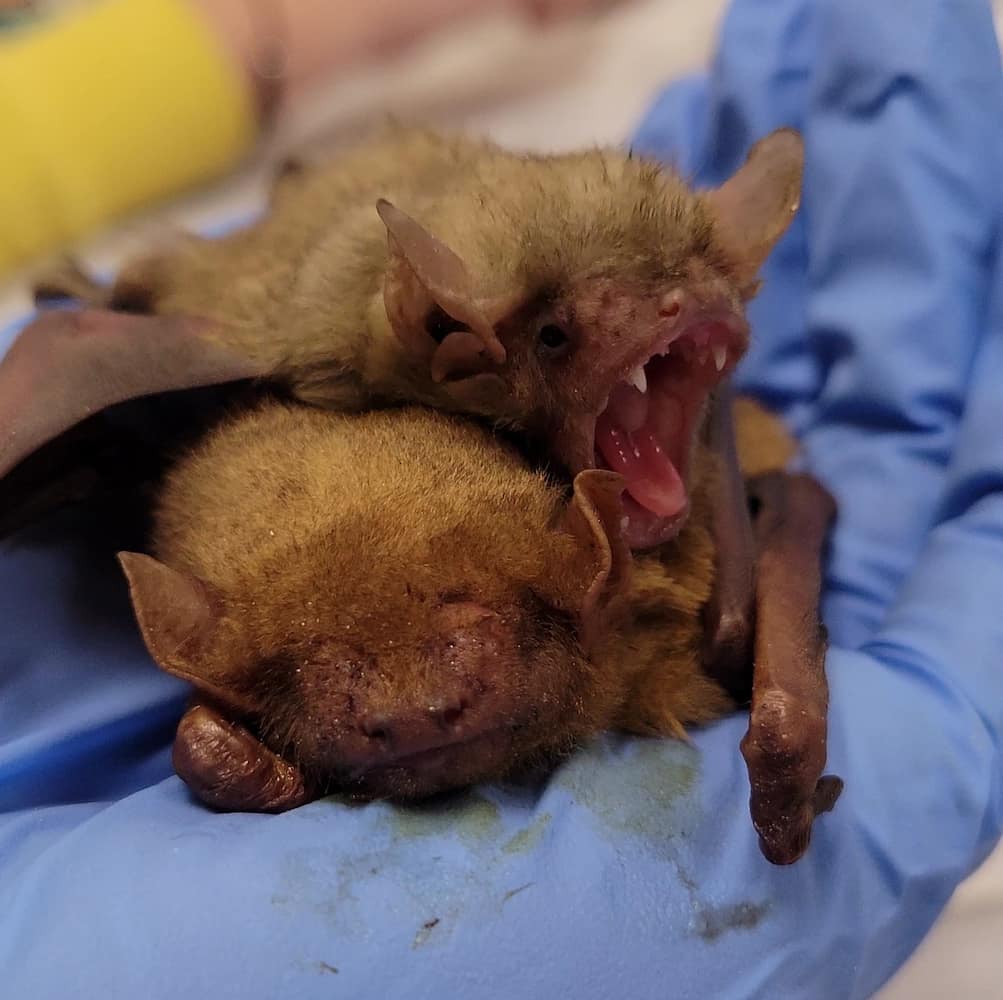
Bats and skunksare two Illinois native species that the Wildlife Medical Clinic cannot receive. Why? These are two of the biggest vectors– animals that commonly transmit disease – of rabies virus. In fact, Illinois law makes it illegal for the wildlife clinic to take in sick or injured bats and skunks because of the high risk of rabies transmission, which would pose a major threat to the student volunteers, faculty, and community members that come into contact with these animals. Additionally, the rabies virus causes a multitude of different symptoms in wildlife, including profound depression, incoordination, and a lack of fear towards people — leading community members to stumble upon these animals more often. Our human instinct is to try and help the vulnerable critter, but Illinois state law and your friends at the Wildlife Medical Clinic urge you to stay far away. Wildlife, whether sick or not, often act unpredictably, and being bitten by a skunk or bat could potentially expose you to the rabies virus.
Waterfowl
Similarly, we encourage the public to keep their distance from geese and other waterfowl (ducks, swans, etc.) during the fall and winter months, due to a disease called Highly Pathogenic Avian Influenza (HPAI). Unlike the common flu people get, HPAI can cause severe neurological disease in our bird species, and has the potential to spread to humans and other domestic animals. Because of their migration patterns, geese and other water birds are currently the most frequent carriers of HPAI, which poses a public health risk if community members handle these birds directly – such as capturing them to bring into the clinic.
I found a bat, skunk, or goose that needs help. Now what?
The best thing to do is to call your local animal control facility. They have the proper equipment, training, and safety measures to be able to capture these animals, and avoid possible public endangerment. The Wildlife Medical Clinic will still accept and treat waterfowl like geese in the clinic, but only after they have tested negative for HPAI, which animal control can help facilitate by examining the birds for clinical signs before bringing them to the WMC. These protocols are in place not just to protect the public, but to keep our volunteers in the clinic safe as well.
After calling animal control, the best thing to do around sick or injured bats, skunks, and waterbirds is to keep as much distance as you possibly can. Do not attempt to handle these species directly under any circumstances, and avoid the painful (and expensive!) post-exposure-prophylaxis shots that must be given if you are bit or scratched by an animal that could carry rabies, or potential exposure to HPAI. We know it is tempting to want to help an animal in need, but we encourage you to leave it to the professionals when it comes to bats, skunks, and waterfowl, to keep everyone as safe as possible.
Written By: Kayla B., Class of 2027