Faculty Research Spotlight
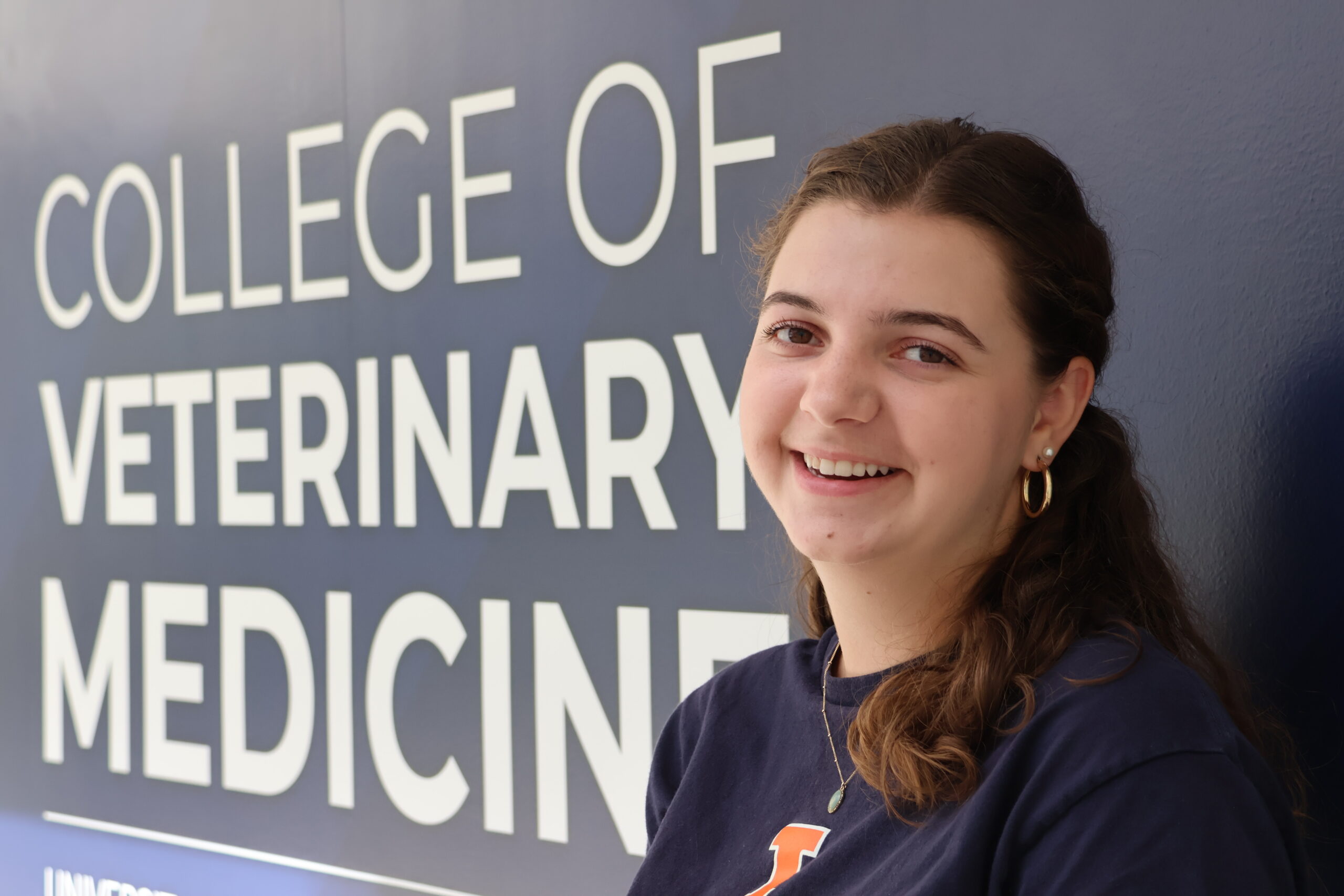
Featuring Master of Veterinary Science Graduate Scholar Genevieve Stickelmaier
Solving the Problem
When scientists discovered a rare bacterium on both Earth and the International Space Station, it raised new questions about how microorganisms evolve and spread. Understanding those questions requires more than laboratory work—it requires powerful computational tools capable of comparing hundreds of genetic sequences. For Master of Veterinary Science student Genevieve Stickelmaier, that challenge became an opportunity to learn an entirely new set of research skills while contributing to an ongoing investigation into Kalamiella piersonii, a multidrug-resistant bacterium.
Project at a Glance
Research area: Genomics and Bioinformatics
Project: Phylogenetic analysis of Kalamiella piersonii
Focus: Computational analysis of bacterial evolution
The Question
Genevieve set out to better understand the evolutionary relationships among isolates of Kalamiella piersonii. By comparing genetic information from hundreds of samples, researchers hoped to learn more about how the organism has changed over time and how different strains are related.
The Investigation
Although she had little previous experience with bioinformatics, Genevieve learned to use specialized computational tools to analyze more than 400 genomic datasets. She worked with sequence alignment, phylogenetic tree construction, and other analytical methods that are increasingly important in veterinary and biomedical research. Along the way, she developed confidence using software and approaches that initially felt far outside her comfort zone.
The Discovery
Her analysis contributed to a broader understanding of the organism’s genetic diversity and demonstrated how computational biology can reveal patterns that are impossible to observe through traditional laboratory methods alone. Equally important, the project highlighted the growing role of interdisciplinary research in solving complex biological problems.
Learning Beyond the Classroom
The Master of Veterinary Science program encourages students to tackle authentic research questions while building practical skills that extend well beyond the classroom. For Genevieve, that meant combining scientific curiosity with data analysis, critical thinking, and lifelong learning—skills that will continue to serve her throughout her career.
Why It Matters
Modern veterinary medicine depends on professionals who can work across disciplines and interpret increasingly complex scientific data. Genevieve’s capstone illustrates how graduate students at Illinois contribute to meaningful research while preparing for careers in science, medicine, and discovery..
“One of the biggest lessons I learned was not to be intimidated by unfamiliar tools. What seemed overwhelming at first became manageable through practice, mentorship, and persistence.”
Genevieve Stickelmaier
Beyond the Classroom
Stories of learning, discovery, and impact from the Master of Veterinary Science.